In a new lawsuit, the Bad River Band of Lake Superior Chippewa alleges the U.S. Army Corps of Engineers violated federal environmental laws when it granted a permit to Enbridge for its proposed Line 5 reroute.
Canadian energy firm Enbridge secured a federal permit for the $450 million project from the Army Corps in late October. The company said that permit is not yet final.
Enbridge first proposed building a 41-mile segment of Line 5 around the Bad River reservation after the tribe sued in 2019 to shut down the pipeline on its lands. Bad River sued Enbridge to remove Line 5 from tribal lands after pipeline easements expired in 2013 on roughly a dozen miles of pipe crossing the reservation.
Earthjustice filed the lawsuit Tuesday on the tribe’s behalf in U.S. District Court for the District of Columbia. The tribe is accusing the Corps of violating the Clean Water Act and National Environmental Policy Act. Bad River is asking a federal judge to overturn the permit and final environmental assessment for Enbridge’s Line 5 reroute.
Bad River Band Chairwoman Elizabeth Arbuckle said in a statement that Enbridge has been trespassing on its lands for more than a decade.
“The reroute only makes matters worse. Enbridge’s history is full of accidents and oil spills,” Arbuckle said. “If that happens here, our Tribe and other communities in the Northwoods will suffer unacceptable consequences. From the Bad River to Lake Superior, our waters are the lifeblood of our Reservation. They have fed and nurtured our Tribe for hundreds of years. We will do everything in our power to protect them.”
A spokesperson for the Army Corps said it’s the agency’s policy not to comment on pending litigation.
The complaint states that the Corps failed to adequately assess environmental effects of construction and ensure the project would avoid or minimize harm. The tribe’s attorneys also argued the federal agency violated the Clean Water Act by issuing the permit as a legal challenge to state approvals for the project remains ongoing.
News with a little more humanity
WPR’s “Wisconsin Today” newsletter keeps you connected to the state you love without feeling overwhelmed. No paywall. No agenda. No corporate filter.
Last year, Bad River and environmental groups challenged state permits granted to Enbridge. They argued the Wisconsin Department of Natural Resources failed to comply with state law when it granted a wetland and waterway permit along with a construction storm water permit for the project. They say the agency lacked data to show it wouldn’t result in significant harm to wetlands and waterways.
An administrative law judge heard weeks of testimony during a contested case hearing on the challenged permits this fall, but a decision is still pending.
Enbridge spokesperson Juli Kellner said the company’s permit applications have undergone extensive environmental review. Kellner said the Corps issued the company an initial proffered permit, which has not yet been signed or finalized by the agency or Enbridge.
“Until the permit is signed, USACE has not engaged in a judicially reviewable final agency action. Enbridge will move to intervene in the lawsuit and defend the USACE’s forthcoming permit decision,” Kellner said in a statement.
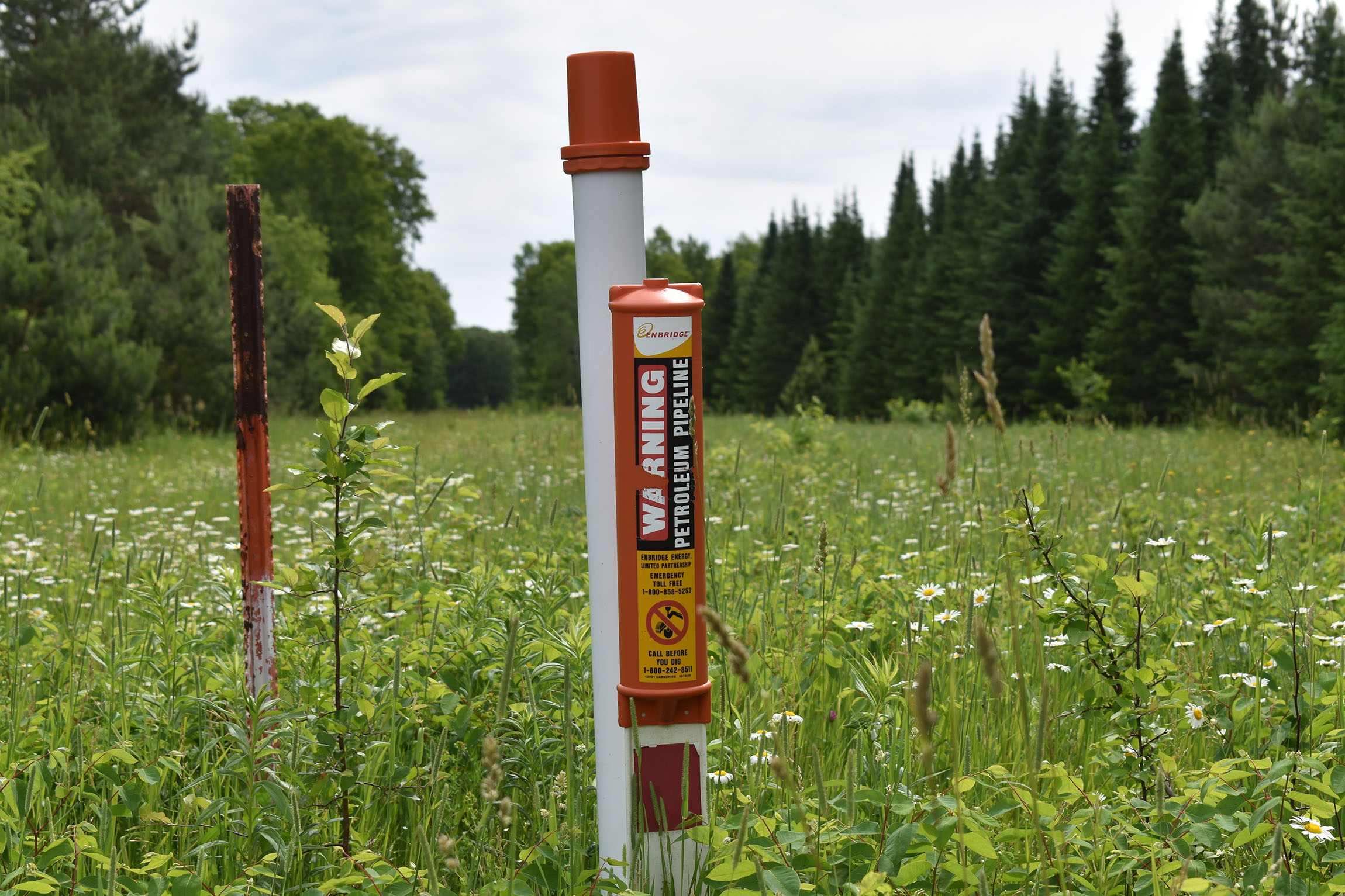
The Line 5 pipeline carries up to 23 million gallons daily from Superior to Sarnia, Ontario. The proposed reroute would cross close to 200 waterways and affect around 101 acres of wetlands in Ashland and Iron counties. Construction would include blasting bedrock and drilling in waterways and wetlands, which would take multiple decades to restore.
The tribe has argued the project could increase water temperatures, runoff and contamination. Enbridge experts said construction wouldn’t cause “measurable” increases to water temperatures, sediment levels or pollutants like PFAS.
The Environmental Protection Agency under the Trump administration concluded this year that data provided by the tribe didn’t show the project would harm the tribe’s water quality. During the Biden administration, the agency previously said the project may result in “substantial and unacceptable” impacts.
A DNR attorney testified the project is the most studied in the agency’s history, undergoing nearly four years of review. The agency received more than 32,000 public comments on the proposed reroute, and the DNR maintains it properly applied the state’s stringent permitting standards in line with the law. The Army Corps also received more than 150,000 comments opposing the Line 5 project.
Supporters have touted the project’s roughly $135 million economic impact and creation of 700 union jobs during construction. Farm and business groups have voiced concerns about the potential for fuel price hikes and a propane shortage if the reroute doesn’t move forward.
“Today’s baseless law suit is another disappointing development in the now nearly six-year effort to relocate Line 5 so it can continue to supply needed energy to our state and region,” the Wisconsin Jobs and Energy Coalition said in a statement.
Opponents say Enbridge has a track record of spills on Line 5 and other pipelines, including a 2010 spill that released more than 1.2 million gallons of oil into Michigan’s Kalamazoo River. Enbridge has also paid millions tied to four aquifer breaches on the Line 3 replacement in Minnesota that released hundreds of millions of gallons of groundwater.
In 2023, a federal judge ordered Enbridge to pay the tribe $5.15 million for trespassing on tribal lands where easements expired and reroute or shut down its Line 5 pipeline on the reservation by June 2026. Both the tribe and the company are appealing that decision in the 7th U.S. Circuit Court of Appeals, and a ruling is still pending.

Wisconsin Public Radio, © Copyright 2026, Board of Regents of the University of Wisconsin System and Wisconsin Educational Communications Board.