A federal agency has granted approval for two northern Wisconsin energy projects under a fast-tracked permitting process in line with President Donald Trump’s declaration of a national energy emergency earlier this year.
In June, the U.S. Army Corps of Engineers issued a notice to proceed for the proposed $1 billion Nemadji Trail Energy Center in Superior and Xcel Energy’s Ashland to Ironwood transmission line project under special emergency permitting procedures.
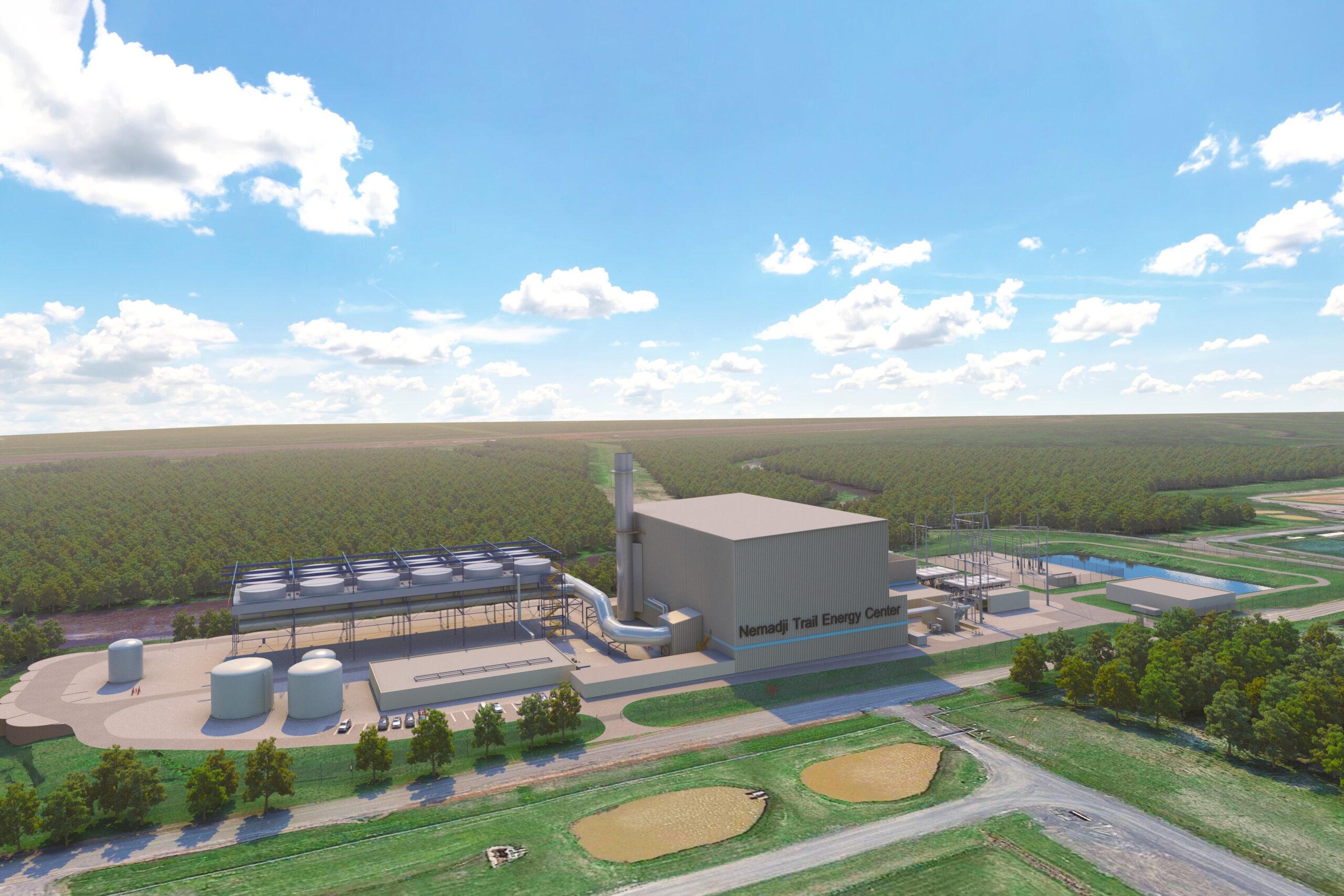
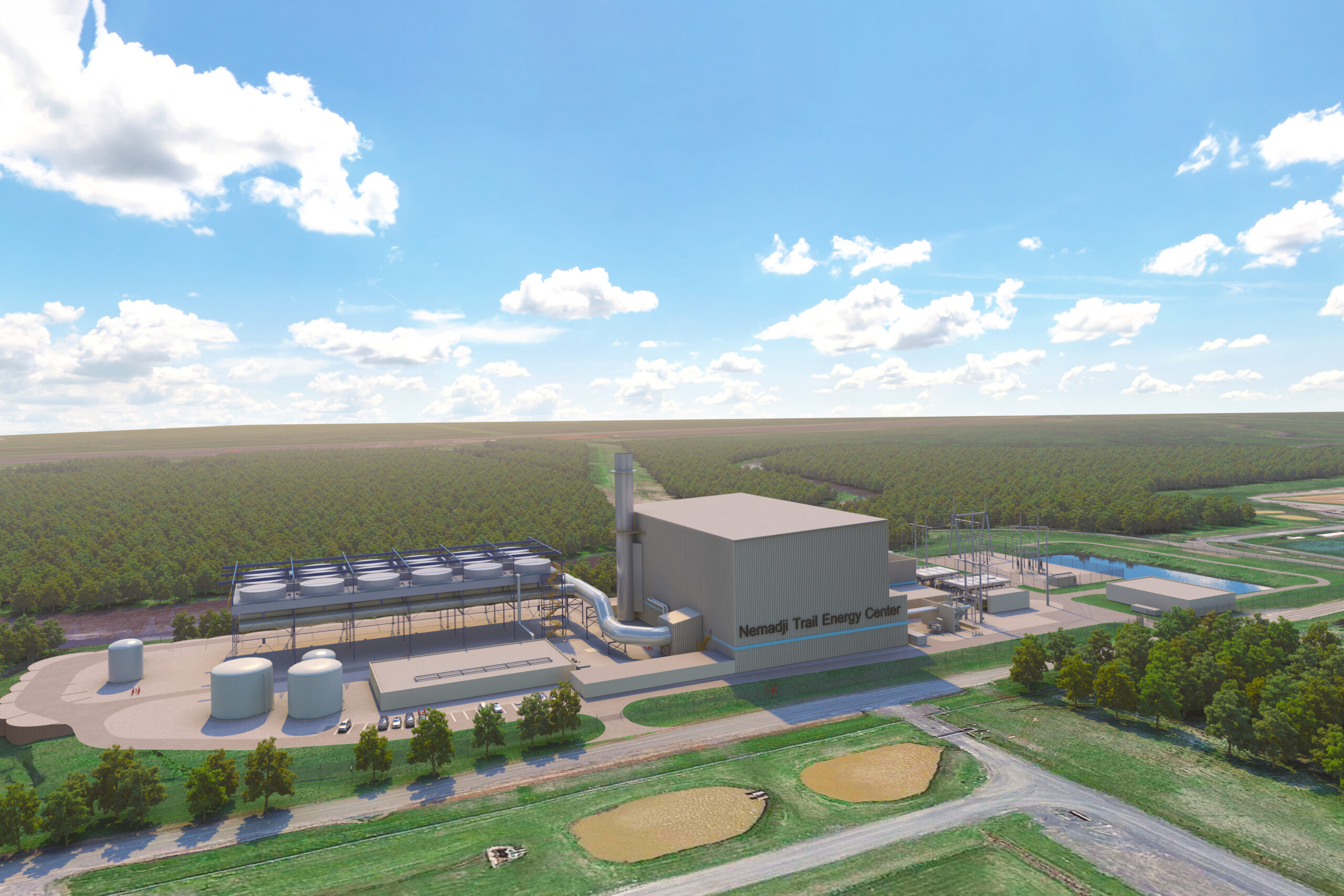
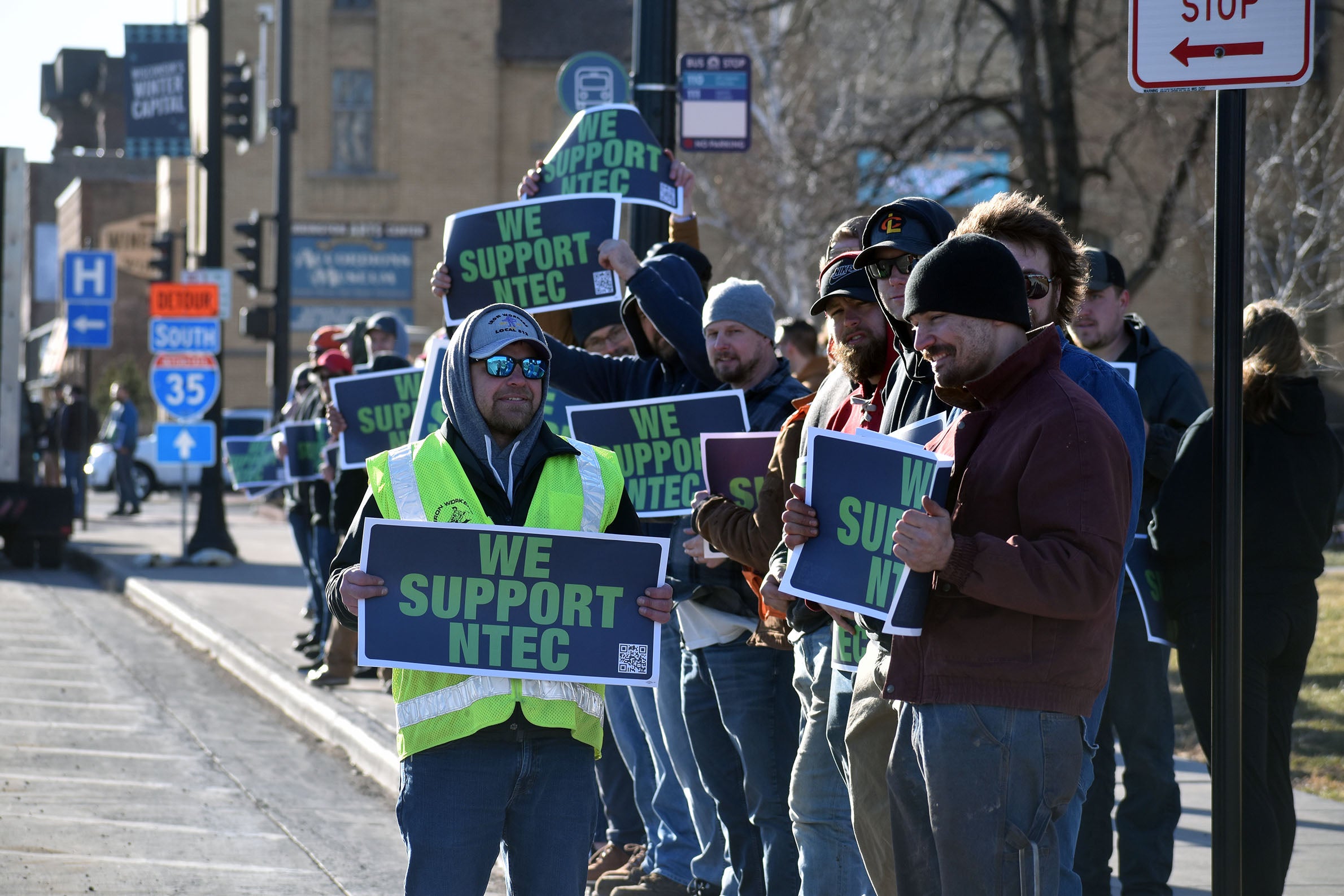
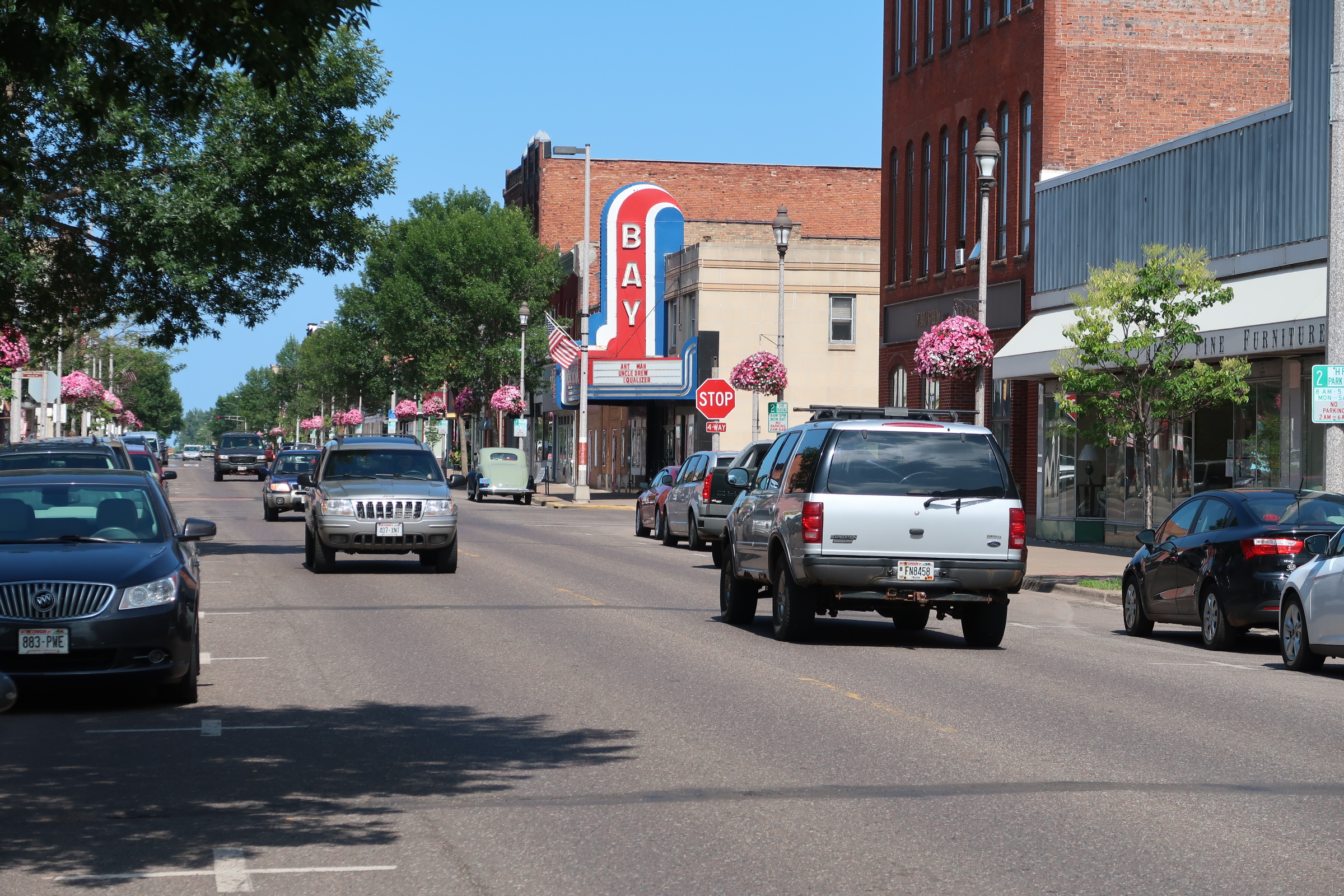
On July 7, the U.S. Army Corps of Engineers issued a permit to the owners of the Nemadji Trail Energy Center, or NTEC, in Superior. La Crosse-based Dairyland Power Cooperative, Minnesota Power and Basin Electric Power Cooperative have proposed building the 625-megawatt gas-fired power plant.
The permit authorizes utilities to temporarily fill 24.3 acres of wetlands and permanently fill nearly 3.93 acres to build a natural gas pipeline, transmission lines and a switchyard for the project. A new transmission line would be built over the Nemadji River. The natural gas pipeline and a fiber-optic line would be drilled underneath the waterway.
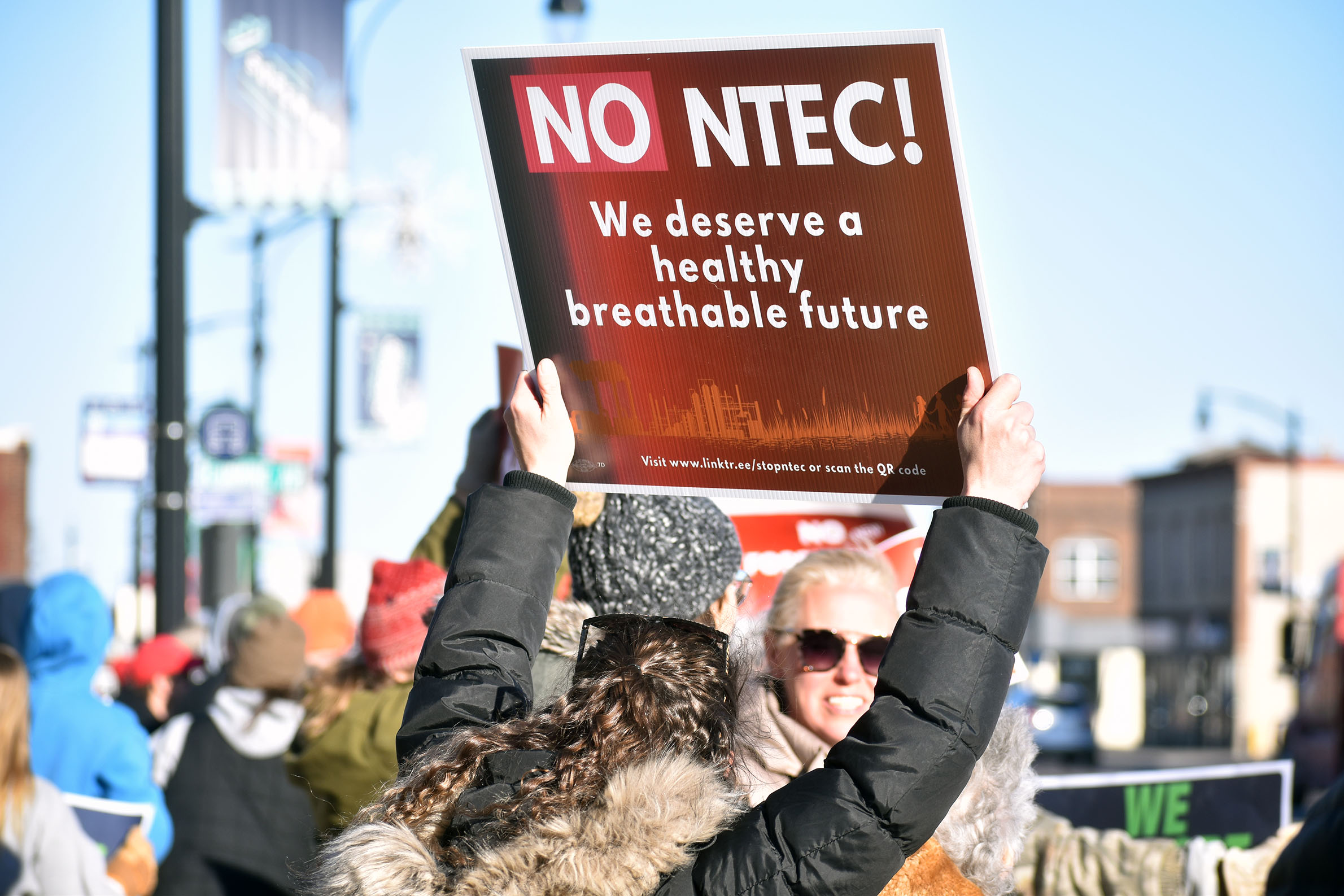
Despite the fast-tracking of federal permits, local opposition might still doom the NTEC project.
Superior Mayor Jim Paine said it’s no surprise the Trump administration issued the permit, but he said it won’t matter.
“I’m sure they’re pleased about that, but this is a dead project. There is no meaningful path to construction for NTEC,” Paine said.
News with a little more humanity
WPR’s “Wisconsin Today” newsletter keeps you connected to the state you love without feeling overwhelmed. No paywall. No agenda. No corporate filter.
First proposed in 2017, NTEC’s owners have said the facility would provide reliable power as they shift away from coal and invest in renewable energy.
Environmental and Indigenous groups mounted multiple legal challenges against the project in Minnesota and Wisconsin. Last year, the Superior City Council denied local approvals for the plant, and utilities withdrew an air permit for the project last fall.
City officials contend the plant is not needed. Lake Superior tribes have also shared concerns about impacts to treaty rights. The Fond du Lac Band of Lake Superior Chippewa is worried about the project’s proximity to a mass grave after about 200 tribal ancestors were buried at a cemetery next to the plant’s proposed site.
“The Nemadji Trail Energy Center has received 16 regulatory approvals to date, and the project partners are evaluating impacts and next steps, including consultation with the Fond du Lac Band,” utilities said in a statement.
The plant has a December 2028 deadline to reach commercial operation under a one-year extension granted by the Federal Energy Regulatory Commission. In a July filing to the Wisconsin Public Service Commission, the utilities outlined that work would begin this year with commercial operation slated for 2027.
Project still needs other approvals to move forward
However, the Wisconsin Department of Natural Resources said the owners have not reapplied for an air permit, and the state has yet to issue a stormwater permit for a substation and transmission line to connect the plant to the grid.
Jenny Van Sickle, Superior resident and former city councilor, said she thinks the utilities would face opposition in the community if they reapplied for an air permit. The Superior refinery has resumed operations since the previous air permit was reviewed and wildfire smoke has contributed to poor air quality this summer.
“People are very aware of air quality and the importance of that, and I think proposing a gas plant in this environment, restarting that effort would be very different,” she said.
Van Sickle added the DNR granted a wetlands permit for the project in 2022, which expired last month.
Clean Wisconsin and the Sierra Club are among groups that challenged the Public Service Commission’s approval of NTEC in 2020. They highlight that the plant would produce nearly 3 million tons of greenhouse gas emissions each year.
The federal Rural Utilities Service has said it would cut emissions by 800,000 tons each year by displacing coal plants. Environmental advocates say Dairyland Power has not yet submitted a loan application to the agency to fund its portion of the project.
The Rural Utilities Service did not immediately respond to a request for comment Tuesday.
Xcel begins work on northern Wisconsin transmission lines
Elsewhere in northern Wisconsin, Xcel Energy is moving forward with plans to build its Ashland-Ironwood transmission line project.
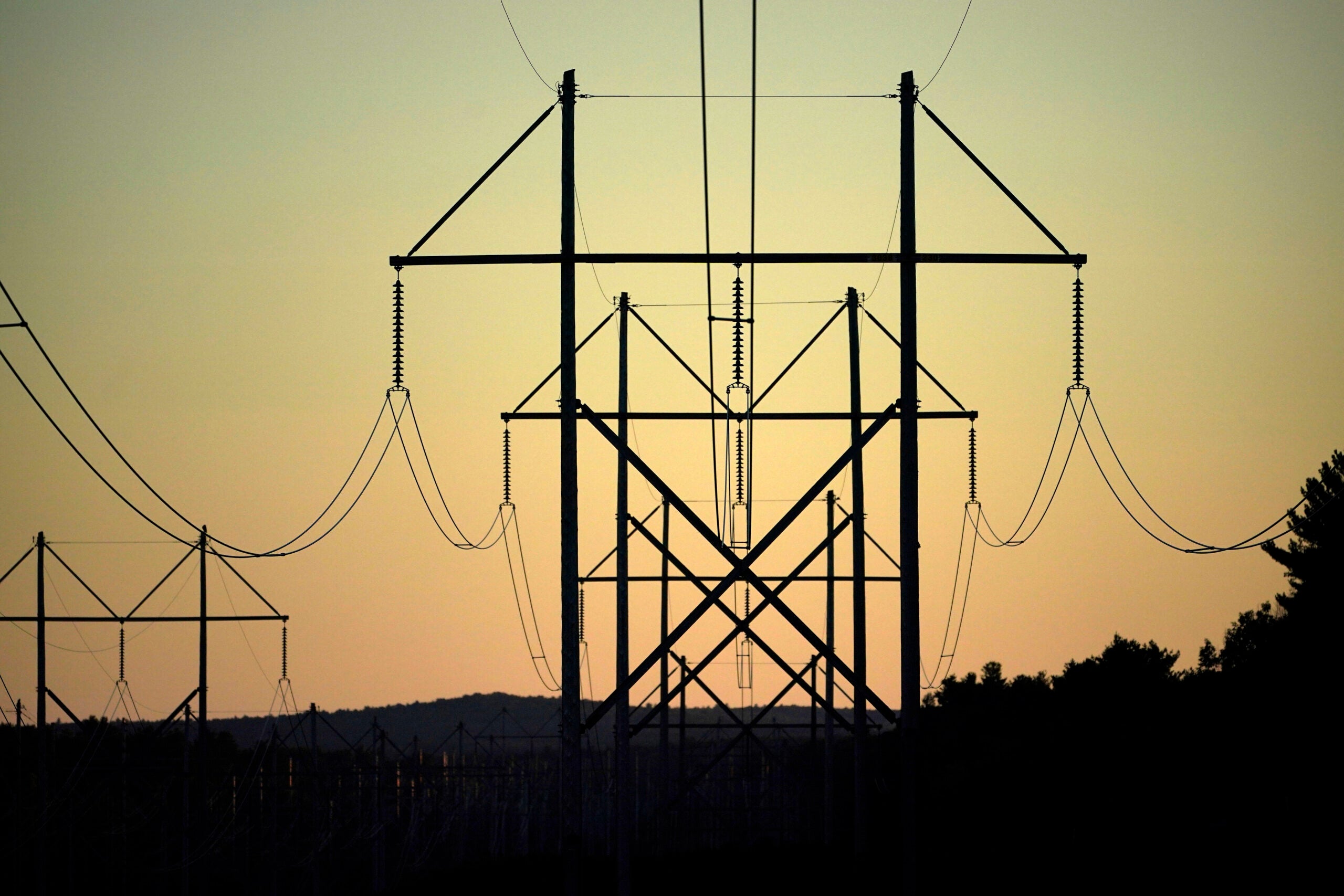
The Public Service Commission approved the roughly $200 million project in 2022. Xcel said it’s rebuilding and moving two 35-mile transmission lines to provide reliable power for customers. The 88- and 115-kilovolt transmission lines were first built in the 1950s and 1970s.
Eric Amundson, Xcel’s project manager, said the lines were not built to modern standards.
He said the lines need to be replaced due to their deteriorating condition and susceptibility to outages during severe storms. He said the remote terrain has presented challenges with addressing aging infrastructure.
“We are seeing the condition holistically hitting a point where replacing a pole here or there isn’t a sustainable way forward,” Amundson said.
The project will remove aging lines that currently cross the Bad River reservation, as well as a 1.8-mile section in Copper Falls State Park.
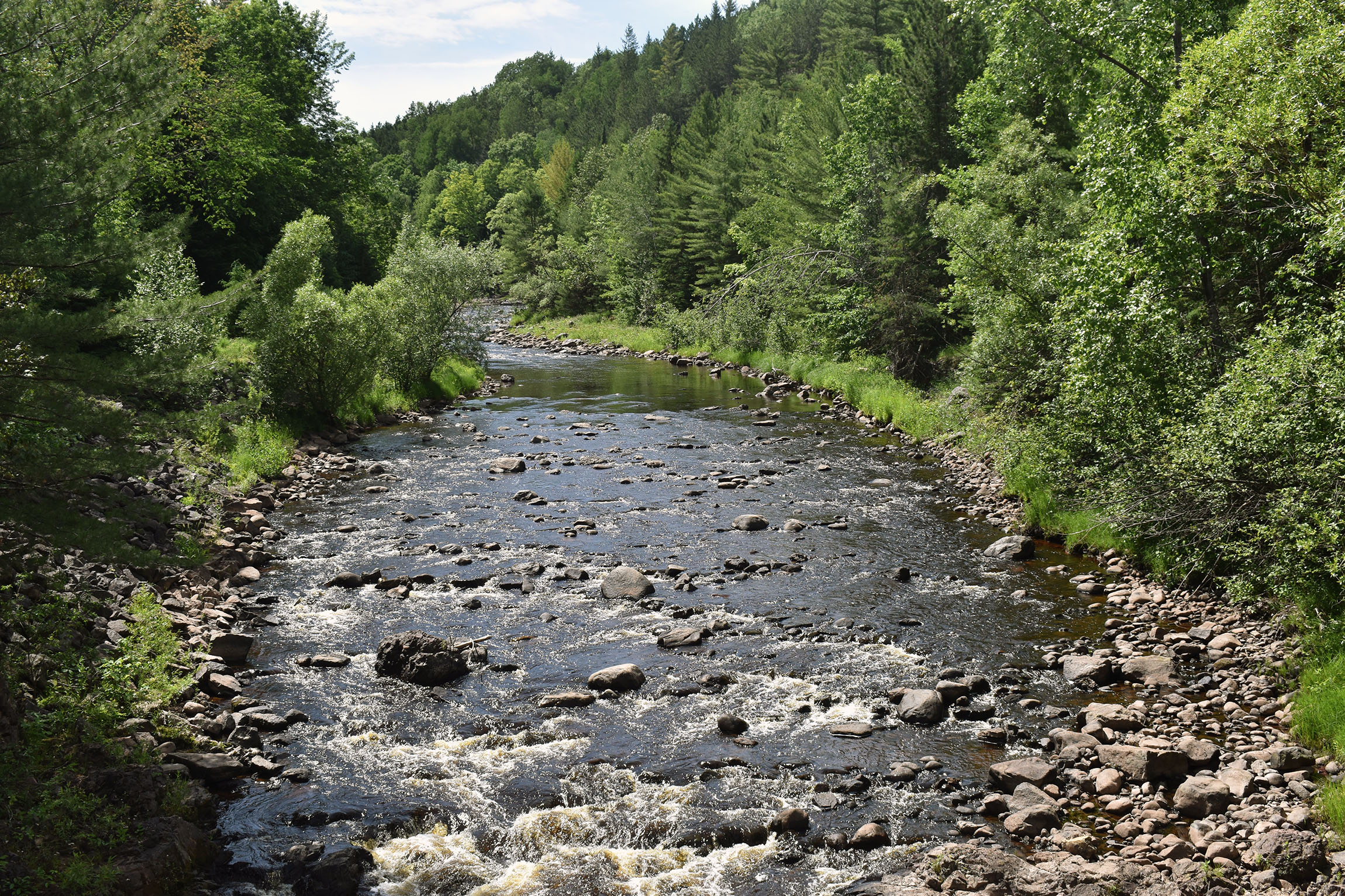
Based on current data, the Army Corps said rebuilding the transmission lines will involve temporarily filling 335 acres of wetlands through the use of construction matting for heavy equipment. Less than an acre would be permanently filled through installation of poles.
While Xcel has received a notice to proceed, the Corps has yet to issue a wetlands permit for the project. Under Trump’s executive order, a notice to proceed is granted as part of emergency procedures when a full permit can’t be issued within 30 days. The Corps said it’s continuing to work with federal, state and tribal partners to reach a decision as soon as possible.
As that work is ongoing, Amundson said the utility is working to address concerns related to the federally endangered northern long-eared bat. The utility is planning to clear trees in the winter to avoid unintentionally harming the species. Amundson added the company will use best management practices to reduce impacts to sensitive areas like wetlands and prevent stormwater runoff and spread of invasive species.
As work gets underway, Xcel is still securing easements from landowners for the project. As of July 22, the utility had obtained 115 of 119 easements on the Mellen to Ironwood section. The company has also secured 97 of 122 easements needed on the Ashland to Mellen portion of the project. Amundson said the use of eminent domain to obtain easements would be a last resort.
“We work really closely with and we’re generally successful at working with landowners to negotiate agreements for easement purchases,” Xcel spokesperson Randy Fordice said.
The first phase of construction will involve rebuilding 2 miles of the 88 kilovolt line in Hurley and Ironwood. Amundson said installation of foundations will begin next week. Construction in the Mellen area is expected to begin in October. Xcel said most work will take place along roads or existing rights-of-way.

Wisconsin Public Radio, © Copyright 2026, Board of Regents of the University of Wisconsin System and Wisconsin Educational Communications Board.