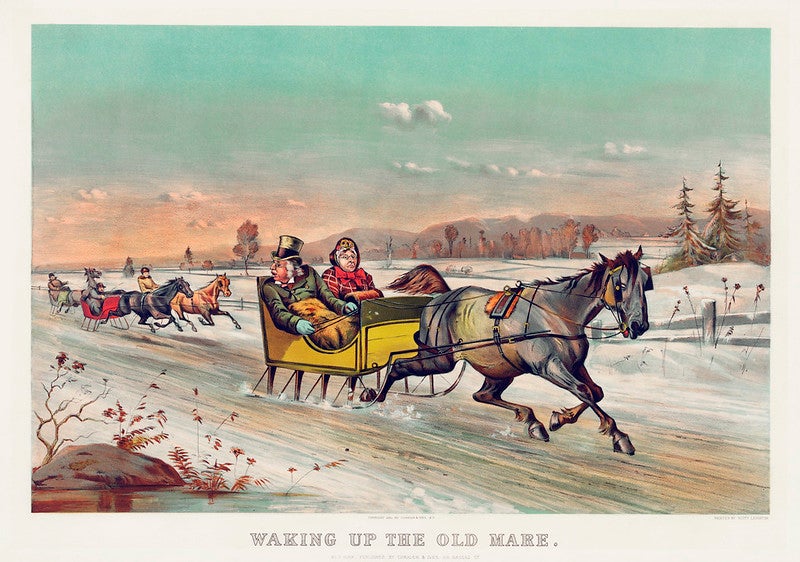
Back in the day, everyone used sleighs for winter travel, not just Santa Claus. The bright ring of bells and slender tracks in the snow were common features of country life in 19th century Wisconsin.
“As long as there have been people here, there have been sleigh-related vehicles,” said Jim Willaert, a curator at Wisconsin Historical Society’s Wade House. Willaert looks after almost 100 sleighs and carriages at the historic site in Greenbush.
Sleighs are able to traverse snow-covered fields and icy lakes and rivers, Willaert said. They’re also able to haul goods. Therefore, sleigh travel was swift and economical.
News with a little more humanity
WPR’s “Wisconsin Today” newsletter keeps you connected to the state you love without feeling overwhelmed. No paywall. No agenda. No corporate filter.
“I’d say, in the country, everybody owned one,” said Howard Kietzke, a member of the Carriage Association of American and the Dairyland Driving Club.
Factories in Fort Atkinson, Janesville, Sheboygan and Fond du Lac diligently produced at least 5,000 sleighs a year during the late 1800s, Kietzke said.
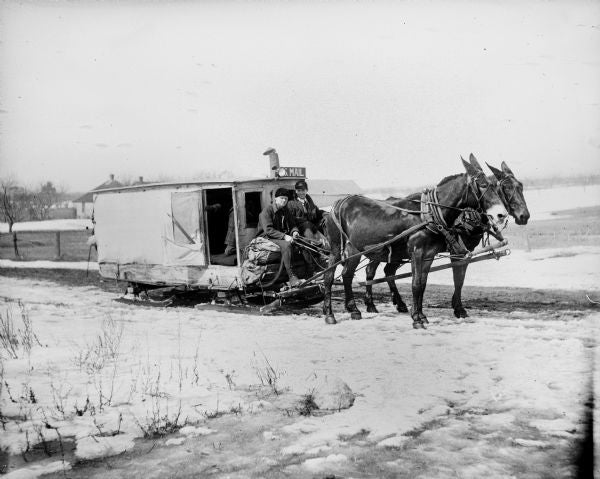
Sleighs kept Wisconsin’s economy churning during winter months. The Wade House has a few sleighs used by a meat company to deliver sides of beef and other meat products right to customers’ doorsteps. Sleighs were also vital to dairy farmers, who needed to take milk to the creamery at least once a week.
Traveling by sleigh was a stealthy affair. The runners slid silently and snow muffled a horse’s footfall. So, some municipalities required each sleigh to have bells attached.
“It was for safety, but it was also for entertainment,” Kietzke said. “Bells became the identification of a family, because all bells strings sound different. So if I heard a bell coming toward me as I’m sleigh riding, I could identify who that was.”
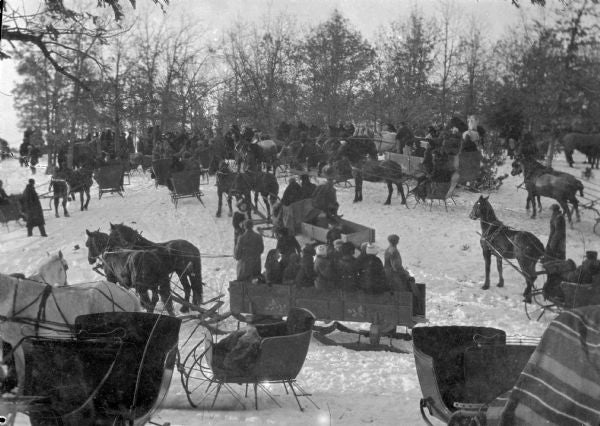
Sleigh rallies: Lovely weather for sleigh rides together
But sleighs weren’t just for work — they were also a source of joy. Communities gathered together for “sleigh rallies.” These events were competitive and social. Sleigh drivers raced their chariots through pine trees. Others showed off sleighs adorned with paint, feathers, bells and well-groomed horses.
Dinner and dancing were often a part of a sleigh rally, Willaert said, and there was courtship. Young men would take young ladies out for a ride in search of a bridge.
“When you cross the bridge in the sleigh, you would exact a toll (a kiss) from the young lady,” Willaert said. “Now, sometimes in small towns, very few bridges could be an issue. So you’d have to cross the same bridge several times during the course of the ride.”
Internal combustion engines slowly took over in the early 20th century. By the 1920s and 1930s, sleighs were obsolete, Kietzke said.
However, sleighs didn’t disappear. Tucked in the back of barns, they waited for collectors and curators like Kietzke and Willaert to rediscover them.
Kietzke owns 30 sleighs and carriages, give or take. For 50 years, it’s been a passion of his to buy, restore and drive these classic vehicles. Kietzke said he sees them as industrial art.
“I don’t collect paintings on the wall, I collect my carriages in the carriage house,” Kietzke said.
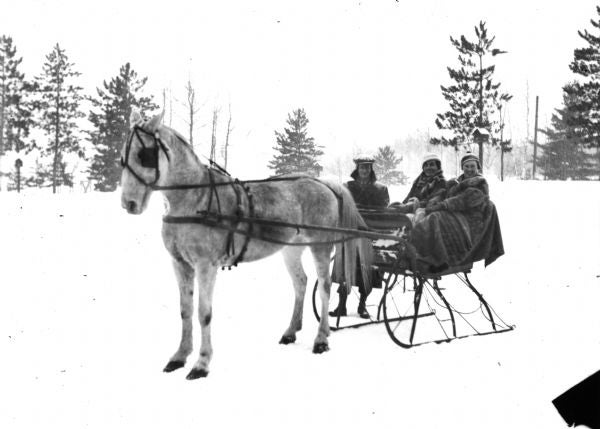
Here comes Santa, on his sleigh
Santa Claus is one person keeping the tradition of winter sleigh rides alive. Santa commonly uses a type of sleigh called an Albany Cutter, Willaert said.
“They tend to be a very lightweight sleigh with a kind of curving design, and the runners often curve all the way up to the top of, and sometimes even beyond, the top of the dashboard,” Willaert said.
Willaert found evidence that St. Nicholas was the first Christmas figure to ride a sleigh. He points to the poem “A Visit from St. Nicholas” by Clement Clarke Moore in 1823. The narrator leaves his bed to see St. Nicholas arrives by sleigh:
When what to my wondering eyes did appear,
“A Visit from St. Nicholas” by Clement Clarke Moore
But a miniature sleigh and eight tiny rein-deer,
With a little old driver so lively and quick,
I knew in a moment he must be St. Nick.
If you’re itching to go over the river and through the woods, Willaert said the Wade House is offering rides on Feb. 14. Rides are available for cost on a first-come, first-serve basis. You can register in advance.
Additionally, you can find sleigh rides throughout the state on Travel Wisconsin’s website.