
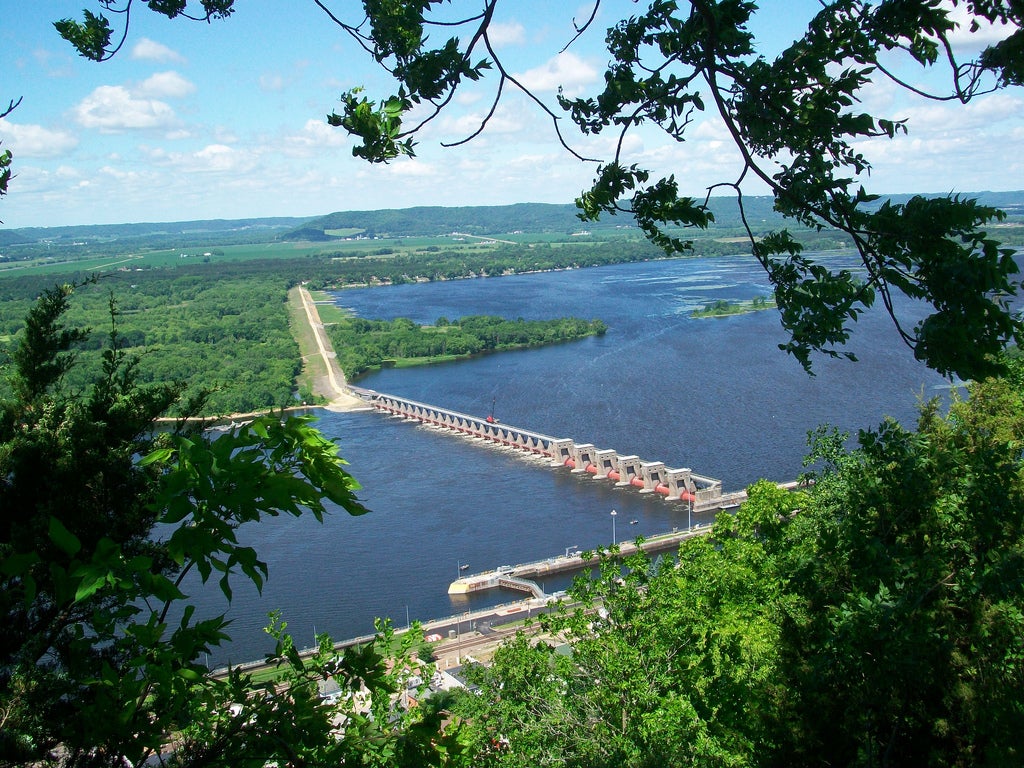
As Minnesota debates handling sediment issues in Lake Pepin, Wisconsin officials are left waiting to set their own standards.
Lake Pepin is the widest part of the Mississippi River, but its days as a popular tourist destination could be numbered if sediment build up is not significantly reduced. Sediment, like fine silt and nutrients, travels from the Mississippi River’s tributaries.
Sedimentation is natural, but runoff from farms, homes, and businesses along waterfronts makes the problem worse. State and federal officials are constantly dealing with sedimentation in Lake Pepin through dredging and stabilizing river and stream banks.
News with a little more humanity
WPR’s “Wisconsin Today” newsletter keeps you connected to the state you love without feeling overwhelmed. No paywall. No agenda. No corporate filter.
Wisconsin Department of Natural Resources Water Quality Specialist John Sullivan says the upper portion of Lake Pepin could be gone in 100 years if sedimentation continues to accelerate at the rate it’s going. Most of it comes from the Minnesota River. Sullivan says Wisconsin’s tributaries account for only up to two percent of the sediment that goes into the lake. “In terms of going forward, we’re waiting to see how Minnesota is going to be addressing the sediment contributions in their watershed, then we’re going to have to define more carefully what is Wisconsin’s share, in terms of how do we address the source of sediment in our smaller watersheds.”
The Minnesota Pollution Control Agency wants to come up with pollution and sediment standards, but agricultural and other groups have come forward to challenge the research.

Wisconsin Public Radio, © Copyright 2025, Board of Regents of the University of Wisconsin System and Wisconsin Educational Communications Board.