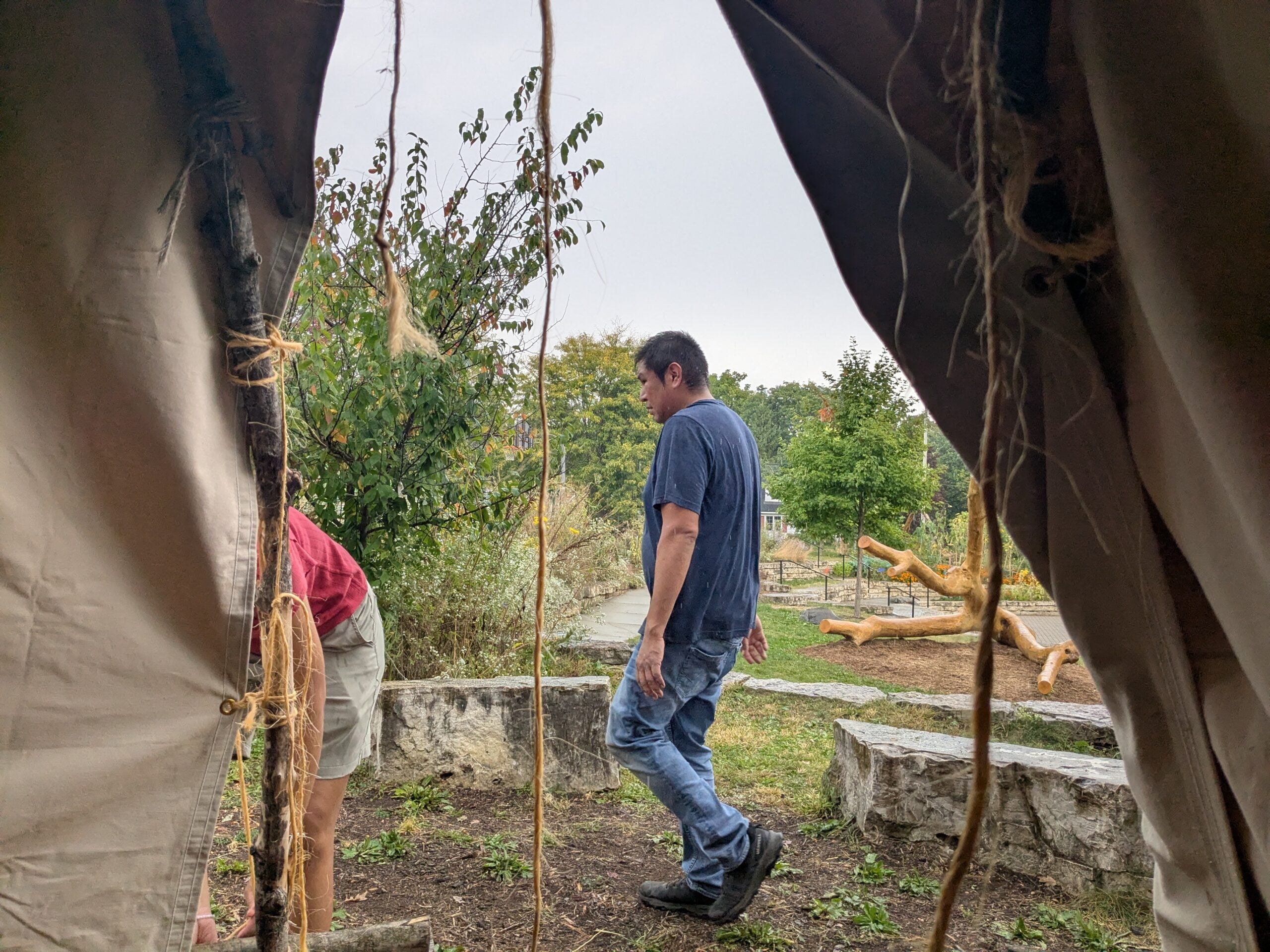
Outside Madison’s Wingra School on a sunny fall afternoon in September, Ho-Chunk artist and horticulturist Lightning New Rider was busy measuring canvas and preparing twine.
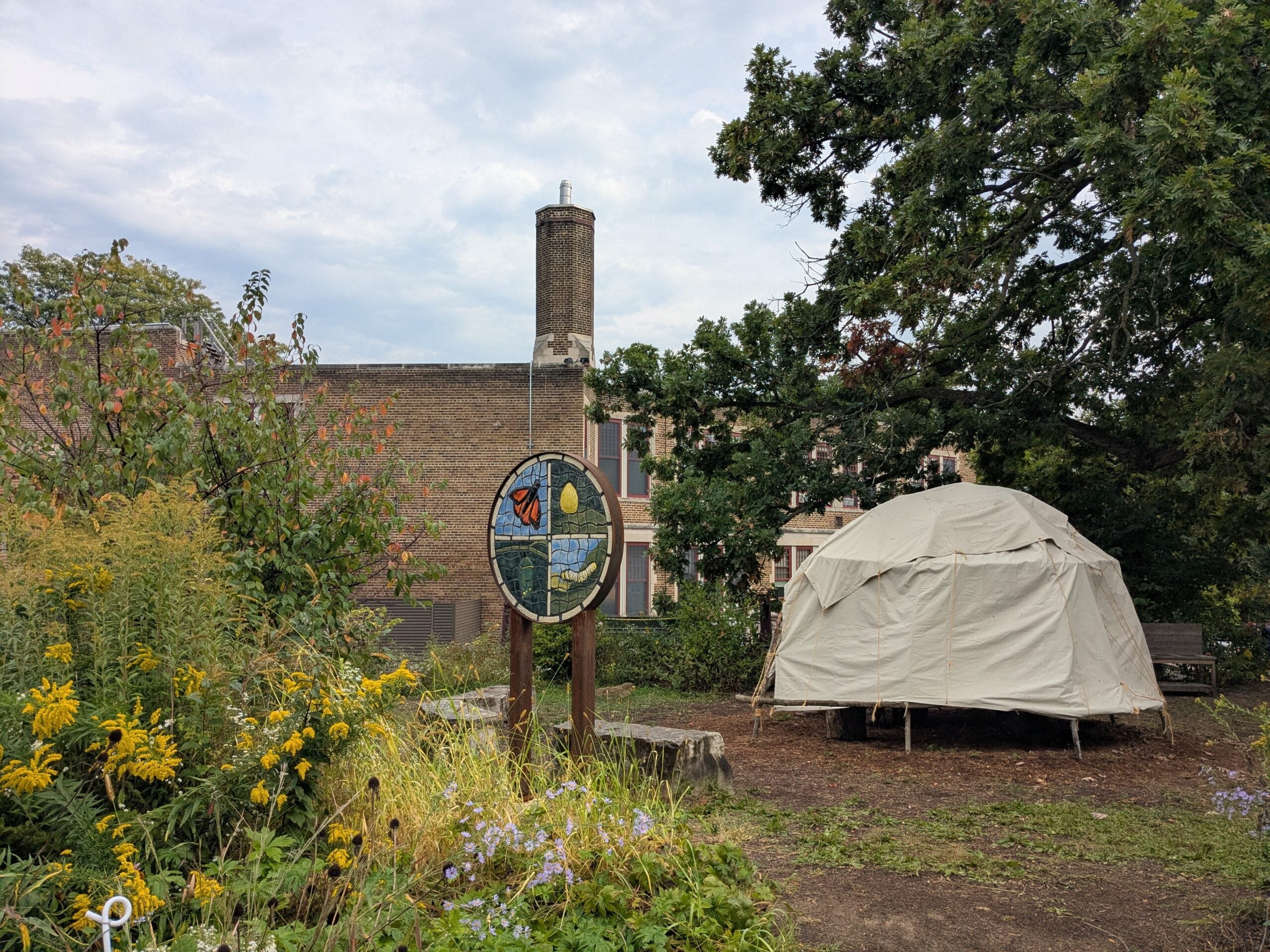
He was there to help the students refurbish the school’s ciiporoke, a Ho-Chunk structure made with bent tree saplings tied together to make a frame and often covered with natural materials like birch tree bark or woven mats — or, in this case, canvas.
“These houses are used for sleeping at night, storing harvest goods like plants, food, squash, corn,” New Rider said. “They did ceremonies every season to honor grandmother Earth and certain spirits like the four directions.”
News with a little more humanity
WPR’s “Wisconsin Today” newsletter keeps you connected to the state you love without feeling overwhelmed. No paywall. No agenda. No corporate filter.
Inside the school’s auditorium, New Rider introduced himself to the students, — kindergarteners through eighth graders — and explained how commonplace ciiporoke used to be.
“Those were the first houses that were all spread out throughout this whole area, this area we call Teejop,” he said. “That’s what this land, this area, was called because of the four lakes — the four lakes that were here, which were very significant to the Ho-Chunk people.”
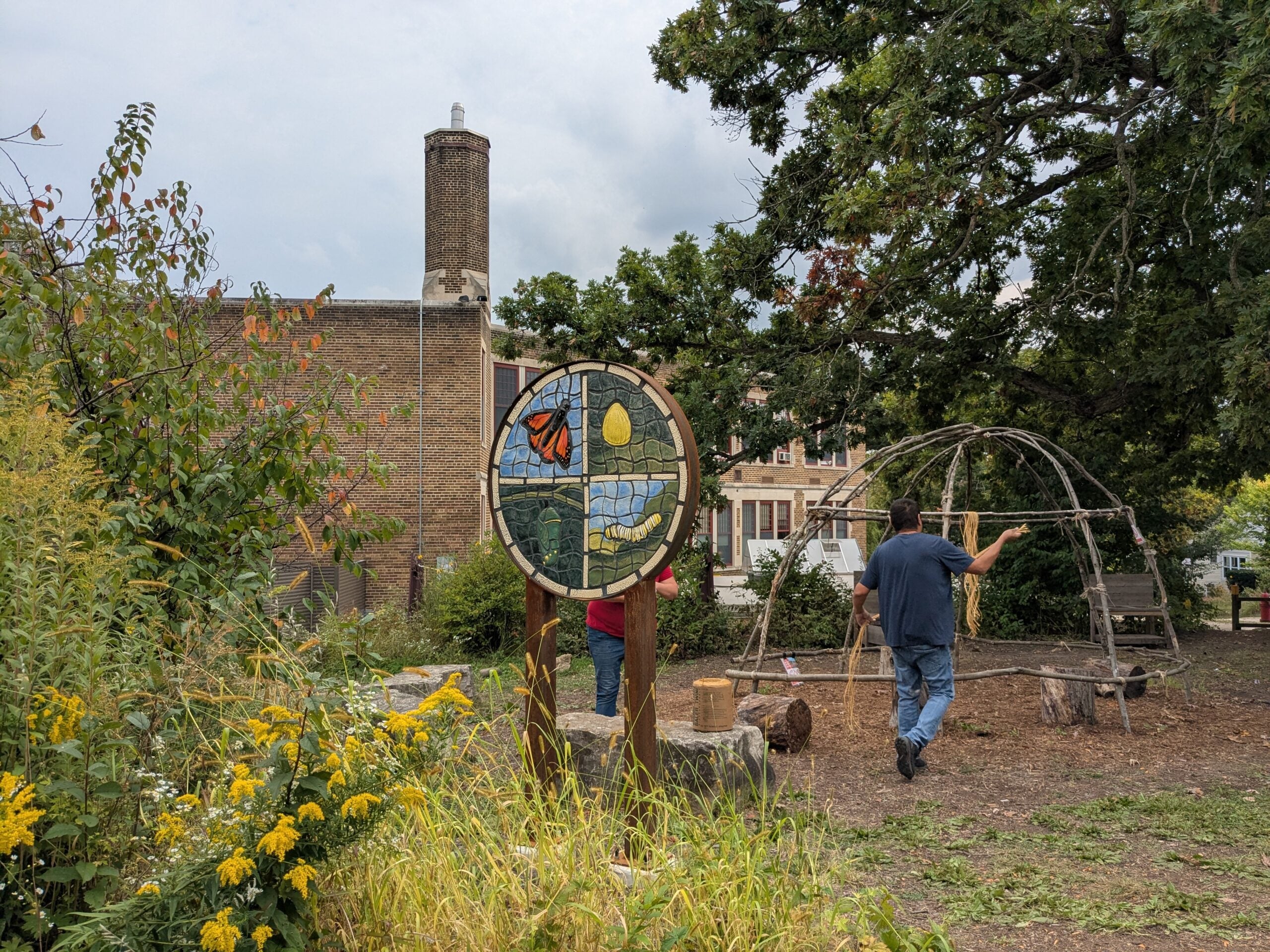
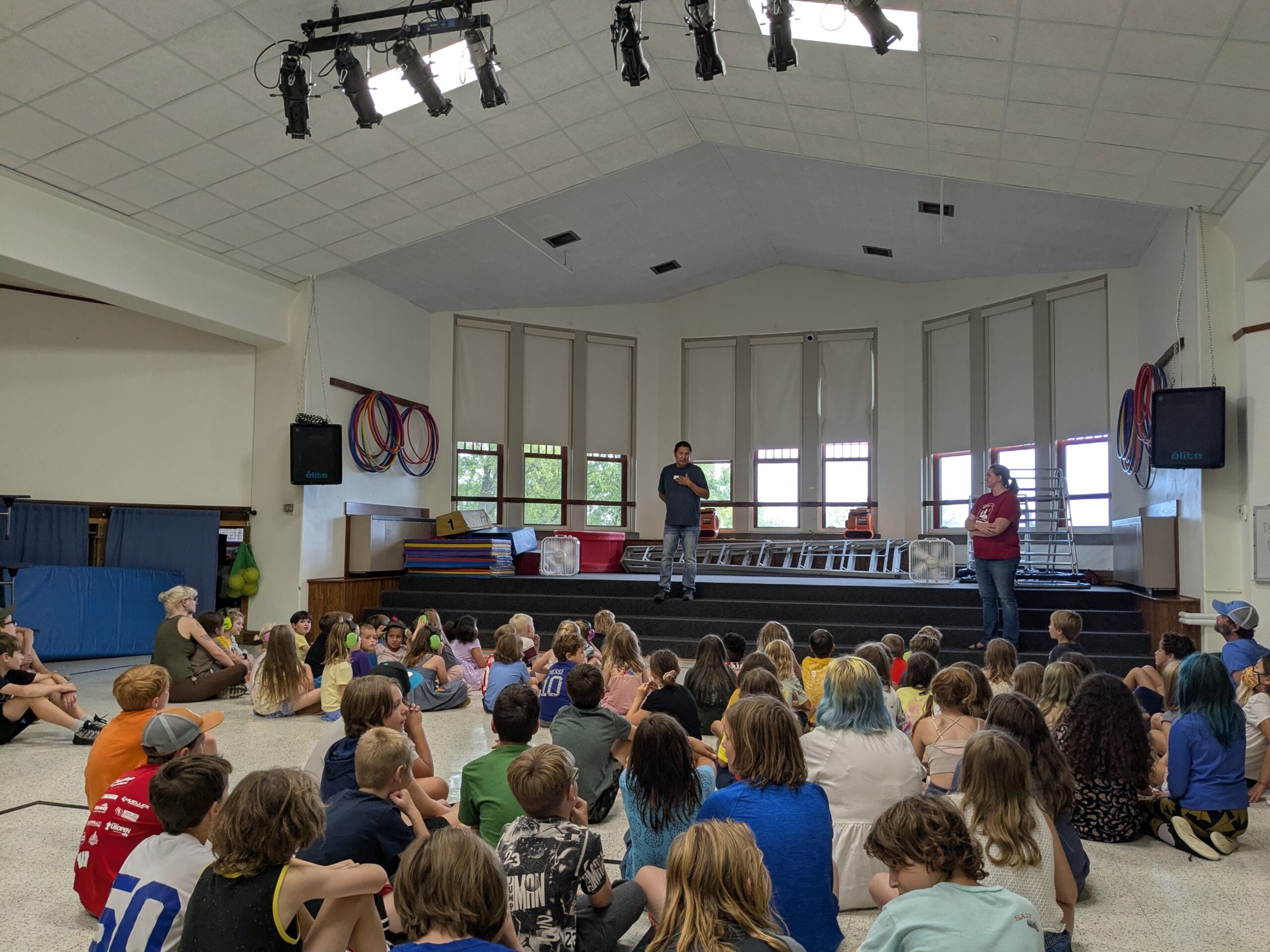
Two years ago, New Rider led the older classes of Wingra students — called Lakers and Skyers — in harvesting tree saplings from tribal lands in Sauk County. He then soaked the saplings in lake water to make them pliable. Meanwhile, the students dug holes for the ciiporoke and helped New Rider build the structure, which now sits near a large tree between the school building and the basketball court.
“It was a really nice teamwork moment for the kids to actually be able to build something. Because I think a lot of times, kids aren’t really honored in the building process,” said Andrea Sherry, who teaches science and technology at Wingra and has been overseeing the ciiporoke project with New Rider.
“Everything, including the tying and the thatching of it, was all done with the kids and the help of Lightning [New Rider],” she added.
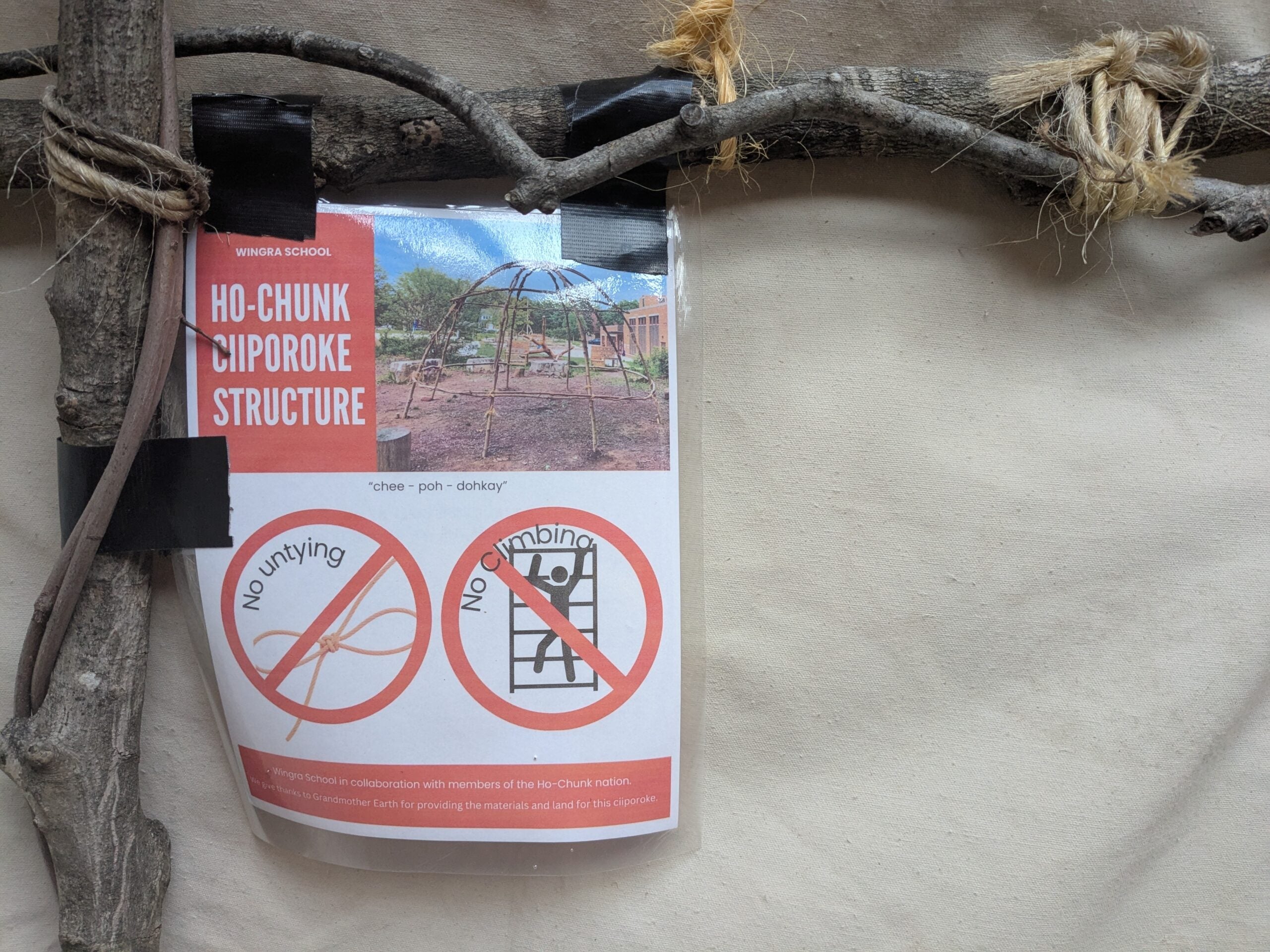
Since then, the ciiporoke has become a beloved playground fixture at Wingra. For the students, it’s a site of play and imagination. Sometimes, the structure serves as a spaceship or a church — Sherry mentioned with a laugh that she’s “attended a few weddings” there. Several students said they use it as a makeshift jail cell for misbehaving classmates or teachers, in an unexpected connection to Ho-Chunk history.
“Back in the old days, they would tie up our enemies and throw them in there,” New Rider said.
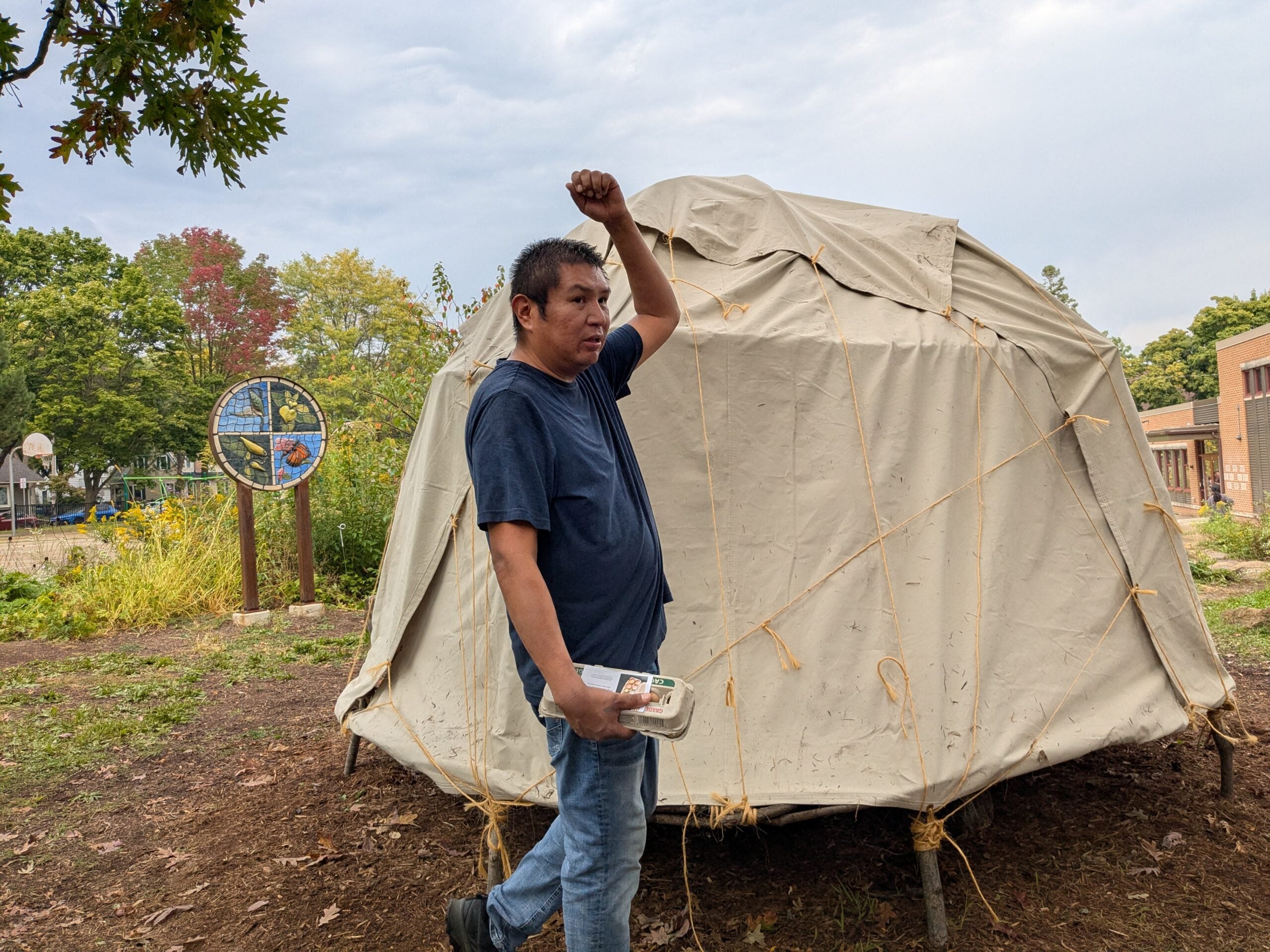
For the first two years, Wingra School’s ciiporoke was an open-air structure. This year, New Rider was back to help the students cover it in canvas, giving it a whole new look and purpose for the next season.
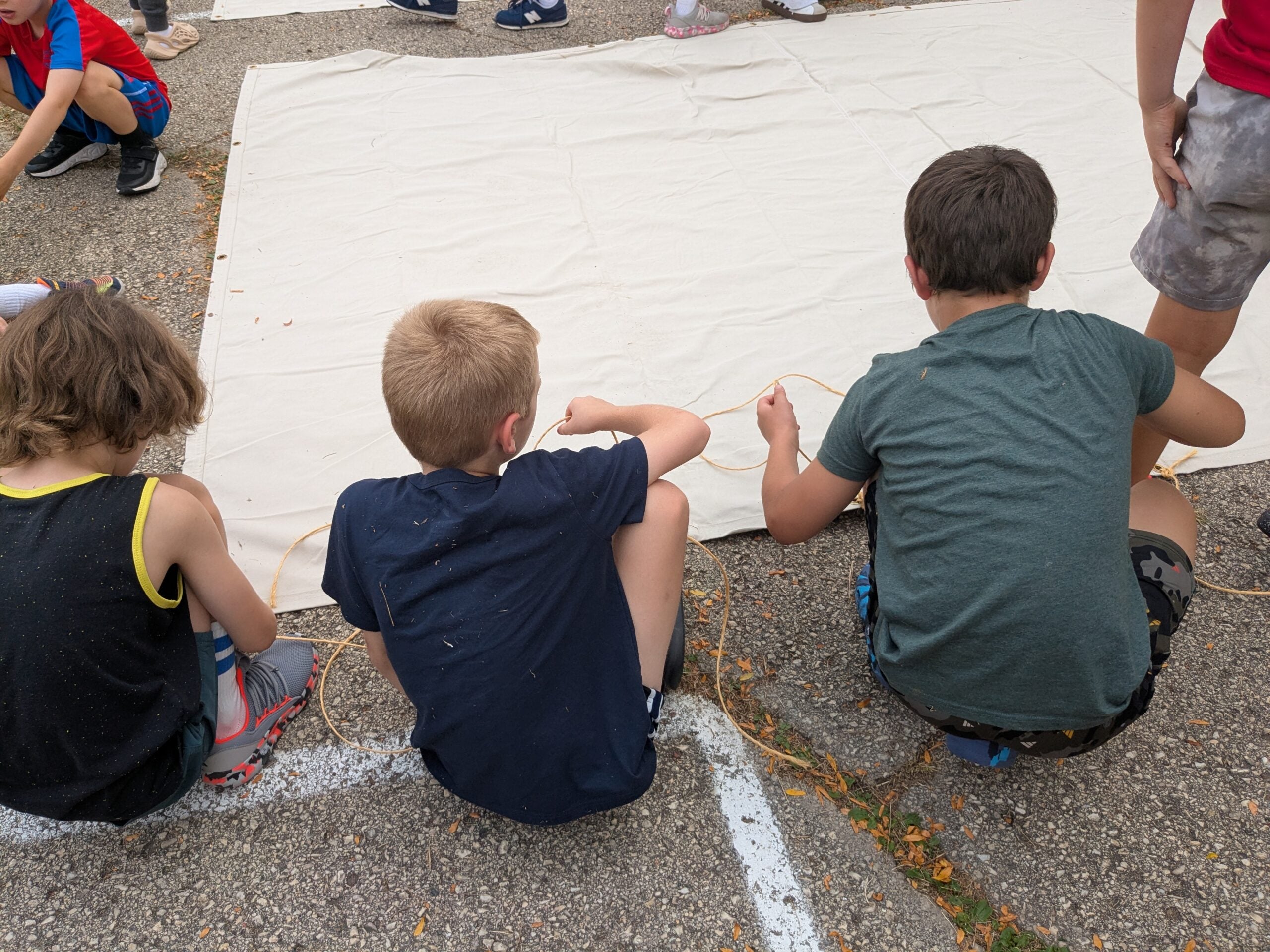
With several large sheets of canvas laid on the ground outside, New Rider showed the Lakers and Skyers how to tie twine onto the canvas, which would be used to secure it onto the ciiporoke frame.
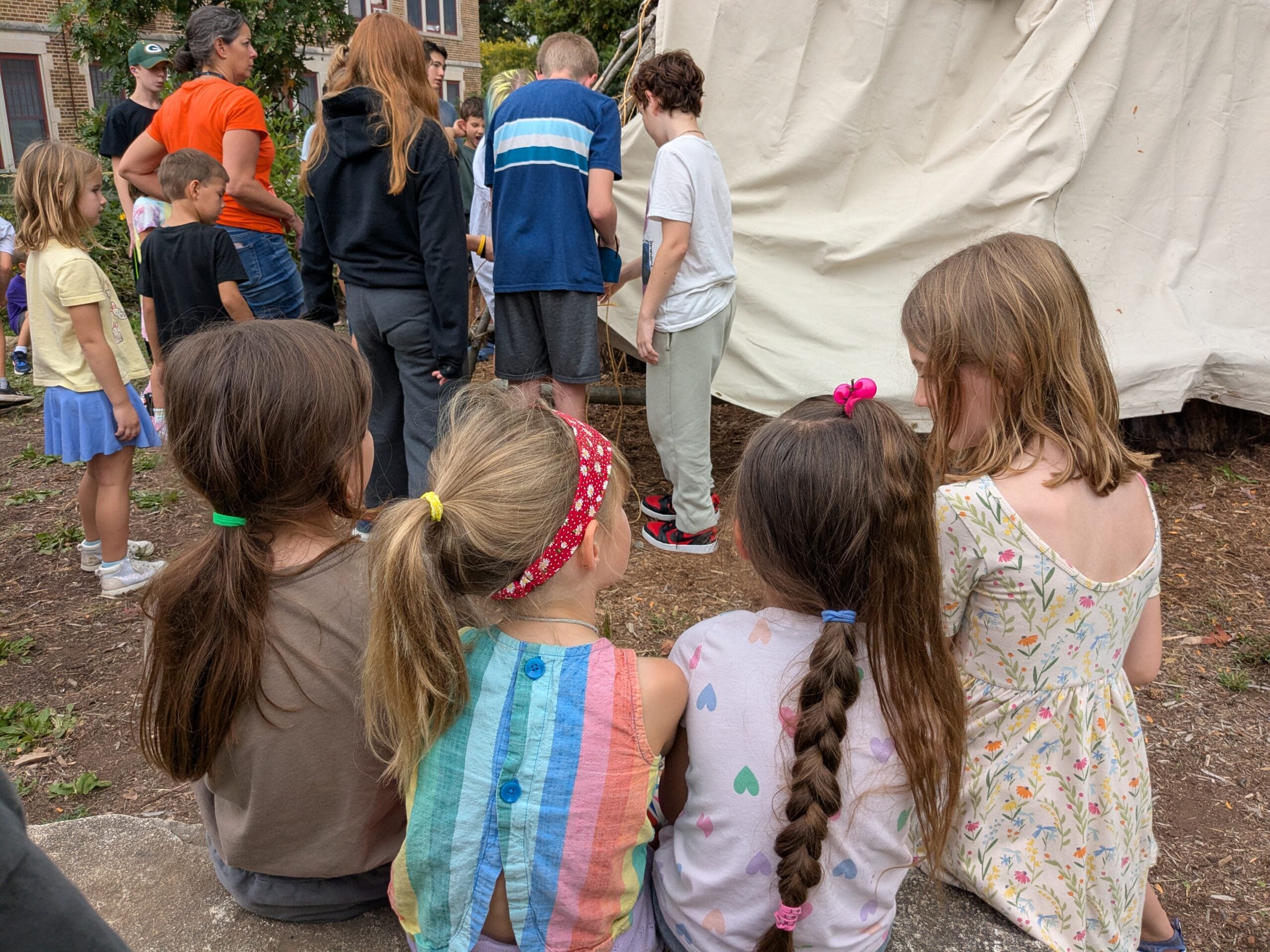
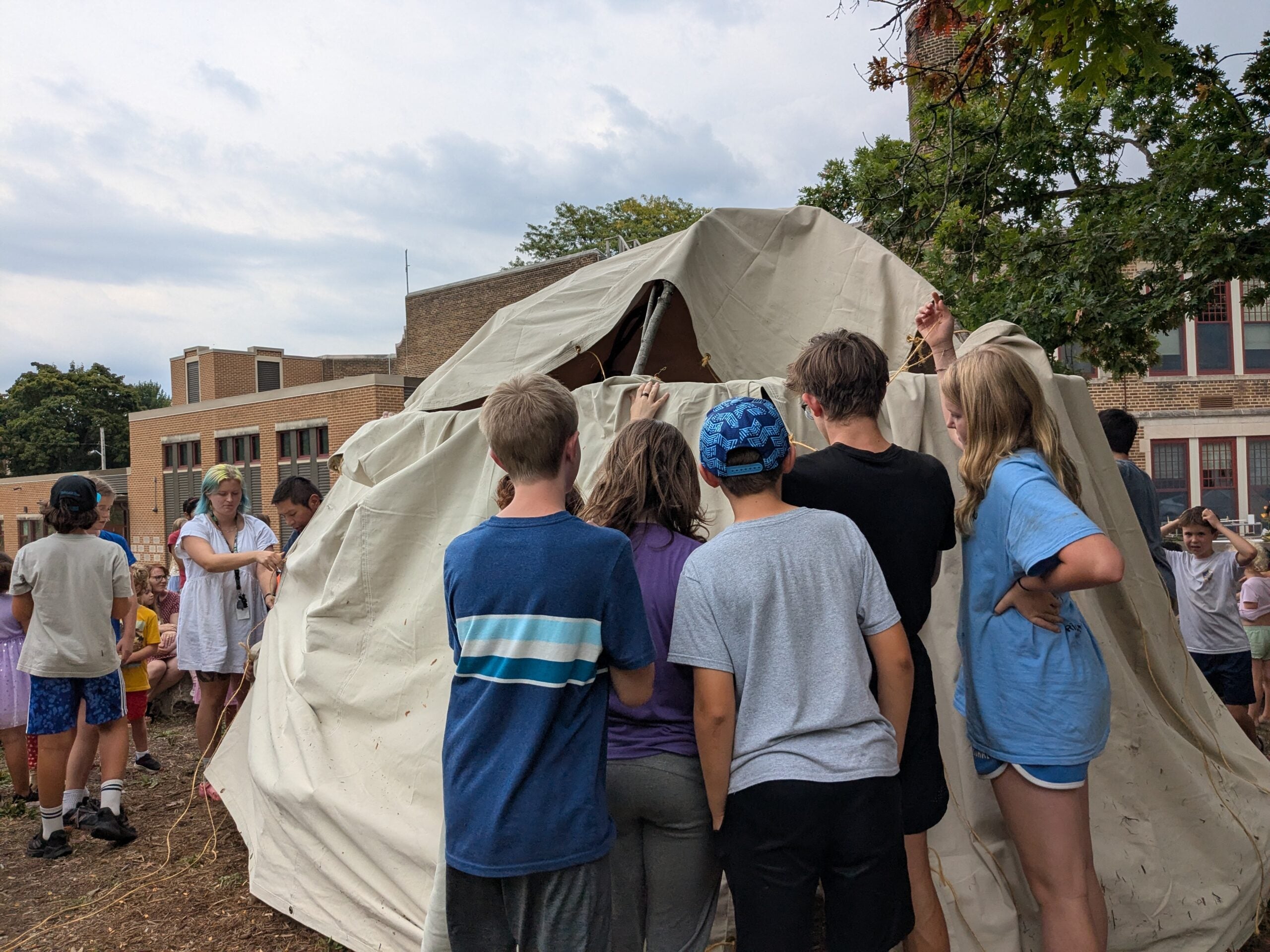
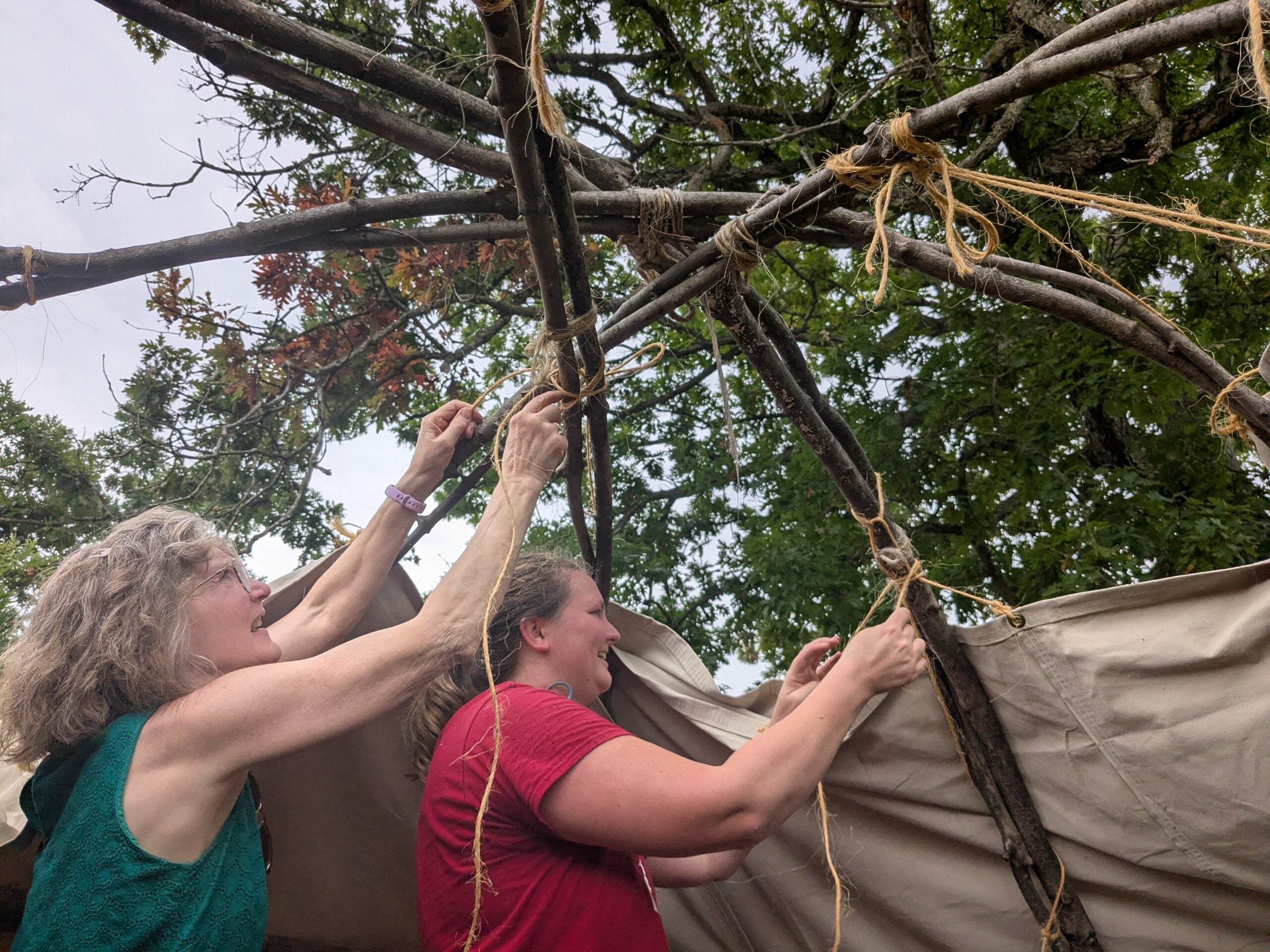
Then, the younger students — the Nesters and Ponders — had the job of carrying the canvas over to the ciiporoke frame, where the older kids and teachers got to work attaching it to the frame. For the final step, the adults reached high to cover the top.
“I like that it’s by this big oak tree,” New Rider said, standing behind the ciiporoke and admiring the day’s work. “This tree’s gotta be, like, 500 years old.”
For New Rider, building this ciiporoke with the students is a way to carry on a long-standing Ho-Chunk tradition with a new generation. Later this school year, he plans to work with students at Tower Rock Elementary School in Prairie du Sac to construct their own ciiporoke.
“These were built to last,” he said.

“Wisconsin Life” is a co-production of Wisconsin Public Radio and PBS Wisconsin. The project celebrates what makes the state unique through the diverse stories of its people, places, history and culture.