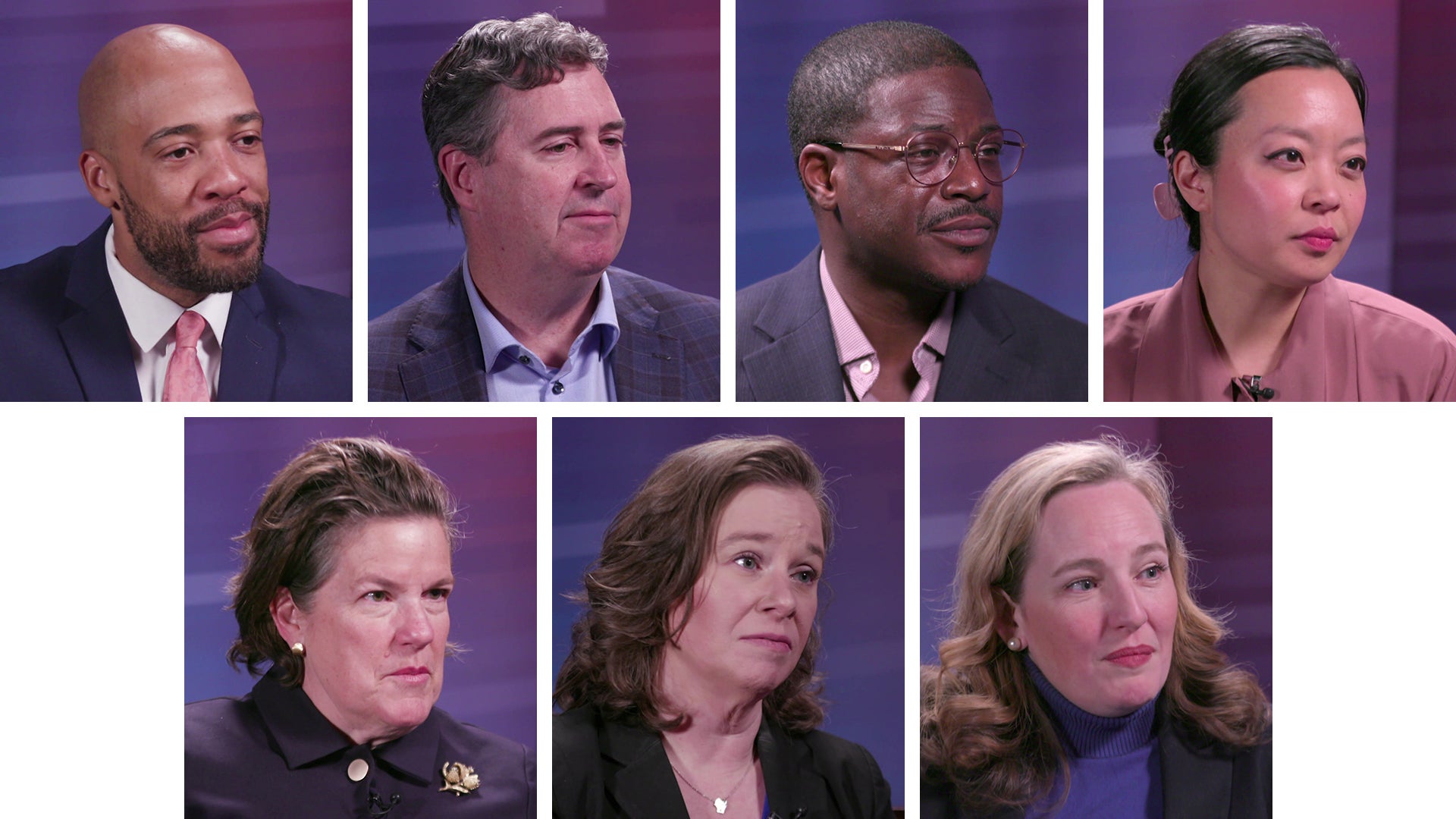
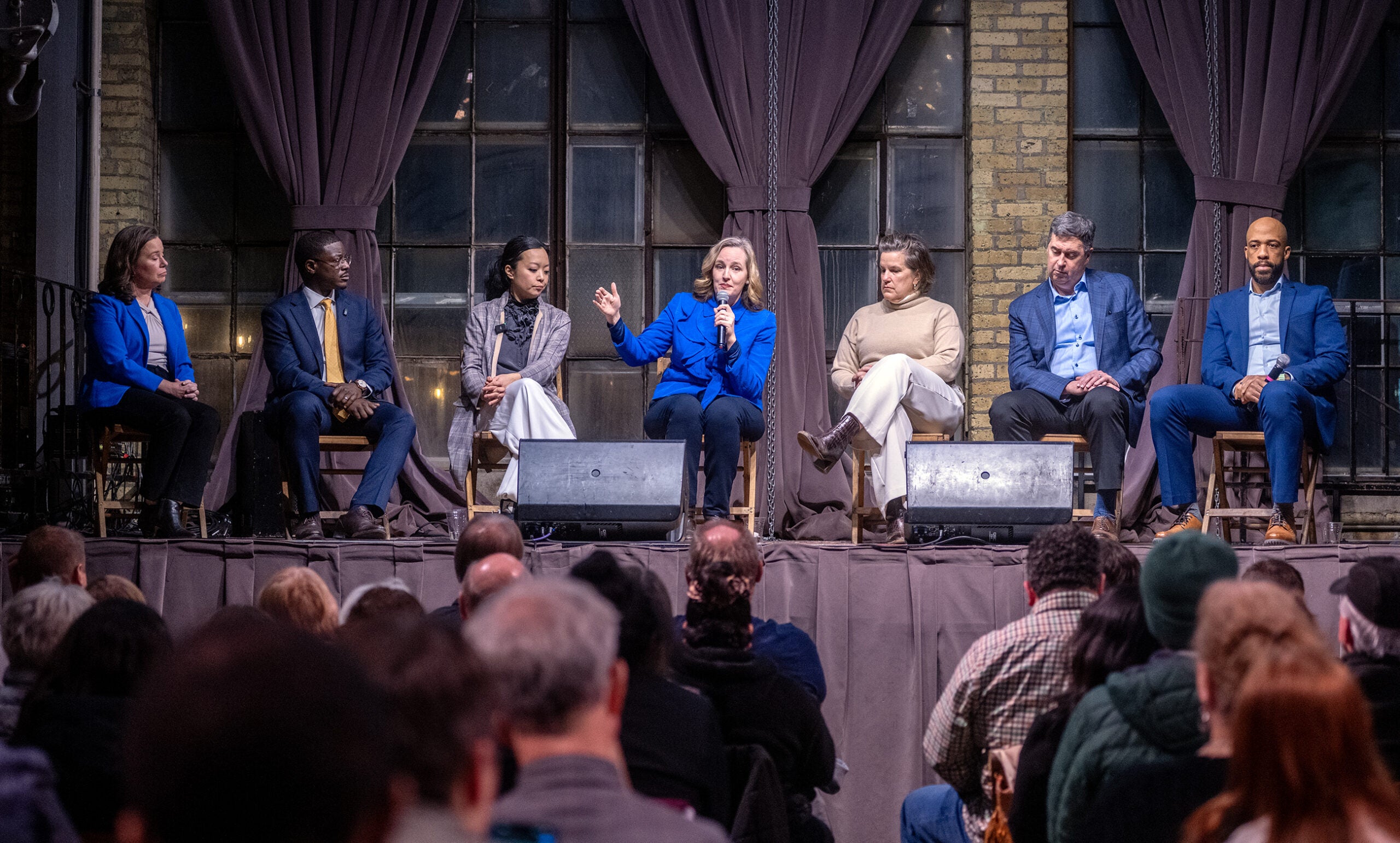
Seven Democratic candidates for Wisconsin governor gathered for a forum in Milwaukee Wednesday evening, the first major event in what is expected to be a heated primary race.
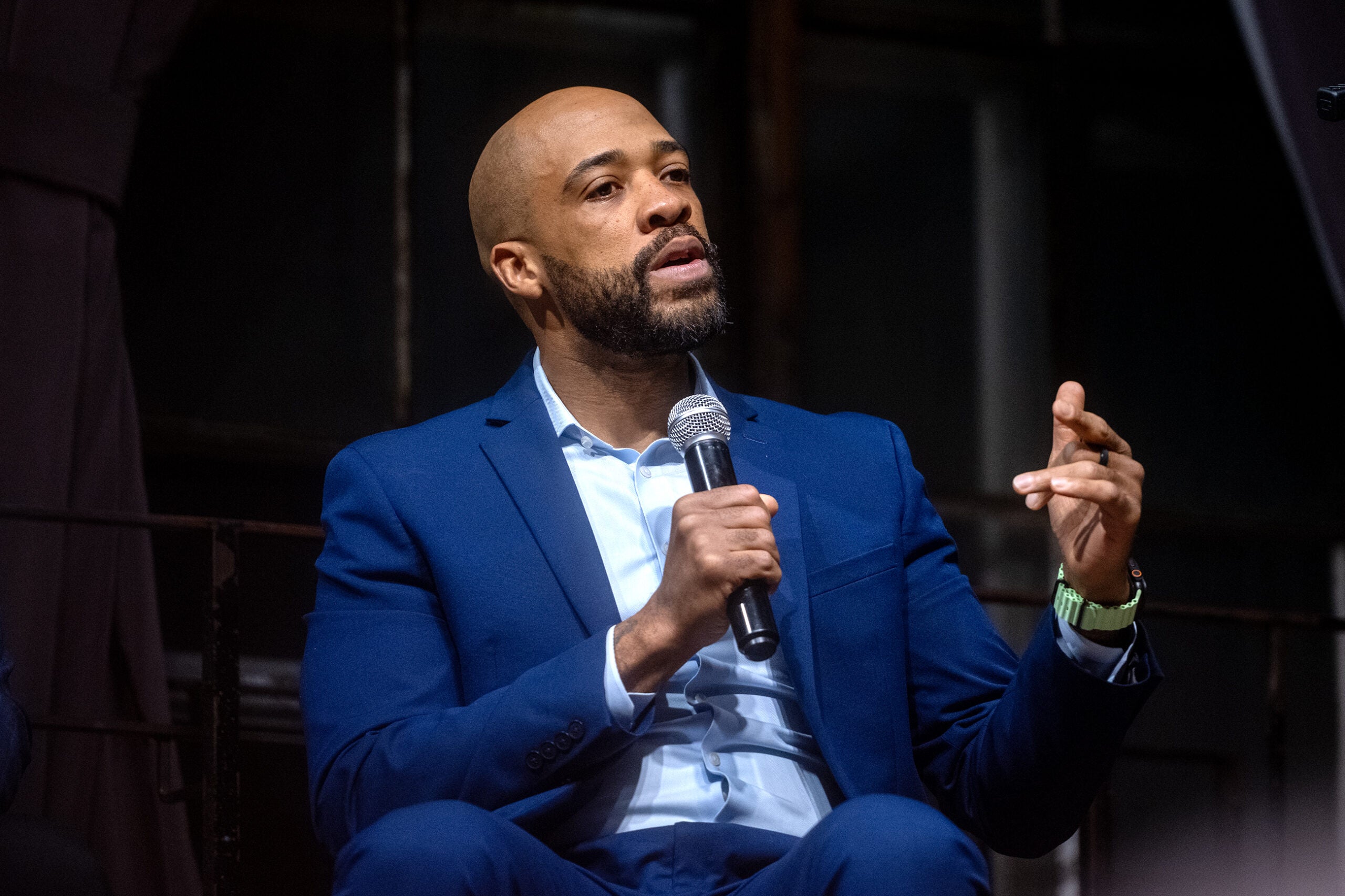
Lt. Gov. Sara Rodriguez, Milwaukee County Executive David Crowley, Madison state Sen. Kelda Roys, Madison state Rep. Francesca Hong, former Wisconsin Economic Development Corp. CEO Missy Hughes, former Lt. Gov. Mandela Barnes and Greater Milwaukee Committee President Joel Brennan gathered before a standing-room-only crowd of a few hundred people on stage at the Cooperage, an event space.
The event comes days after the race’s first major fundraising reports came out, indicating that the crowded primary is attracting big dollars already. Crowley emerged as the top fundraiser, with Rodriguez, Brennan and Barnes each racking up more than a half-million dollars.
News with a little more humanity
WPR’s “Wisconsin Today” newsletter keeps you connected to the state you love without feeling overwhelmed. No paywall. No agenda. No corporate filter.
But experts say the early numbers don’t suggest a clear favorite in the race. While Barnes may enjoy the greatest statewide name recognition after his U.S. Senate race four years ago, most candidates are working to both establish a higher profile and distinguish themselves in the field.
Democrats also have a tightrope to walk as they eye the general election: strengthening their case without weakening the overall Democratic field, as the party eyes “trifecta” control of the state Senate, Assembly and governor’s office.
They face a much less fragmented GOP field, as only two Republicans — U.S. Rep. Tom Tiffany of Minocqua and Washington County Executive Josh Schoemann — are in the race to replace outgoing Gov. Tony Evers.
The tone on Wednesday was collegial, and the candidates largely shared the broad strokes of policy values: expanding Medicaid under the Affordable Care Act, establishing a paid family and medical leave program and ensuring access to child care. They sought to differentiate themselves by pointing to details in their records or within their policy platforms.
Health care, child care and paid family leave
Health care is expected to be a pivotal issue in the 2026 elections, with battles in Congress over the Affordable Care Act spilling into midterm campaign strategies.
Meanwhile, expanding access to child care has been a linchpin of the Evers administration, and he’s also included a paid family and medical leave program in budgets he’s proposed to the Legislature.
Each of these policies was central to the questions posed by small business owners, including a child care provider in Eau Claire and an apparel maker from Milwaukee.
Candidates onstage Wednesday said they would support expanding Medicaid under the ACA, and establish a public option.
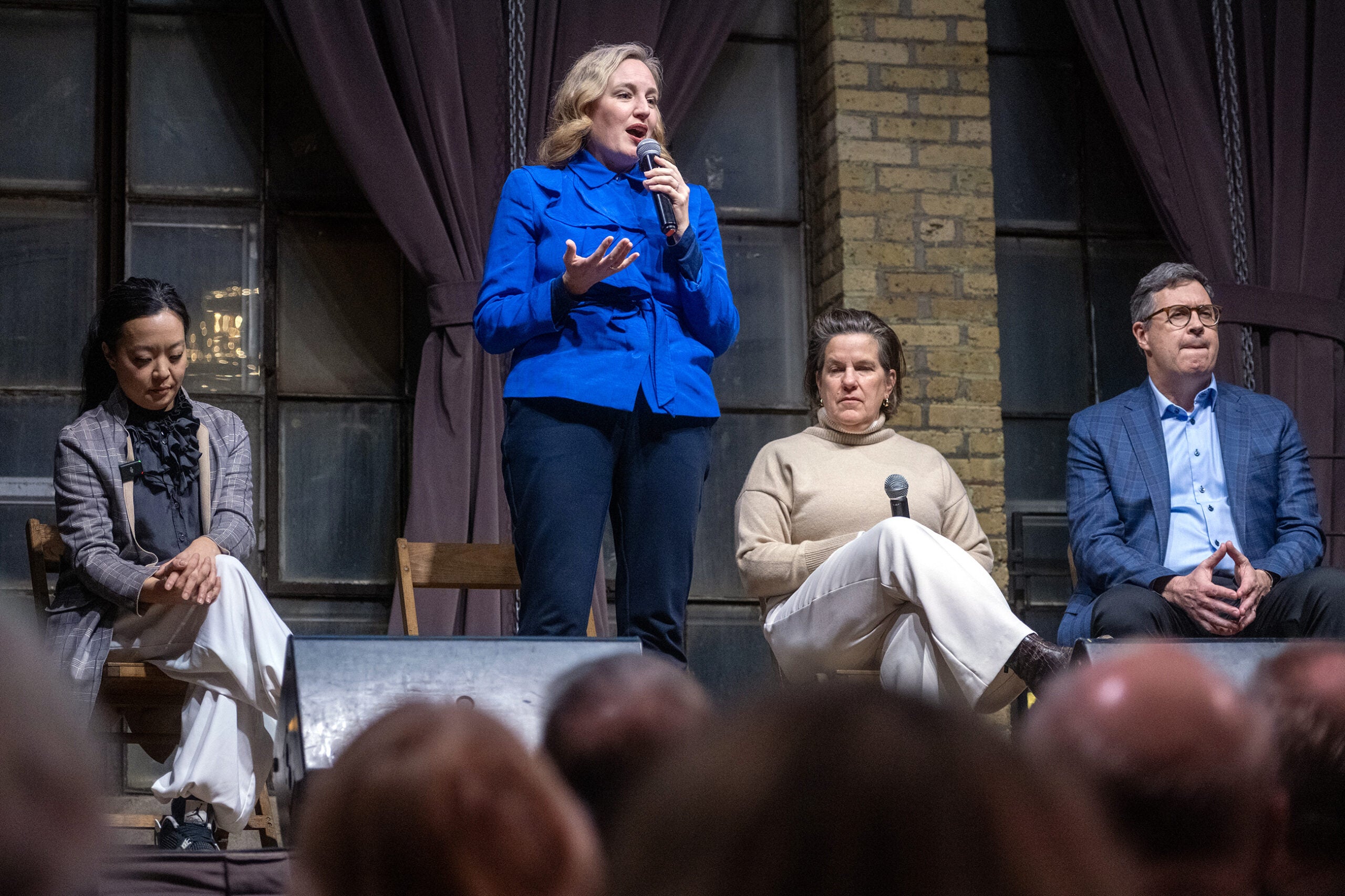
“But that is not enough,” said Roys, the Madison senator. She proposed a state-run health care program modeled after what state officials like herself receive.
“That means less uncompensated care. That means lower premium costs for all the rest of us, and it actually could save taxpayers money, because we are amortizing the cost of administering those plans.”
Rodriguez, a former nurse and health care executive, said she would propose a state-run public option and negotiate with drug companies to cap prices. And Hong, the Madison representative, also called for health care profits to be capped and reinvested back into the health care system.
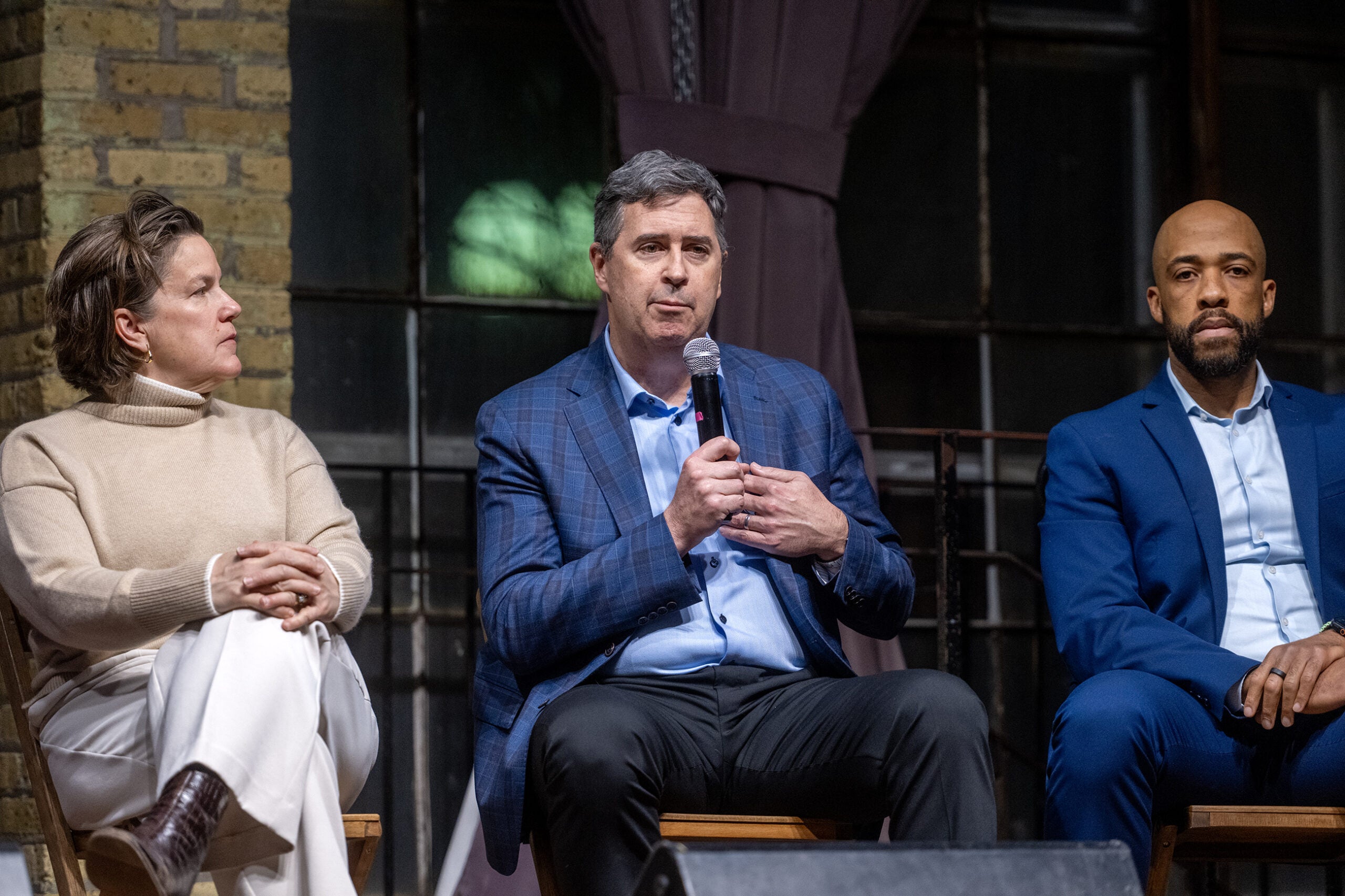
The candidates also framed access to child care as a driver of economic growth. Brennan, who previously served as a top cabinet official in the Evers administration, said the state loses about a billion dollars a year in workforce productivity because people can’t find child care.
“I want to see innovative things around child care,” he said, pointing to funding mechanisms in other states that could fill in anticipated funding gaps as COVID-era programs end. “We don’t need to … recreate the wheel here. We just need to be innovative in the way that we look at things.”
The candidates were also asked about establishing a paid family and medical leave program. While many were short on details, they said they backed the concept, and Crowley pointed to a 2022 policy he signed for county employees.
“We absolutely need this because when we are able to have healthier families, healthier kids, that makes our state that much stronger, that much healthier moving forward,” he said, calling for a blue ribbon commission to study how the state surplus can be spent on progressive programs, public schools and local communities in a sustainable way.
Tax policy
Dan Jacobs, a celebrity Milwaukee chef, asked one of the more technical questions of the night: how the candidates would reform a tax credit for manufacturing and agriculture.
That program, a Republican plan that emerged from the administration of former GOP Gov. Scott Walker, was touted as an incentive for job creation, but Democrats have long criticized the cost of it, and the high incomes of the average recipient.
Hong, who ran a Madison restaurant for seven years, said tax incentives should be reinvested.
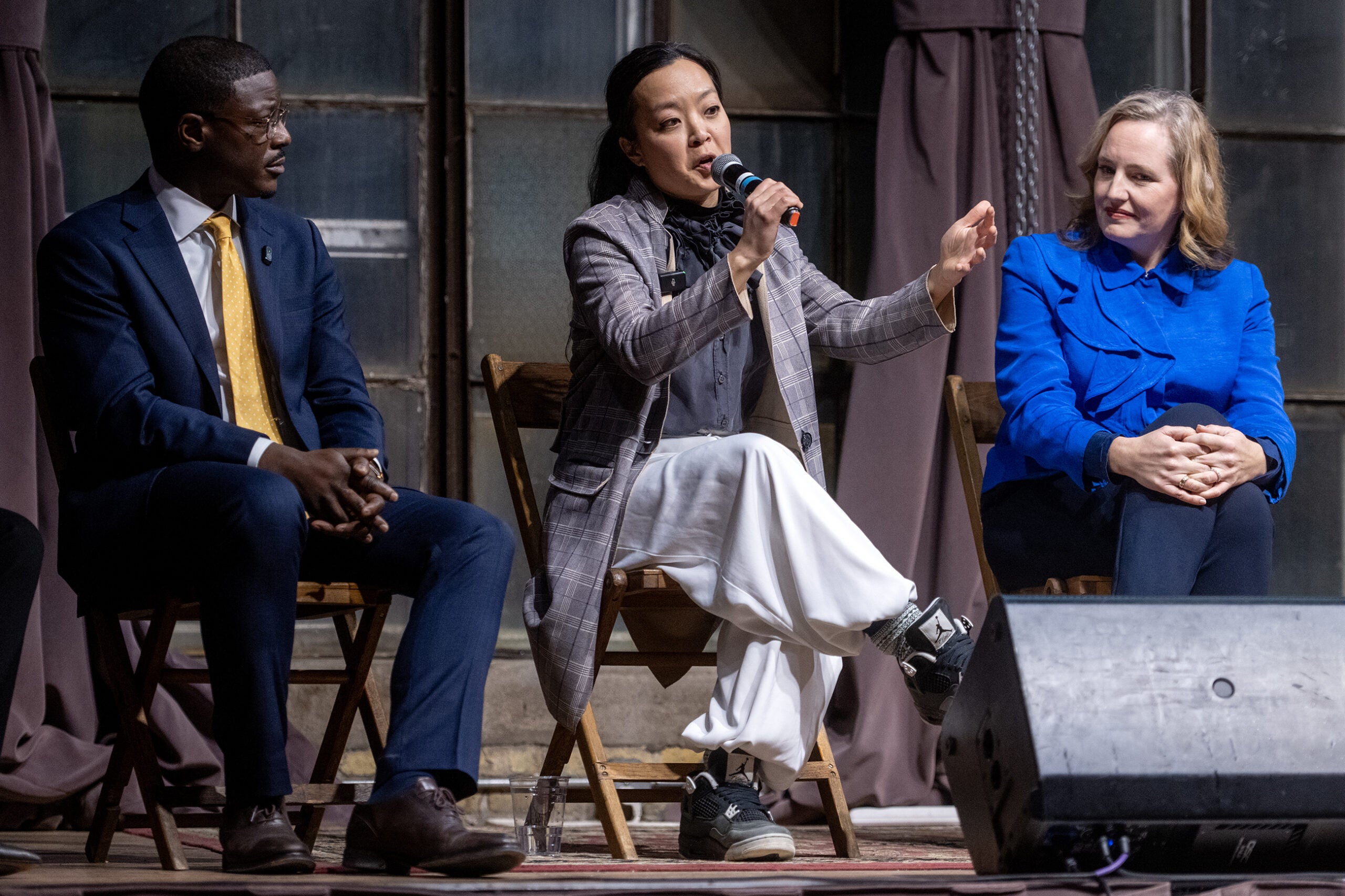
“Look, I’m okay with having corporations or small businesses get a tax credit, but those are our dollars that they are using, so they need to be invested back into the community,” she said. “When we move towards actually having public dollars stay in the state for the public, it ends up helping our small businesses.”
In one of the bigger applause lines of the night, Crowley called for an end to other Walker-era programs.
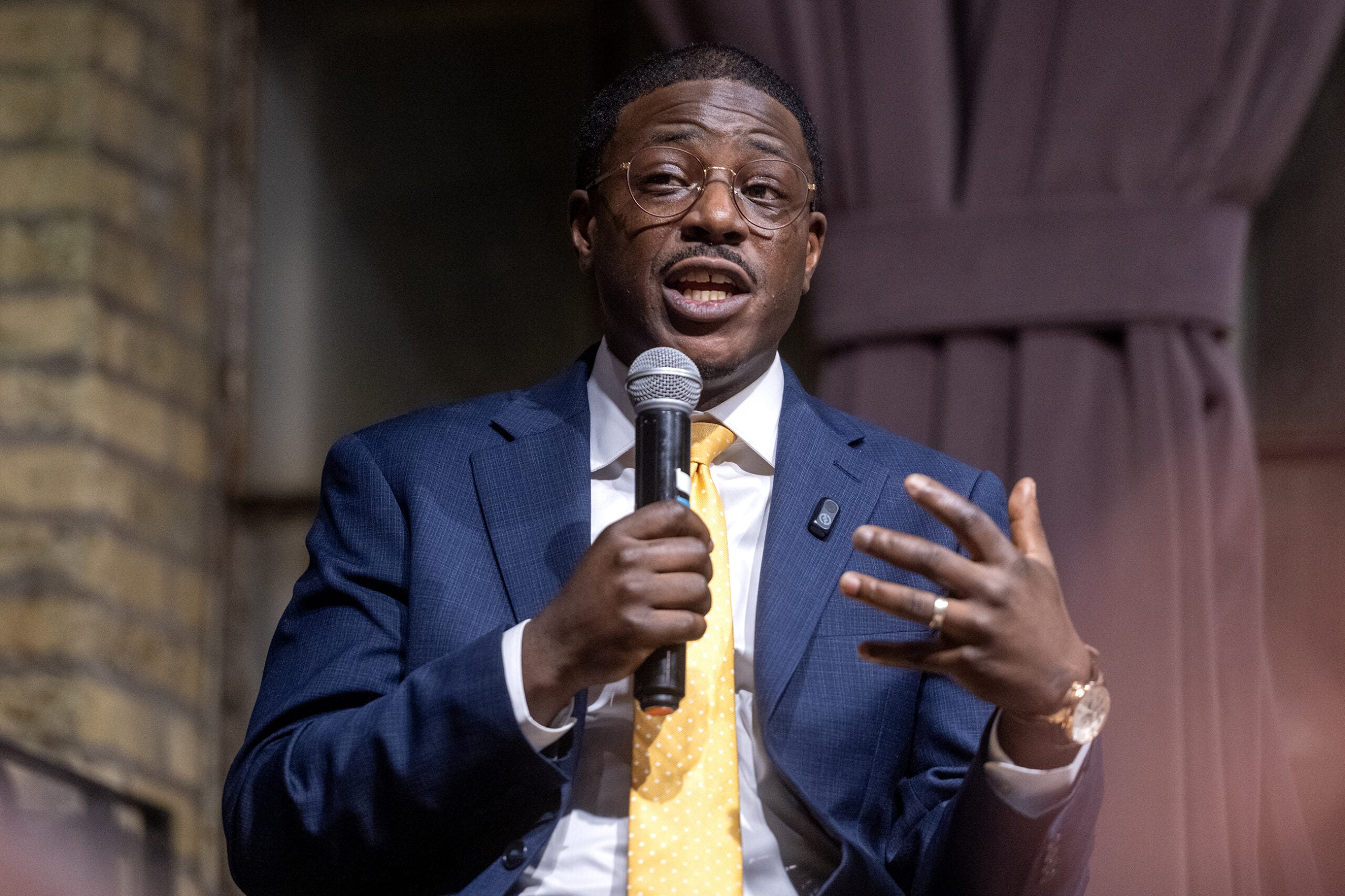
When the candidates were asked whether they would support increasing taxes on the wealthiest Wisconsinites, Hughes said she supported “growing an economy” across the board.
“We need to build a sustaining economy. It could mean that we increase taxes on the most wealthy. But in addition to that, we need to be thinking about creating a system that works election after election and administration after administration,” she said. “The zigging and zagging that we are witnessing as citizens of Wisconsin, as citizens of the United States, is not sustainable.”
Immigration enforcement
With such a crowded field, the event split up most of the questions, so that a handful answered each. The one question that was addressed to all seven was about immigration enforcement, and how the candidates would respond if a federal crackdown similar to Minnesota arrives in Wisconsin communities.
Across the board, each candidate denounced the federal immigration crackdown taking place in cities like Minneapolis and Chicago.
Rodriguez said the issue was personal for her, as the wife of a naturalized citizen from Mexico, and pointed to her recently released call to ban immigration arrests in certain spaces, and require agents from Immigration and Customs Enforcement, or ICE, to wear body cameras.
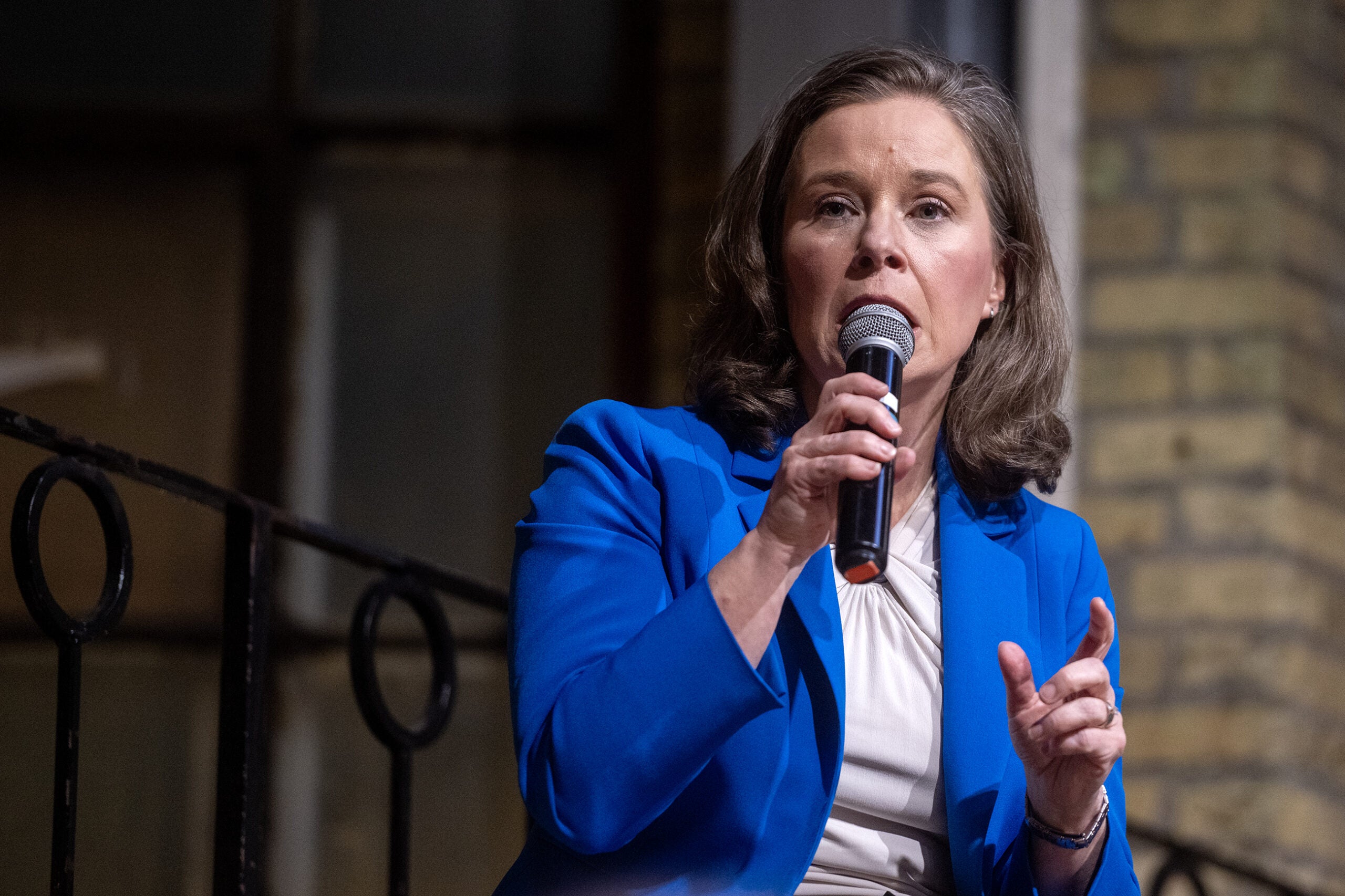
“I have children, and we speak Spanish outside of the house. I am one of those targets,” Rodriguez said. “And so I wanted to make sure that people knew I stand with immigrants. I stand with Wisconsinites, and we are not going to take this from those federal agents.”
Hughes called for local communities to follow the lead of immigrant communities when formulating plans for how to respond. Crowley said that communities can be tough on crime and still “protect everybody and make sure that we are a safe community.”
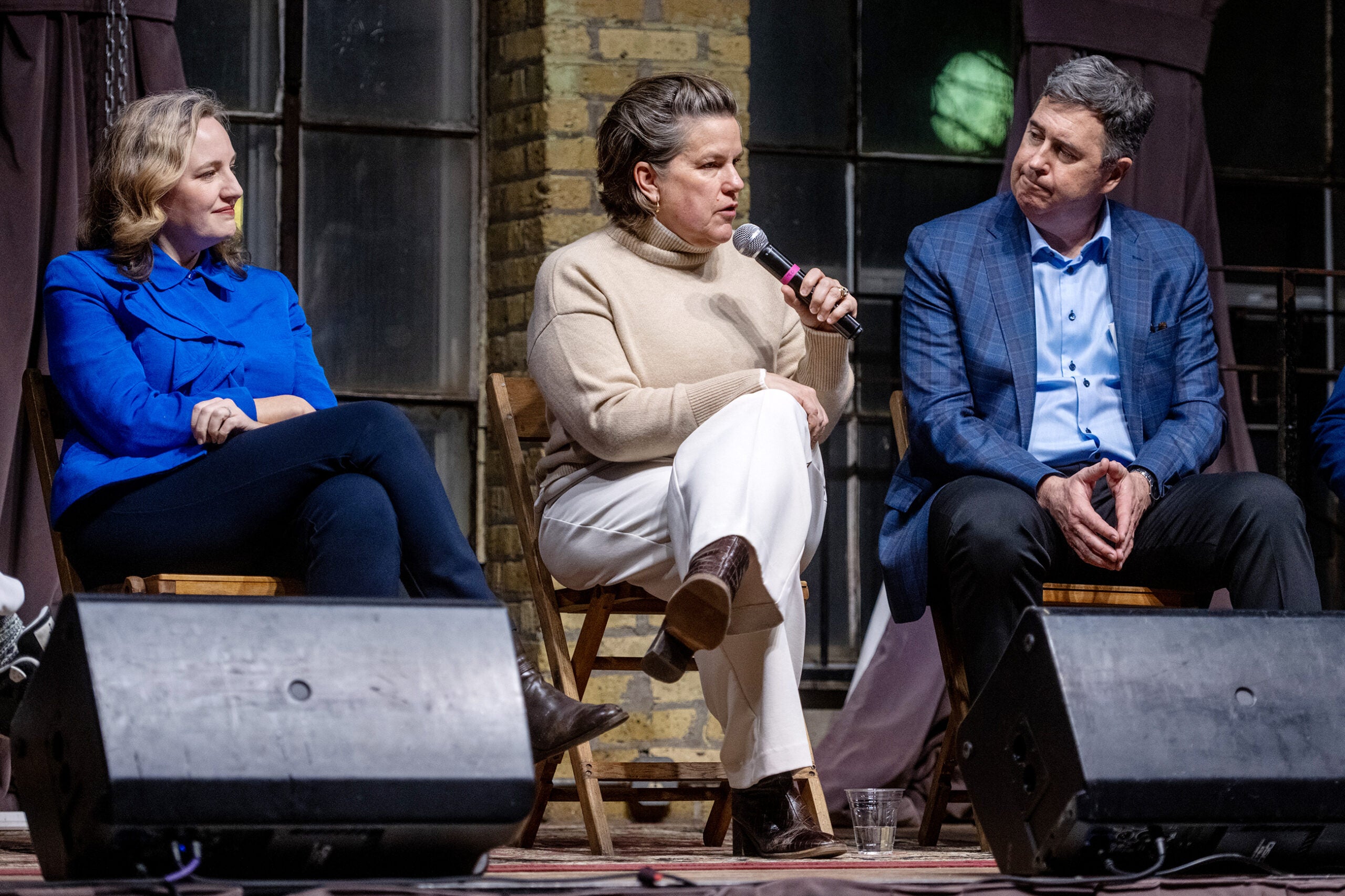
“The federal government, this is an 800 pound gorilla that’s looking to descend into communities and instill fear and intimidation, but the only way that we can push back is by organizing,” he said.
Hong called ICE a “rogue agency.” Roys called it “a violent, unaccountable, lawless paramilitary force.” Barnes said a Democratic governor would need to directly face off against the Trump administration.
“We need a governor who’s going to stand up, a governor who’s going to use every tool at his disposal —– or their disposal,” he said. “We need not just full leadership, we need change, somebody who’s going to stand up and be strong in this.”
The event was hosted by Main Street Action, a small business advocacy group. It was moderated by Dan Shafer, founder of the Recombobulation Area, a publication under the helm of the liberal Wisconsin radio network Civic Media.

Wisconsin Public Radio, © Copyright 2026, Board of Regents of the University of Wisconsin System and Wisconsin Educational Communications Board.