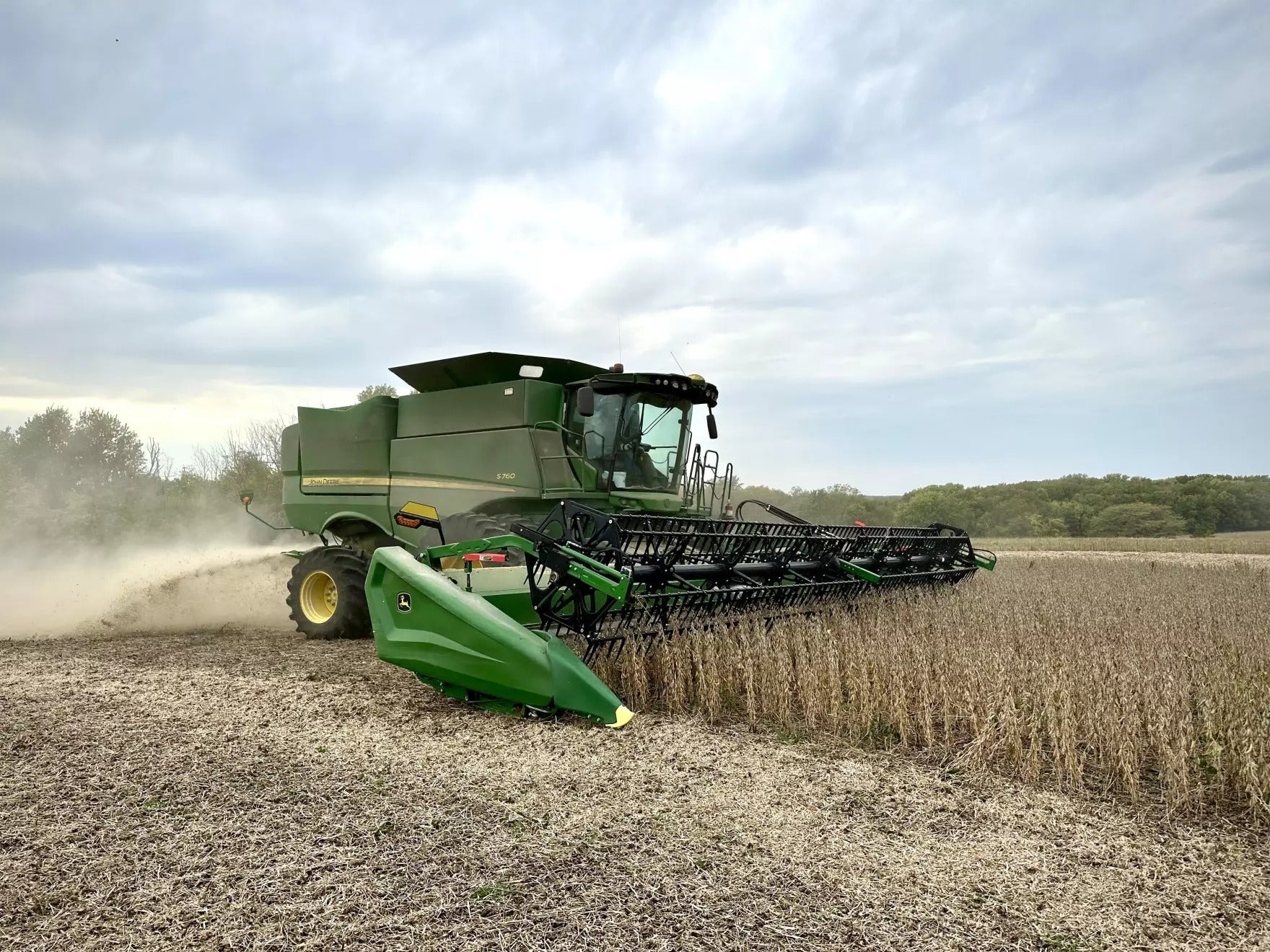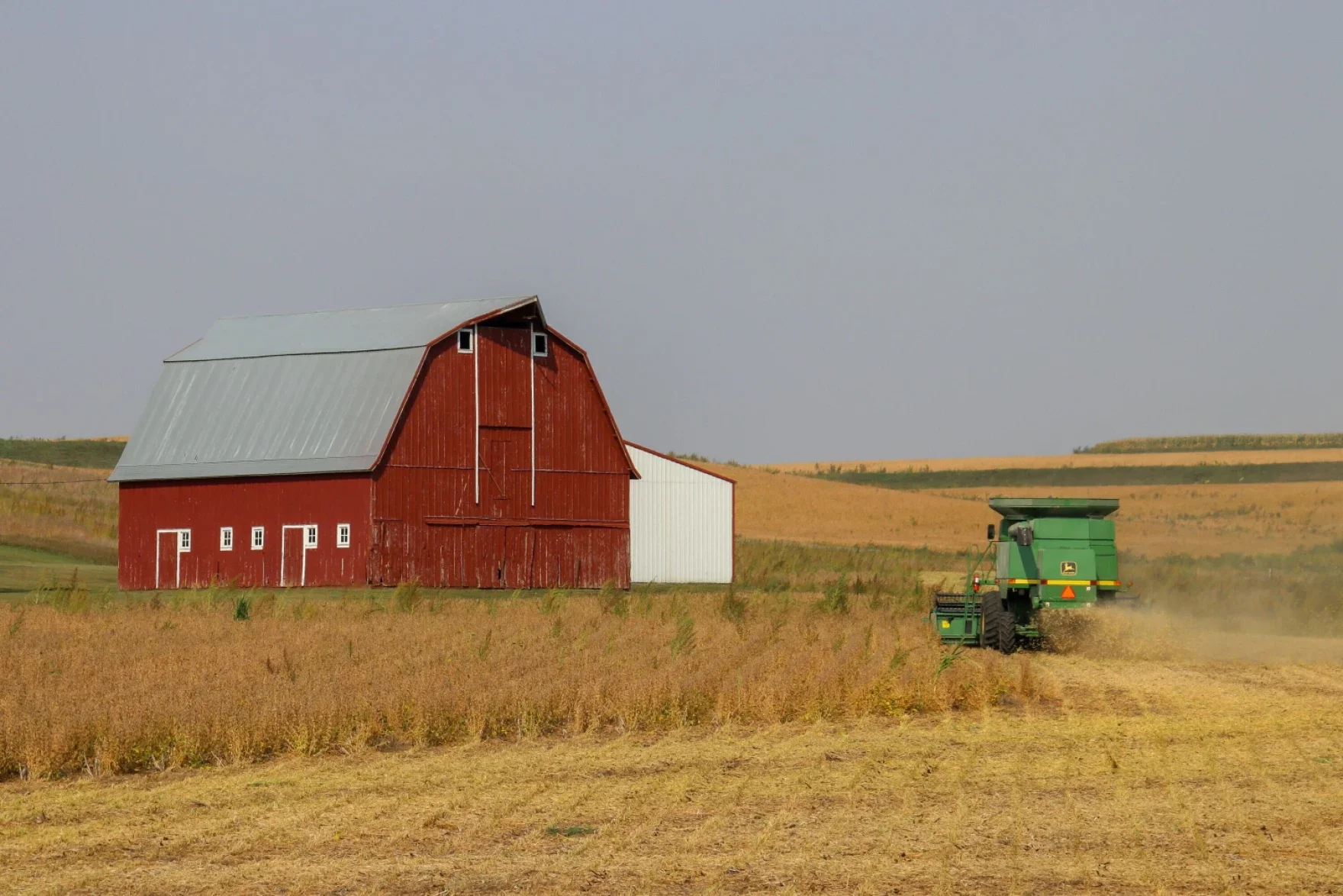
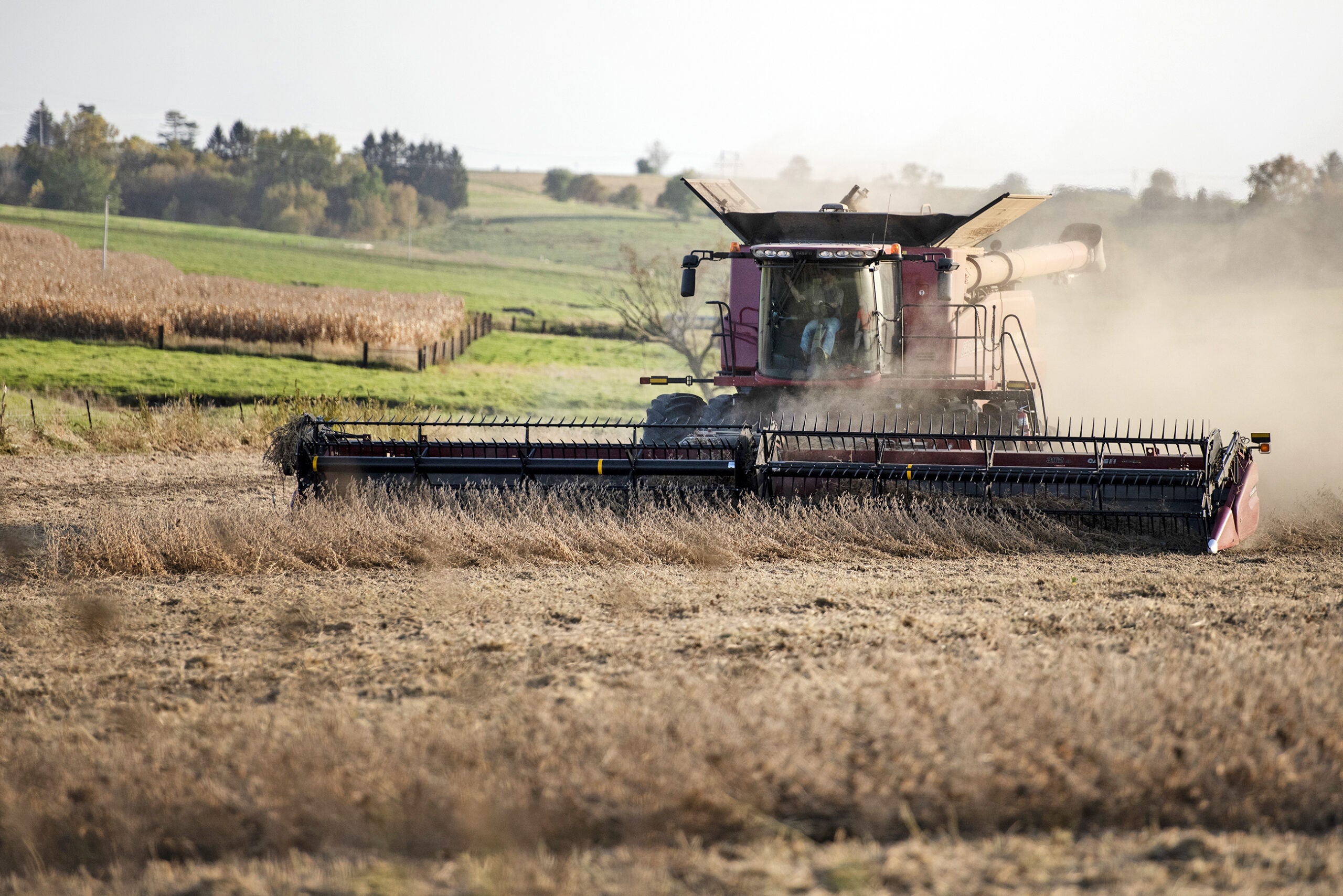
Wisconsin farmers are cautiously optimistic that a trade deal between the Trump administration and China will help give soybean growers more market certainty moving forward.
The federal government reached a trade deal with China last week. Under the agreement, the White House says China will purchase at least 12 million metric tons of U.S. soybeans in the last two months of this year and purchase 25 million metric tons of soybeans annually over the next three years.
China, which purchased about half of all U.S. soybean exports last year, stopped buying U.S. soybeans in May in retaliation for President Donald Trump’s tariffs.
News with a little more humanity
WPR’s “Wisconsin Today” newsletter keeps you connected to the state you love without feeling overwhelmed. No paywall. No agenda. No corporate filter.
“Anytime you can reengage with a customer that hasn’t been a customer for the past year, it’s a good sign,” said Matt Rehberg, vice president of the Wisconsin Soybean Association and a first-generation farmer in southern Wisconsin.
Rehberg, who grows soybeans, corn and wheat, said he’s recently wrapped up his harvest, so the trade deal is more about giving farmers some sense of certainty for the future.
“We’re looking at these deals as future deals,” he said. “Our crops (have) basically been marketed at this point.”
Scott Simons is a farmer who grows soybeans, corn and hay, and raises beef. He also serves as the president of the Walworth County Farm Bureau. He said he’s a big Trump supporter. While Simons said the deal with China is “great” news, it comes “a little too late.”
“I wish they’d have done it a month ago,” he said. “A lot of guys sold already because they thought the price was going to go lower.”
Even with the deal, soybean exports to China are expected to come in below 20 million metric tons, according to a report from the Center for Strategic and International Studies, a think tank that analyzes global issues. From 2020 through 2024, the think tank says the U.S. sold an average of more than 28 million metric tons of soybeans to China annually.
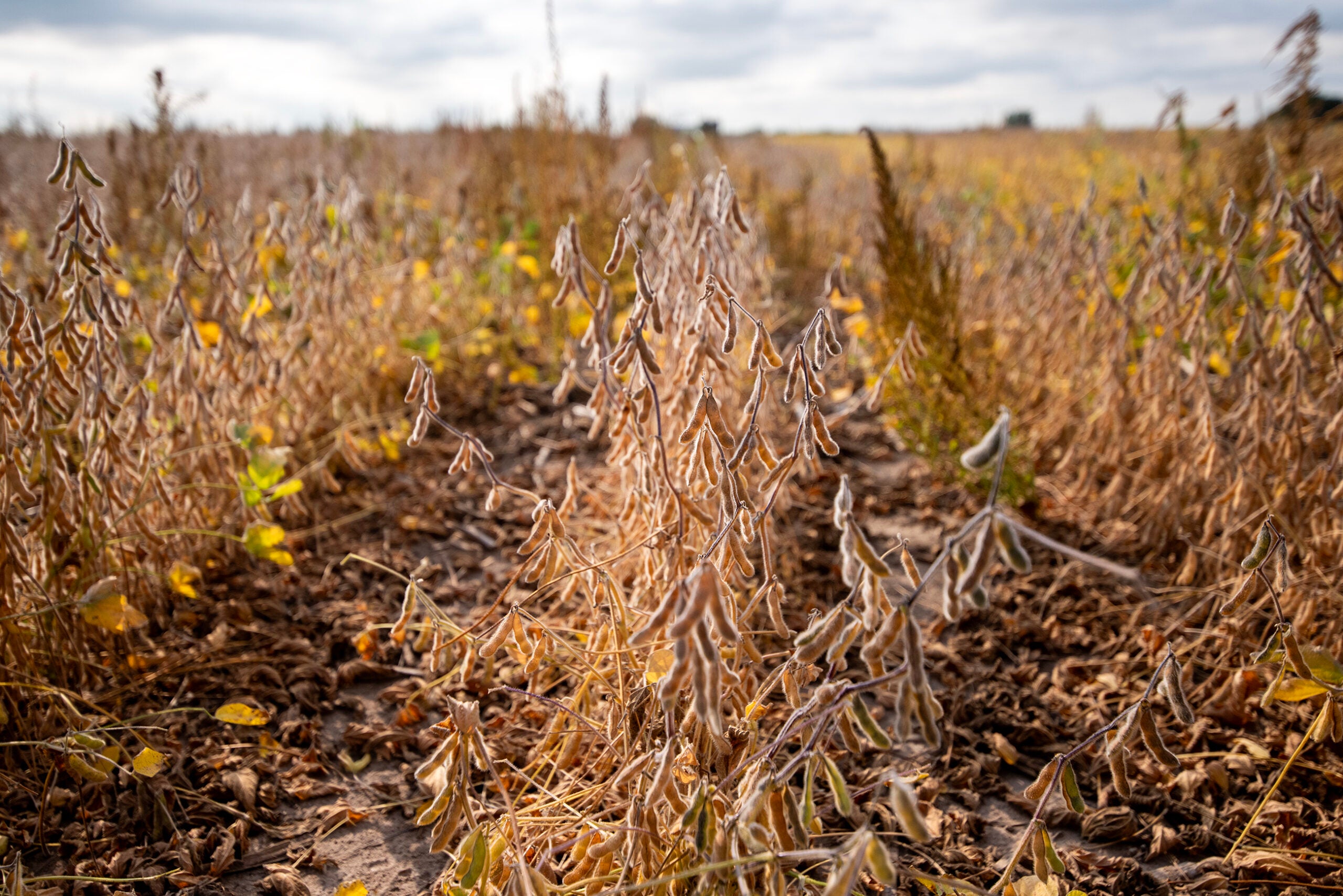
Darin Von Ruden, president of the Wisconsin Farmers Union, said the trade deal isn’t going to make farmers whole after losing the Chinese market for much of the year. He also said the deal doesn’t do enough to grow the Chinese market because the 25 million tons China agreed to buy in each of the next three years comes in lower than their five year average.
“If their population was shrinking, then you certainly understand why they don’t need as many soybeans,” Von Ruden said. “Their population continues to grow, and so they will be in need of more soybeans. And so who’s filling that market? It’s South America that’s filling that market.”
Beyond trade tensions, farmers are also facing stubbornly high input costs and low crop prices, which have made 2025 a tough year for farm finances.
“Our inputs keep going up, and the price of the crop either stays flat or goes down,” Simons said.
There had been talk of a federal bailout to support farmers impacted by Trump’s trade war, but it’s unclear when such a plan would roll out.
Steven Deller, a professor of agricultural and applied economics at the University of Wisconsin-Madison, said farmers will likely need some sort of additional federal stimulus this year, even with the deal with China.
“They will need help to make the industry whole,” he said. “Whether it’s Congress that’s going to act and do something, or whether Trump’s going to do it on his own, it’s not clear.”
Deller also said the trade deal helps provide some certainty for farmers, but it’s still a tenuous situation.
He said there’s always the possibility that China could make an announcement that upsets Trump and results in trade tensions reigniting.
“Then all bets are off, and that’s the uncertainty,” he said. “There’s no master game plan that’s being laid out.”

Wisconsin Public Radio, © Copyright 2026, Board of Regents of the University of Wisconsin System and Wisconsin Educational Communications Board.