When Sun Prairie native Sophie McIntosh, a playwright who now lives in New York, took her big city colleagues to a hunting store in Dane County to get hands-on experience for an upcoming play, they felt like they were visiting another country.
McIntosh remembers their reaction to seeing gun displays in a store.
“I took them into a hunting store, I took them into a Cabela’s. They were like, ‘What on Earth is this?’ They couldn’t believe it, like the gun library.” McIntosh said with a laugh. “It’s just very different from the East Coast.”
News with a little more humanity
WPR’s “Wisconsin Today” newsletter keeps you connected to the state you love without feeling overwhelmed. No paywall. No agenda. No corporate filter.
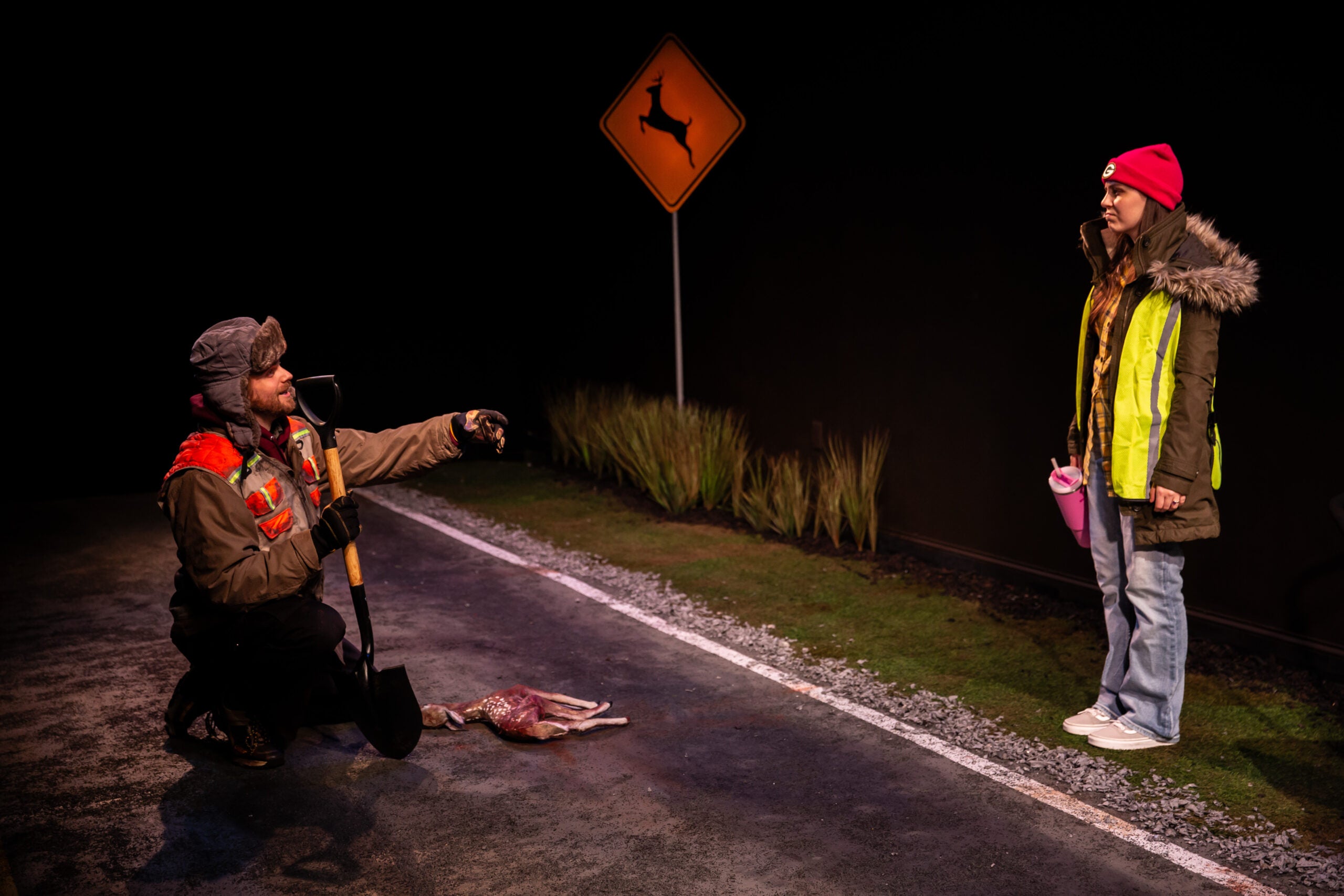
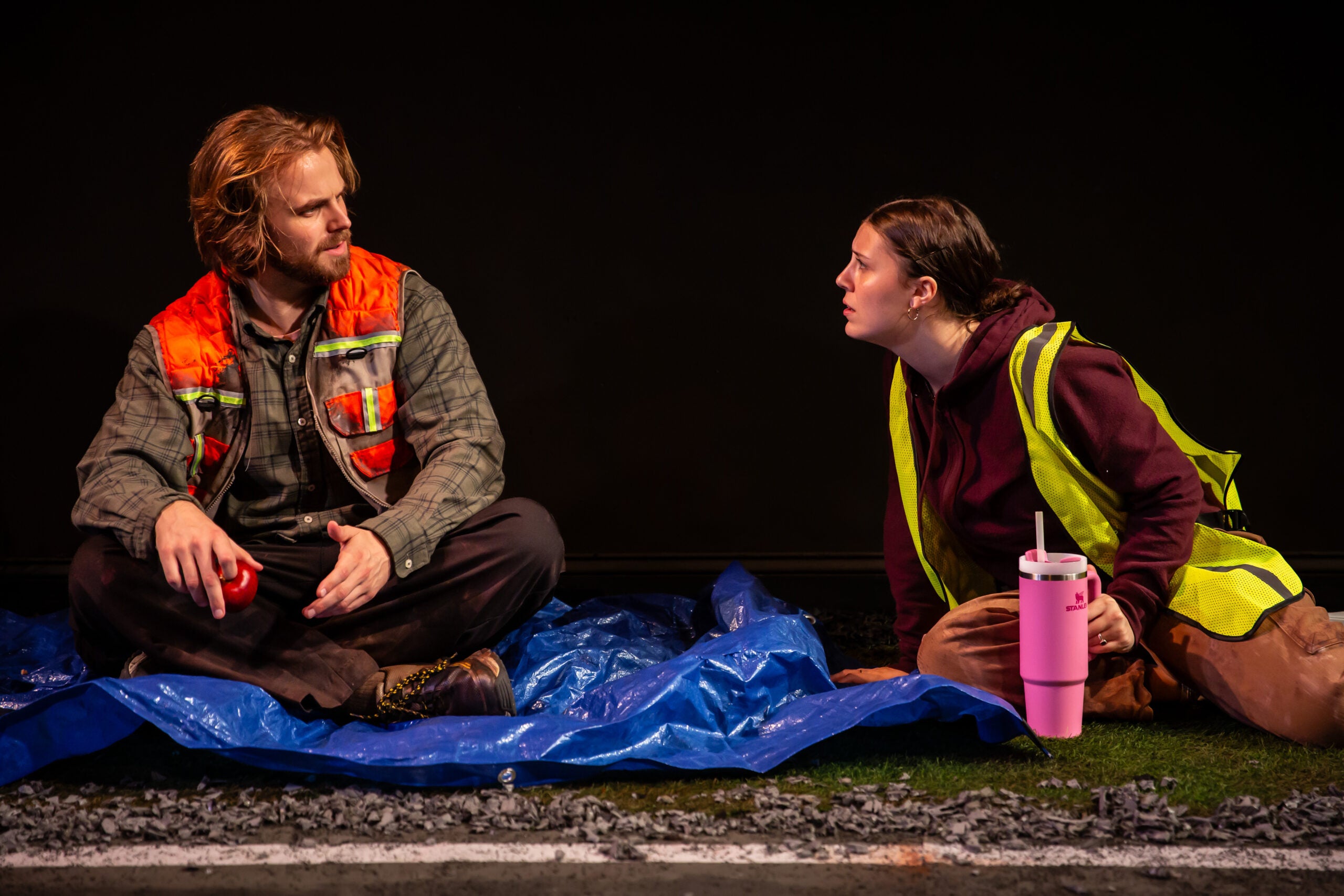
McIntosh and her colleagues were researching for a production of a new off-Broadway play, “Road Kills.” The script, written by McIntosh, is set along the rural highways of Wisconsin and explores the relationship between a drunken driver sentenced to community service and a kind-hearted roadkill cleanup worker.
For six Saturdays, the two characters — Jaki and Owen — are stuck with each other.
To prepare for the play, the group drove rural highways near Oshkosh and explored small cities. McIntosh’s inspiration for the play came from her college commute from Sun Prairie to the University of Wisconsin-Stevens Point on Interstate 39. Roadkill was a regular presence of these drives.
“Each of these corpses represents a dramatic event. It’s a moment of impact,” McIntosh told WPR’s “Wisconsin Today.” “It’s a moment of choice to either stop or not, to deal with it or not.”
“And as I started to research roadkill pickup, I uncovered a very fascinating world,” she added. “I was like there’s something here that we can use for a play.”
McIntosh spoke to “Wisconsin Today” about the play and her Wisconsin roots.
Kate Archer Kent: Jaki is the person caught drinking and driving. What is she like as a character?
Sophie McIntosh: She is a tough cookie. In the sense of being able to handle herself. But also she makes it tough to get to know her and quite frankly, tough to like her for very much of the play. She has a lot of baggage and she does not concern herself with being a nice person, especially to Owen.
She has a tough exterior and a lot of that comes from her upbringing. Part of the fun thing about the play is kind of learning how this very difficult young woman came to act this way and feel this way in her life. I adore her, as you must when you write the play.
KAK: And Owen does the dirty work here, and he does it with pride. How does Owen interact with Jaki?
SM: Jaki was assigned to pick up this roadkill as community service, which is based on a real program that existed in Michigan. I sort of transposed it onto my home state.
So Jaki kind of gets to learn and practice a different sort of responsibility each week. At first she’s keeping an eye on the traffic to make sure that Owen doesn’t get hit. And as the weeks go on he kind of gets her more and more into the dirty work.
KAK: We also learn that Jaki was sexually abused by a family member. But you also don’t want this to be a play about abuse. How do you handle that aspect of the character and that aspect of the story?
SM: It was very important that this is not a play about an act of abuse. You do not see the abuse happening on stage. I do not depict it actively. And that’s something that I did very intentionally because when you do something like that it can often end up being gratuitous, especially if you have a member of the audience who has undergone a similar experience.
And the act of abuse is not the point of this play.
The point is how it has shaped this person and has shaped the way she views the world. The point is to let it be about her and not about this thing that happened to her.
Also, it’s a funny play. Not in a way that makes light or sort of disparages what happens to her but in a way that allows her to laugh and be human and experience these strange, gross things on the roadside.
I really feel that in order to better connect with the character you have to be able to laugh with them and see them through the ups and downs, instead of just downer, downer, downer.
KAK: A part of me wants to feel like the play has some “Fargo” in it, the 1996 Coen brothers’ dark comedy.
SM: I get that a lot, especially in New York, because people don’t have a lot of points of reference for Wisconsin. They’re like “OK, cheese and serial killers.”
I’m like no, actually, there’s a lot more happening out here, which is part of why I feature the Midwest quite a bit in my work because I’m interested in showing people a little bit more of our lives. That isn’t just the cheese and serial killers of it.