As Wisconsin faces a health care workforce shortage, a professor at the University of Wisconsin-Oshkosh says getting men into nursing can be one way to address the state’s shortage.
Men make up only around 13 percent of registered nurses nationally, according to the Bureau of Labor Statistics. The divide is more stark in Wisconsin, with men only making up a little more than 8 percent of the state’s nursing workforce according to an analysis from Marquette University.
The Wisconsin Department of Workforce Development predicts the state will be short between 12,000 and 19,000 nurses by 2040.
News with a little more humanity
WPR’s “Wisconsin Today” newsletter keeps you connected to the state you love without feeling overwhelmed. No paywall. No agenda. No corporate filter.
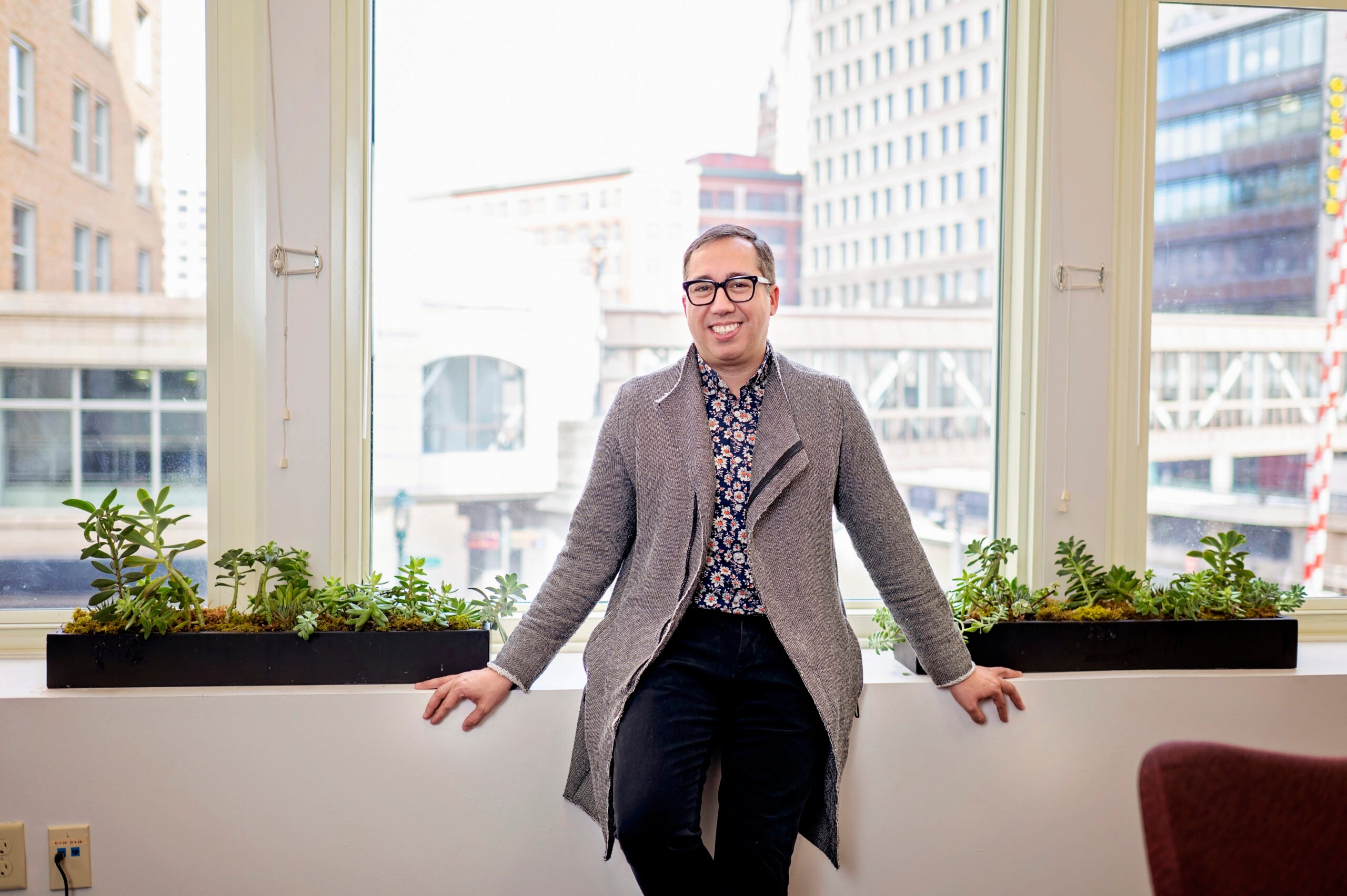
Jason Mott, a professor in the School of Nursing and Health Professions at UW-Oshkosh, said increasing the number of men in nursing is one way to cut into the sector’s worker deficit.
Mott has been President of the American Association for Men in Nursing since 2022. He told WPR’s “Wisconsin Today” stigmas around men in the nursing profession date back to the 1850s, when men and other minorities were excluded from the field.
Mott’s association recently named UW-Oshkosh as one of the best schools in the nation for men in nursing — the ninth time it’s received the designation. At UW-Oshkosh, around 15 percent of their nursing students are men. The number of students who are men climbs as high as roughly 30 to 40 percent in certain programs, according to the university.
Mott talked with WPR about the longstanding stigma and how he pitches the profession to male students.
The following interview was edited for clarity and brevity.
Rob Ferrett: How do you make the pitch to an incoming student who’s maybe thinking about nursing, but might be hesitant because of the stigma around the profession?
Jason Mott: We are always going to need nurses. It’s a good paying job. You have a lot of different options. If you go to medical school and then you do your residency, and you end up as an orthopedic surgeon, you can’t really do anything else unless you go back for further schooling and training.
With nursing, you can move around to different areas. You can do pretty much whatever you want in order to make it so that it fits your schedule. There are positions where you don’t have to work nights or weekends or holidays. Job stability is a huge factor for getting men into nursing.
RF: In addition to teaching about nursing, you are also the president of the American Association for Men in Nursing. Why is this gender disparity so important to you?
JM: Most of the places I’ve been, I’ve been one of the only men. You don’t really have a chance to connect with other guys. It’s been part of my interest to really focus on asking, “How do we diversify the nursing workforce?”
We’re primarily white and female. Research has shown that patients want people that look like them. And so we need more nurses who are men. We need more nurses of color, different sexual orientations, all those sorts of things to really encompass what our whole population looks like.
RF: Growing up, I had two nurses in my family. One was my aunt and one was my uncle, both lifelong nurses pretty much until retirement. So nursing never seemed like a women-only profession to me. Does that kind of representation matter? Does having men in nursing open the door for more men in nursing?
JM: Definitely. A lot of boys don’t see men in nursing. So if you go to the hospital and you’re always taken care of by females, you really never even think of it as “a profession that I could get into.” I think the more that we can expand men into nursing and get more men, the better it is as a recruitment strategy.
There’s an article that was just recently done in The New York Times talking about former and some current NFL players who have gone on to become nurses … I think that sort of stuff really helps break down the stereotypes of what a nurse is.