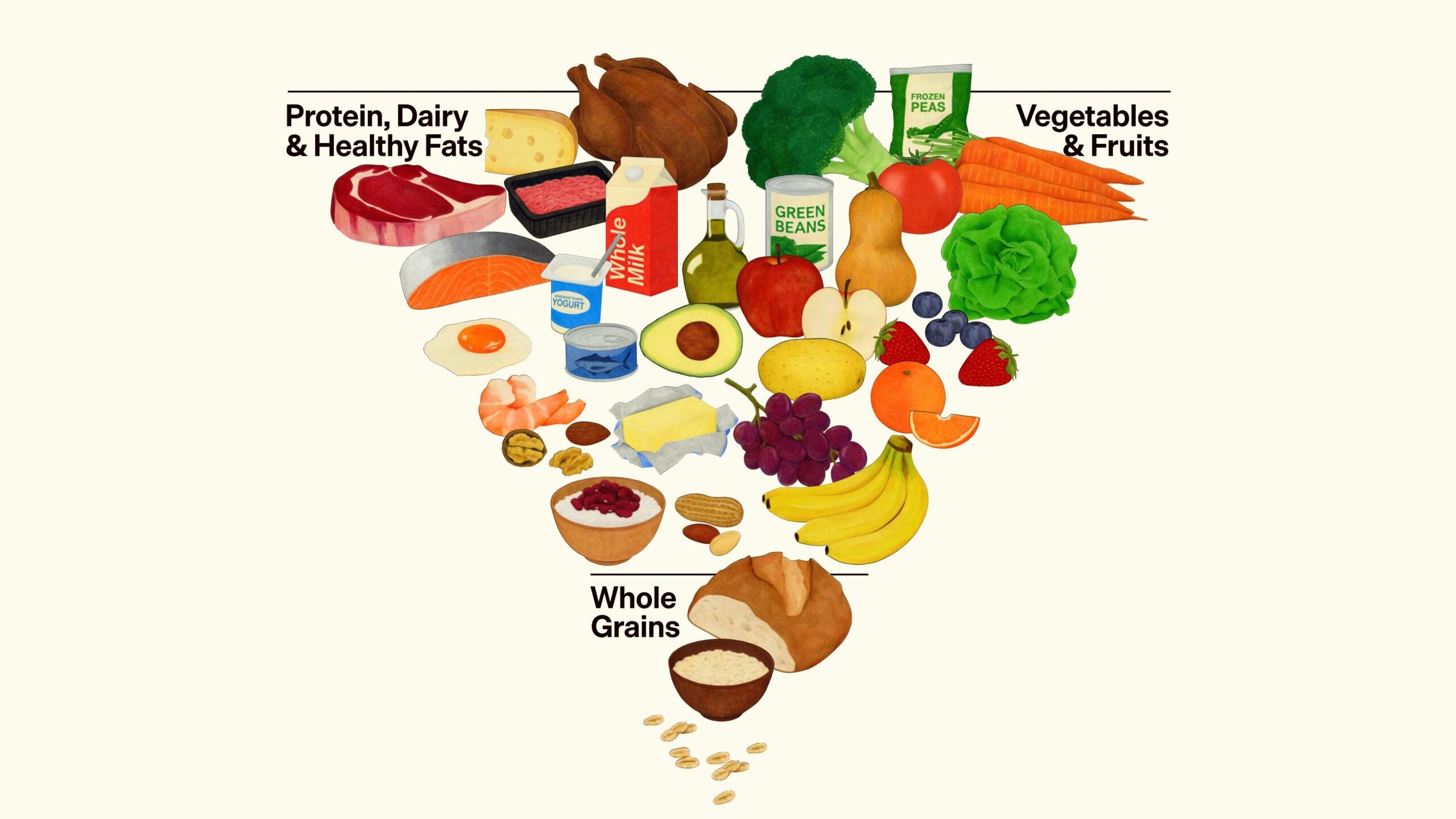

The recently released federal Dietary Guidelines made big changes to recommendations on what Americans should be eating.
But it also took a new approach to guidance on alcohol consumption.
The new guidelines end the previous recommendation of up to two drinks per day for men and one drink for women, in favor of a much simpler message: “Consume less alcohol for better overall health.”
News with a little more humanity
WPR’s “Wisconsin Today” newsletter keeps you connected to the state you love without feeling overwhelmed. No paywall. No agenda. No corporate filter.
“It really reflects a rapidly changing landscape in terms of the scientific and epidemiology understanding about how alcohol impacts people,” said Doug Matthews, psychology professor at the University of Wisconsin-Eau Claire and editor-in-chief of the scientific journal “Alcohol.”
Matthews said new research from the last decade has demonstrated that any amount of alcohol has a negative effect on a person’s health, from their liver and brain to their risk for certain types of cancer.
Previous iterations of the Dietary Guidelines have warned about the adverse health effects of drinking. The last version published in 2020 maintained the one- and two-drink recommendation while also stating that “even drinking within the recommended limits may increase the overall risk of death from various causes.”
Matthews sees the simpler recommendation as taking things one step further.
“What the guidelines are really recognizing is we don’t know, and we’re not really thinking, right now, that there’s any healthy level of alcohol consumption,” Matthews said.
While most health care and research experts are united behind the push toward less drinking, some providers worry that not providing more specific recommendations makes the guidelines too vague.
Dr. Ian Latham, an addiction medicine physician at Emplify Health by Gundersen in La Crosse, said he was surprised to see federal officials step away from the one- and two-drink guidelines that he said were established by the National Institutes for Alcohol, Alcohol Abuse and Addiction years ago.
“I do think that people appreciate a guideline,” Latham said. “Those specific guidelines that were given, they were really to kind of provide a soft line between moderate drinking and immoderate drinking.”
Latham said he supports the overall message that people should consume less alcohol. But he thinks the new guidelines would be improved by an explicit statement that not drinking is the best choice for a person’s health.
The guidelines’ recommendation on alcohol was far from the only section of the document to see a significantly pared down message, said Maureen Busalacchi, director of the Division of Alcohol Policy, Prevention, and Research and the Wisconsin Alcohol Policy Project at the Medical College of Wisconsin’s Comprehensive Injury Center.
She described the new version as “a snapshot” at only nine pages versus the more than 100-page documents of the past.
“There’s no reason that we can’t continue to provide the basic data and research,” Busalacchi said. “A lot of this is used kind of in the background. So I think what the public needs to understand is what is a serving size, and that drinking more than one drink per day can definitely increase your risk.”
She said people are often consuming more alcohol than they think, either from overpouring or from packaged drinks that contain more than one serving.
But Busalacchi said people working in public also have to be realistic about the population’s current drinking habits, especially in a state like Wisconsin.
“Wisconsin continues to be in the top tier of states that have high excessive drinking, which is not only binge drinking, but drinking while under age, drinking while pregnant, and heavy drinking,” she said. “So drinking less, I think, is overall a really great message. But we do encourage, if you don’t drink alcohol, not to start.”
Busalacchi said she was disappointed that people under the age of 21 were not included in the guideline’s list of people who should not consume alcohol.
Like previous years, that list includes people who are pregnant, those who are recovering from alcohol use disorder and people taking medications or have certain medical conditions that can interact with alcohol.

Wisconsin Public Radio, © Copyright 2026, Board of Regents of the University of Wisconsin System and Wisconsin Educational Communications Board.