
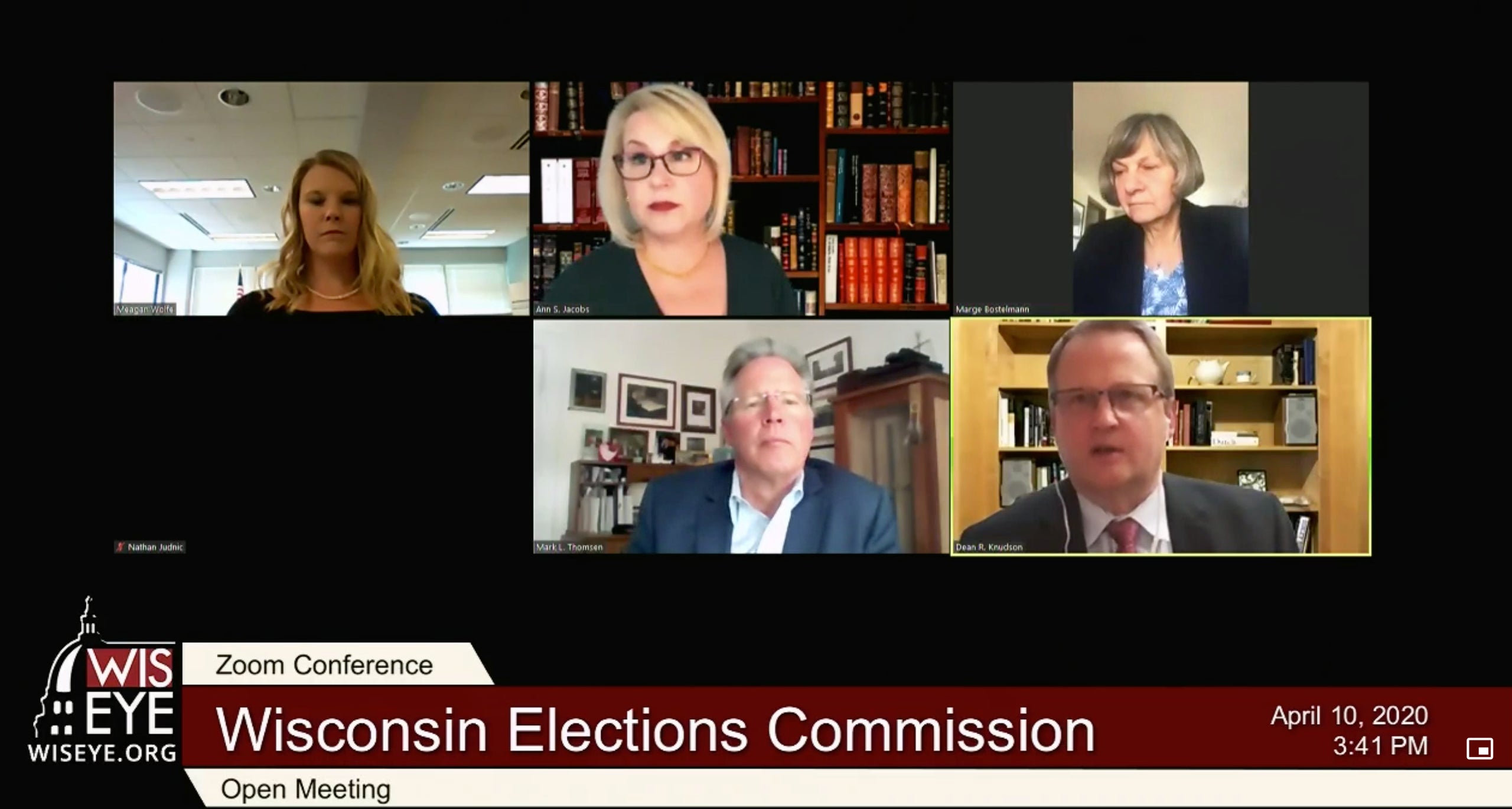
After operating for nearly 20 years, the public broadcaster Wisconsin Eye ceased its operations this week, citing a lack in funding.
Wisconsin Eye’s programming featured unedited video of entire public hearings at the Capitol, legislative floor sessions, press releases and state Supreme Court hearings.
There is $10 million set aside in the state budget in an endowment fund, the nonprofit could have accessed if it was able to match that amount in donations. But the clock ran out on that effort.
News with a little more humanity
WPR’s “Wisconsin Today” newsletter keeps you connected to the state you love without feeling overwhelmed. No paywall. No agenda. No corporate filter.
Bill Lueders is president of the Wisconsin Freedom of Information Council. On WPR’s “Wisconsin Today,” Lueders called Wisconsin Eye’s service essential to the state’s democratic process.
“It’s a huge loss,” he said. “To go to that site now and see that wiseye.org is off the air is just really disappointing and sad.”
In addition to taping a large number of public hearings and legislative sessions, Wisconsin Eye’s website archived footage for public viewing going back over a decade.
Lueders said the work Wisconsin Eye did in keeping a public video record of state events helped give state residents confidence in the democratic system.
“There’s this old saying that, ‘You shouldn’t see laws or sausage being made because of how messy it is,’” Lueders said. “I hate that saying. I don’t think it’s true. I think that really does a disservice to people in elected office.”
There are efforts developing in the state Legislature to return some kind of public broadcaster to the Capitol.
Democratic state Rep. Brienne Brown, who represents the 43rd Assembly district in Whitewater, this week began circulating a bill that would create a Public Affairs Network, a state-run broadcaster in the style of Wisconsin Eye.
The bill would set aside $2 million for the organization’s first year of operations. In addition to resuming Capitol video coverage, the bill would attempt to recover Wisconsin Eye’s years of archived footage.
“(Wisconsin Eye) is not just something for a regular citizen to watch or be able to access the archives, or even a journalist to watch. It really helps me do my job better as well,” Brown told “Wisconsin Today.” “That’s what we’re trying to do, just keep that going and make sure that we’re being as responsive to our constituents as possible.”
The bill calls for the network’s management to be “strictly nonpartisan,” with an operating board made up of the governor, two gubernatorial appointees and four members of the Legislature. It also requires the new entity to consult with the Educational Communications Board, or ECB, in establishing the service. The ECB is a state agency that operates WPR’s broadcast network.
Brown said the details on ensuring how the state-run network’s leaders are held accountable to its nonpartisan mandate are still up for negotiation.
“What we’re trying to do is create a healthy dialogue to make sure that Wisconsin Eye doesn’t go dark again,” she said. “It’s really, really important to make sure that the constituents get what they need consistently.”
Wisconsin Eye President Jon Henkes told WPR he’s declining to comment on Brown’s bill at this time.
Lueders said he believes that $10 million in the budget could still be administered, with a little “legislative tweaking,” to bring back Wisconsin Eye’s service.
“You can’t take something away from people that has become so valuable over time,” Leuders said.