This story was produced and originally published by WPR and Wisconsin Watch.
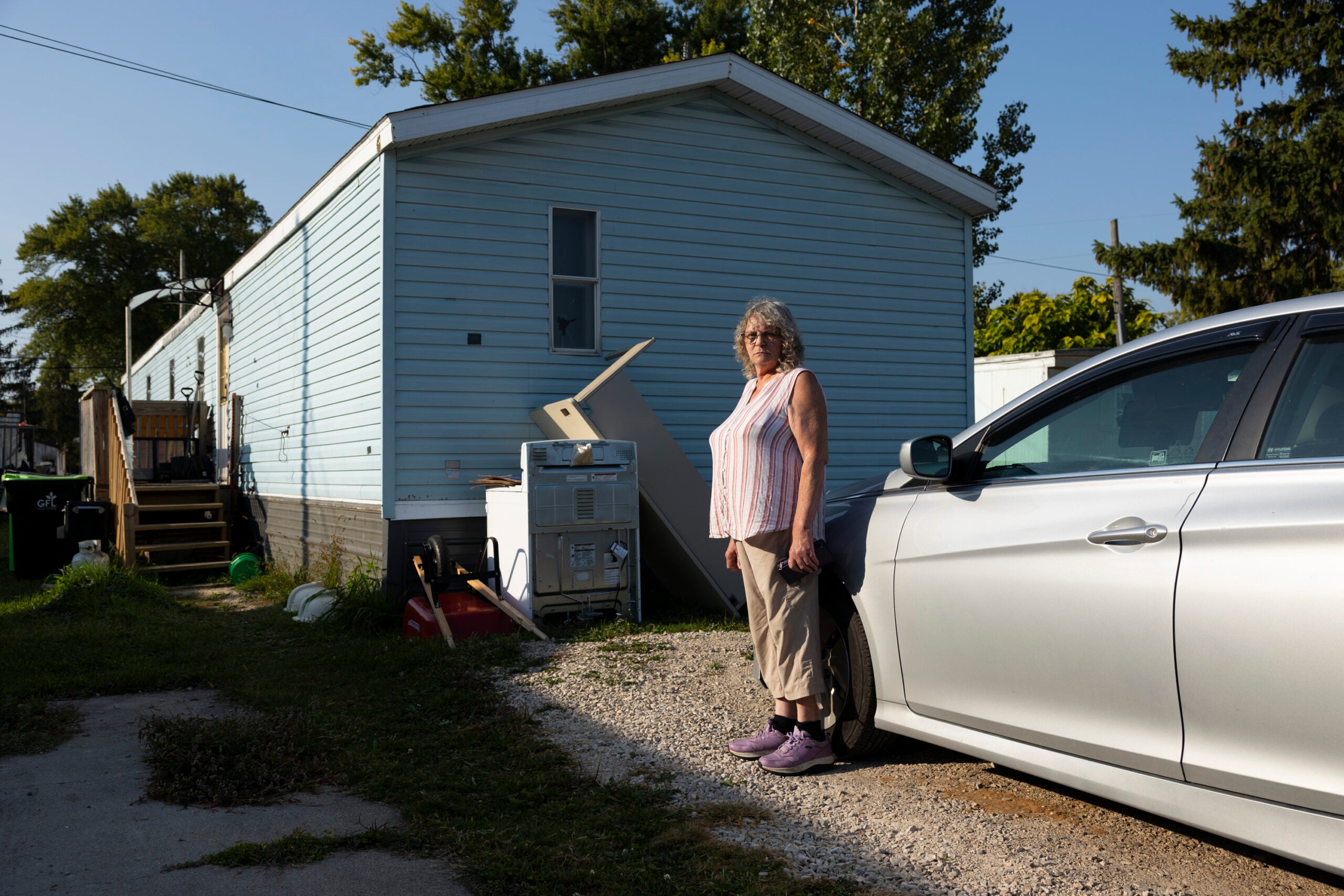
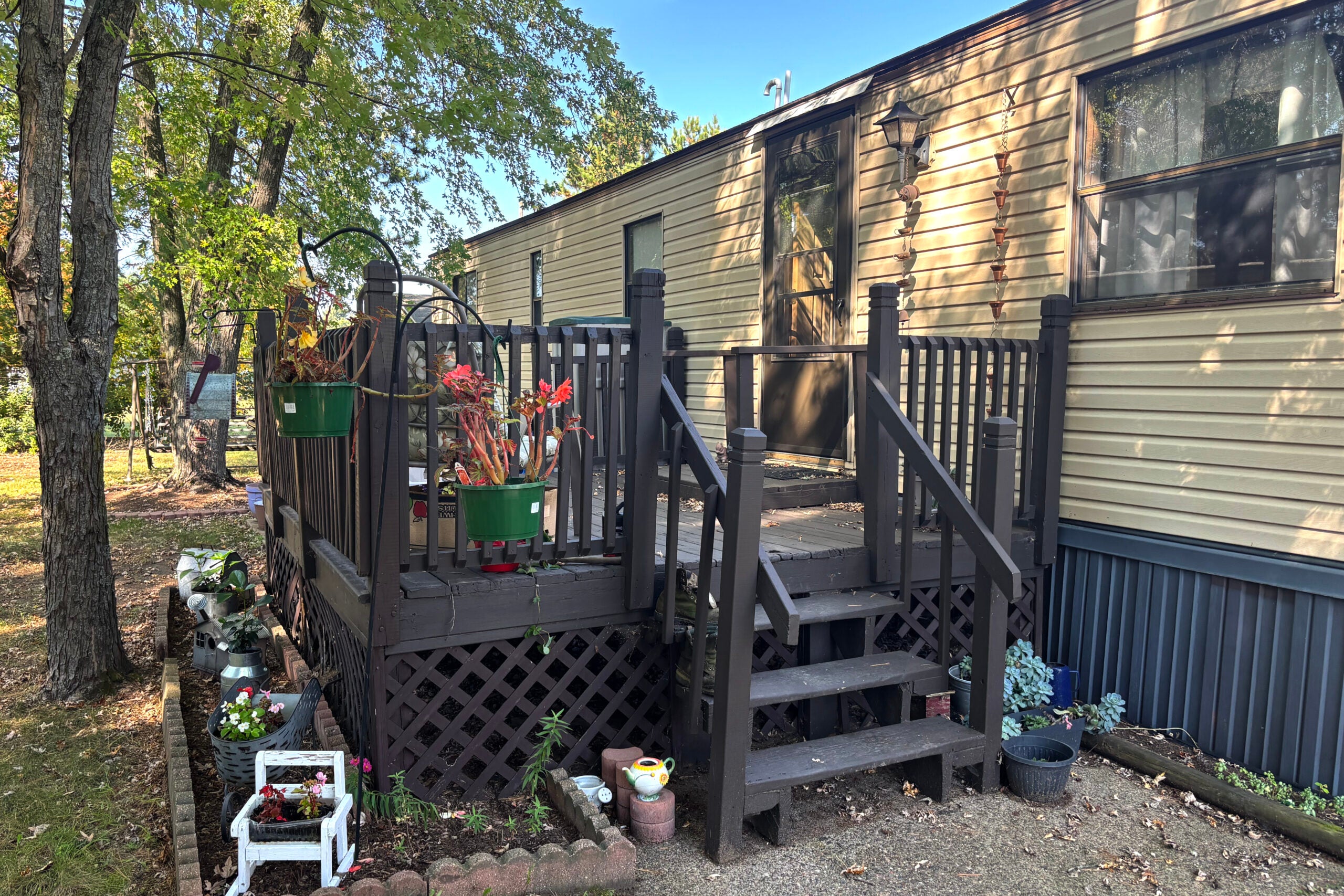
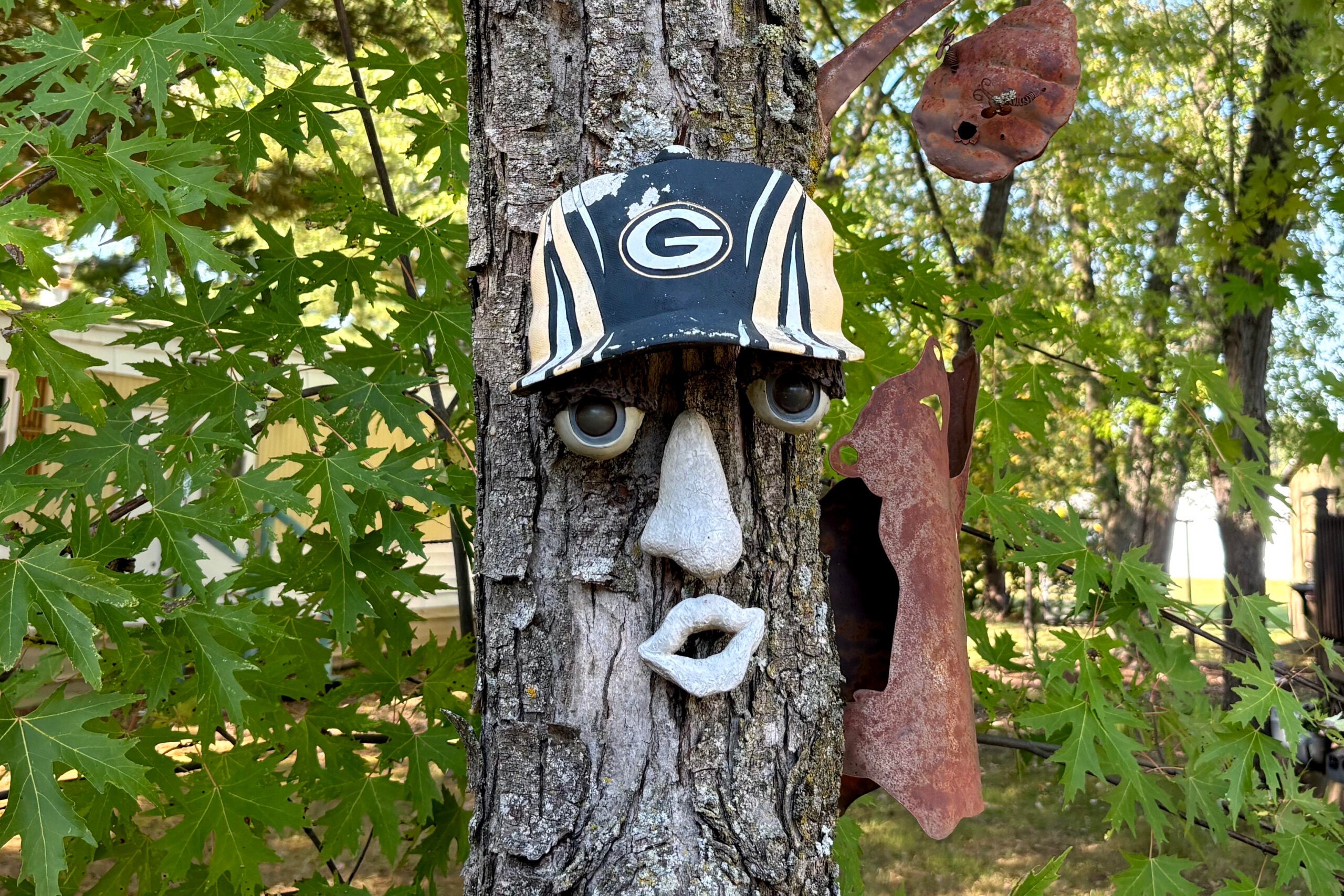
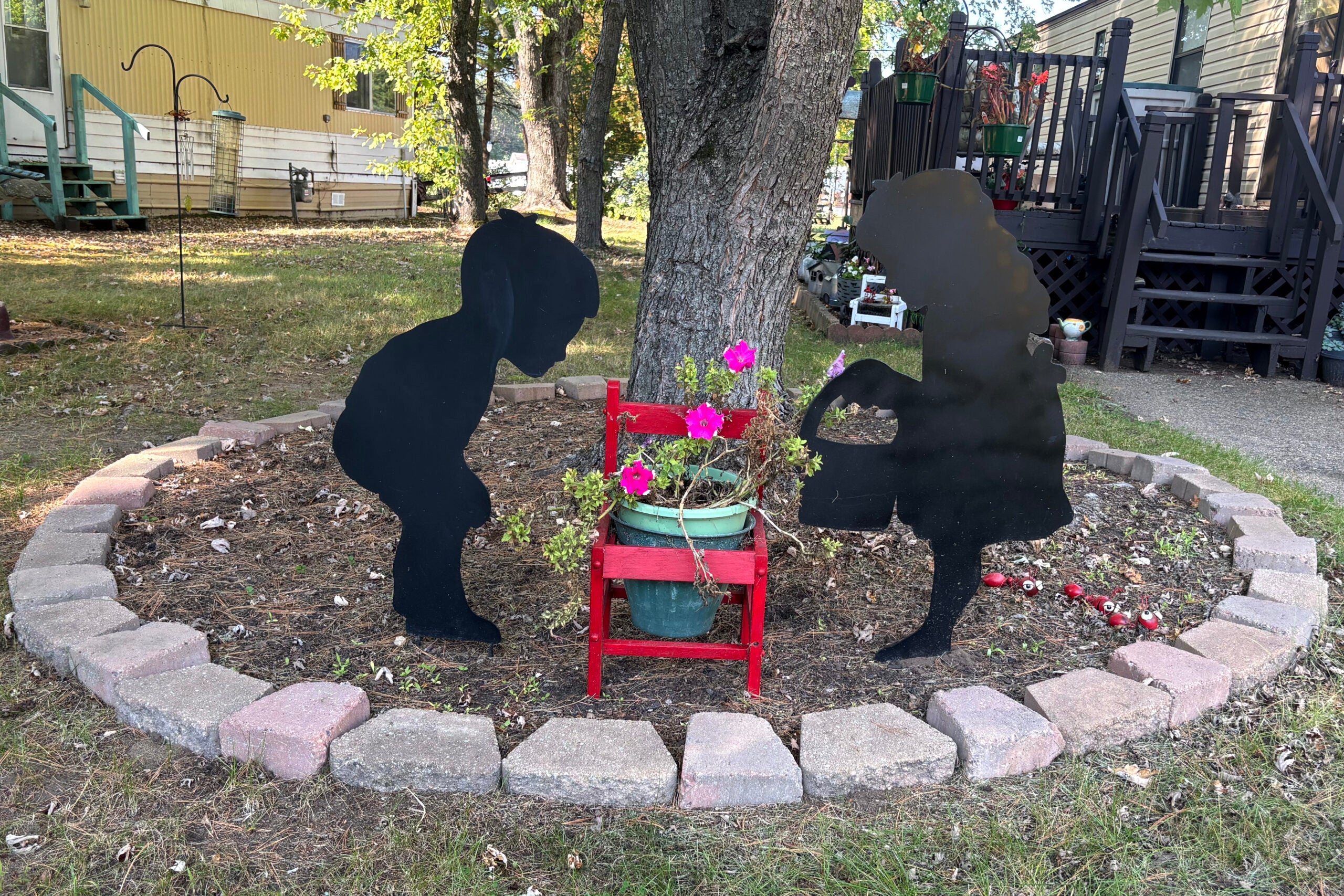
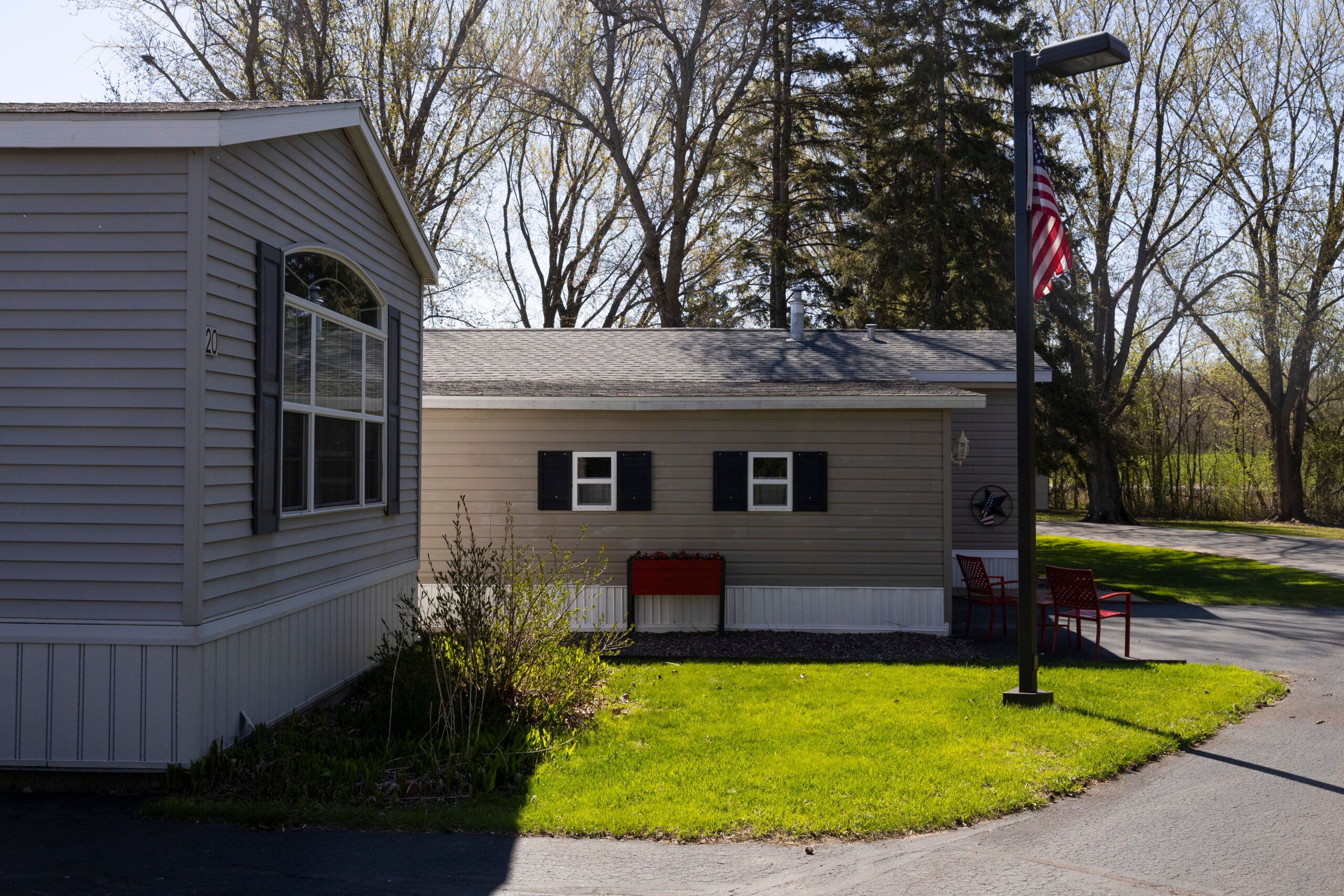
Standing on her porch, Vikki Braker pointed out her favorite lawn cutouts, arranged in a colorful scene: Silhouettes of two children smelled pink flowers as a line of googly-eyed red ants marched beneath their feet. A tree stretching over them wore a Green Bay Packers hat.
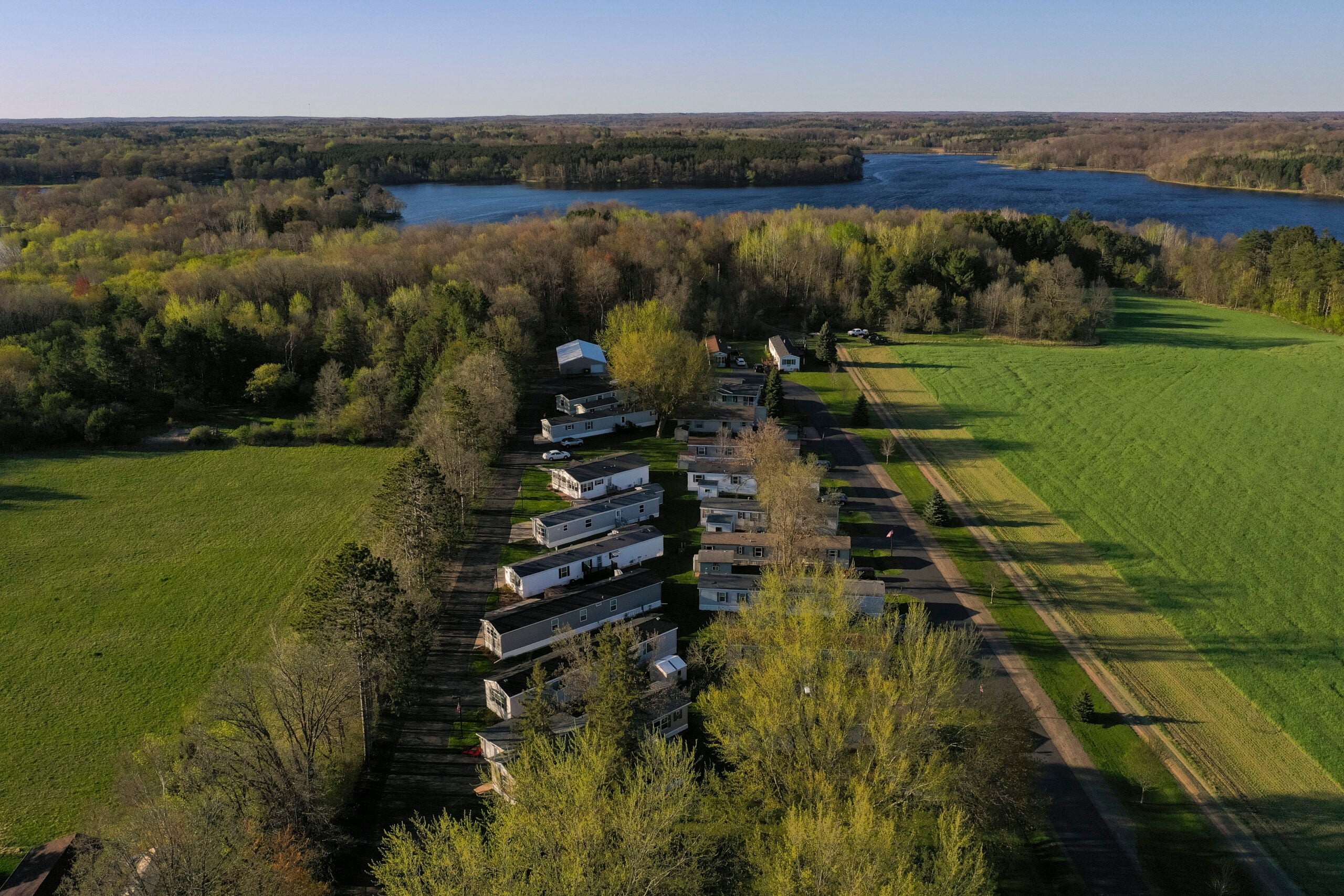
The decorations were among many Braker inherited during nearly half a century at Cedar Falls Acres mobile home park near Menomonie, Wisconsin. She figures more people get to enjoy her outdoor display than anything she keeps inside.
News with a little more humanity
WPR’s “Wisconsin Today” newsletter keeps you connected to the state you love without feeling overwhelmed. No paywall. No agenda. No corporate filter.
Neat rows of brick bordered each decorative scene atop grass her son had trimmed. Even as she slows down in her yard work, the 67-year-old can’t imagine giving it up.
But Braker does not own her yard, only the home that sits on top of it. She worries about who will soon control her well-manicured lot.
Like thousands of Wisconsinites, Braker lives in a manufactured home, the more accurate name for what many call mobile homes or trailers — structures that make up the country’s largest portion of unsubsidized low-income housing.
Braker has rented her lot since she was 18. It’s where she raised three children, battled cancer and took care of her dying husband.
She paid rent to the same owner for most of those years: Vince Hague, 81. But he’s retiring and selling the lot. Braker and her neighbors are nervous about what’s next, especially as profit-maximizing private equity companies are buying manufactured home communities nationwide.
Some of Braker’s neighbors have discussed buying the park themselves and running it as a cooperative. Many view the model as a way to keep communities well-maintained and affordable. But forming a resident-owned cooperative can be difficult — especially in Wisconsin.
Might Braker want to join a cooperative if she gets the option? She’s not sure. She wants more information to feel more comfortable about her future.
Co-op conversions aren’t easy
Braker and her husband, Roger, bought a mobile home in Cedar Falls Acres 49 years ago, seeing it as an affordable way to move out of Roger’s parents’ house. They planned to buy land of their own and build a home when they got older. But as decades passed by, they remained happy enough in their peaceful community.
“We never did buy a house,” Braker said. “We were always very comfortable here.”
Roger worked as a school bus driver. Braker worked in education before managing a Walmart and a gas station. Even when the couple could have afforded a down payment on a traditional home, they worried money would later get tight, she said.
The looming sale of Cedar Falls Acres — and the anxiety that comes with it — makes her wonder whether they should have tried to make traditional ownership work. Or if she should give up her home and yard and consider an apartment.
“But I just can’t make myself do it,” Braker said. “I love being outside.”
In an ideal world, Braker said, Hague would find another local buyer to step in to keep the park peaceful and affordable. But such “mom-and-pop” owners are increasingly rare. Large corporations are taking their place, often raising lot rents and sometimes neglecting conditions.
Braker attended multiple resident-led meetings to explore whether a cooperative might preserve a semblance of the status quo. She left “really confused.”
Converting a manufactured home community into a resident-owned cooperative isn’t easy.
In this case, Cedar Falls Acres homeowners and those at a neighboring park Hague owns would likely form a limited equity co-op. Residents would pay little up front but would not profit from their ownership over time.
Residents of limited equity co-ops pay a small fee to join, usually between $100 and $1,000, and simply get that fee back if they leave, even if the co-op’s land increases in value.
Cooperatives need large loans to cover the land purchase and any overdue maintenance.
Residents pay monthly fees to pay down park debt over time and cover routine maintenance. When major projects pop up, like fixing septic system issues, residents may vote to increase lot rent or refinance the debt.
What would a co-op mean for Braker’s pocketbook?
When they first moved in, Braker and her husband paid $60 in monthly rent. That gradually increased to the $360 she pays today, slightly above the rate of inflation since the 1970s. Braker now lives on a fixed income from Social Security and can’t afford to pay much more.
Converting into a cooperative often initially increases monthly fees, said Victoria Clark-West, executive director of CoNorth, a nonprofit focused on developing manufactured home co-ops in Minnesota and Wisconsin. But residents typically see smaller rate increases over time when compared to commercially owned parks.
CoNorth is part of a nationwide network called ROC USA. The organization has reached out to Hague about a resident purchase of his Menomonie parks, Clark-West said.
CoNorth-supported cooperatives see a 2 percent average annual increase, less than half of the average market increase, according to the organization’s website.
Co-ops allow community residents to control what happens to the equity their land builds over time, Clark-West said.
“Manufactured home communities are uniquely positioned to be really successfully, cooperatively owned,” she said. “You have an existing constituency of folks that already own their home, and they have the land in common.”
But like a business, co-ops can fail. For instance, a ROC USA co-op in Colorado faced foreclosure earlier this year. While residents are not liable when a co-op defaults on a loan, they lose their say in what happens to the land.
None of the co-ops CoNorth has supported since 2004 have defaulted on their debt, Clark-West said. Only one has voted to dissolve. Typically, co-ops’ loan agreements specify that if a co-op decides to sell its land, the profits go to a nonprofit.
CoNorth has answers to Braker’s questions, but the organization does not start fully engaging residents until a park owner agrees to sell to a co-op.
Hague said he’s open to selling to any qualified buyer. He’s ready for someone else to take over. The Menomonie resident has enjoyed interacting with residents during his decades running Cedar Falls Acres.
Unlike Wisconsin, Minnesota incentivizes co-op sales
But it’s getting harder for residents to compete with commercial buyers as investors increasingly eye park sales, Clark-West said.
Wisconsin’s relative lack of consumer protections and incentives for co-op sales doesn’t help.
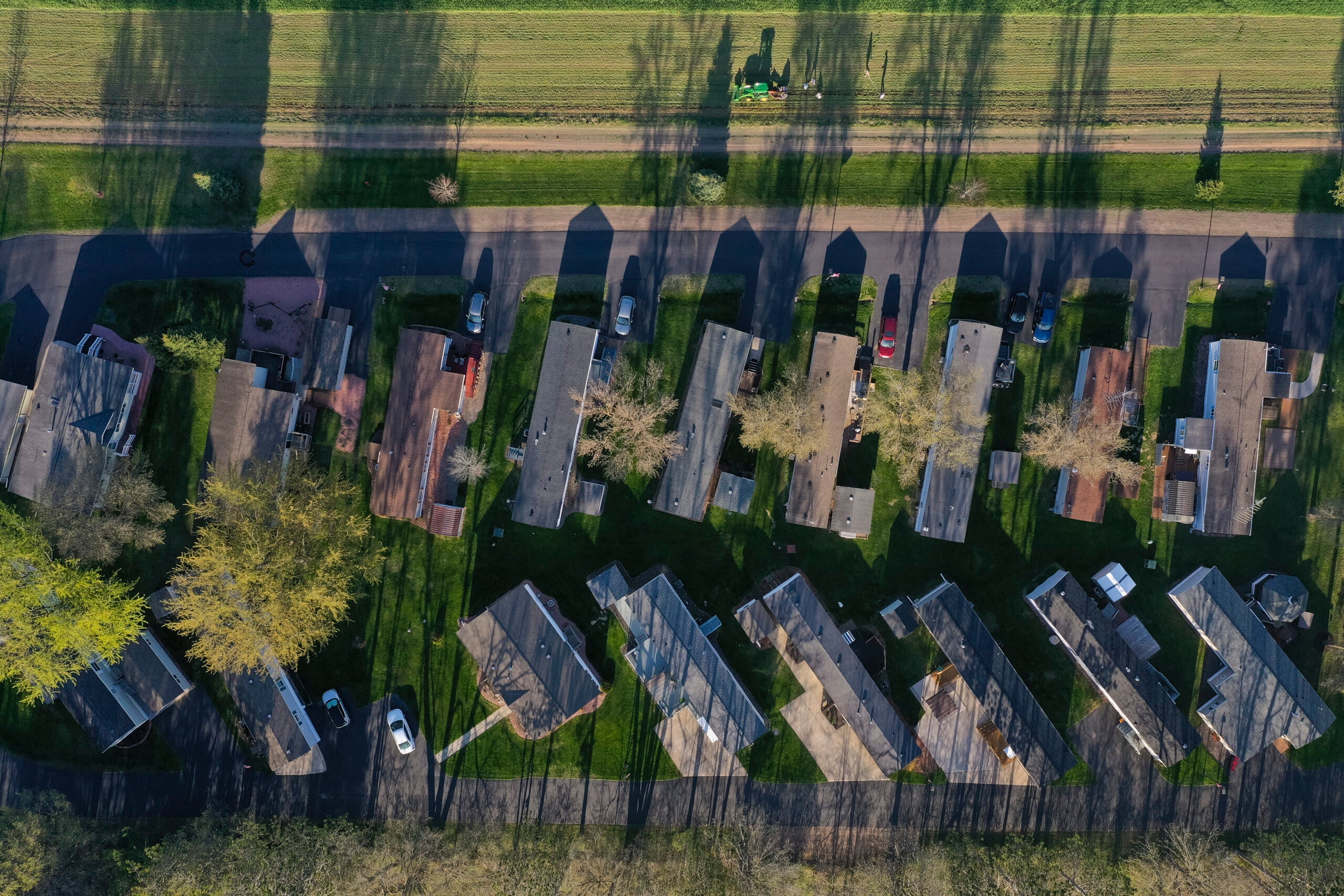
CoNorth assists 13 co-ops in Minnesota but just three in Wisconsin. That’s partly because of the nonprofit’s St. Paul headquarters, but it’s also because Minnesota offers resources to make co-op purchases more viable, Clark-West said.
“There’s definitely more scrapping it in Wisconsin.”
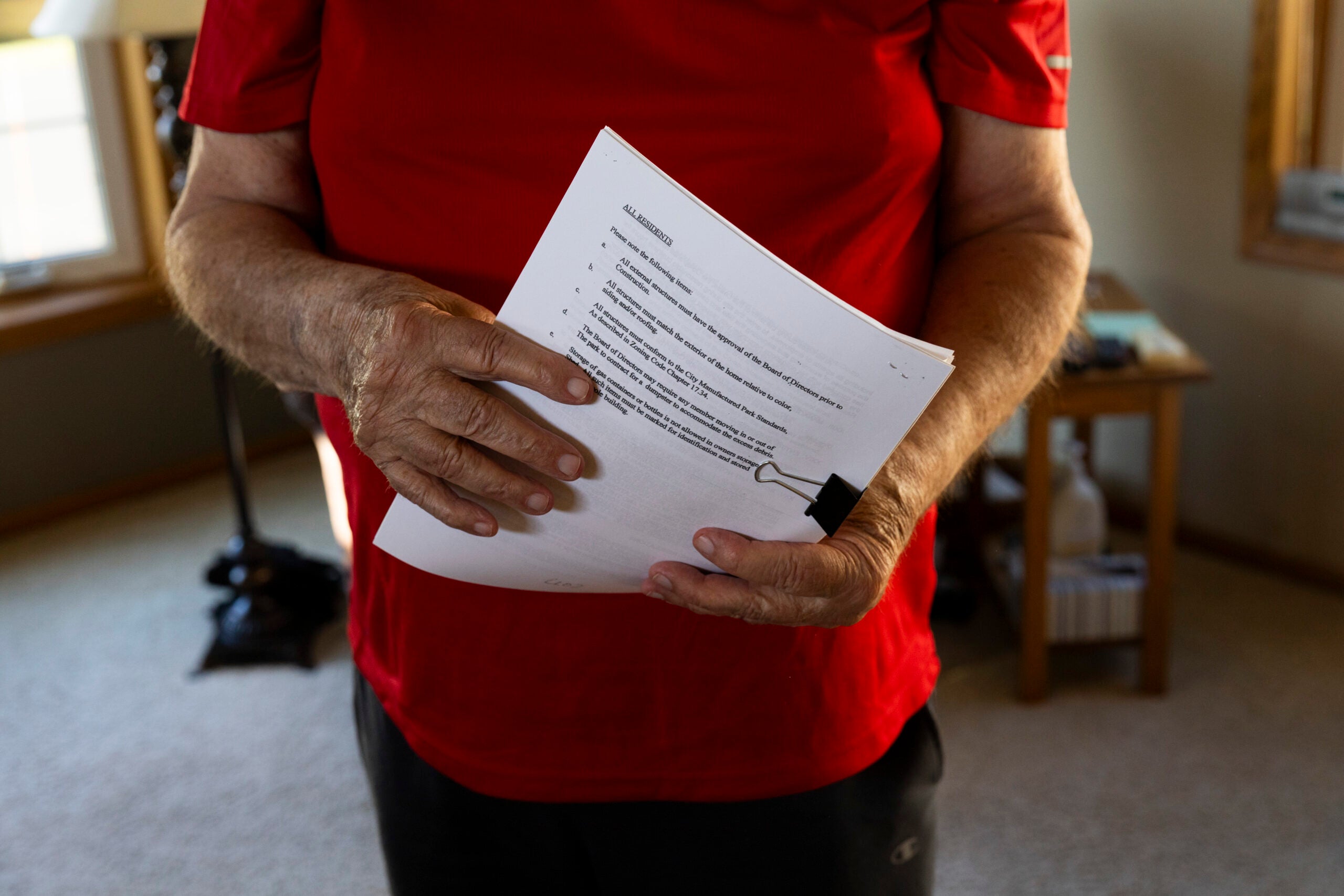
The Minnesota Legislature in 2023 enacted a 5 percent tax incentive for park owners who sell to resident-owned co-ops or nonprofits — along with expanded requirements that owners notify residents about potential sales.
Wisconsin has no such incentive or requirement. Legislation last session would have required such notification and “good faith” negotiation with co-ops, but it failed alongside a proposed grant and loan program to fund park improvements.
Policies interfering in the sales of communities could have unintended consequences, said Lesli Gooch, the CEO of the Manufactured Housing Institute, national trade group for the manufactured home industry.
“If this market is stifled, you are going to see more community closures,” Gooch said.
Private owners often increase rents to cover the costs of deferred maintenance. Those increases are necessary to preserve communities that remain more affordable than other forms of housing, she said.
When residents form co-ops, they are taking on the maintenance responsibilities without the property management experience of many for-profit owners, she said.
Expensive maintenance costs can challenge any owner. That’s why Minnesota’s grant dollars for park infrastructure projects have been transformative for the state’s co-ops, Clark-West said.
The neighboring state has allocated millions of dollars to help manufactured home park owners make major repairs. That allows co-ops to avoid taking on more debt and bolsters lender confidence, Clark-West said.
2 decades of community ownership
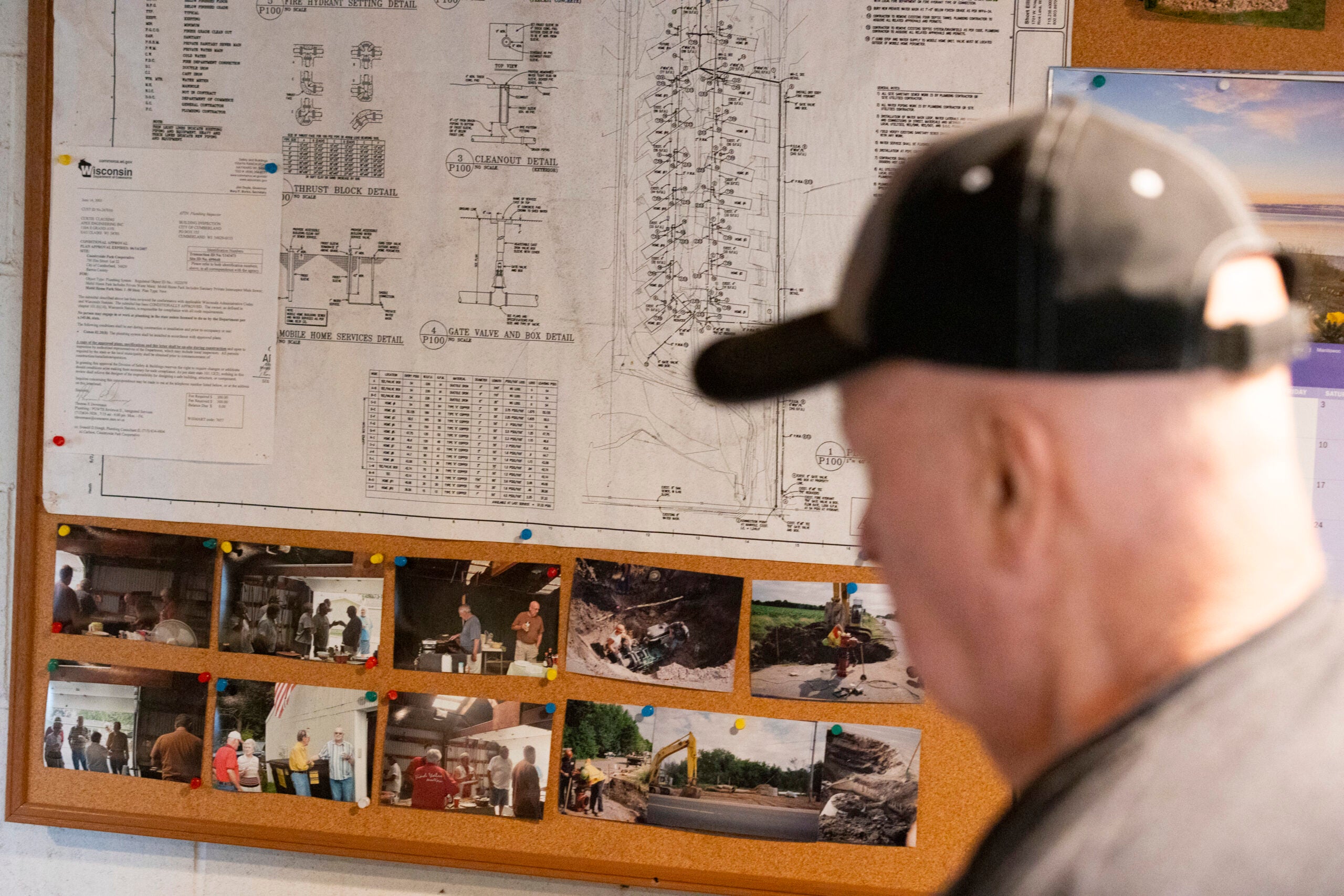
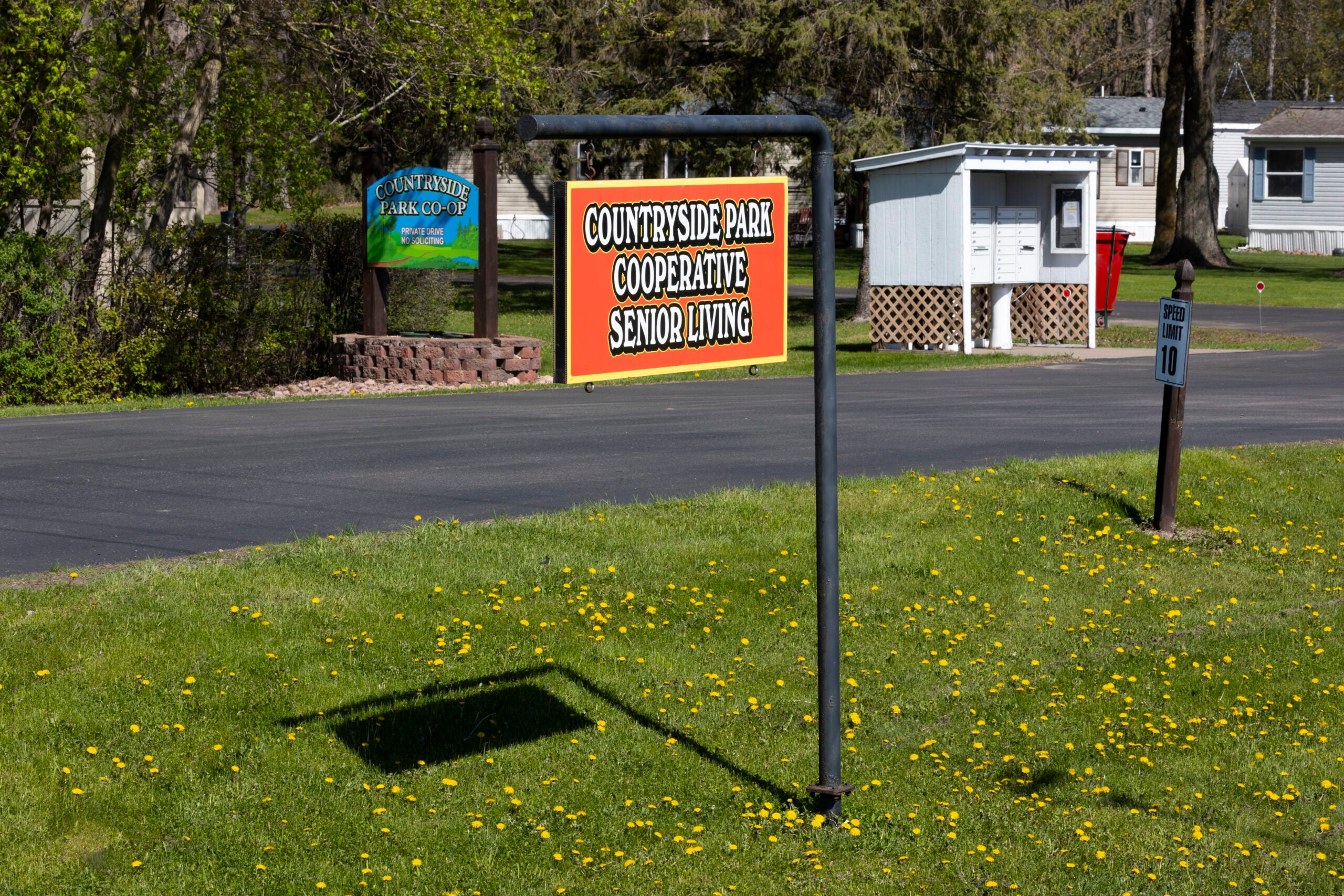
Steve Parliament has observed the anxiety a pending manufactured housing park sale can bring — like when he learned 20 years ago that Countryside Park in Cumberland, Wisconsin, was set to close and residents were being evicted. The news sent him door knocking.
The details are now fuzzy, but he remembers the tears. Residents felt helpless, with many of their homes too old to survive a move.
Parliament had organized co-ops in Minnesota and San Francisco before starting at West Central Wisconsin Community Action Agency, a quasi-governmental agency created to fight poverty. He told one park resident to invite his neighbors over for coffee and a discussion about trying to buy their community.
“That was the easiest organizing job I ever did,” Parliament recalled.
Financing the purchase was more difficult. After working with the city to address the park’s sewage issues, Parliament’s employer, WestCap, stepped in to help. The organization lined up loans and grants to purchase the community before the co-op was ready to take ownership.
The cooperative is still running today.
Replicating the Countryside sale today would be difficult, Parliament said, adding that the rise of private equity has only bolstered the need for co-ops.
That was his motivation to co-found the Wisconsin Manufactured Home Owners Alliance late last year. The nonprofit aims to keep manufactured home communities viable by pushing for stronger legal protections and helping residents organize.
An antidote to loneliness
Co-ops are not the solution for every community, said Arica Young, director for housing access and affordability at the nonprofit Lincoln Institute of Land Policy, which researches issues related to land use.
“They are a lot of work. There’s a lot of expense entailed,” Young said.
But co-ops may deliver benefits beyond housing stability, Young said, such as a sense of community that can counteract the loneliness epidemic.
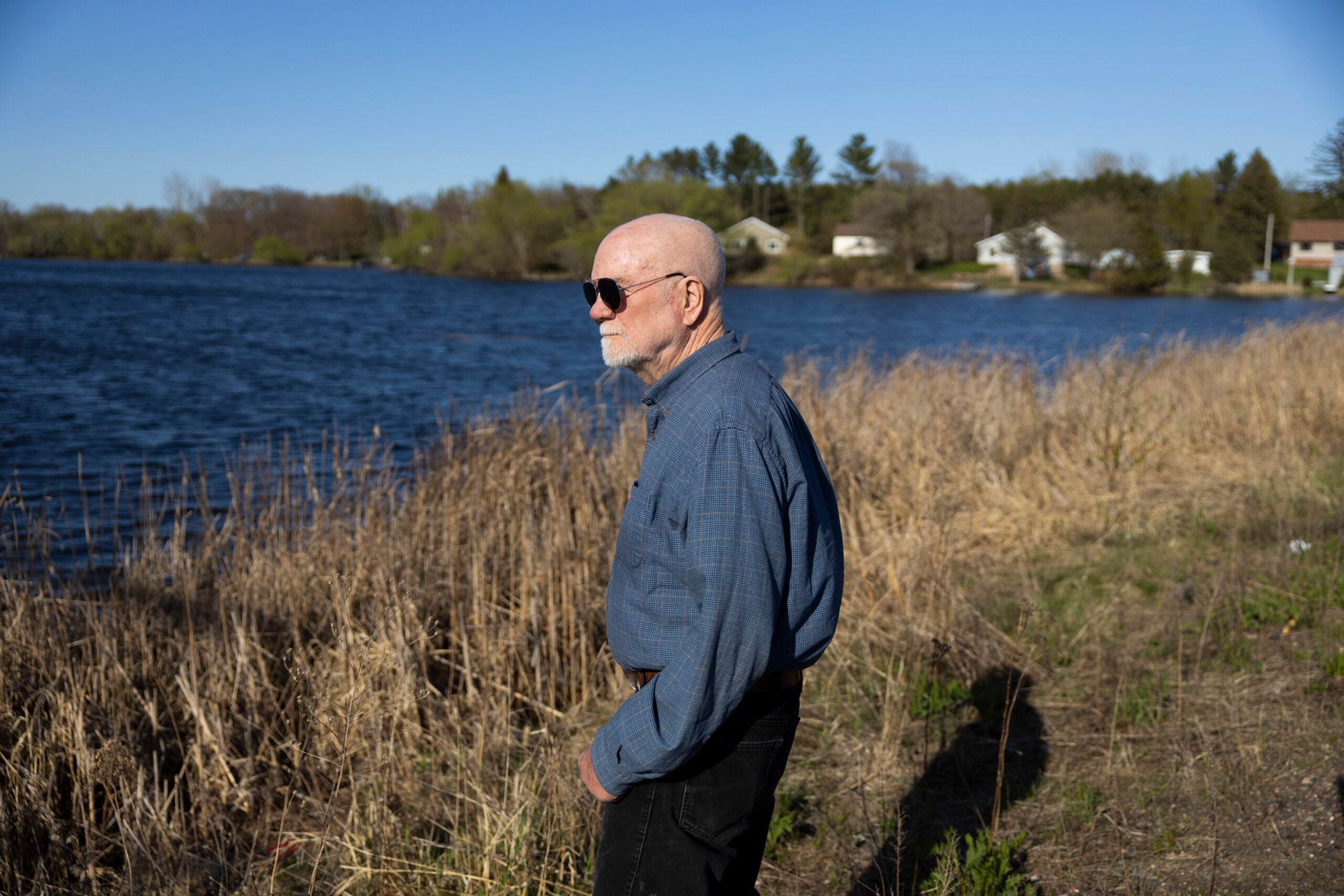
Morris Bussewitz jokes that the friendliness of his neighbors at Countryside has become a problem. More than a decade after he and his wife moved in, he can’t finish a lap around his home without getting stopped for a chat, interfering with his exercise.
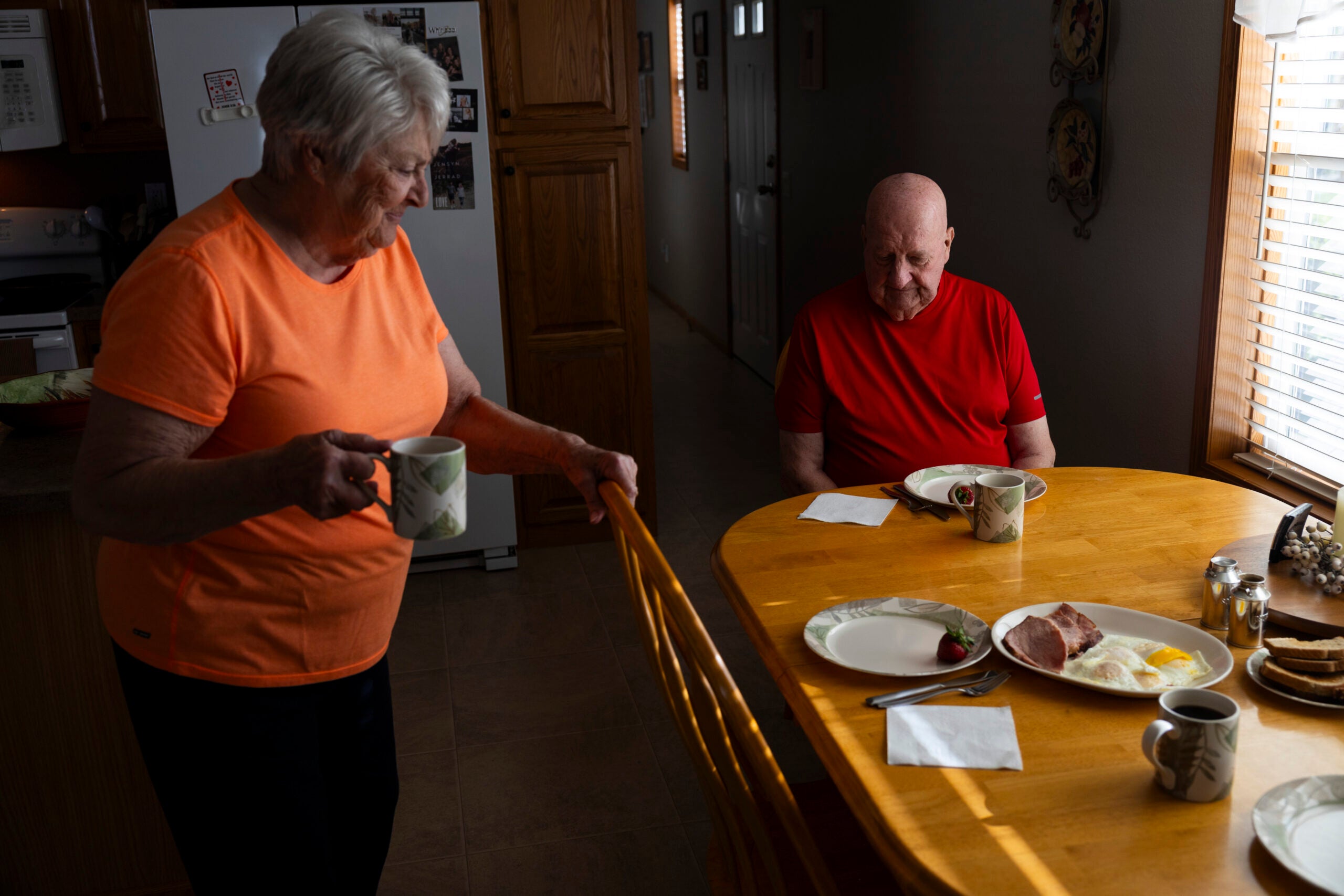
He started walking in the cemetery across the street to get his steps in uninterrupted.
“My friends there, they don’t want to stop and talk to me. They let me walk right by,” he said.
Countryside had just become a co-op as Bussewitz and his wife were looking for a permanent place to retire. Community ownership was a draw.
Monthly fees for their lot started around $140 and have since increased to just $230. They are able to keep fees low by volunteering to finish park maintenance, Bussewitz said.
“It has worked out really good,” he said.
Members attend multiple meetings each year to vote on significant spending items or changes. Residents volunteer as leaders. Bussewitz has spent years on the co-op’s board. Others take turns mowing the grass. One resident makes bird houses that decorate yards throughout the small park.
“People own part of the park,” Bussewitz said, “and they take care of it.”