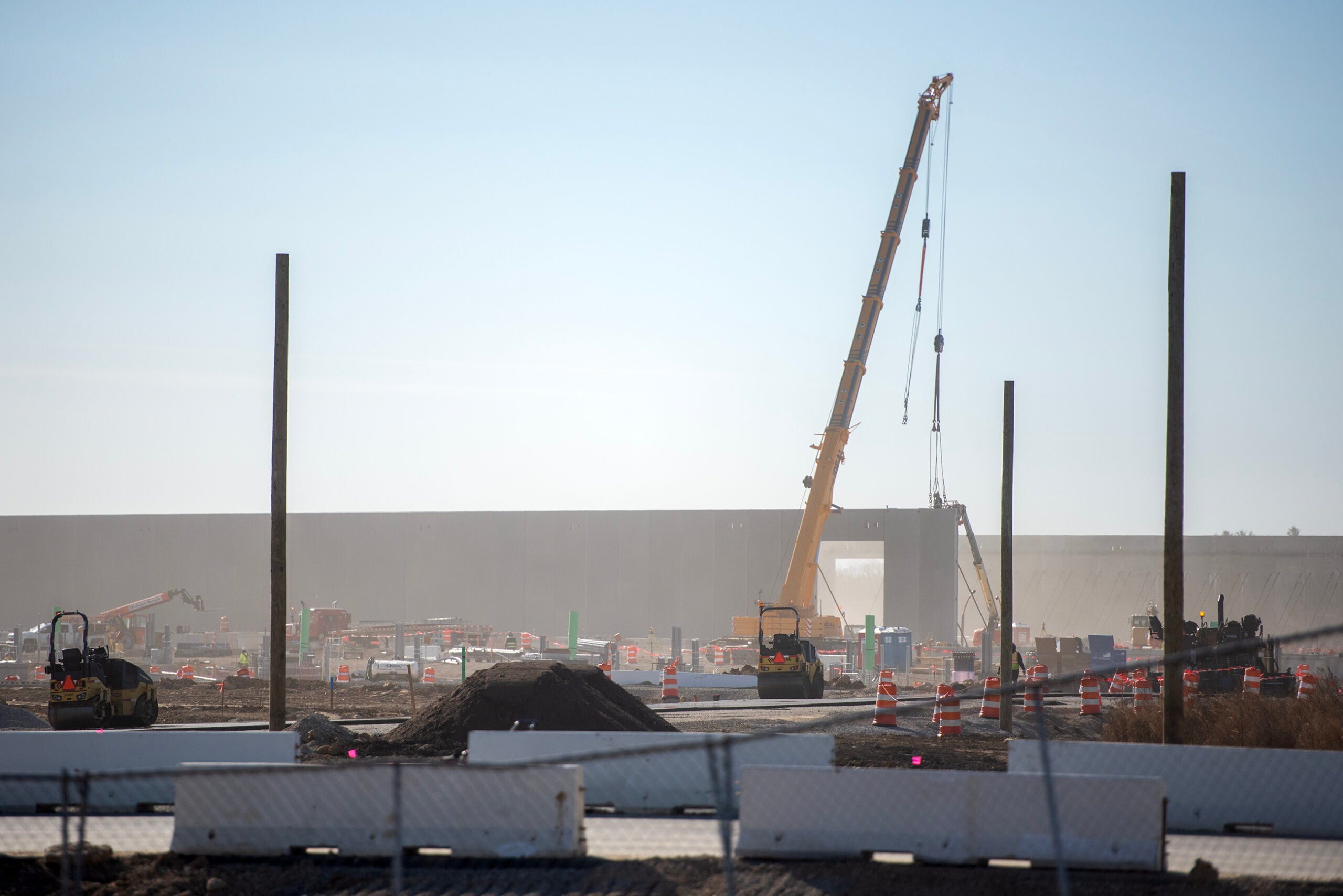

Around three months after a $1.6 billion data center proposal in the western Wisconsin city of Menomonie was halted by its mayor, the city council has passed an ordinance restricting where and how any potential future data centers can be built.
The city council voted unanimously Monday to amend its definition of the word “warehousing” to exclude data centers and create a new data center district in the city’s industrial zone. The ordinance also sets height and setback requirements for any future data center developments.
The council vote stems from strong pushback among community members and the city’s Mayor Randy Knaack to a $1.6 billion data center proposal pitched by the newly formed developer Balloonist, LLC in September. Despite the Menomonie council voting to annex property for that project, Knaack announced he wouldn’t negotiate any development agreements, which put the project on ice.
News with a little more humanity
WPR’s “Wisconsin Today” newsletter keeps you connected to the state you love without feeling overwhelmed. No paywall. No agenda. No corporate filter.
Ahead of Monday’s vote, Menomonie City Council member Matthew Crowe, who voted to annex the land in September, said he fully supports the ordinance restricting data centers because it protects the community.
“This is just the beginning,” Crowe said. “We have a lot of work to do on this ordinance adding light pollution, noise pollution, water usage. You have to do things with substations for power, things for renewable energies, reclamation plans, remediation plans as well and bonds with those.”
With the ordinance and new data center zone, Crowe said he believes Balloonist would have to reapply with the city.
During the back and forth over the Balloonist data center proposal, members of a local opposition group and some council members complained that the company wouldn’t say who the ultimate owner would be. Ahead of his vote for the new ordinance, council member Cody Gentz said he hopes it sends a message.
“Menomonie is open for business, but we want responsible and transparent development,” Gentz said. “I hope this helps developers see that the era of kind of opaque corporate maneuvering and non-disclosure agreements needs to end, that residents have a right to know what’s being proposed and what’s coming to their towns.”
GOP and Democratic lawmakers push competing visions for state regulations
As data center projects have been springing up around Wisconsin, state lawmakers have also proposed different ways to regulate them.
The most recent proposal comes from state Sen. Romaine Quinn, R-Birchwood, and state Rep. Shannon Zimmerman, R-River Falls. Their bill, which is circulating for cosponsors, would require the Wisconsin Public Service Commission to ensure that residential and small business electrical customers don’t get stuck paying for electrical grid improvements that primarily serve data centers.
The GOP bill would also require data centers to recycle the water they use to cool computer equipment, report annual water usage to the state Department of Natural Resources and establish funds to pay for future reclamation of land data centers are built on. A potential sticking point for Democrats is another requirement that any renewable energy facility serving as a primary power source for data centers must be located on the data center property.
Democrats have introduced their regulatory vision for data centers. A bill introduced last month by state Sen. Jodi Habush Sinykin, D-Whitefish Bay, would require that at least 70 percent of the electricity used by a data center come from renewable sources. In addition, any workers constructing or renovating large-scale data centers would be required to be paid union wages or the prevailing wage rate. Republicans, who control the Wisconsin Legislature have yet to schedule a public hearing for Habush Sinykin’s bill.
The debate comes as more communities are dealing with data center regulations at the local level.
The day after the Menomonie council’s vote, members of the Jefferson City Council in southeastern Wisconsin were set to consider amending their zoning ordinance to regulate the construction and operation of data centers. While no developer has come calling yet, City Administrator Tim Freitag told the Daily Jefferson County Union it’s a preemptive move because the city’s zoning code doesn’t offer a way to regulate data center developments.

Wisconsin Public Radio, © Copyright 2026, Board of Regents of the University of Wisconsin System and Wisconsin Educational Communications Board.