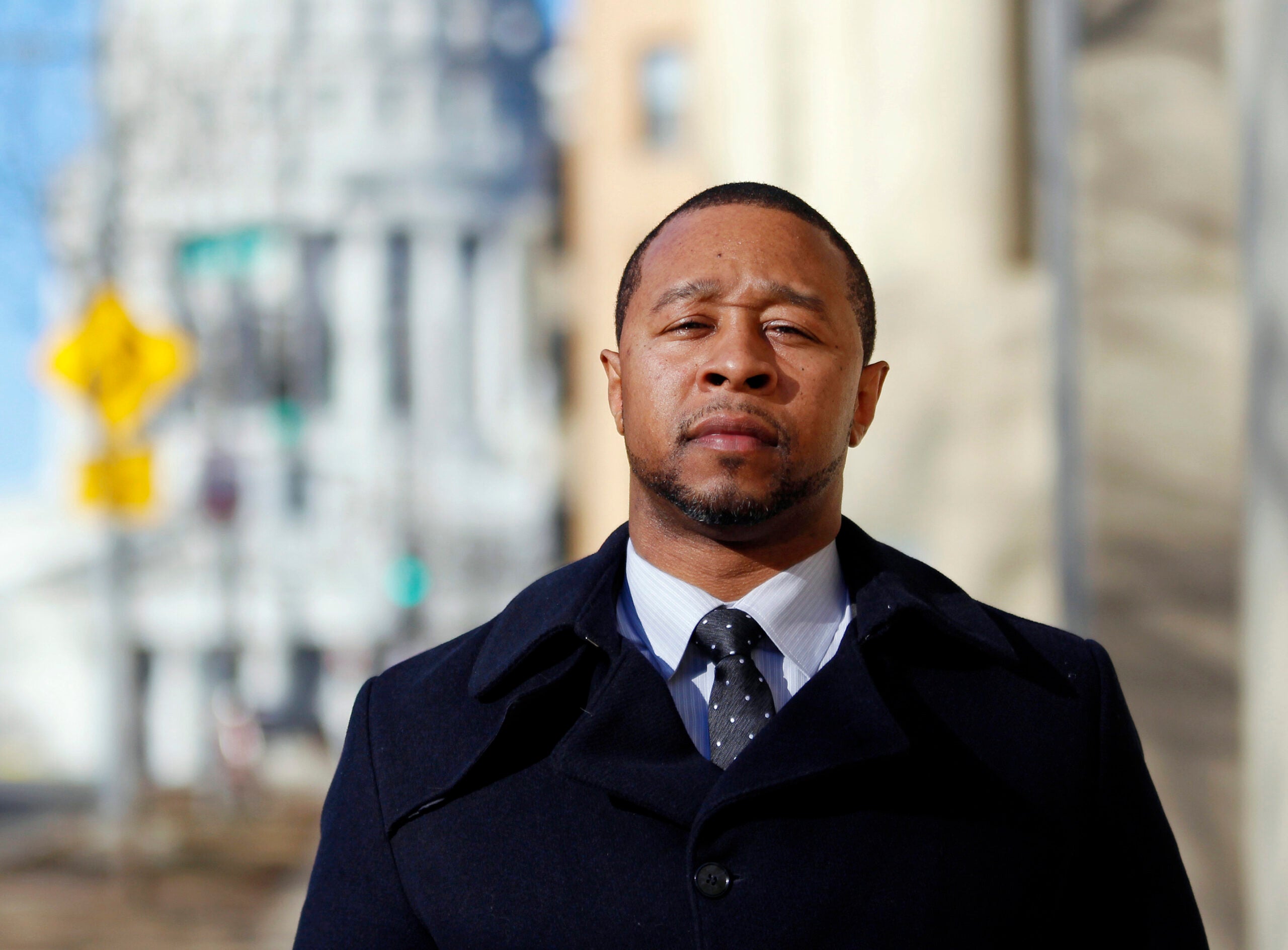
In 2009, when he was 20 years old, Gabriel Lugo went to prison for first-degree reckless homicide. In 2023, a Milwaukee County judge vacated the conviction.
The judge took that step after a key witness in Lugo’s initial trial recanted his testimony and another witness came forward with what the judge deemed to be a more credible version of events.
By that time, Lugo had spent nearly 14 years behind bars for a crime he did not commit.
News with a little more humanity
WPR’s “Wisconsin Today” newsletter keeps you connected to the state you love without feeling overwhelmed. No paywall. No agenda. No corporate filter.
Early last year, Wisconsin’s Claims Board agreed to pay Lugo $25,000 in compensation for his wrongful incarceration in addition to reimbursing him for just over $77,000 in attorney fees.
That payout was made possible by a state law last amended in 1987. That law limits the money that the Wisconsin Claims Board can pay out to an exonerated person at no more than $5,000 for every year of wrongful incarceration, or up to $25,000 total. Those caps do not include attorney fees.
In Lugo’s case, the $25,000 ceiling amounted to less than $5 for every day he wrongfully spent behind bars.
Bipartisan bill would dramatically increase what claims board can pay
A proposal advancing in Wisconsin would dramatically increase what the Wisconsin Claims Board can pay to people who went to prison for crimes they did not commit.
State Rep. Jessie Rodriguez, R-Oak Creek, cited Lugo’s experience when introducing the bill, which advanced to committee hearings with bipartisan support last month. Rodriguez said she was contacted by Lugo, who formerly lived in her district.
“If you listen to the testimony from Gabriel Lugo and anybody else who was exonerated, the biggest challenge … is being able to function in society after serving so many years of their lives in prison,” said Rodriguez, who authored the bill alongside state Sen. Van Wanggaard, R-Racine. “We are trying to do something to not only help them get back on their feet, but also compensate them in the meantime.”
Under Rodriguez’s bill, the claims board could pay a wrongfully convicted person up to $50,000 for every year wrongfully spent behind bars. That annual amount would increase with inflation. The bill also sets a lifetime cap on compensation at no more than $1 million.
Proposal would make exonerees eligible for reentry services
Additionally, the proposal would make exonerees eligible for reentry services, designed to ease their transition out of prison. And it would allow them to apply for state employee health care coverage.
“There’s no amount of money that can undo the pain and trauma and loss for folks,” said Christopher Lau, who works to overturn wrongful convictions as co-director of the Wisconsin Innocence Project.
Still, Lau said the bill’s changes would make a real difference for wrongfully incarcerated Wisconsinites. He noted that many exonerees struggle with high health costs after receiving substandard care while behind bars.
“We see our clients come out,” Lau said. “They come out with no access to health care, with no access to homes.”
Compared to other states, Wisconsin ranks toward the bottom when it comes to compensating wrongfully incarcerated people. Under U.S. law, exonerees can get $50,000 for every year in federal prison, or up to $100,000 for every year spent on death row.
Currently, it costs an average of $54,600 to lock up one person for one year in state prison, according to Wisconsin’s Department of Corrections.
Lawmakers can OK additional compensation, but doing so is rare
Already, the claims board can recommend additional compensation beyond the $25,000 cap. But that extra money needs to be approved by Wisconsin’s Legislature on a case-to-case basis, and it’s exceedingly rare for lawmakers to grant those approvals.
Since the 1980s, those legislative approvals for additional compensation have been granted in only three cases, according to testimony submitted by Rodriguez.
In Lugo’s case, the claims board recommended that the Legislature approve $750,000 in added compensation, but state lawmakers have not done so.
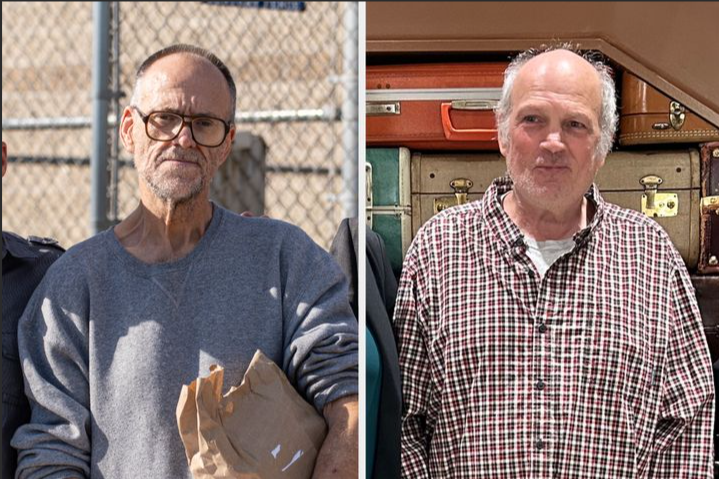
In a more recent instance, the claims board agreed to pay David and Robert Bintz, two brothers from Green Bay, the maximum payout of $25,000 each in addition to attorney fees.
That’s after the Wisconsin Innocence Project and the Great North Innocence Project, a related organization, used DNA evidence to overturn the Bintz brothers’ decades-old murder conviction.
The claims board asked legislators to pay the Bintz brothers an additional $1 million each, but the Legislature has yet to do so.
Another provision in Rodriguez’s bill aims to speed up the payment process for exonerees, by setting a timeline for hearing claims. Lau said those changes could have been helpful to the Bintz brothers when they were released from prison.
“It took them nine months before the money actually got to them, and so in that time, they had to scrape by with help from donations or help from their family,” Lau said.
A similar bill cleared Wisconsin’s Assembly in 2015, but never got a Senate vote.
Lau hopes things will be different this time around.
“We have done real, horrendous harm to folks who are wrongfully convicted,” Lau said. “The least we can do is compensate them in line with the way that other states and the federal government does.”

Wisconsin Public Radio, © Copyright 2026, Board of Regents of the University of Wisconsin System and Wisconsin Educational Communications Board.