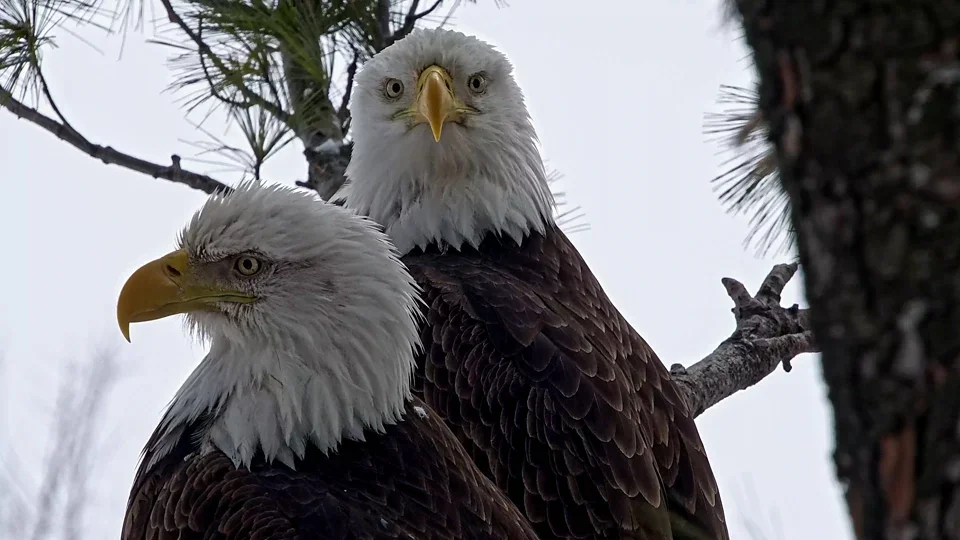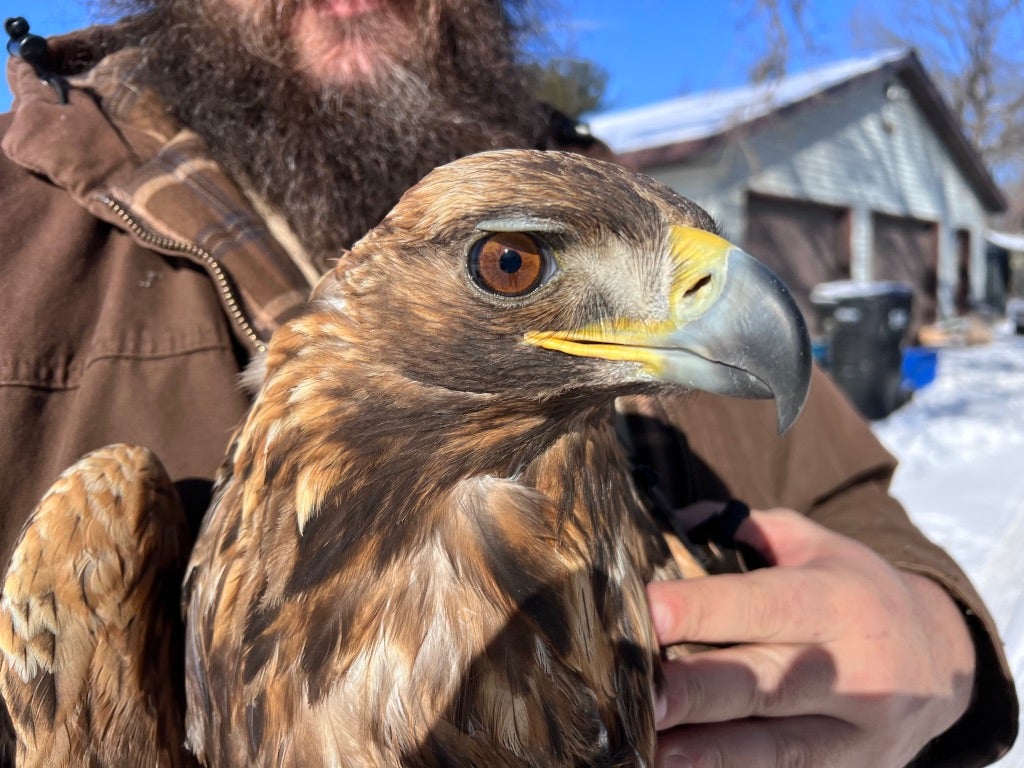
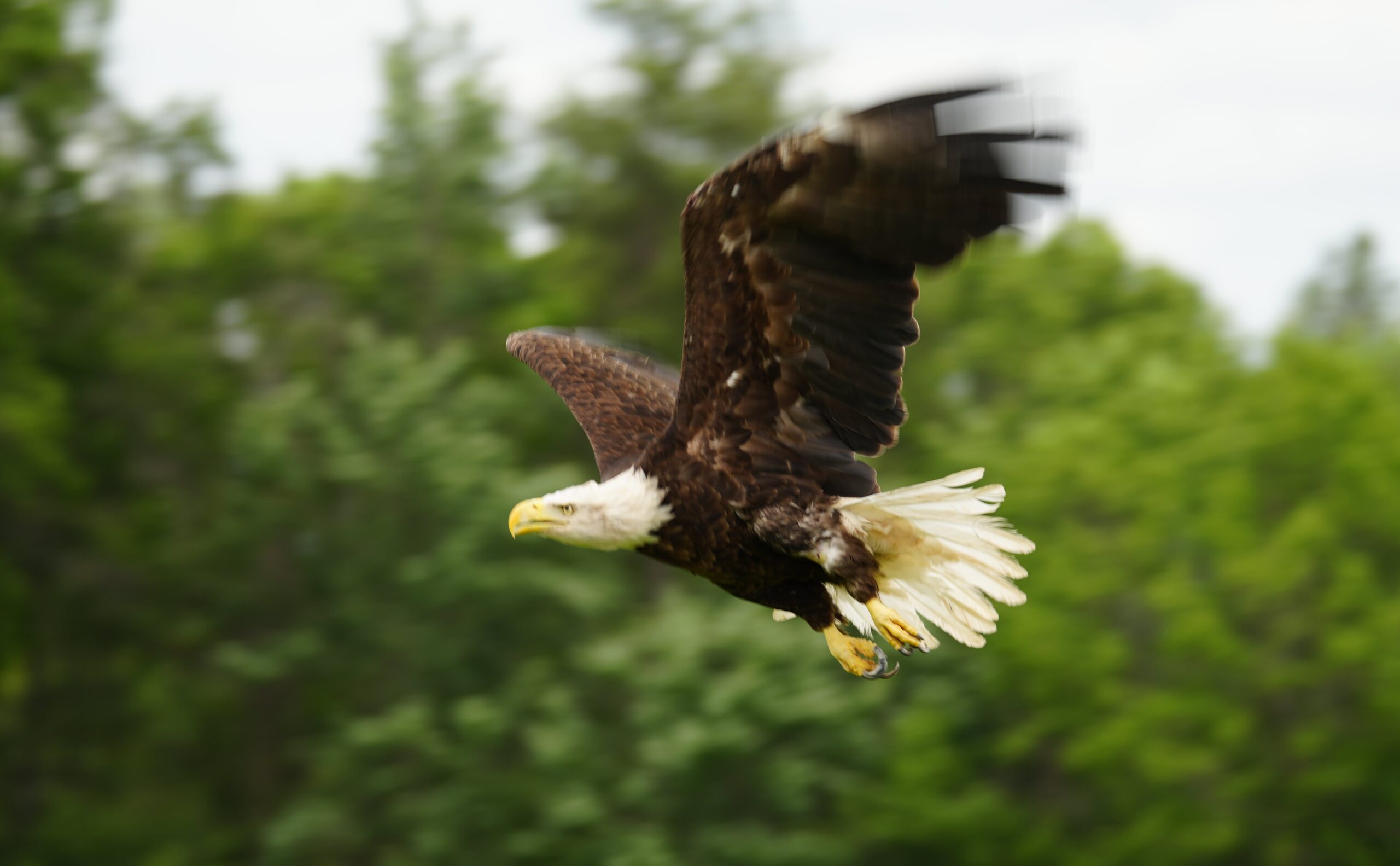
A bald eagle that nearly died from a leg injury took flight this summer in northwestern Wisconsin, after it was rehabilitated for nearly a year using a first-of-its-kind cod fish skin graft treatment primarily used in humans.
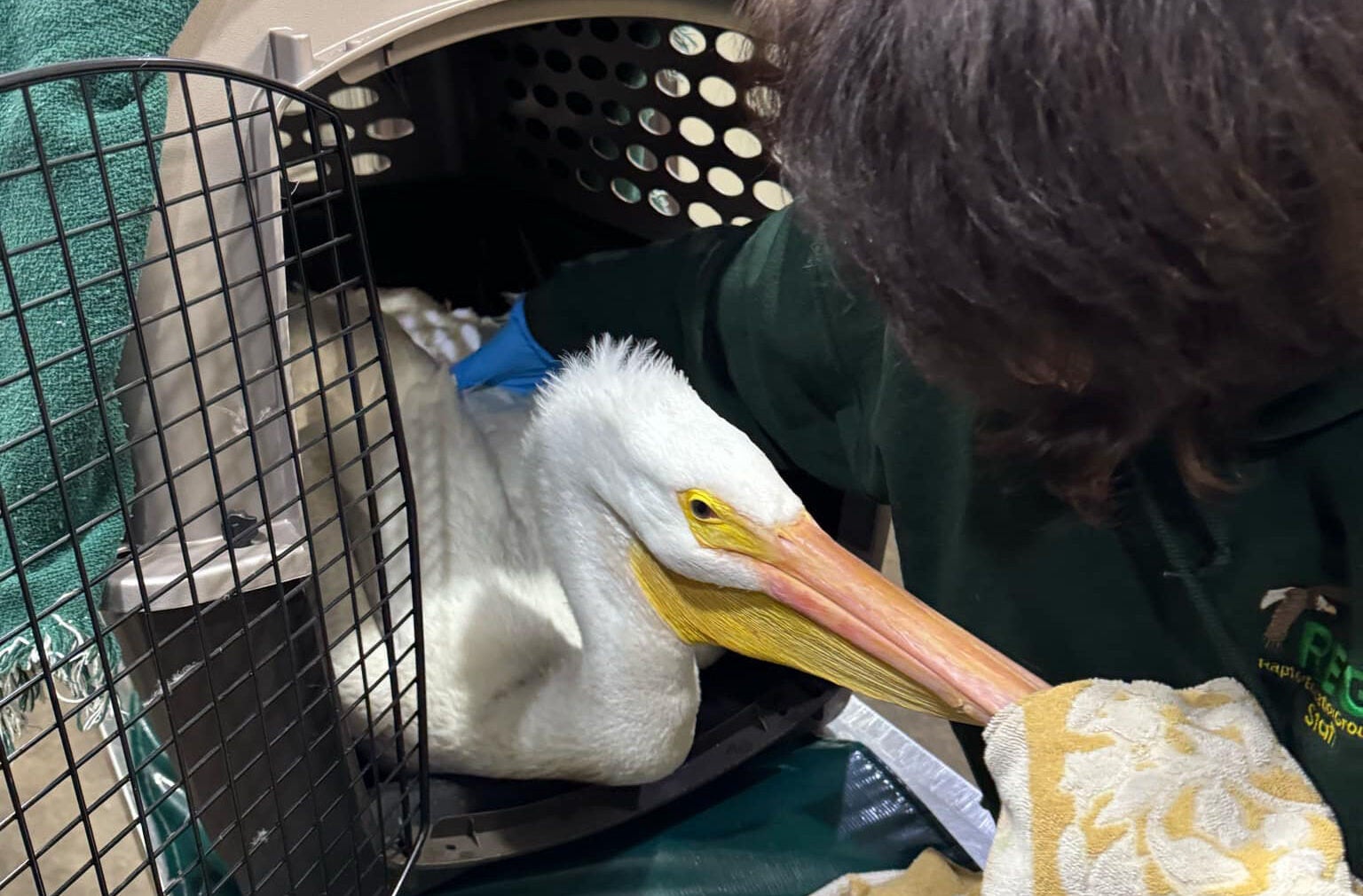
The eagle was treated by veterinarian Kim Ammann at her Winged Freedom Raptor Hospital in Spooner.
Ammann said the eagle was brought to the volunteer-run center in September 2024 after it was found at a campground with a gaping injury on its leg.
News with a little more humanity
WPR’s “Wisconsin Today” newsletter keeps you connected to the state you love without feeling overwhelmed. No paywall. No agenda. No corporate filter.
“It was horrible,” said Ammann, founder of the hospital. “It had been open and exposed to air and bugs and bacteria … at least a week, if not longer.”
“She was dying,” Ammann added.
The veterinarian takes in about 200 birds a year, including at least 75 bald eagles.
She knew this wound would be difficult to treat without any remaining skin near the injury to work with. So Ammann began Googling alternative ways to close the wound. She found the Iceland-based company Kerecis, which makes tissue regeneration products from fish skin.
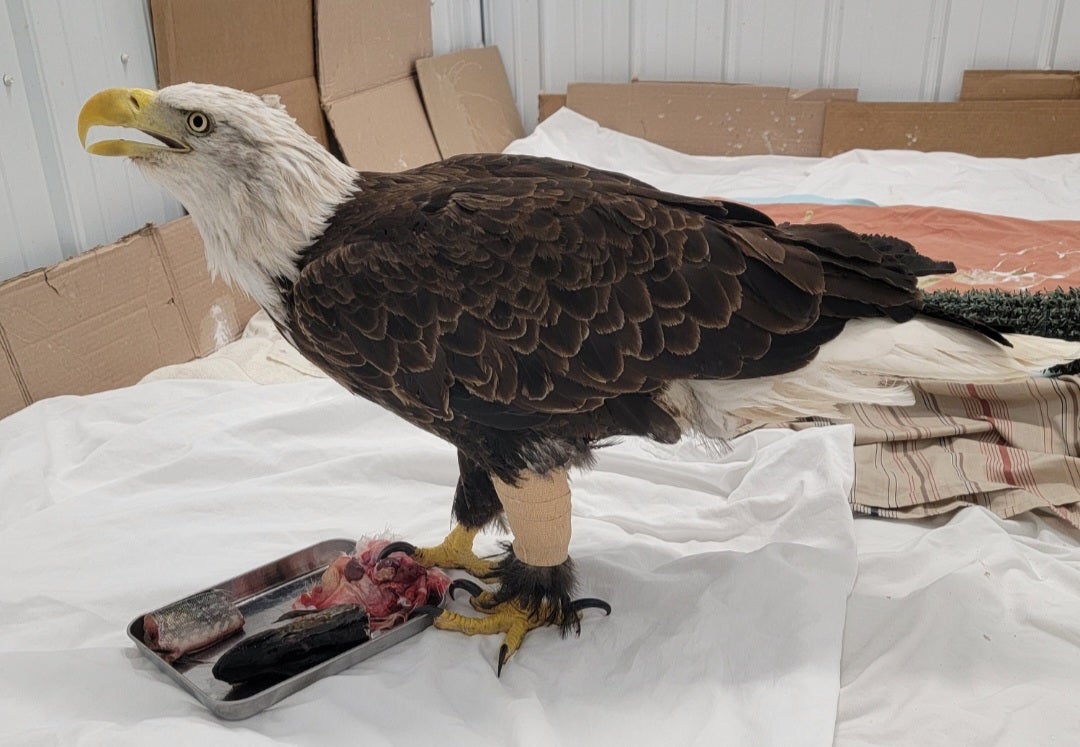
“She (Ammann) was looking for a solution that would help her save the bird’s life,” said Marta Hines, Kerecis’ veterinary business development manager. “We had never applied fish skin to an eagle.”
Typically, the company’s products are used on humans. But after receiving requests from doctors to use the technology on animals, Hines said, they created a veterinary version.
After hearing the eagle’s story, the company provided its product to Ammann’s center for free. Ammann named the eagle “Kere,” a nod to the company’s name.
Kerecis products are made from North Atlantic cod skin, selected for its compatibility with human skin and because it has no known risk of viral transmission, Hines said. The production is also sustainable, she added.
“We are able to work with something that would have been discarded and wasted,” Hines said. “And put it to work and to help save lives, close wounds.”
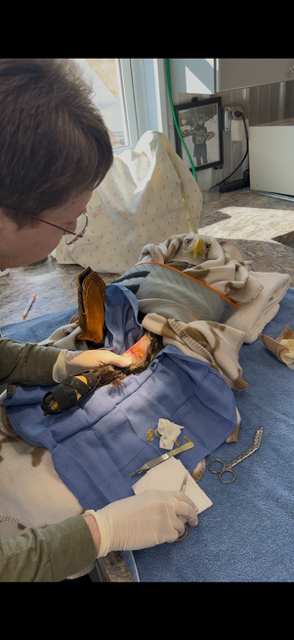
Ammann rehydrated and sutured Kerecis’ veterinary-friendly fish skin patch onto Kere, a fish-eating bird. The product looks almost like a fishnet stocking, she said, and creates a structure for tissue to regenerate around.
“It brings all the nutrients and structure in for her own skin cells to then creep in,” Ammann said.
After 10 months of wound treatments and, later, rehabilitation in the center’s open air eagle flyway, Kere was ready to be released, Ammann said.
On June 22, Kere took flight on a soccer field at a school near the center.
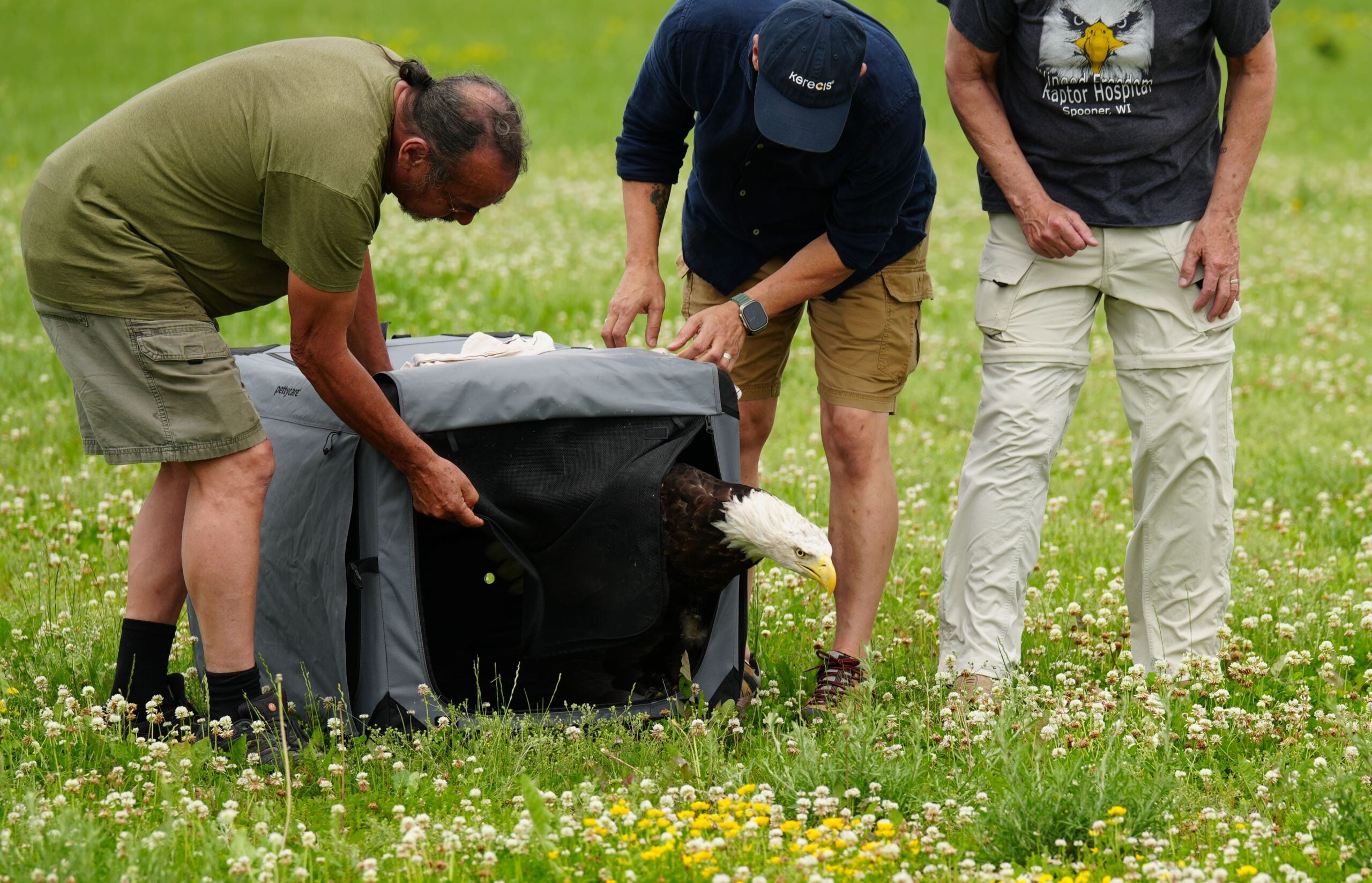
“She came right over my head,” Ammann said. “It was (a) mixed blessing for me. I was very fond of her. She was so tolerant of everything that we had done.”
Dozens of supporters looked on.
“There were some tears. There was some laughing and high fives,” she added.
Ammann said she’s continued to use the fish skin treatment for small injuries on other birds.

Wisconsin Public Radio, © Copyright 2026, Board of Regents of the University of Wisconsin System and Wisconsin Educational Communications Board.