
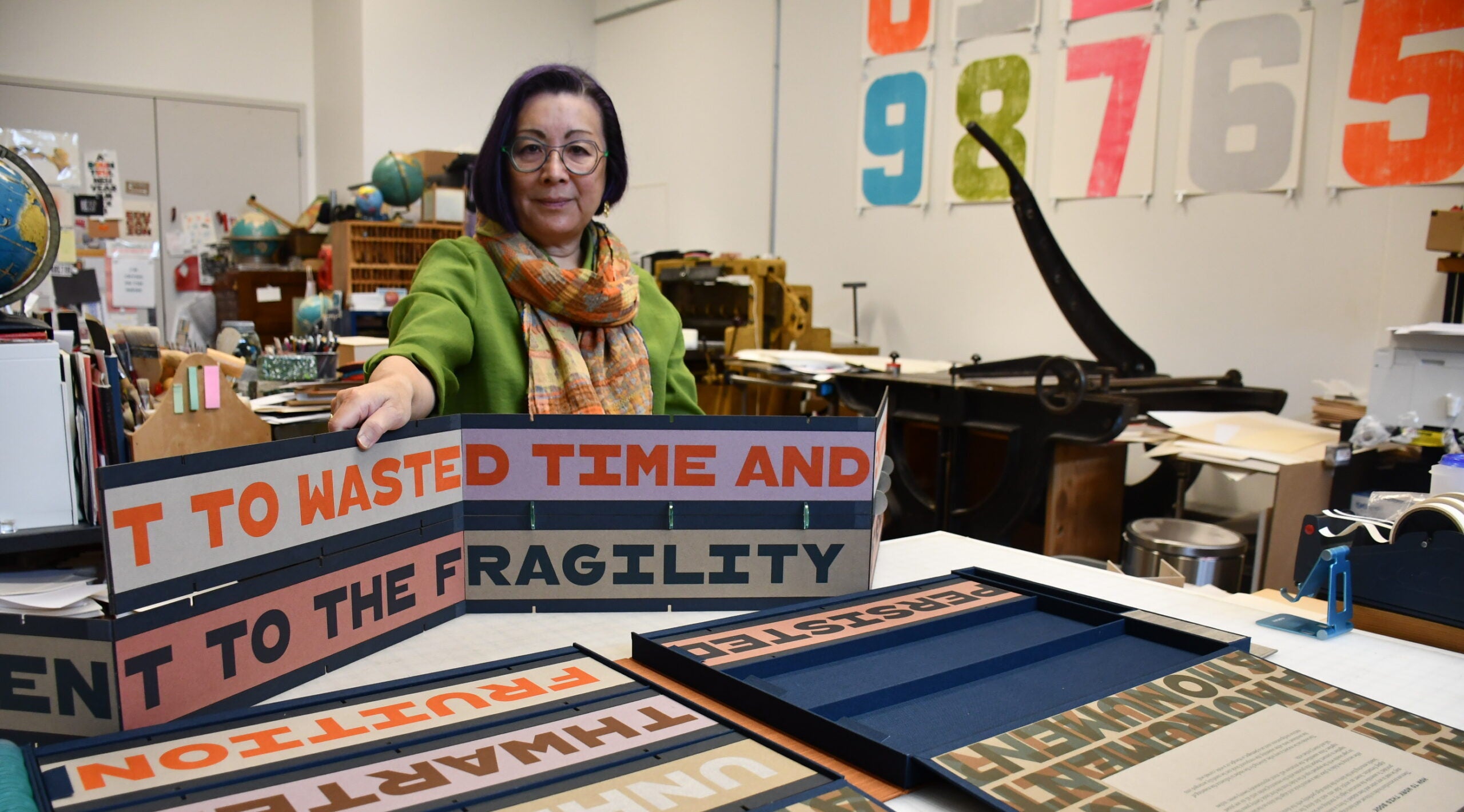
Julie Chen has made hundreds of books. But she’s not an author. She’s a book artist.
“Book art really is about using the book form, in all its various iterations, as an art medium. The way someone might make art film or sculpture or a print,” Chen told WPR’s “Wisconsin Today.”
“The reader really has to interact with the book in various ways,” she added. “They’re not just turning pages but doing other actions in order to find the content.”
News with a little more humanity
WPR’s “Wisconsin Today” newsletter keeps you connected to the state you love without feeling overwhelmed. No paywall. No agenda. No corporate filter.
Chen’s books often have moveable structures, three-dimensional aspects and surprise endings. Her book art has few words but still tells dramatic stories.
Chen is an internationally renowned book artist and professor at the University of Wisconsin-Madison. She has been publishing limited edition artists’ books under Flying Fish Press for more than 30 years.
Her work is housed in collections in the Library of Congress and the Victoria and Albert Museum in London. In Wisconsin, visitors to the Kohler Art Library in Madison can view and interact with some of Chen’s pieces themselves, with the help of a librarian.
Her next project is based on a 19th-century pop-up book master, Lothar Meggendorfer.
What is book art?
Chen said there is a difference between “book art” and “book arts.” Book arts (with the “s”) refers to the craft and technique of making books — so printing, binding and paper-making.
Book art is transforming a book into artwork. Rather than a book being the thing that houses text, the book is the sculpture or the painting.
Chen’s pieces are known for being highly interactive.
One example is a recent piece she created called “A Monument to What Remains.” The inspiration for the book came when Chen was at the Vietnam Veterans Memorial in Washington, D.C. As she was looking at all the names of the dead soldiers, she thought about a friend who served in Vietnam and survived, but developed post-traumatic stress disorder.
“I’m thinking, ‘Well, where is his monument? He served his country. He didn’t die. But his life was affected,’” she said.
The reader starts with two large boxes.
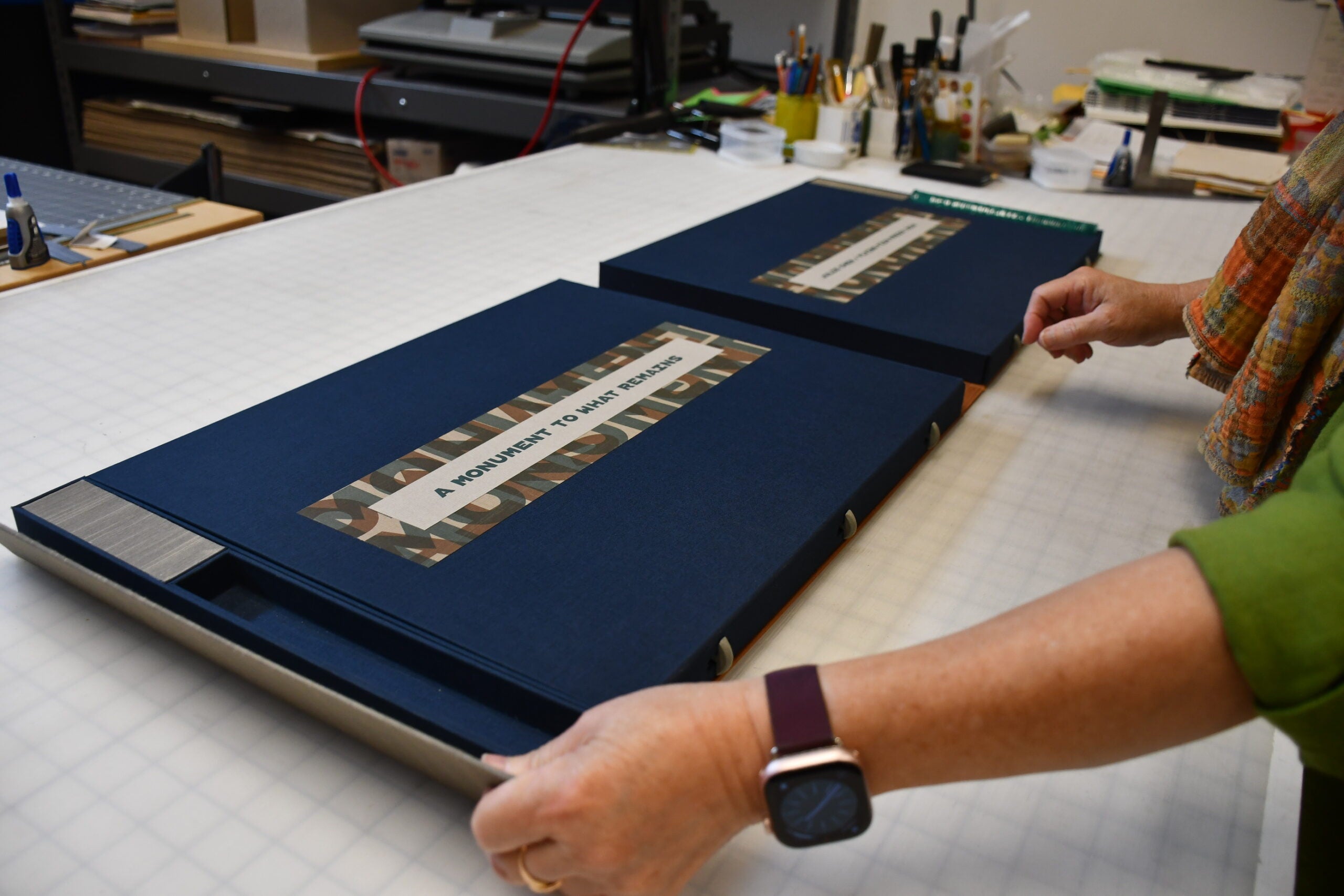
Inside the large boxes are six skinny accordion books with 2-inch type. The text says things like, “This is a monument to the fragility of memory,” and, “We honor those who were unthanked and unnamed.”
Further on, the text refers to other concepts that often don’t get memorialized, like emotion or persistence.
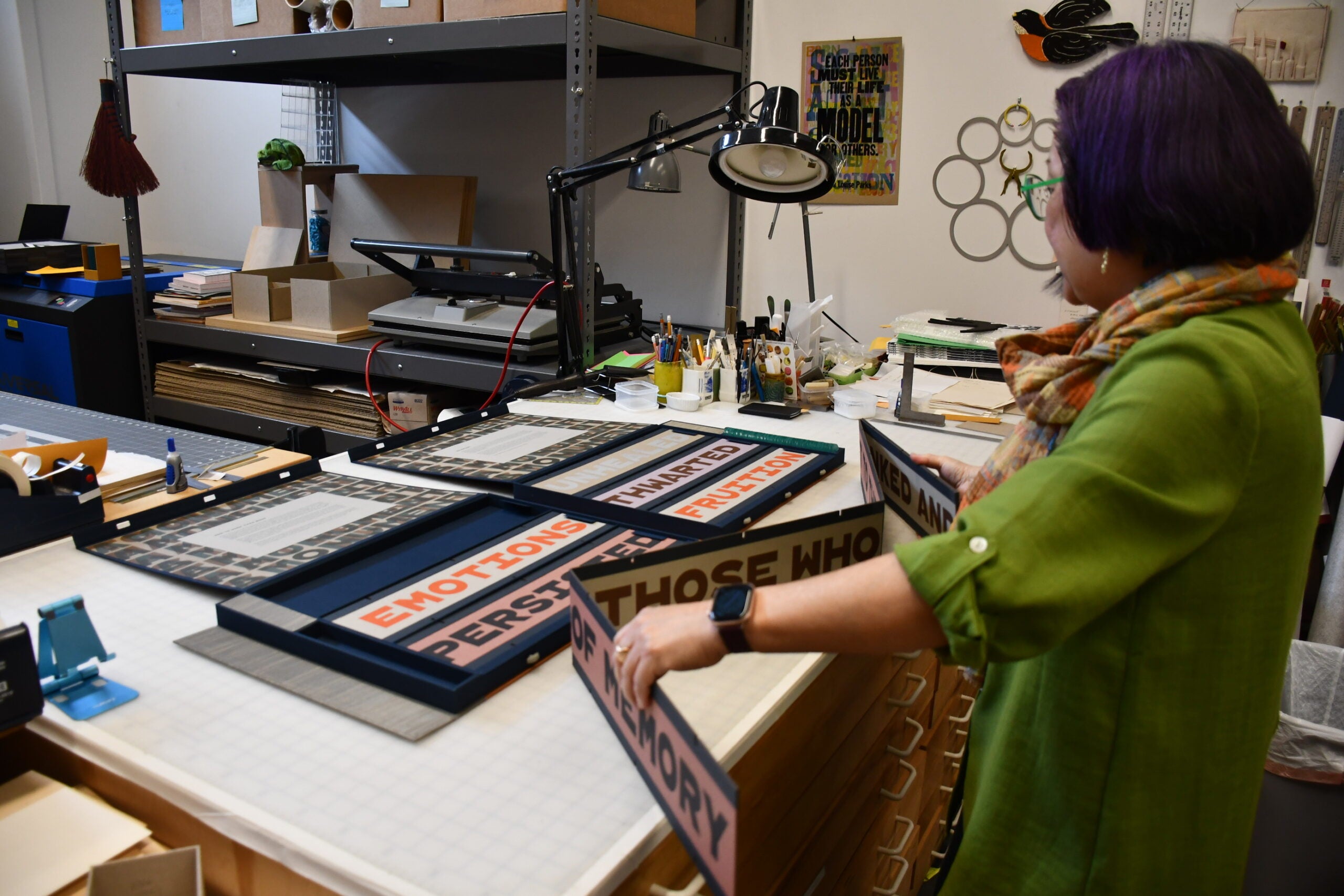
Then there is a set of acrylic discs included with the book so the reader can stack the pieces one on top of the other.
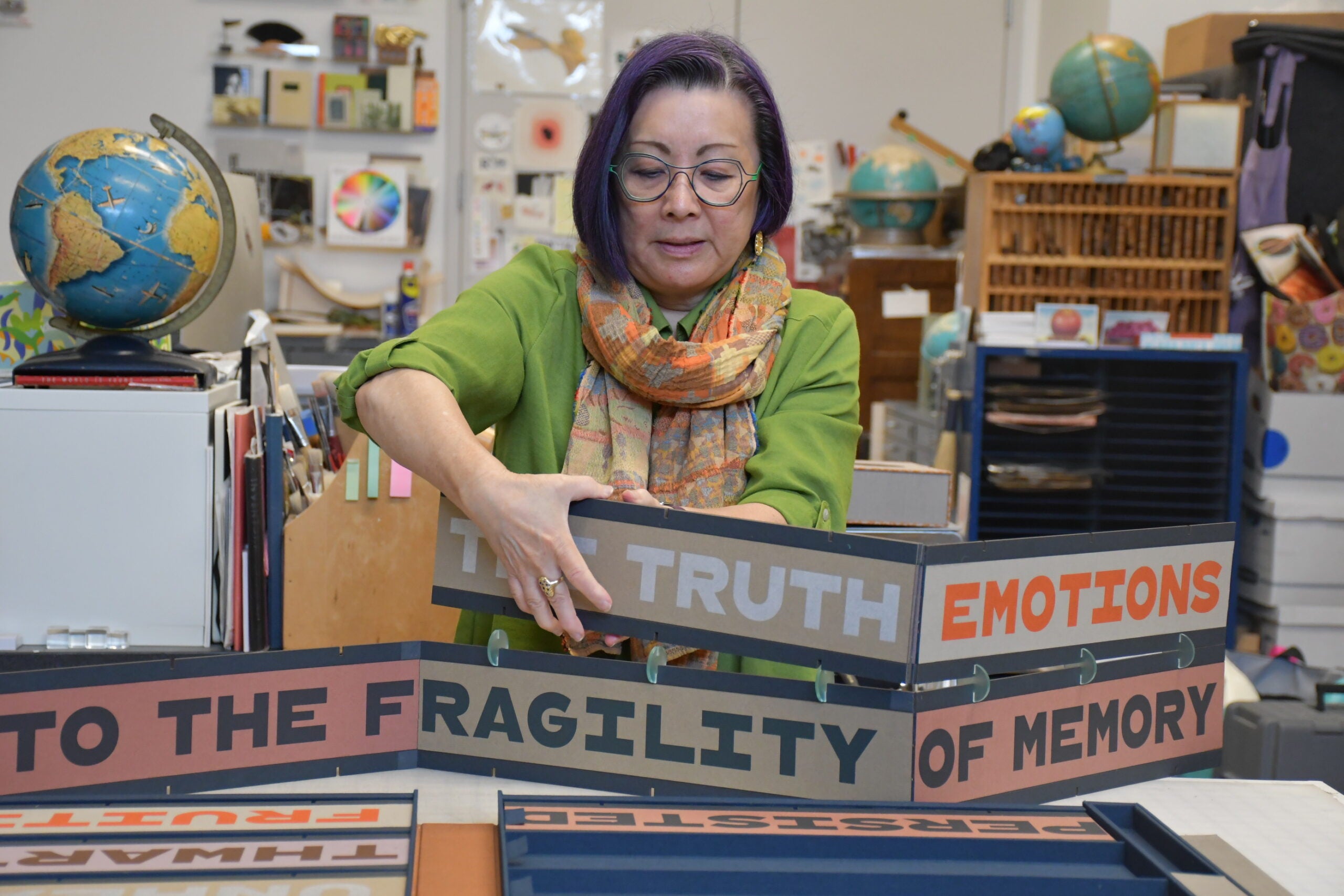
In the end, the reader gets to build their own monument and control how the words and phrases are displayed.
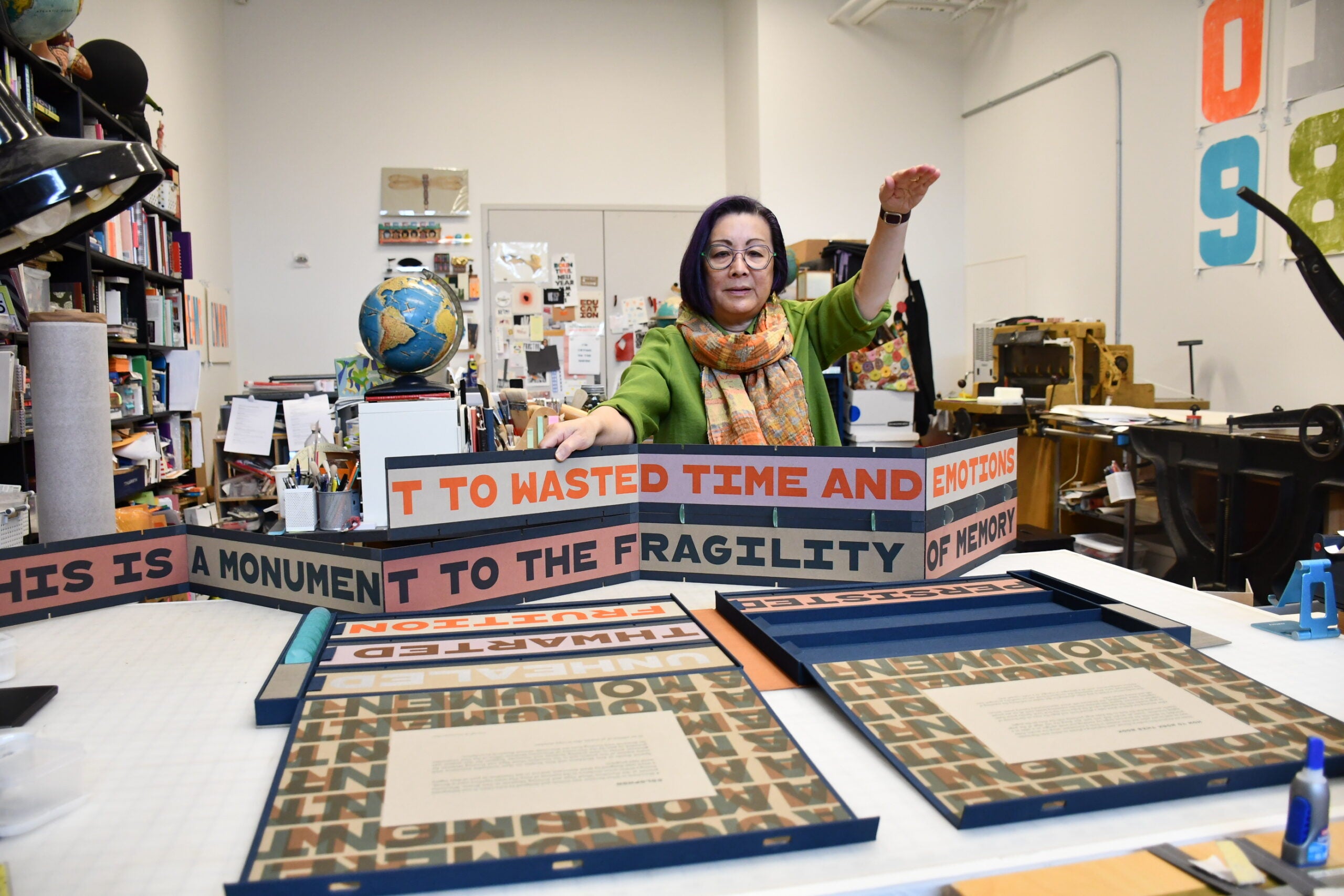
Listen to Chen describe her piece, “A Monument to What Remains.”
Who is Lothar Meggendorfer?
For the past year, Chen has been diving into the world of a 19th-century paper engineer.
Lothar Meggendorfer made hundreds of moveable or pop-up books over his career, and his artwork is said to have some of the most complex mechanisms ever created in the genre. Examples include a single pull tab that causes multiple levers to move, which in turn animate an illustration.
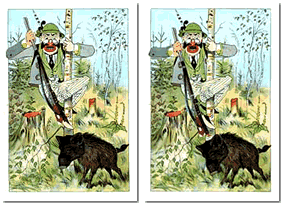
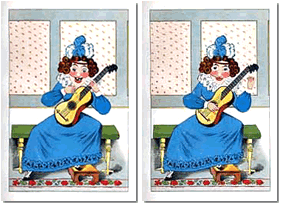
With the help of UW-Madison grants, Chen bought several Meggendorfer books and studied their mechanics. She wanted to find out how the pieces moved and what was happening behind the pages to create moveable illustrations.
She reverse-engineered the mechanics and is making her own version of a moveable, pop-up book that will focus on levers of power. It’s called “Endless Machine.”
“It’s a kind of reflection about where we are right now in the political situation and how there’s so many hidden forces that are shaping the world we live in,” she said.
Chen expects to finish the piece next year.