Across the country, immigration enforcement agents are raiding worksites in small towns and rural communities.
A public health researcher at the University of Michigan paints a picture of what immigration enforcement looks like — not at the U.S.-Mexico border — but in quiet, predominantly white, rural parts of the Midwest, like Wisconsin.
Witnesses told William Lopez, the researcher and author of “Raiding the Heartland: An American Story of Deportation and Resistance,” that raids reminded them of a natural disaster, like a tornado.
News with a little more humanity
WPR’s “Wisconsin Today” newsletter keeps you connected to the state you love without feeling overwhelmed. No paywall. No agenda. No corporate filter.
“One of the elements that (the natural disaster comparison) lacked was actually violence,” Lopez told WPR’s “Wisconsin Today.” “Folks often extended the comparison from something like a tornado to a situation of violence that involved people. We heard a lot of comparisons to school shootings. We heard comparisons to 9/11 and to the Challenger explosion.”
A pillar of President Donald Trump’s administration and campaign was to crack down on people entering and living in the country illegally.
“Enforcing our Nation’s immigration laws is critically important to the national security and public safety of the United States,” the White House said on Trump’s Inauguration Day this year.
The Department of Homeland Security says the Trump administration has deported more than 400,000 people since taking office.
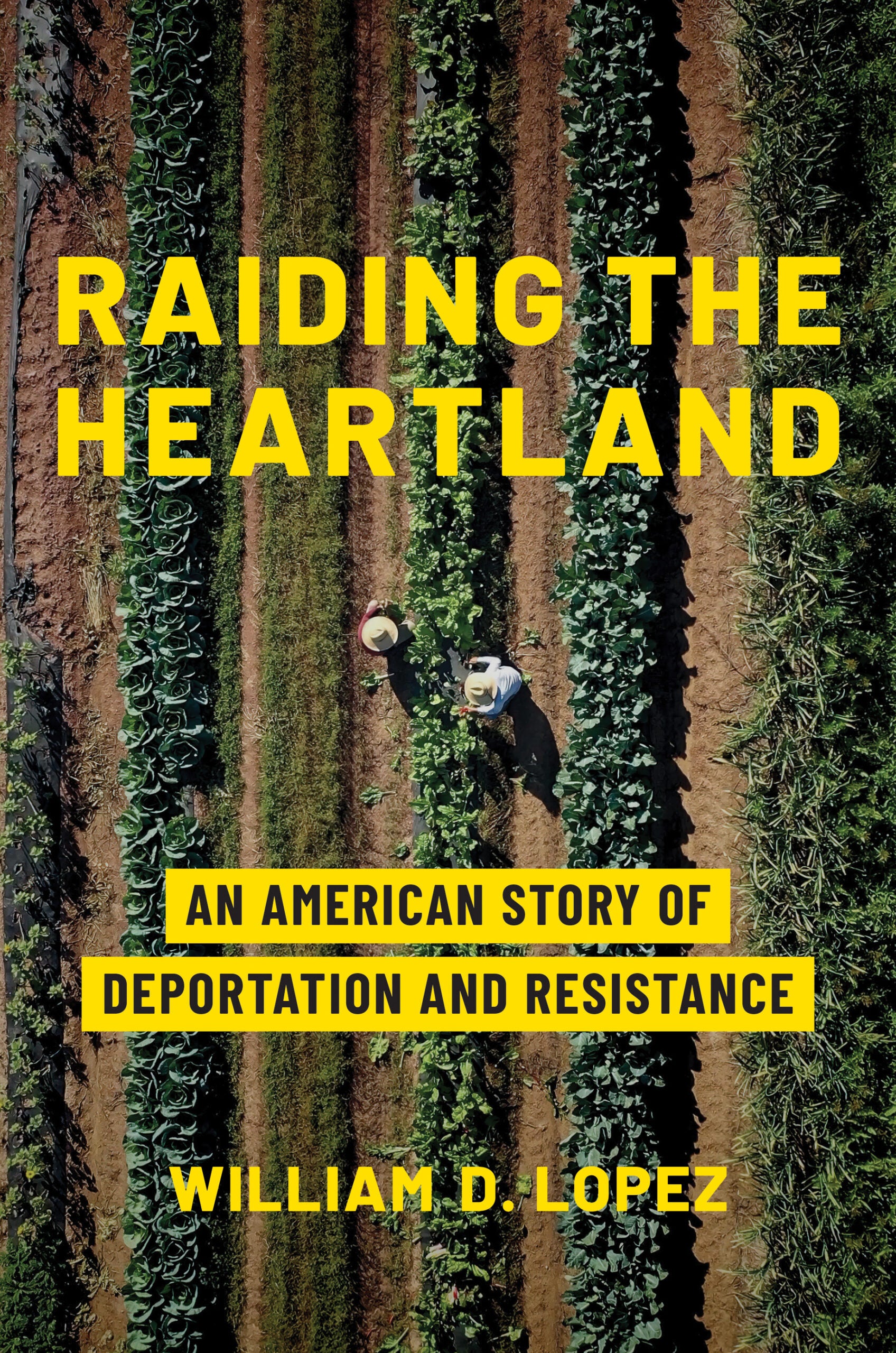
Lopez’s new book highlights some of the places where worksite immigration raids occurred in the Midwest, starting with scenes from 2008 in Postville, Iowa and hearing firsthand how raids affected families and residents.
This interview has been edited for clarity and brevity.
Kate Archer Kent: You describe these worksite raids as a particularly violent method of immigration enforcement. What is it about these moments that are so violent?
William Lopez: These worksite raids are in places that are generally small, quiet, isolated. And all of the sudden, with the force of an organized hurricane, hundreds of agents will descend upon these towns.
We had people referencing the helicopters that were buzzing overhead. Why would they mention helicopters? Because it’s just so rare, the only time anyone would ever see a helicopter is perhaps one of the helicopters associated with the university hospital, right? And even that doesn’t really happen in small towns,
In addition, there were hundreds of officers. There would be buses. There would be police cars and other enforcement vehicles. Then at the moment of the raid, the officers surround these facilities. They enter the building. They force everyone to go into the middle, and then they arrest them and walk them out, usually in a long line, as you’ve seen in photo ops of folks who are handcuffed or shackled, or in many cases, zip tied with their hands behind their backs.
KAK: You talk with Juana, whose husband, Elisio, was detained during a worksite raid. Those are pseudonyms. Juana described seeing white managers sobbing, Latino workers disappearing and Latina wives picking up their husbands’ belongings. It just sounds devastating.
WL: I was with Juana and her husband in a small room in a church in Mount Pleasant, Iowa. A town very much like other towns throughout the Midwest.
So I was in this situation where on the one hand, her husband, Elisio … was telling me: I was terrified the moment the ICE agents entered the facility because I thought I was going to get shot.
And Juana, on the other hand, was telling me about what it was like to try to figure out what was happening. Because her son’s teacher actually called Juana, seeing ICE (Immigration and Customs Enforcement) vehicles outside of the facility, and said “I think your husband’s in danger.”
So like so many other people throughout these communities, Juana was trying to put the pieces together of what was going to happen.
ICE does not say when a raid starts and does not say when a raid ends.
KAK: You mentioned the teachers, one of the big groups of people who are dealing with the aftermath of raids are teachers. What role do they have in communities after worksite raids and the deportations?
WL: What I’ve come to understand is that aside from immigrant families themselves, teachers will bear the brunt of mass deportation.
I say that because when I studied worksite raids and started to understand the mechanics of when they happen, worksite raids happen during the work day. And with few exceptions, we know where children and teenagers are going to be: They’re going to be at school.
It’s the teachers who have to explain to those students what’s happening and explain to the students that the parents who drop them off may not be the parents that pick them up that day.
We visited a school in Morristown, which is right outside of Bean Station, Tennessee, where a meat packing plant was raided.
The principal and administrators had to figure out how to tell their bus drivers there may not be parents home when you drop the kids off, so you need to make sure that their students go into houses that are not empty.
Those teachers, like others we met in Texas, actually packed lunches for their students, who stopped coming to school, and hand delivered those lunches to those student homes.