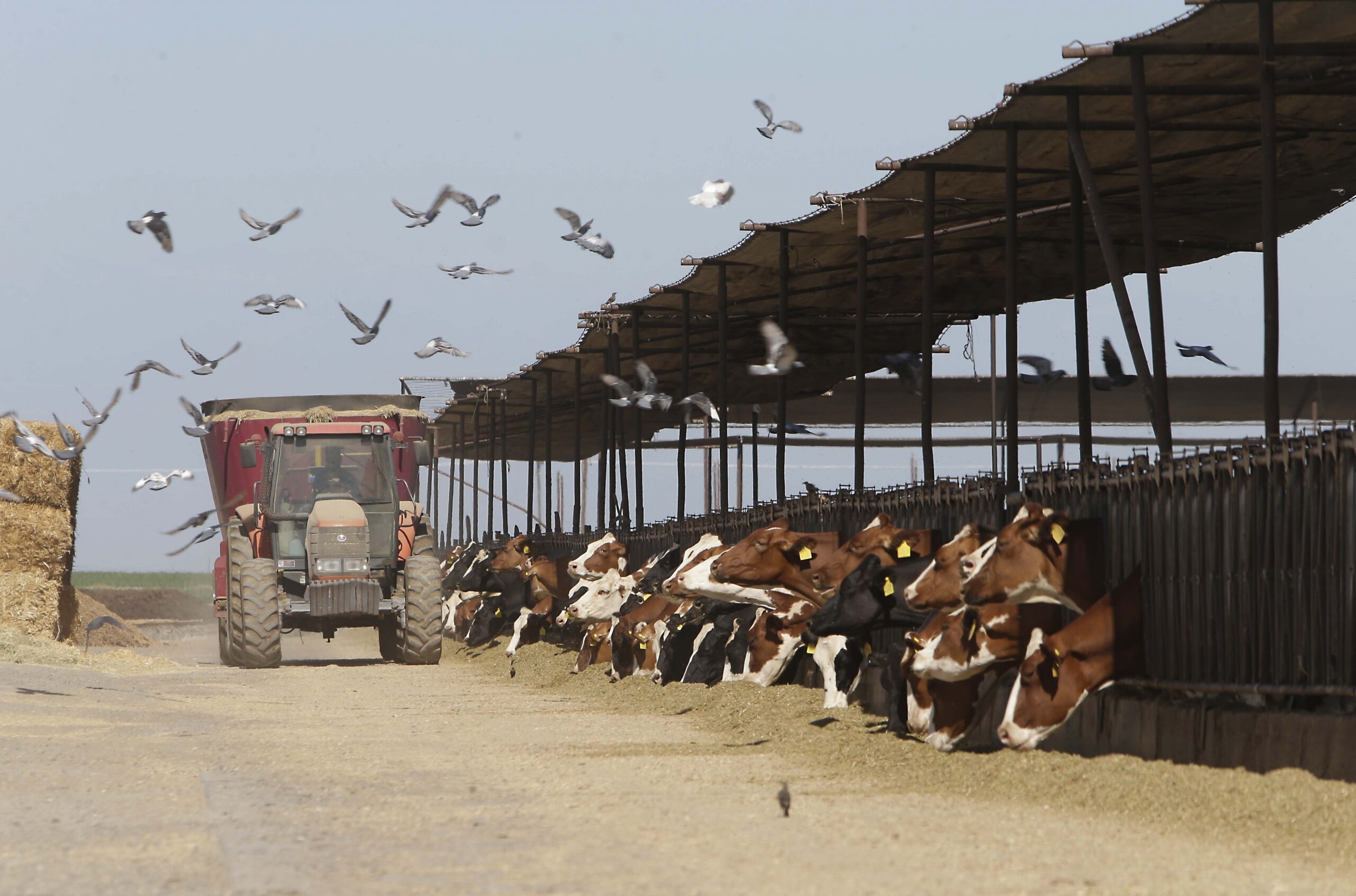
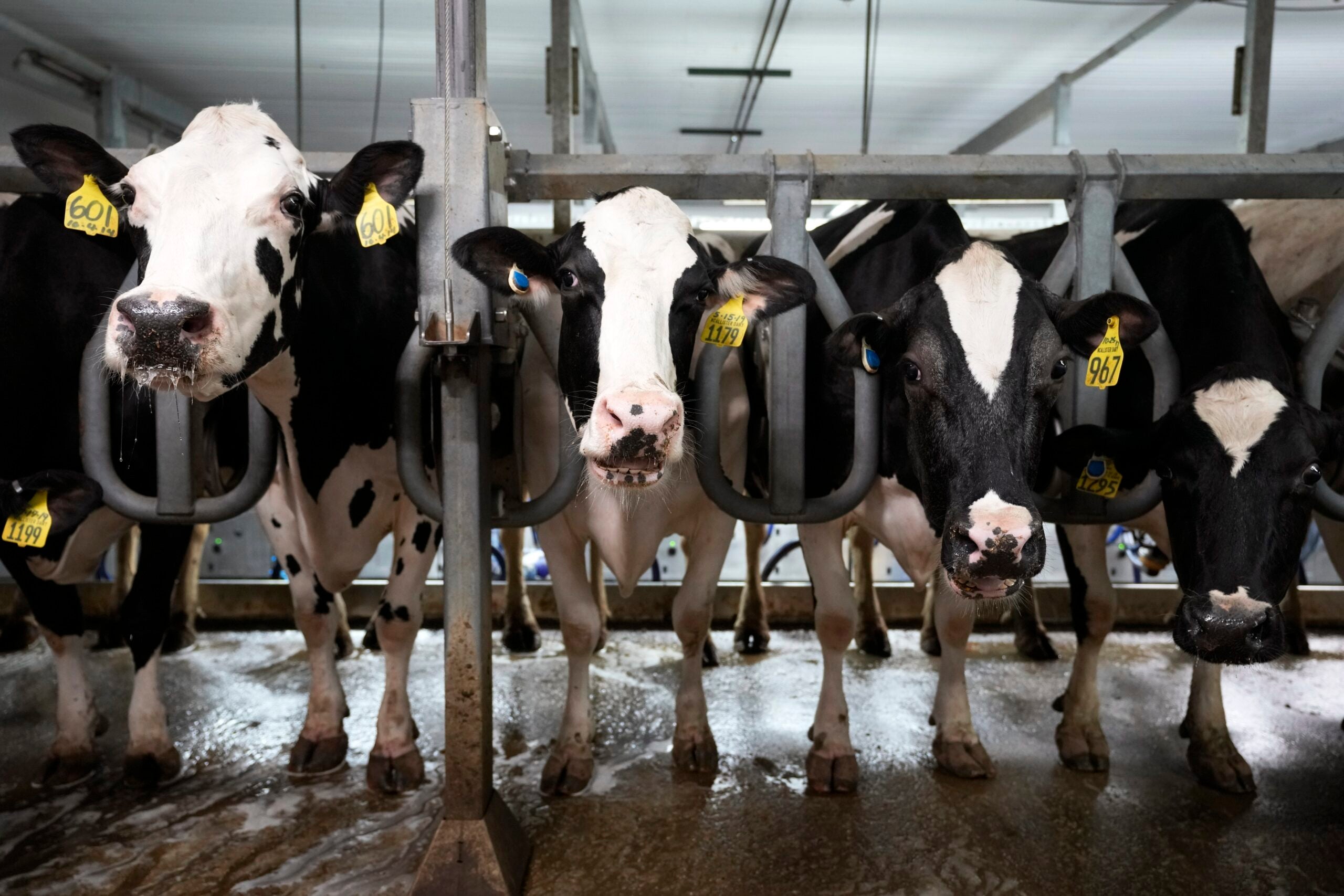
A western Wisconsin town is among a growing number of local governments that want local regulation of large livestock farms.
The Pierce County town of Isabelle will hold a public hearing Tuesday on a draft operations ordinance for concentrated animal feeding operations, or CAFOs. Those farms have at least 1,000 animal units or the equivalent of 700 milking cows. The ordinance would require a CAFO owner to obtain an operations permit to address concerns about manure, air pollution and road damage among other issues.
“We just want to reinforce state statute and make sure that the environment is sound and that there’s good business practices by the CAFO people, and that people will be held accountable for any misrepresentation of what they’re going to be doing,” said Scott Nelson, chair of the town of about 270 residents.
News with a little more humanity
WPR’s “Wisconsin Today” newsletter keeps you connected to the state you love without feeling overwhelmed. No paywall. No agenda. No corporate filter.
The ordinance comes as Ridge Breeze Dairy, a 1,700-cow dairy farm in Pierce County, plans to expand in the nearby town of Maiden Rock. Residents there are challenging the state’s approval of those plans. No CAFOs currently operate within the town of Isabelle.
As of December, three Wisconsin counties and eight towns had passed CAFO operations ordinances, including Maiden Rock.
Isabelle’s ordinance applies to farms with 1,000 animal units or more and requires them to pay an application fee. The owner would be required to share various plans to manage waste, air pollution, carcass disposal, road maintenance and fire safety, as well as how to prevent the spread of disease and damage to nearby waterways.
A CAFO applicant would also have to provide assurance to the town to ensure it has enough money to be able to clean up any pollution that results from the project.
Town of Isabelle resident Margaret Chesley chaired the town’s CAFO study group committee. In a statement, Chesley said the committee recommends the town approve the ordinance based on research about environmental and health risks posed by CAFOs.
“The purpose (of the ordinance) is to protect public health and safety; to prevent pollution, preserve quality of life and (the) environment, including achieving water quality standards within the town of Isabelle,” Chesley wrote.
The draft ordinance states the town is susceptible to pollution in its groundwater, which residents rely on for drinking water. A 2024 report found 14 percent of wells tested in Pierce County exceeded the federal drinking water standard for nitrates. In the town, the ordinance states nine of 52 wells tested had unsafe nitrate levels, noting that 90 percent of nitrate contamination is tied to agriculture in Wisconsin.
Erin Tomasik, community relations manager with the Dairy Business Association, said farmers are constantly improving their operations to enhance sustainability and water quality. She said the town’s ordinance is overreaching.
“We feel that these requirements are so burdensome that only a few farms are going to be in a position to be able to pay the fees and complete the permits and maintain the reporting requirements,” Tomasik said. “These ordinances are going to be pushing out many family farms.”

The group is among those that backed a bill introduced by Republican lawmakers last year that would have barred local governments from pursuing more stringent local regulation of farms and animal welfare.
Such ordinances create a patchwork of regulations for Wisconsin’s $116 billion ag industry — which is already regulated by the state, said Jason Mugnaini, executive director of government relations for the Wisconsin Farm Bureau Federation.
“Wisconsin already has some of the strictest environmental standards in the country, so this isn’t about saying no to regulation. It’s about being smart with how government interacts with the farm community and does so with consistency,” Mugnaini said in a statement. “Adding duplicative local ordinances on top of strong statewide standards only creates confusion, uncertainty, and unnecessary cost.”
The towns of Rock Elm and Gilman are also exploring operations ordinances for large farms, said Danny Akenson, field organizer for the group Grassroots Organizing Western Wisconsin.
“What we’re recognizing here across western Wisconsin is that the sheer size of these factory farms is becoming so large that the rules that are in place are not enough to protect the residents and small farmers in rural areas in Pierce County,” Akenson said.
The legal arm of the business lobbyist Wisconsin Manufacturers & Commerce has sued towns over local ordinances regulating large farms on behalf of residents in Laketown and Eureka.
In Laketown, new town officials later rescinded its ordinance, making the case moot. Earlier this year, a Washburn County judge dismissed the case against the town of Eureka, saying residents lacked standing.
A public hearing on Isabelle’s proposed ordinance will be held at 6:30 p.m. Tuesday at Tabor Church in the town of Isabelle.

Wisconsin Public Radio, © Copyright 2026, Board of Regents of the University of Wisconsin System and Wisconsin Educational Communications Board.