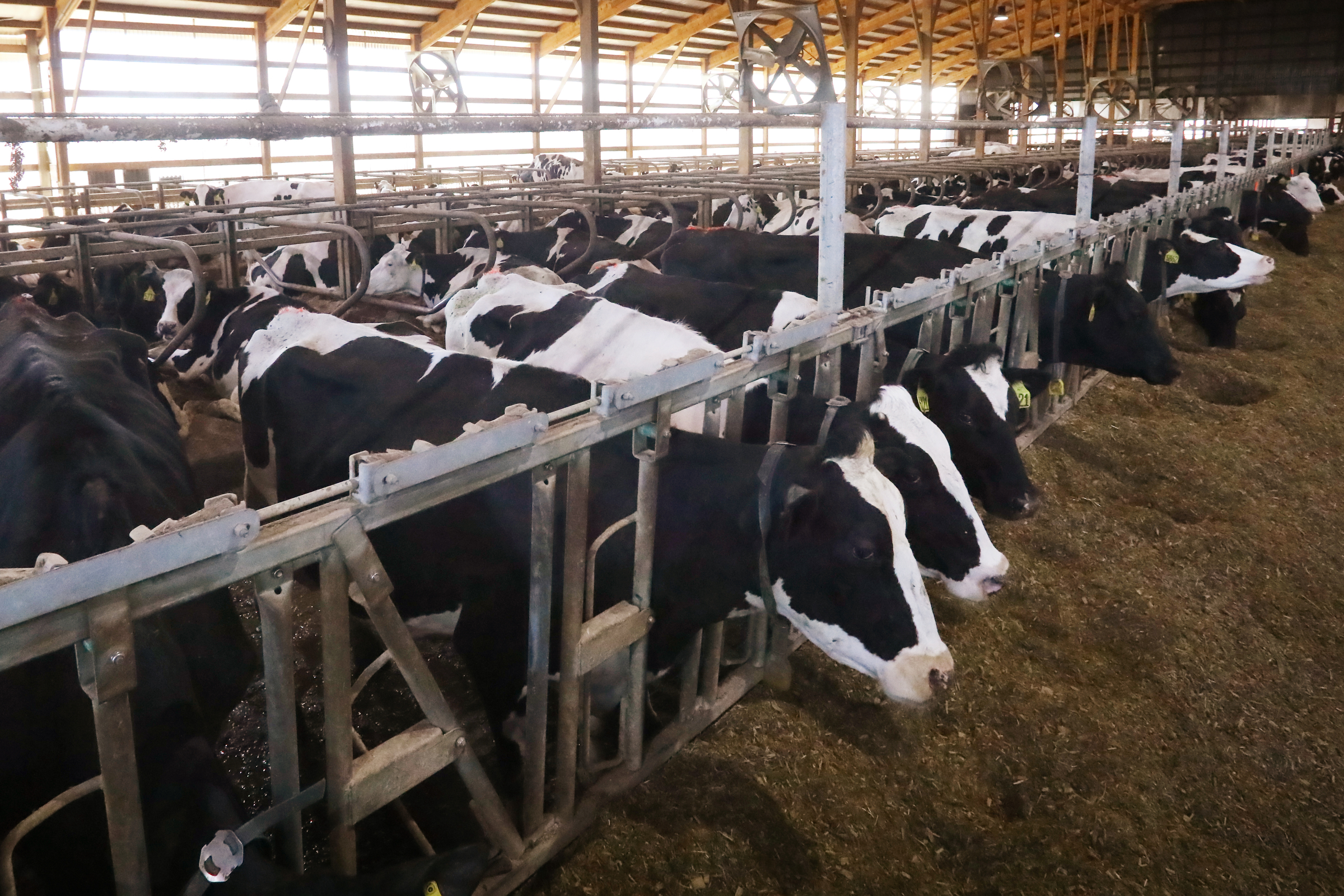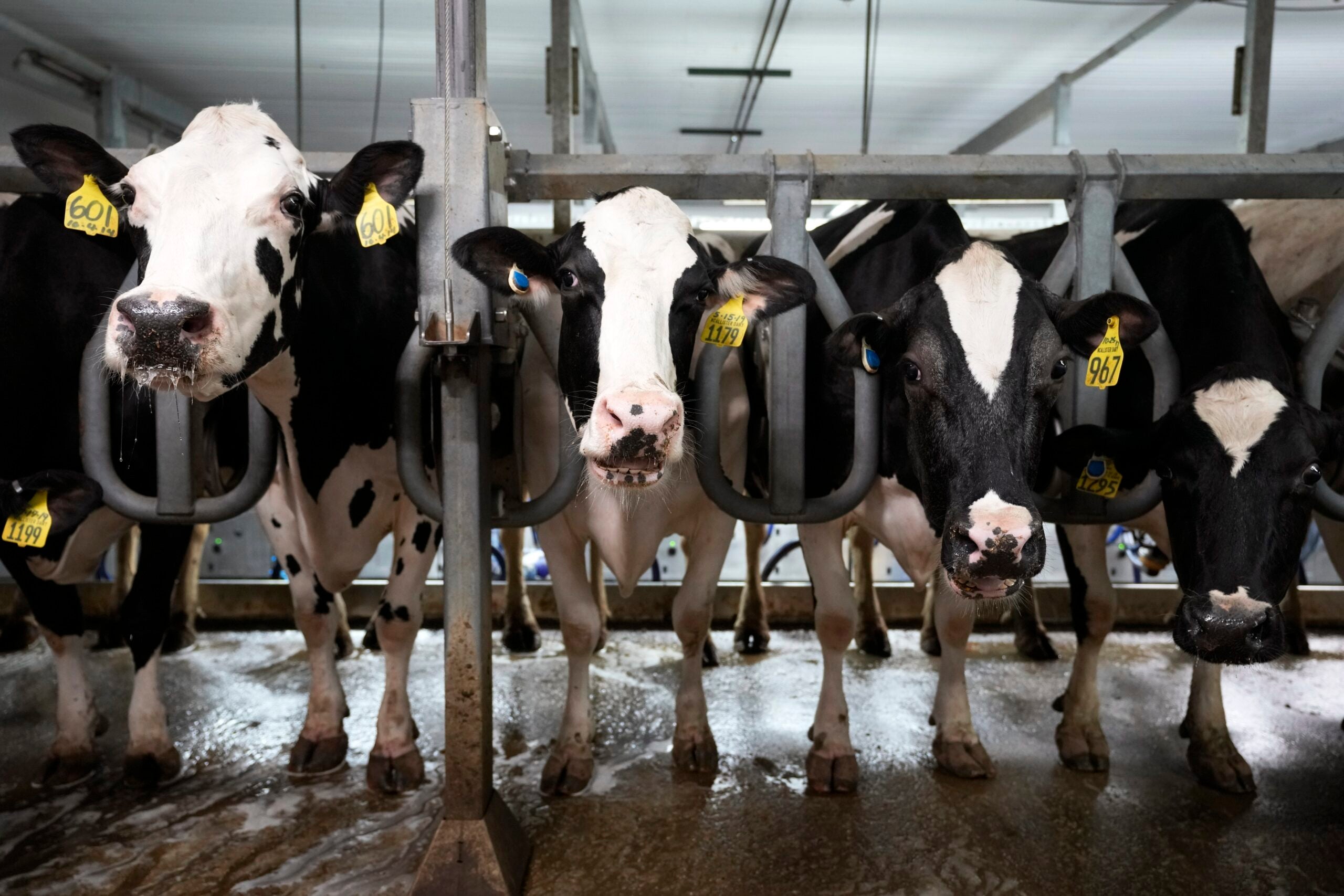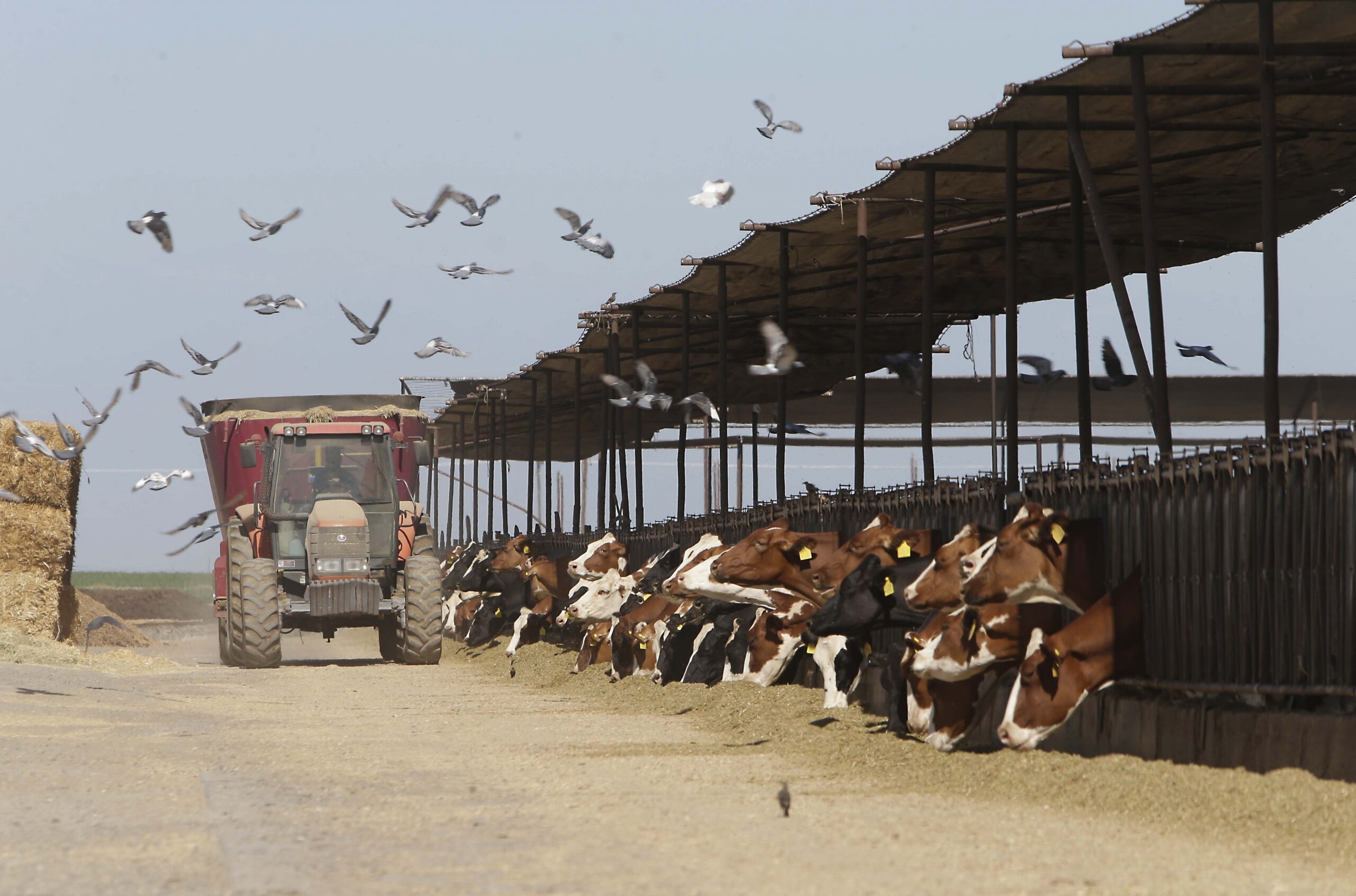

Environmental groups are challenging a permit issued to a large dairy farm near West Bend that operated for years without one.
Midwest Environmental Advocates filed a petition late last month for a contested case hearing on behalf of Milwaukee Riverkeeper and neighbors living near three facilities operated by Rob-N-Cin Farms in the towns of Trenton and Saukville.
In October, the Wisconsin Department of Natural Resources issued a permit to the farm as a new concentrated animal feeding operation, or CAFO. Farms with 1,000 animal units, which is equivalent to 700 milking cows, must obtain a CAFO permit before reaching that threshold. But the DNR noted the farm’s herd already exceeded that limit when it sought a permit in 2023.
News with a little more humanity
WPR’s “Wisconsin Today” newsletter keeps you connected to the state you love without feeling overwhelmed. No paywall. No agenda. No corporate filter.
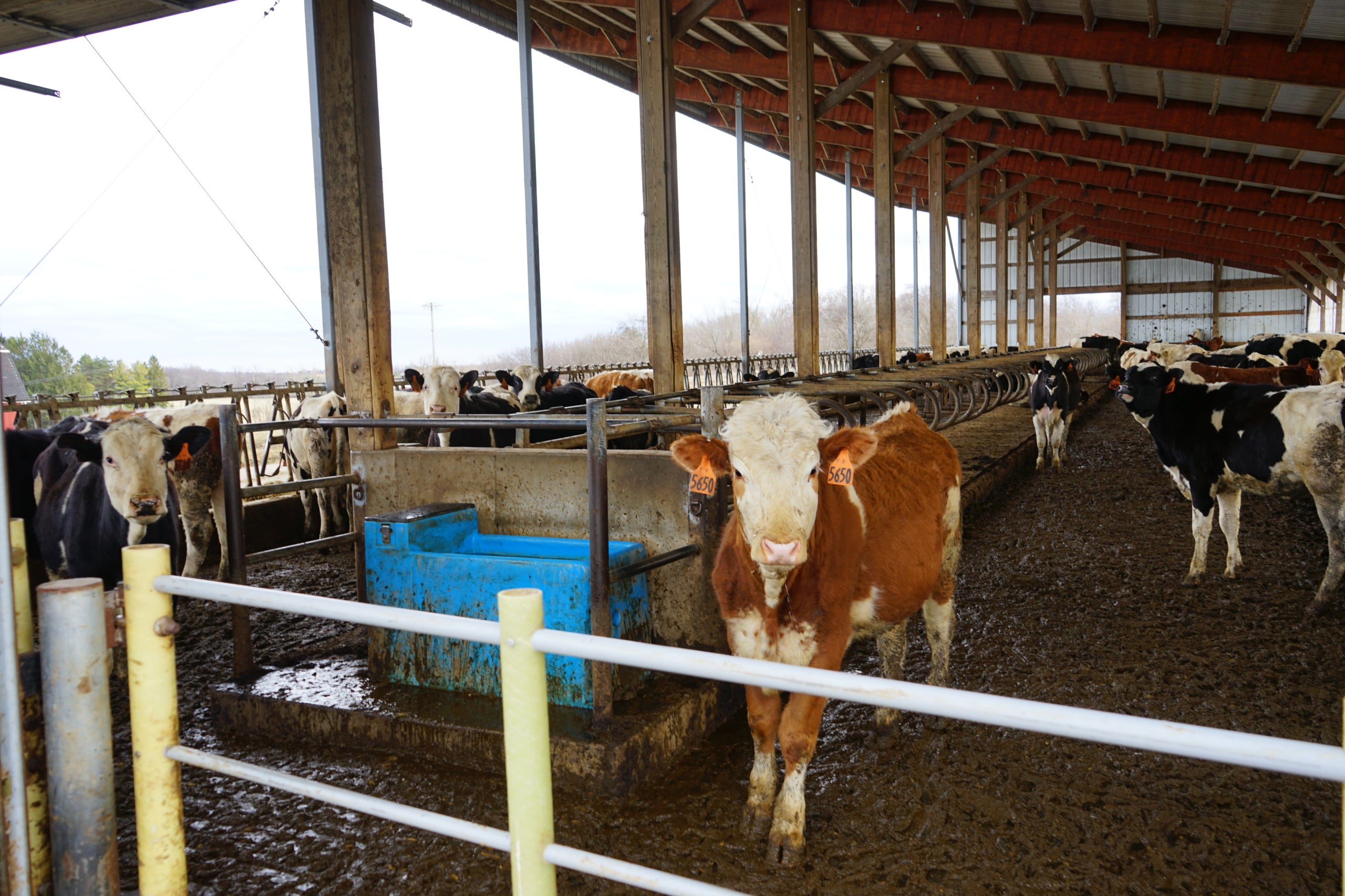
As of March, Rob-N-Cin Farms had around 1,700 cows, heifers, steers and calves. The farm’s owner wants to grow the herd by more than 40 percent to nearly 2,500 animals by 2030. After the expansion, the farm’s facilities would generate more than 18 million gallons of manure and wastewater each year that would be spread across more than 3,200 acres.
“The DNR permit that came out recently didn’t really include any groundwater monitoring (or) other controls … to give us more assurance that this farm would protect water quality,” said Cheryl Nenn with Milwaukee Riverkeeper, a nonprofit environmental organization.
A DNR spokesperson said the agency doesn’t comment on pending litigation. The farm’s owner Robert Roden also declined to comment.
Nenn is worried about the effects of spreading manure in an area of shallow, fractured bedrock that is more vulnerable to groundwater contamination, as well as potential runoff to nearby waterways.
The farm’s production sites are near Cedar Creek and streams that drain to the Milwaukee River, in addition to the Cedarburg Bog. The state natural area is home to one of the largest and most diverse wetlands in southeastern Wisconsin, as well as a National Natural Landmark.
“Existing environmental issues in the area are not a basis for denial” of a permit, the DNR said in its final decision. The agency said permit conditions are intended to protect private wells and groundwater with no spreading allowed within 100 feet of private wells or sinkholes.
Petitioner Roxanne Ramirez, who co-owns Winterspring Farm with her husband, said she’s worried that the CAFO may contaminate water that she and her husband use to grow organic vegetables, threatening their operations and the 300 customers they serve during the growing season.
“There’s nothing protecting us from that aside from DNR permitting processes, limiting people from accumulating so much manure that it poisons the groundwater nearby,” Ramirez said.
Adam Voskuil, MEA senior staff attorney, argued the DNR failed to require adequate environmental review of the farm’s plans, as well as both on- and off-site groundwater monitoring.
“DNR needed to order groundwater monitoring in order to get background quality data and address whether or not the CAFO is in fact impacting people’s private drinking water wells or other groundwater resources,” Voskuil said.
The DNR said geologic conditions suggest the threat of groundwater contamination is “relatively low” and don’t warrant groundwater monitoring.
Nitrate, the state’s most widespread contaminant, is often traced back to agriculture and linked to serious health issues that include blue-baby syndrome.
In the towns of Trenton and Saukville, sampling of around 250 private wells shows most had nitrate levels below the health standard of 10 milligrams per liter, according to data from the University of Wisconsin-Stevens Point. But petitioners say recent testing has detected groundwater contamination in the area
Environmental advocates and neighbors had requested an environmental impact statement, but the DNR said state regulations don’t require a separate environmental review. The agency also determined the farm was an existing CAFO because the animal feeding operation existed at the site prior to 2003, which meant the farm was not required to submit an environmental analysis.
Voskuil said it was unreasonable for the DNR to make that determination when the farm had grown significantly over the last two decades, saying the agency allowed the farm to evade more stringent environmental review.
Environmental advocates have also expressed concerns about a lack of written manure spreading agreements. The DNR will review the petition and decide whether to hold a contested case hearing.

Wisconsin Public Radio, © Copyright 2026, Board of Regents of the University of Wisconsin System and Wisconsin Educational Communications Board.