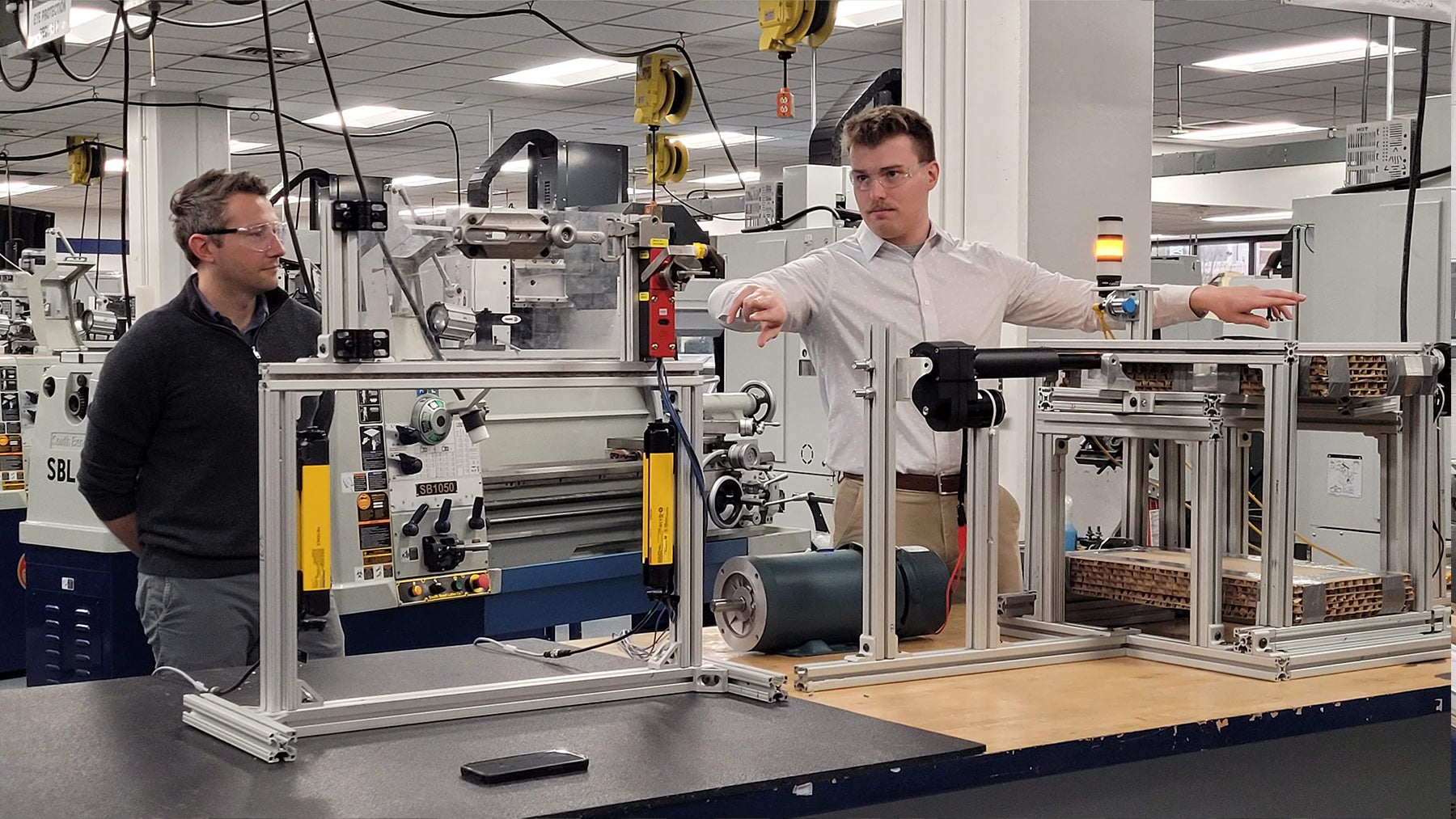
A group of senior engineering students at the University of Wisconsin-Stout developed a custom pallet stacker for Wisconsin-based Ashley Furniture as part of a capstone project last year.
Now, the company plans to implement the machine in its facilities, according to UW-Stout. The project focused on stacking Ashley’s nonstandard pallets, which are longer and heavier than typical pallets.
Ashley Furniture Manufacturing Engineer Eric Kramer, the team’s project manager, said in an announcement from UW-Stout that the students’ pallet stacker came in at a price of about $25,000 and offered the company a “cost reduction of about 60 percent.”
News with a little more humanity
WPR’s “Wisconsin Today” newsletter keeps you connected to the state you love without feeling overwhelmed. No paywall. No agenda. No corporate filter.
“With the team’s documentation, our automation team can replicate their functional design to build six more stackers for our facilities,” he said.
Engineering capstone projects allow UW-Stout students nearing graduation to use skills learned at school on projects for private industry. Students are asked to find a solution to a problem facing the company, said Nathan Spike, an assistant professor in the engineering department.
He said the capstone students usually meet with the company every two weeks to give updates on the project and get feedback on their work.
“I think the biggest learning experience that these students have is often not in the technical side of things,” he said. “It’s often in the project management and teamwork side of things. They’re learning how to depend on not just themselves but one another.”
That hands-on experience also helps students after graduation. According to UW-Stout, 99 percent of 2023-24 graduates from the mechanical and manufacturing engineering programs were either employed or continuing their education within six months of graduation.
The student team that worked on the Ashley Furniture project included Luke Mertens, Zachary Morgan, Chase Rodewald and Riley Stiehl. All four graduated in December.
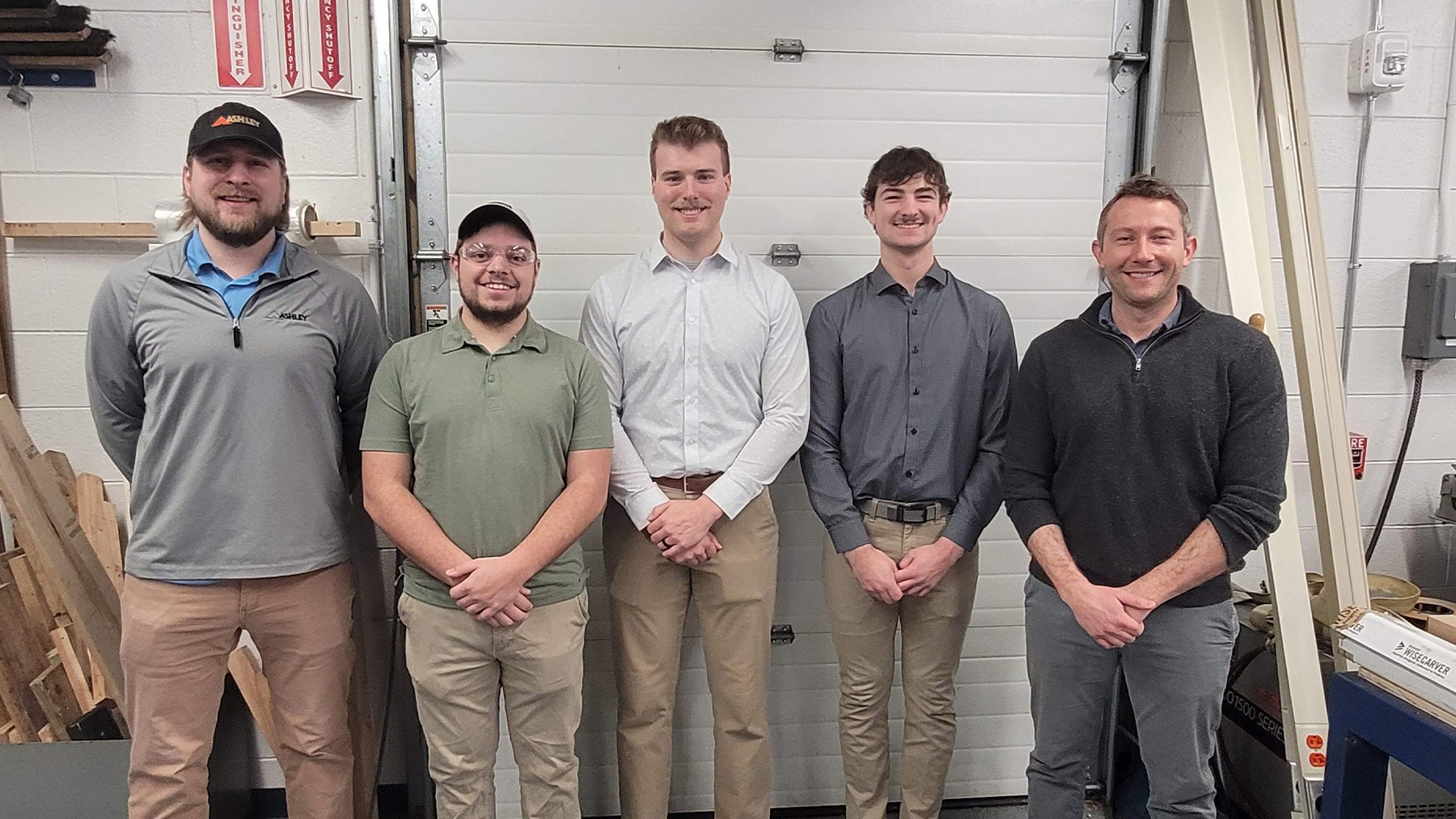
Mertens, one of the students who worked on the project, said the collaboration between the team and Ashley Furniture throughout the process was seamless.
“They fully trusted our creativity and the thoughts we brought to the table,” he said. “If there was an idea that we proposed that they knew, for one reason or another, wouldn’t work, they’d explain why and guide us toward a better solution.”
In addition to the collaboration between the team and Ashley Furniture, Morgan said the partnership between the students was one of the best he’s had during his college career, saying he’s “never worked with a better team.”
“Whenever there was an issue or a question, we’d all gather around, converse like either at a whiteboard or at a computer and get on the same page,” he said. “And then we would divvy up what the next steps are, and then we disperse and go work on it.”
Mertens said the team broke Ashley’s problem down into “smaller problems” and then analyzed possible solutions. He said it “didn’t even feel like a class” and instead “felt like a real-world project.”
“Going through that year-long experience helped prepare me for the industry,” said Mertens, who now works as an automation engineer for a medical device manufacturer in Wisconsin. “It really primed me and made me know exactly what I was getting into, and it’s allowed me to contribute to my company that much quicker.”
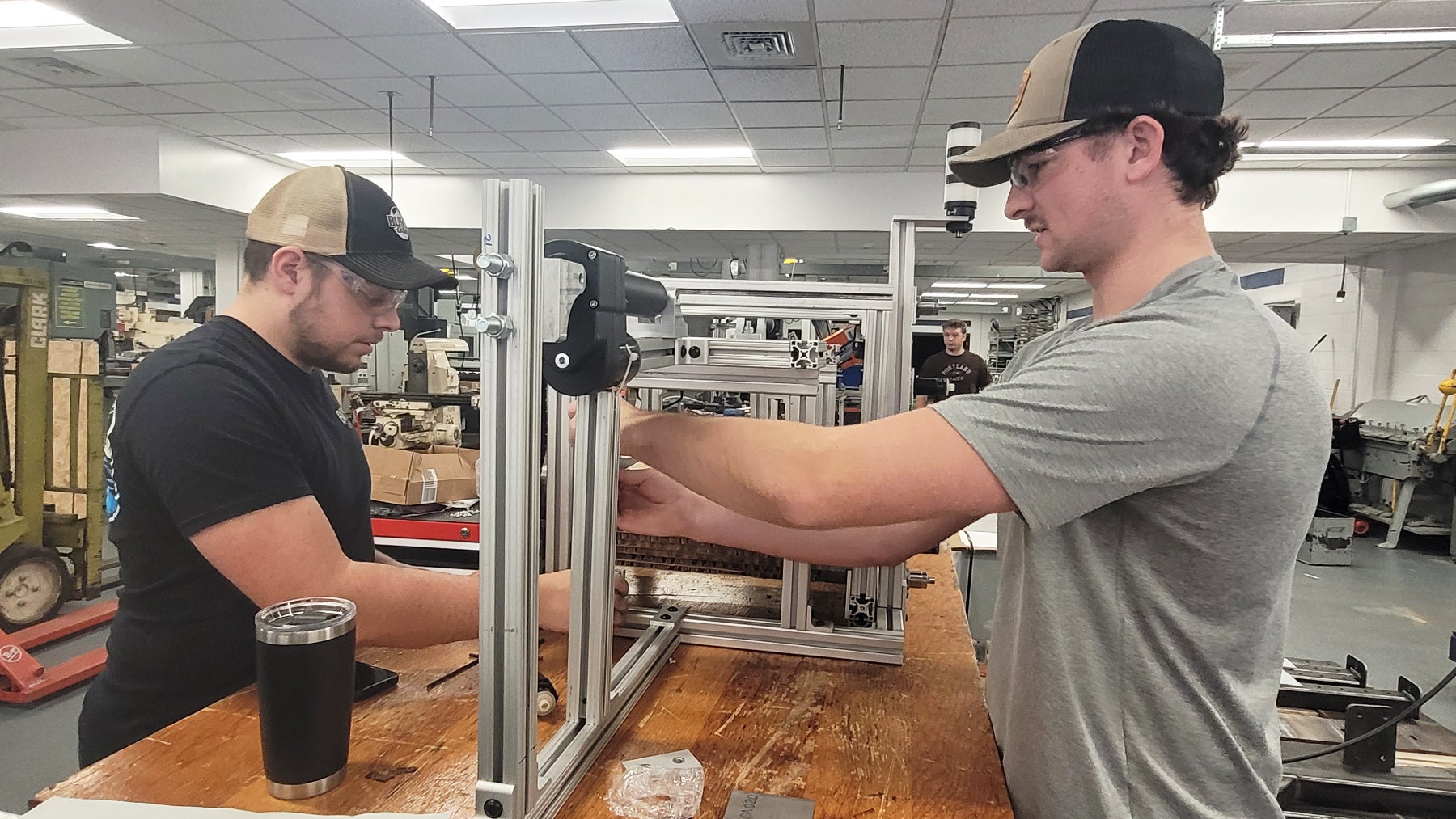
He said it’s rewarding to know Ashley plans to implement the team’s project at its facilities.
“For them to be happy with this design, for them to say that there’s going to be a cost reduction of 60 percent from this design, that this is going to be implemented in multiple facilities, that means a heck of a lot to me,” he said. “It really feels like I helped play a part in solving a big problem that this company had.”

Wisconsin Public Radio, © Copyright 2026, Board of Regents of the University of Wisconsin System and Wisconsin Educational Communications Board.