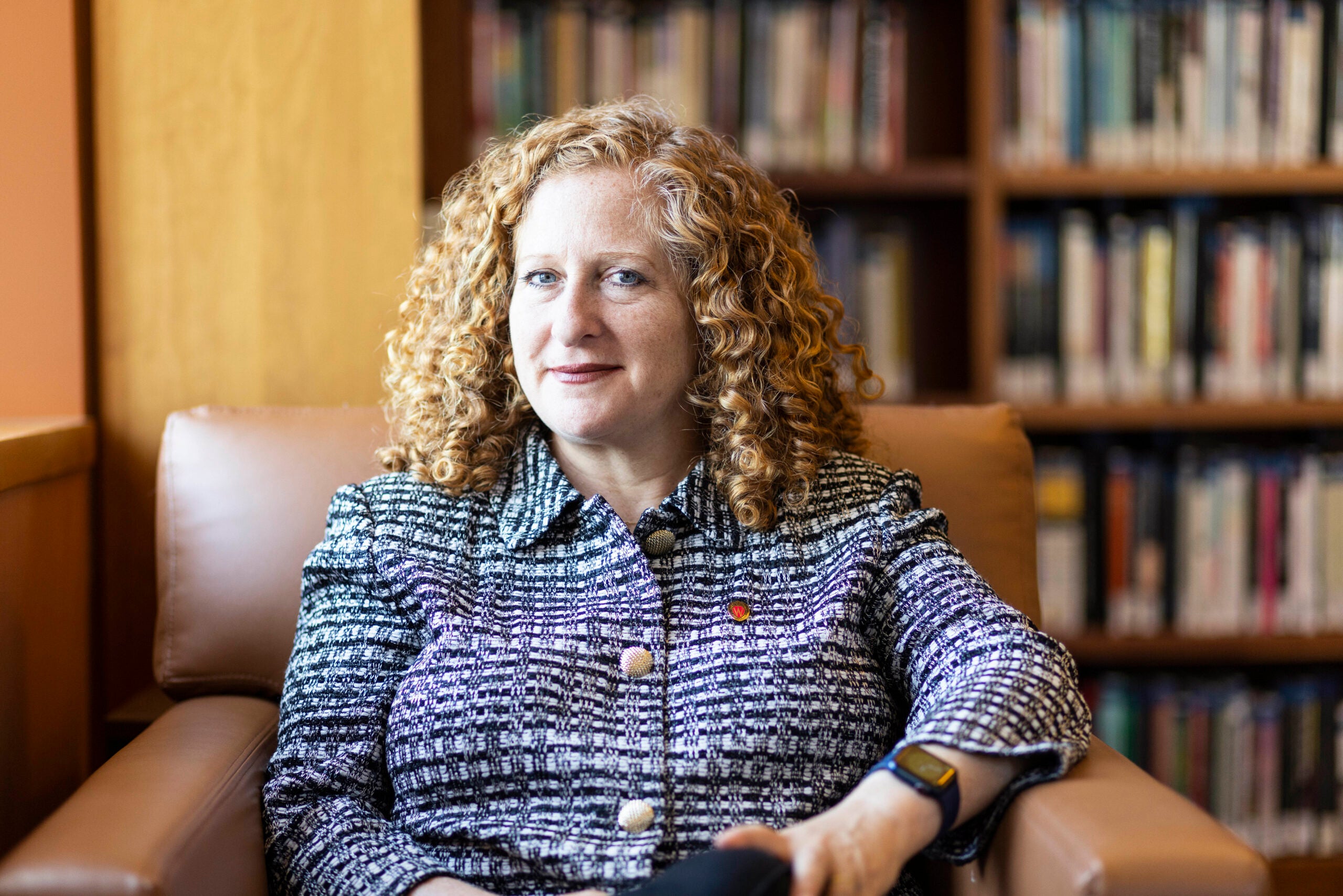
For the second time in four years, Wisconsin’s flagship university will be searching for a new chancellor.
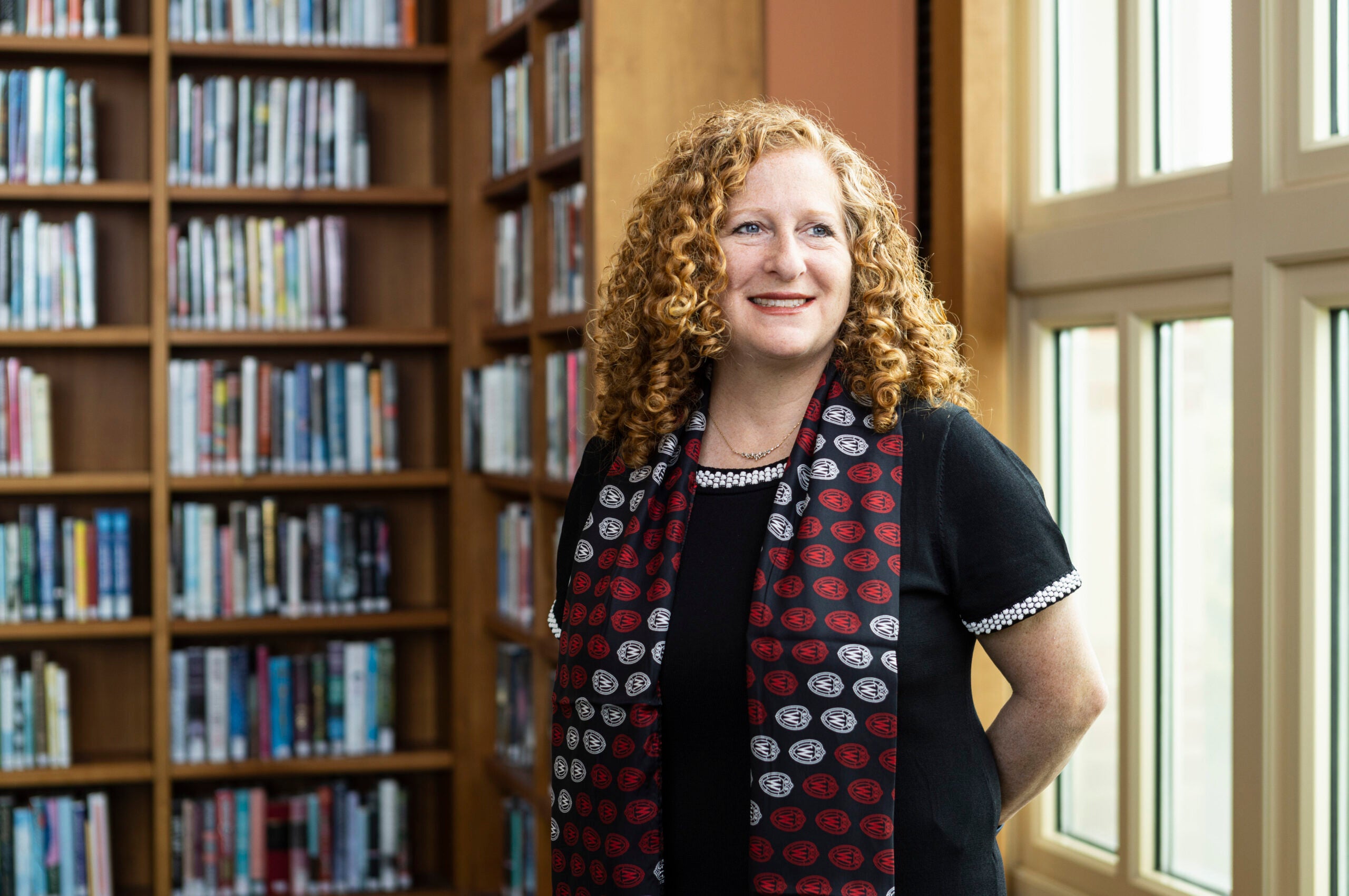
On Sunday, the University of Wisconsin-Madison community learned that Columbia University selected Chancellor Jennifer Mnookin as its next president.
Mnookin says her experience leading UW-Madison during a “complex time” has prepared her to head the Ivy League university.
News with a little more humanity
WPR’s “Wisconsin Today” newsletter keeps you connected to the state you love without feeling overwhelmed. No paywall. No agenda. No corporate filter.
“I well understand the significant uncertainties and heightened scrutiny many universities are now facing,” Mnookin wrote to members of the Columbia University community. “Moments like this demand, in my view, an urgent assertion of the role universities must play in civic life, a clear articulation of both our value and our values, and, simultaneously, a genuine openness to taking seriously the views of those who see the world differently, both inside our campus and in the broader world.”
Meanwhile, UW System President Jay Rothman plans to name an interim chancellor for UW-Madison before Mnookin departs in May.
The Board of Regents is promising a “rigorous and robust” search for a new chancellor.
‘One of the most important jobs in the state’
Regent Board President Amy Bogost said leading Wisconsin’s flagship public university is “one of the most important jobs in the state.”
“UW-Madison is recognized as a world-class institution, and we have long been fortunate to have talented leaders,” Bogost said in a statement to WPR. “We look forward to evaluating a strong pool of candidates.”
Mnookin holds degrees from Harvard University, Yale Law School, and a Ph.D. from MIT. Her husband is a political science professor from New York, and her father is a law professor at Harvard.
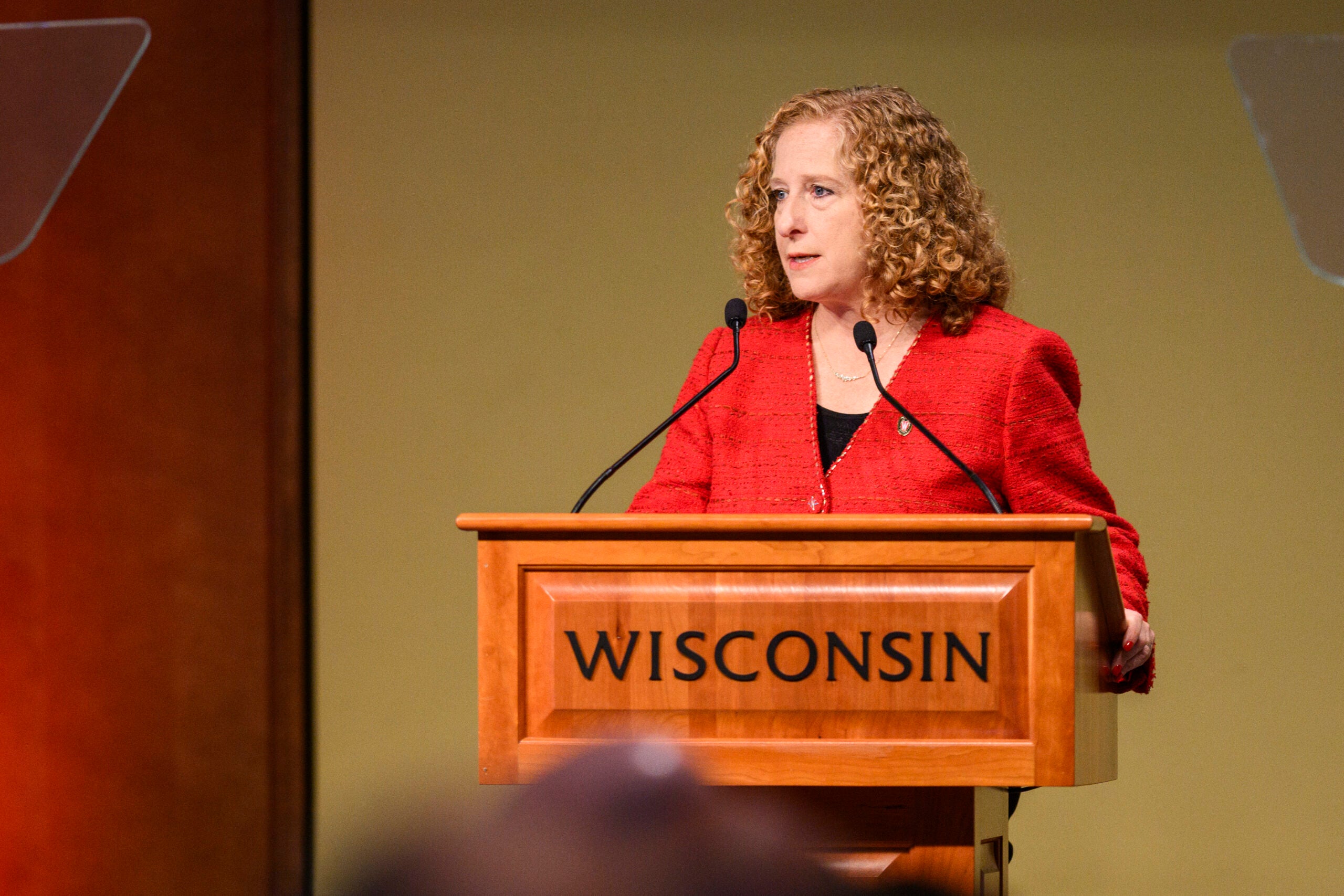
Judith Wilde, a research professor at George Mason University who studies the contracts and hiring process of college presidents, said she can see why Mnookin emerged as the top candidate for Columbia University.
Columbia was the Trump administration’s first target last year when it cracked down on campuses in response to pro-Palestinian encampments and diversity, equity and inclusion initiatives.
The administration ended 350 research grants at Columbia and demanded the university comply with a set of demands, which it largely agreed to.
At UW-Madison, Mnookin faced similar challenges, with student encampments, demands from the state Legislature to end DEI programs, and a loss of 145 federal awards.
“Her father is not only a legal scholar and professor of law, but he specializes in negotiations, and it turns out, that is also one of her areas of expertise.” Wilde said.
In an interview on Tuesday with the Chronicle of Higher Education, Lee Bollinger, who led Columbia University from 2002 to 2023, said there has never been a more crucial time than now “for university leaders to give full voice to academic values.”
“I have interacted with Jennifer and found her to be an excellent legal scholar and committed to academic values,” Bollinger said, “both of which will be even more important than is usually the case in these very, very challenging times.”
But not everyone in Madison felt like Mnookin successfully navigated those challenges.
On Thursday, the editorial board of the The Daily Cardinal, the UW-Madison student newspaper, questioned Mnookin’s leadership during her tenure, particularly her willingness to compromise with the Republican-led Legislature.
“If the core mission of higher education — academic freedom, institutional independence and the pursuit of knowledge — is incompatible with Republican efforts to remake American universities, it raises a deeper question: whether there is any real “winning” to be had by caving to political demands at all, whether from Trump or (Assembly Speaker Robin) Vos,” the editorial board wrote.
Chancellor turnover is no longer unique
The average tenure of chancellors and university presidents has declined nationally, from 8.5 years in 2006 to only 5.9 years, according to a 2022 survey by the American Council on Education.
That same survey found 45 percent of schools have leaders with tenures less than four years.
UW-Madison English professor Michael Bernard-Donals thinks part of the reason for the higher turnover is that chancellors have to answer to multiple stakeholders, including faculty, regents and the Legislature and often, these three entities have different ideas of the best way to run the institution.
Wilde agrees that running a university has become a 24/7 job.
But she thinks the reason for shorter tenures is the use of search firms.
Her research found more than 90 percent of colleges and universities hire search firms — that sometimes charge as much as one-third of the leaders’ negotiated salary — but they are not always doing their due diligence.
This includes nearly 50 percent of firms failing to call a candidate’s references, Wilde said.
In 2020, the Universities of Wisconsin’s search for a new president failed when the single finalist dropped out due to “process issues” and public opposition. The cost of the search was more than $216,000.
“We call them ‘failed presidents,’” Wilde said. “We don’t mean they are necessarily bad presidents. We mean that they failed to last even half of their contract, so about two years, maybe two and a half years and then they’re stepping down.”
When Mnookin takes the helm at Columbia, she’ll be the University’s first permanent president since August 2024 and its fifth president in four years.
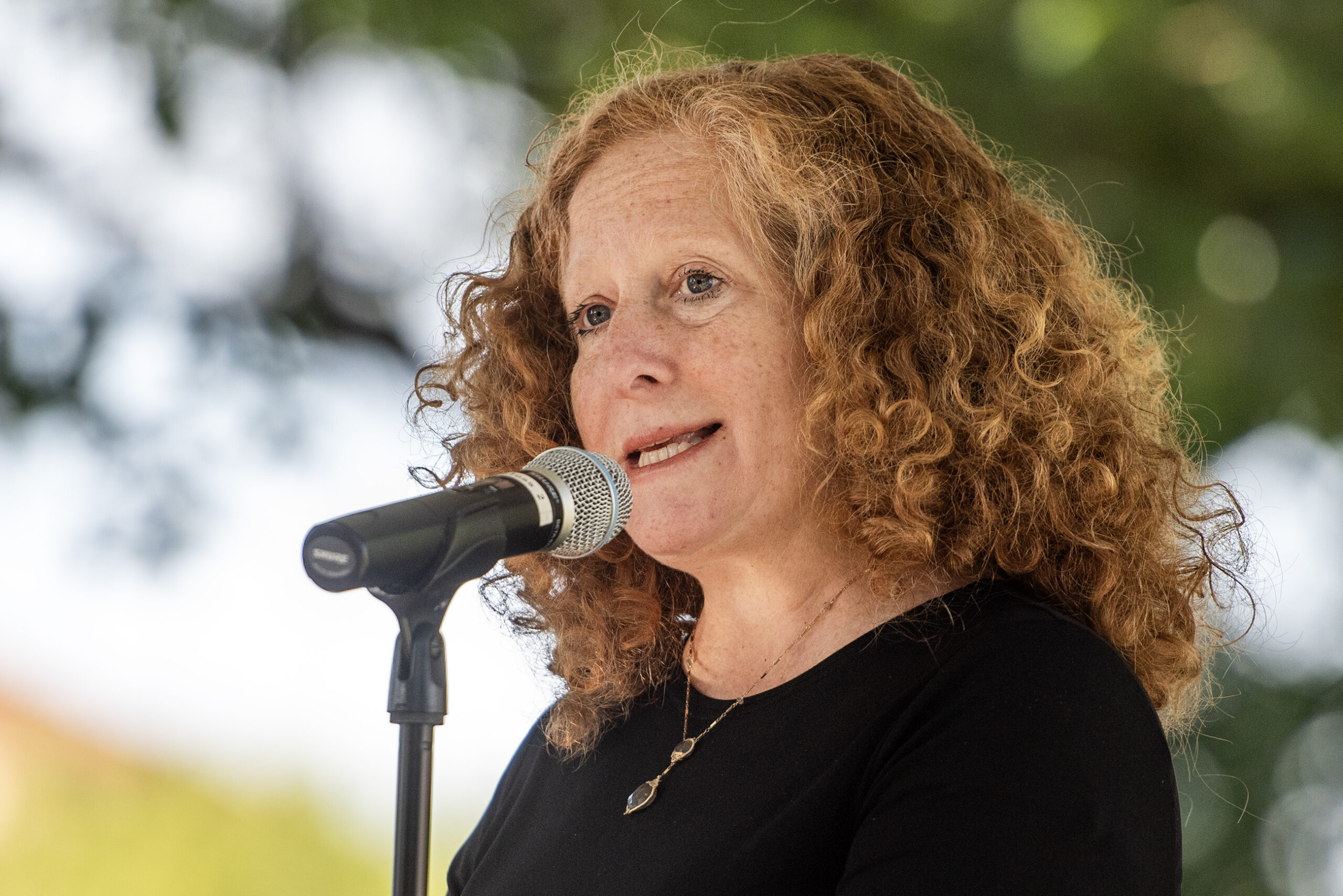
When a university finds a leader it wants to keep, they entice them with bonuses. That was the case in June, when the Board of Regents gave Mnookin a $150,000 bonus.
When Mnookin was hired by UW-Madison in 2022, her base salary was $750,000. By 2024, she was making $892,000. Had she stayed, she would have gotten another $150,000 each year through 2029.
But Mnookin is likely to make more than three times that salary at Columbia University, plus perks, Wilde says.
Bollinger was paid a salary of $3.17 million and “other compensation” totaling $328,385, according to the school’s 990 filing.
New chancellor’s vision will take time
Bernard-Donals, who leads PROFS, a UW-Madison group that advocates on behalf of faculty, said Mnookin has been dedicated to the university during her brief tenure.
He says good leaders purposely take at least a year to understand the institution before making it clear what their initiatives and values are. So when they leave, it’s discouraging.
“Sometimes there’s continuity with the prior leaders’ initiatives, but sometimes there isn’t,” Bernard-Donals said. “And so, we start up again with a different set of priorities, and that causes some unease.”
In a message to the campus Monday, Mnookin said she plans to stay at UW-Madison through the Spring commencement.
Mnookin said for the next five months, she’ll remain fully focused on her work in Wisconsin.
“From bringing our current provost search to a conclusion, to engaging with lawmakers in Wisconsin and in Washington, D.C. to bolster support for our mission and the academic freedom that underpins it, to ensuring we are on a strong path toward launching the College of Computing and Artificial Intelligence, the first new school or college at UW-Madison in decades,” she wrote.
Bernard-Donals hopes the next chancellor has experience in higher education, is willing to work with faculty and staff and is an “out of the box thinker.”
“Because higher education right now is in an out-of-the-box situation,” Bernard-Donals said.

Wisconsin Public Radio, © Copyright 2026, Board of Regents of the University of Wisconsin System and Wisconsin Educational Communications Board.