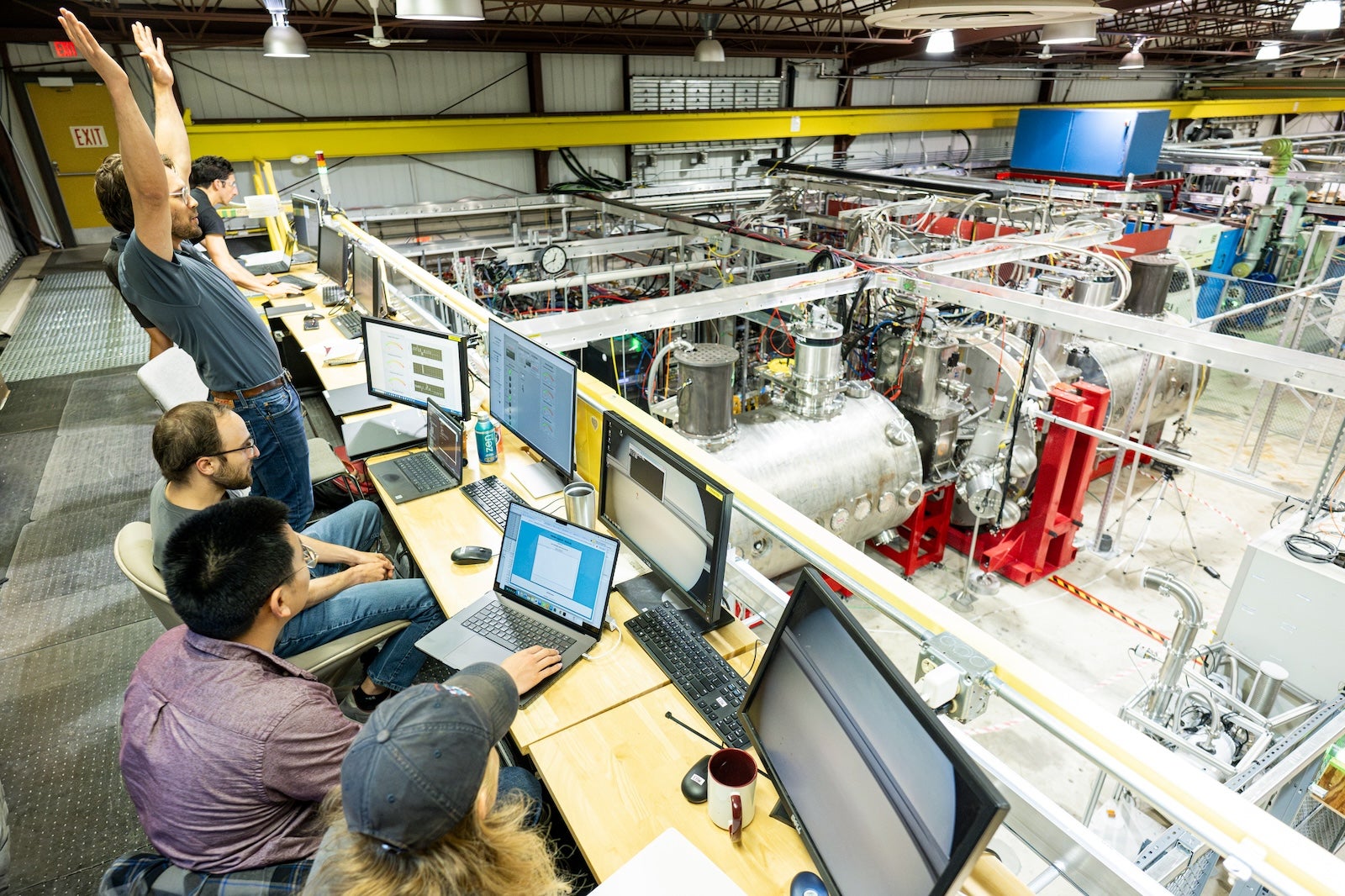
A University of Wisconsin Board of Regents committee has signed off on a $13.5 million expansion of a planned cyclotron particle accelerator research facility that will create radioactive isotopes used in cancer research, detection and treatment.
Cyclotrons are sophisticated particle accelerators that create what are called radionuclides, which are used in cancer detection and treatment. UW-Madison had already secured $48.5 million, including $10 million in grants from the National Institutes of Health, to construct a new laboratory building to house a 30 megaelectron volt cyclotron machine.
In their request for the additional funding, university leaders said that during the design phase of the project, they realized the lab building would need “significantly more robust and complex infrastructure” including “hot cells,” which are shielded spaces where radioactive isotopes created by the cyclotron can be manipulated.
“Due to the sensitive nature of the (cyclotron) equipment, once installed, additional construction is unable to take place above it,” the request states.
University officials said that’s why they would like to expand the building project to include two additional floors above the cyclotron to house additional laboratories and clinical space before construction begins. UW-Madison now expects construction to begin in fall of 2026 and anticipates most of the building to be completed in 2027.
UW-Madison Associate Vice Chancellor for Facilities Planning and Management Cindy Torstveit told regents on the Capital Planning and Budget Committee the 30 megaelectron volt cyclotron is a “more robust piece of equipment” that will allow for a wider range of uses than first expected.
“It will help us advance our goals to be a leader in theranostics, which will allow us to make the component parts for radioactive isotopes and construct those agents, image and treat patients all in one location, as well as design that therapy that they need in order to target the cancer,” said Torstveit.
The regent committee approved the $13.5 million request during its meeting Thursday morning. The full board is likely to approve it at its Friday meeting.
News with a little more humanity
WPR’s “Wisconsin Today” newsletter keeps you connected to the state you love without feeling overwhelmed. No paywall. No agenda. No corporate filter.

Wisconsin Public Radio, © Copyright 2026, Board of Regents of the University of Wisconsin System and Wisconsin Educational Communications Board.