Nearly all artificial Christmas trees in the world today are made in China. And with that comes an up to 30 percent tariff rate on imported Christmas products — including artificial trees.
Kris Reisdorf is co-president of the Racine- and Sturtevant-based home and garden store Milaeger’s. On WPR’s “Wisconsin Today,” Reisdorf said tariffs are affecting their prices on artificial trees, but she’s mitigating most of the rate hike through negotiations with manufacturers and by taking on lower profit margins herself.
“We are doing our fair share in making Christmas affordable,” Reisdorf said. “When the average person is thinking 30 percent (tariffs), that’s not by any means what they’re really paying.”
News with a little more humanity
WPR’s “Wisconsin Today” newsletter keeps you connected to the state you love without feeling overwhelmed. No paywall. No agenda. No corporate filter.
Milaeger’s “almost real” trees range from under $100 to well over $3,000. Reisdorff said she’s raised prices for all artificial trees by only around $20 compared to last year.
Residorf said tree sales are largely stable despite the uptick in tariff pricing.
An ABC News/Washington Post poll last year found that 58 percent of Americans were buying artificial trees instead of real ones. That’s up from 40 percent in 2010.
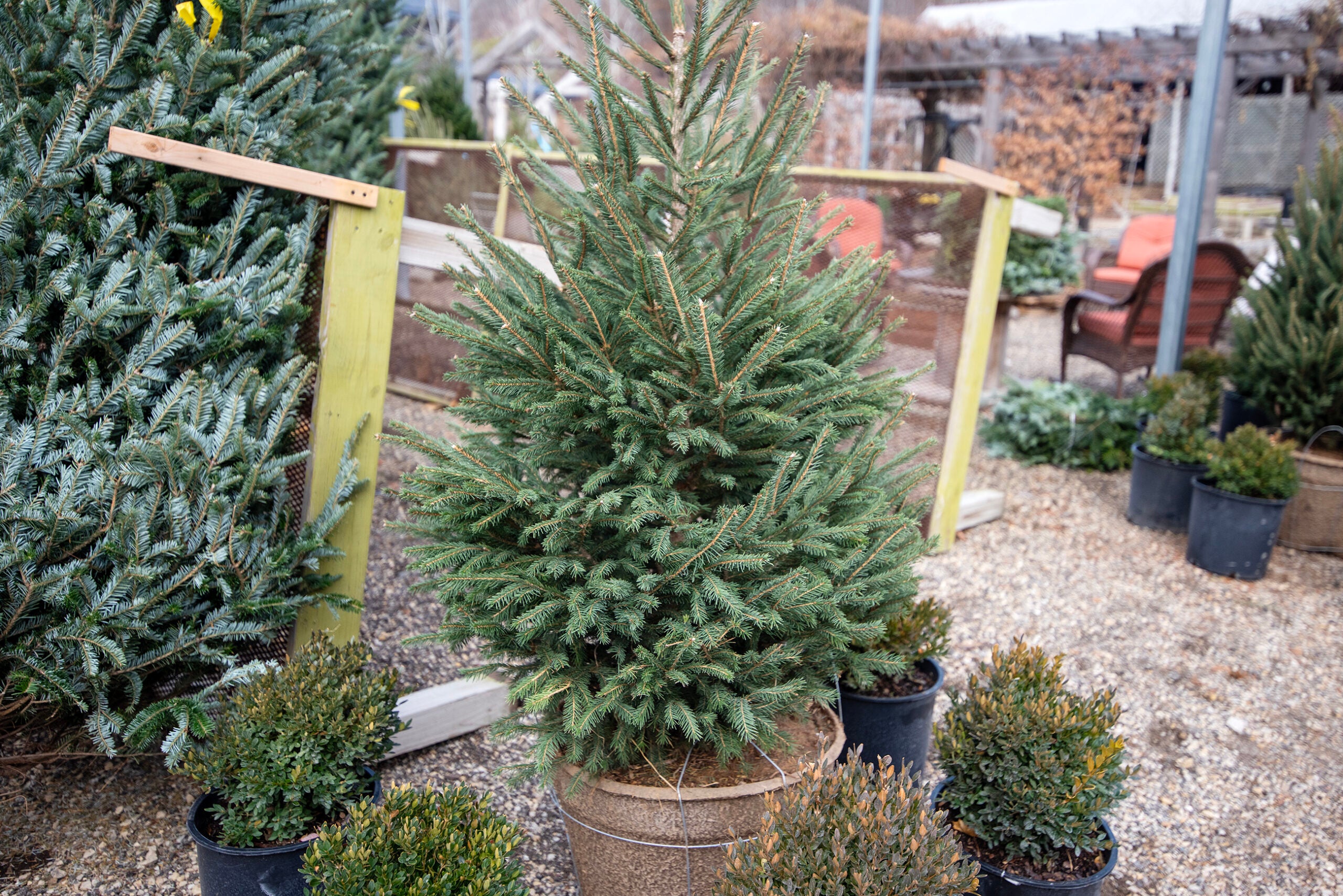
Greg Hann owns Hann’s Christmas Farm in Oregon. Hann also sits on the Wisconsin Christmas Tree Producers Association Board and is president-elect of the National Christmas Tree Association.
Hann told “Wisconsin Today” the COVID-19 pandemic in 2020 created a surge in business for real evergreen trees and that demand has been holding relatively steady ever since. That said, Hann acknowledged real Christmas tree sales are up for him and fellow growers this year. He attributed the increase in sales to the tariffs and the fact that farmers’ supplies are finally catching up to the higher demand brought on by COVID-19. Nearly all real trees come from the United States or Canada, according to Hann.
Hann said a recent survey by the National Christmas Tree Association found 84 percent of Christmas tree growers nationwide have kept prices the same over the last two years, and that includes his own farm. Being grown locally in Wisconsin, Hann said his business is largely unaffected by tariffs.
“It’s kind of nice to have a good supply with a stable price in this economy,” he said.
Reisdorf said that some artificial tree manufacturers are moving operations outside of China to places like Cambodia. But most other countries in the east are also facing tariff threats.
Instead, Reisdorf said artificial tree importers are lobbying President Donald Trump to lower his 30 percent tariffs on Christmas products like trees and ornaments, because those kinds of goods aren’t coming back to be made in the U.S.
Meanwhile, Hann said his organization is lobbying to have tariffs on artificial trees increased to 300 percent. He said the added tariff costs help create an “even playing field” between real and artificial trees, since farmers have to pay farm staff and cover fertilizer costs.
But it isn’t always about the cost. Reisdorf said artificial trees have the benefit of lasting “forever,” essentially.
Hann said many of his customers come to the farm looking to keep up the Christmas tradition of picking out their own family tree.
“They’re looking for that fragrance of a real tree,” he said. “They want to start that tradition of the family together. They pick the tree, they take it into their house.”