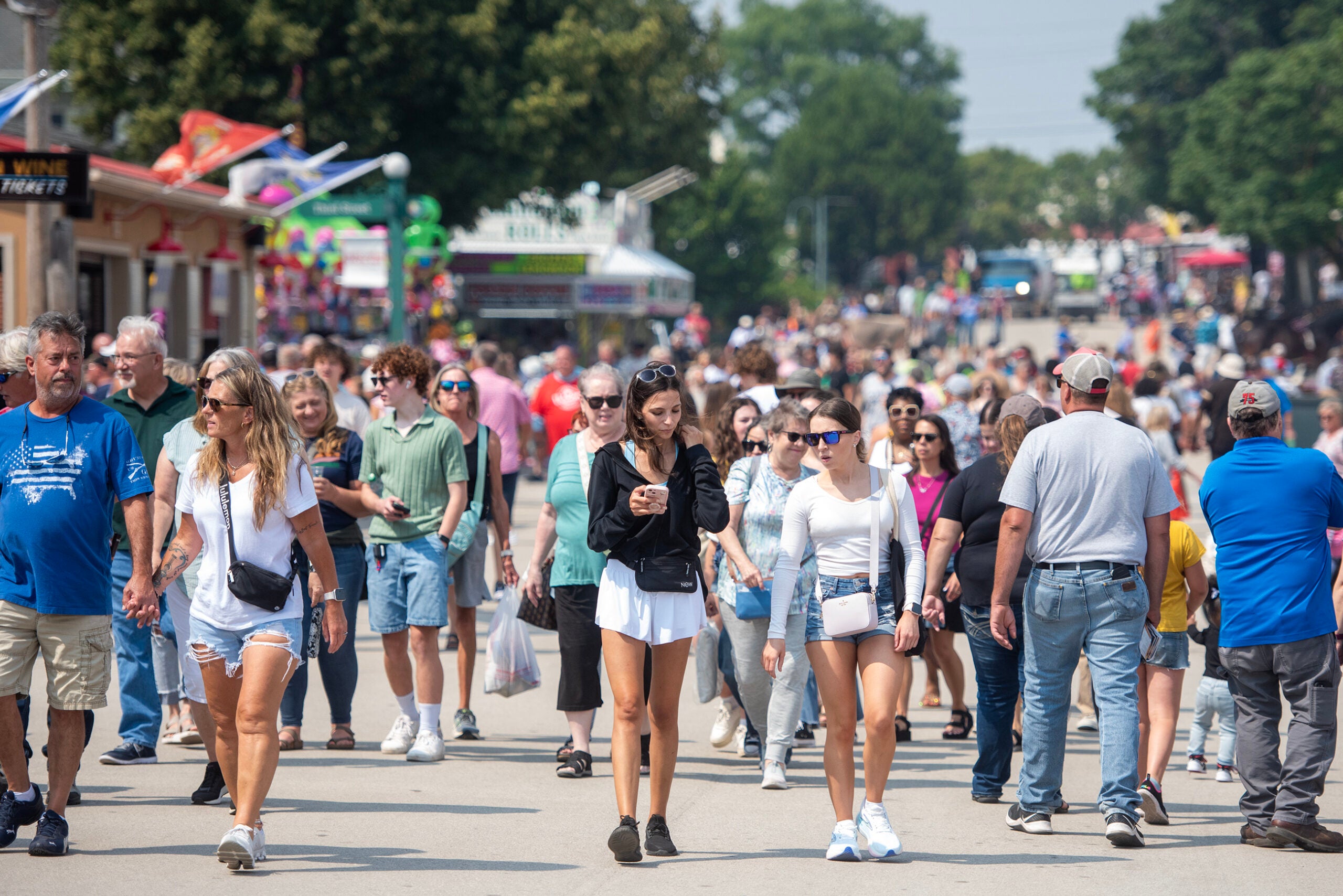
Comedians and satirists poke fun at how aggressively warm and welcoming people from Wisconsin and the surrounding region can be.
This idea of being “Midwest nice” reflects a social standard that differs from other parts of the country, where locals might not be viewed as the same level of friendly.
But new data from Pew shows that people don’t trust each other as much as they used to, and Wisconsin is falling behind trust levels compared to other parts of the country.
News with a little more humanity
WPR’s “Wisconsin Today” newsletter keeps you connected to the state you love without feeling overwhelmed. No paywall. No agenda. No corporate filter.
The nonpartisan think tank updated its General Social Survey this summer, measuring American’s attitudes toward each other. It found that the percentage of people who think “most people can be trusted” has declined steadily over the last 50 years.
Wisconsin ranked outside the Top 15 states in this measurement of trust, despite the reputation of being “Midwest nice.” The same is true for the nearby states of Iowa, Michigan and Indiana.
University of Wisconsin-Madison psychologist Markus Brauer studies how social groups interact, and he told WPR’s “Wisconsin Today” that the state’s political divisiveness helps explain some of the trust issues.
“If there are people who belong to other political parties, then there is the possibility that they may not share the same common values, which then undermines trust,” Brauer said. “So generally, partisan strength and perceived political polarization actually undermine social trust in others.”
That decline in trust can have negative consequences for democracy, said UW-Eau Claire sociology and communication professor Peter Hart-Brinson.
He told “Wisconsin Today” that this idea of social capital and trusting each other makes for a stronger, more connected society.
“When groups of people have higher levels of social capital, it typically means that they’re more involved in their communities,” Hart-Brinson said. “They know their neighbors more intimately, and that ultimately makes people more trusting.”
He said people who are part of more vulnerable populations, like those who are low-income or undocumented immigrants, tend to be less trusting than those who are in more secure situations.
That can compound the issue, where the lack of trust can make it harder to form the social bonds necessary to rely on community and build more trust.
The key to developing more of it, Hart-Brinson said, is stepping out of our comfort zone and choosing to interact more with people who are different from us.
Brauer, the psychologist, agreed with that assessment and hopes we as a society strive to put ourselves out there more.
“We tend to trust people who score high in integrity, honesty, who are competent, who are reliable, who are respectful to others, who show their vulnerabilities, who are authentic and who make processes transparent,” Brauer said. “I think what we gain from that is stronger communities, people who can support each other in times of hardship and just better quality of life.”