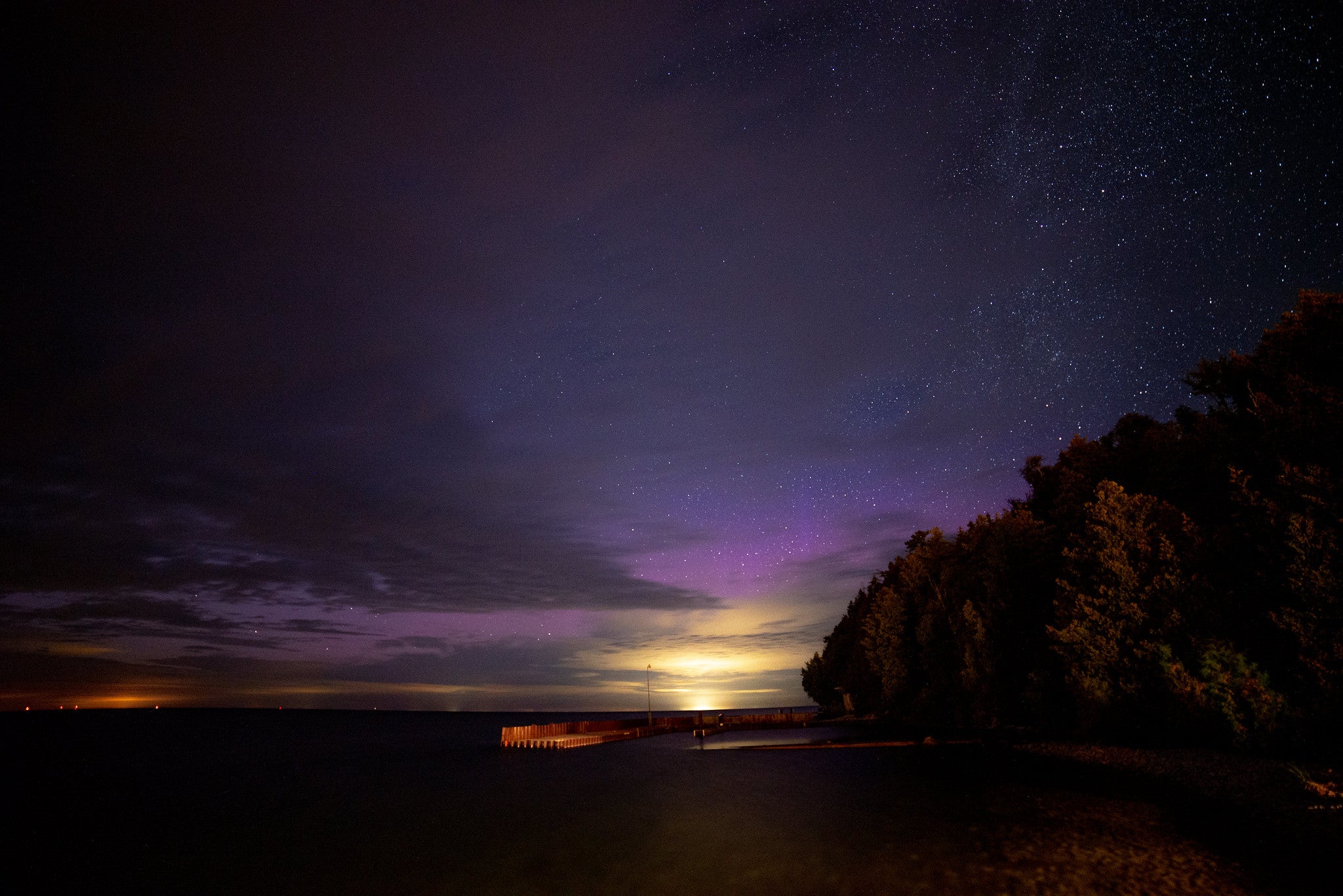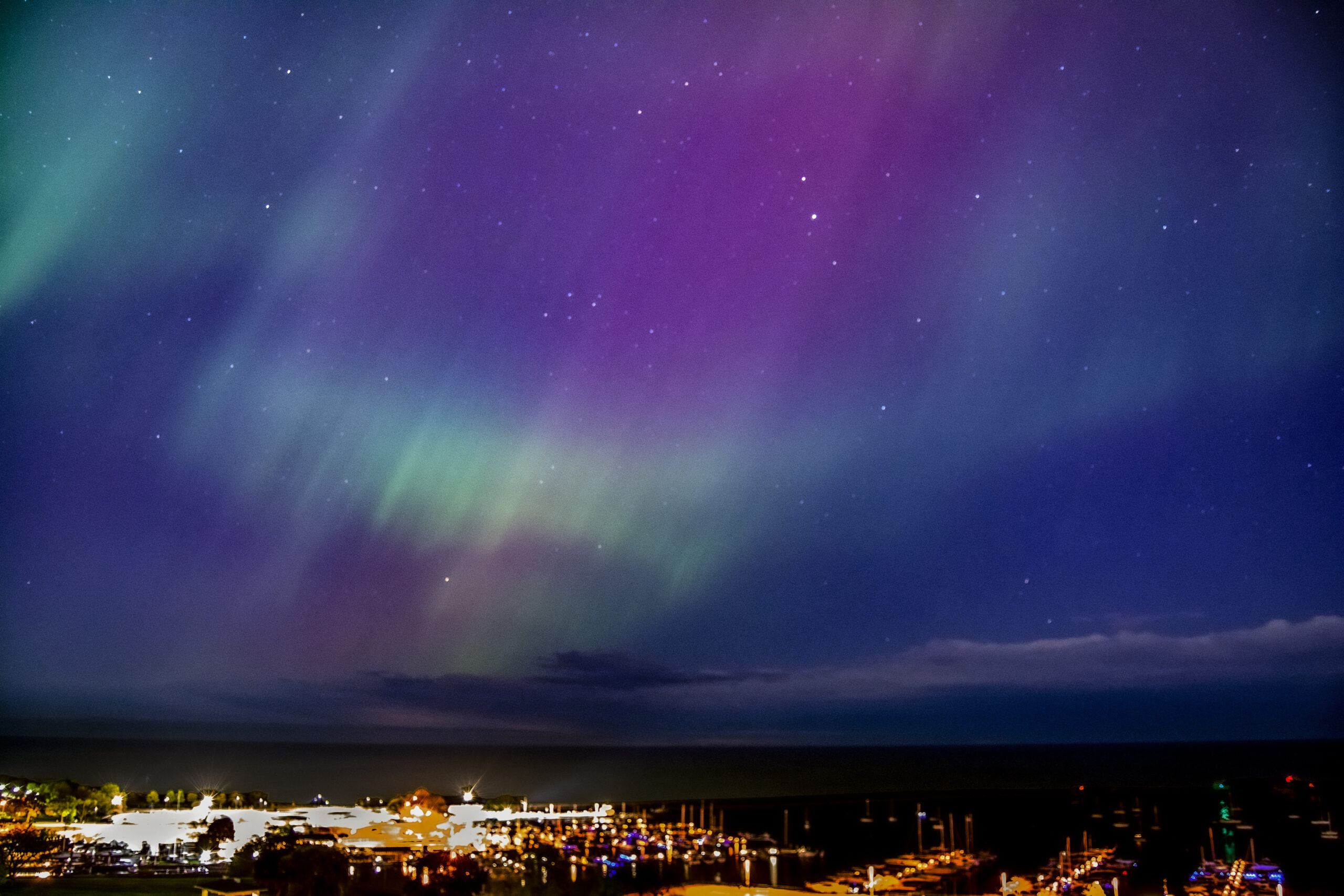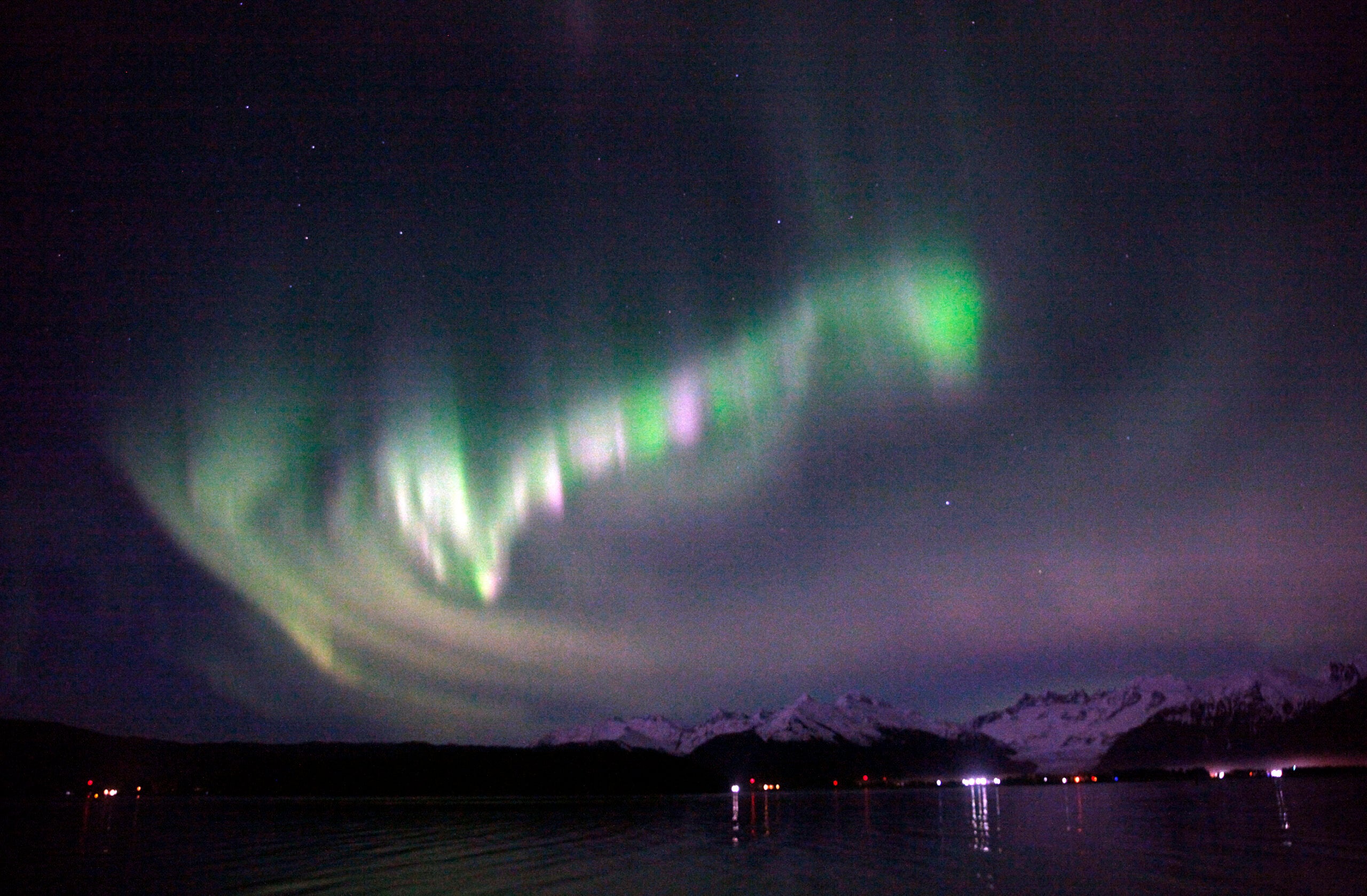
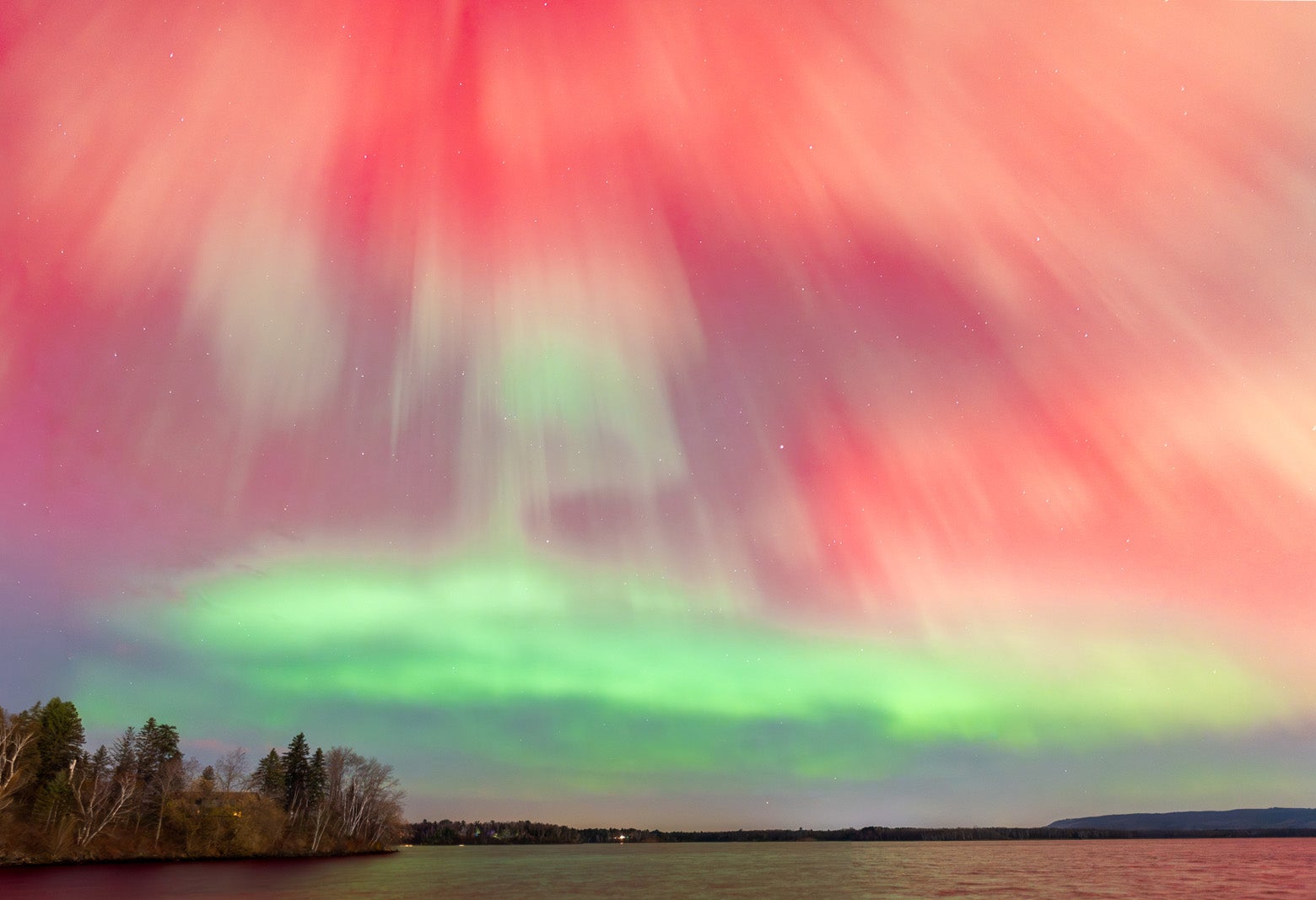
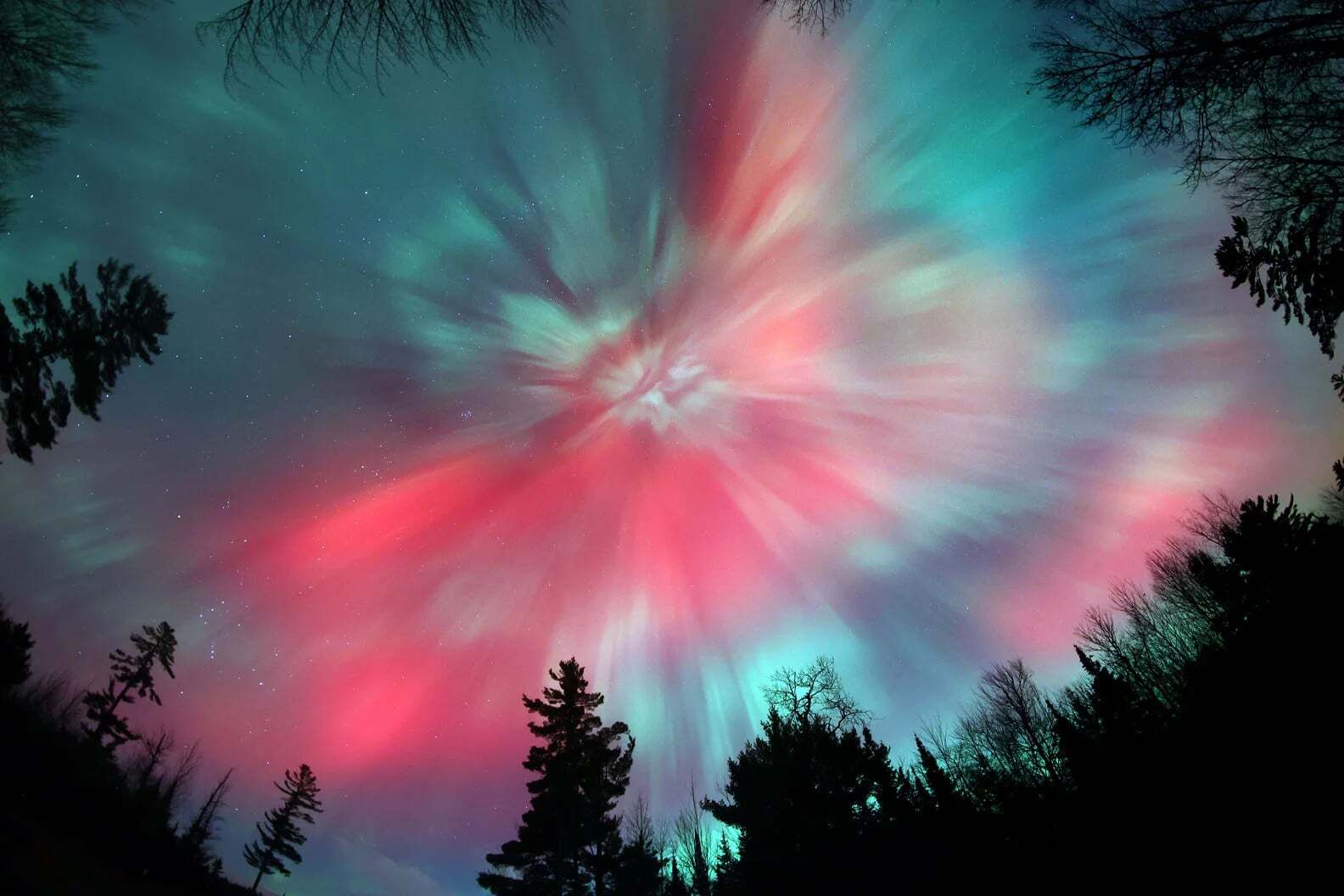
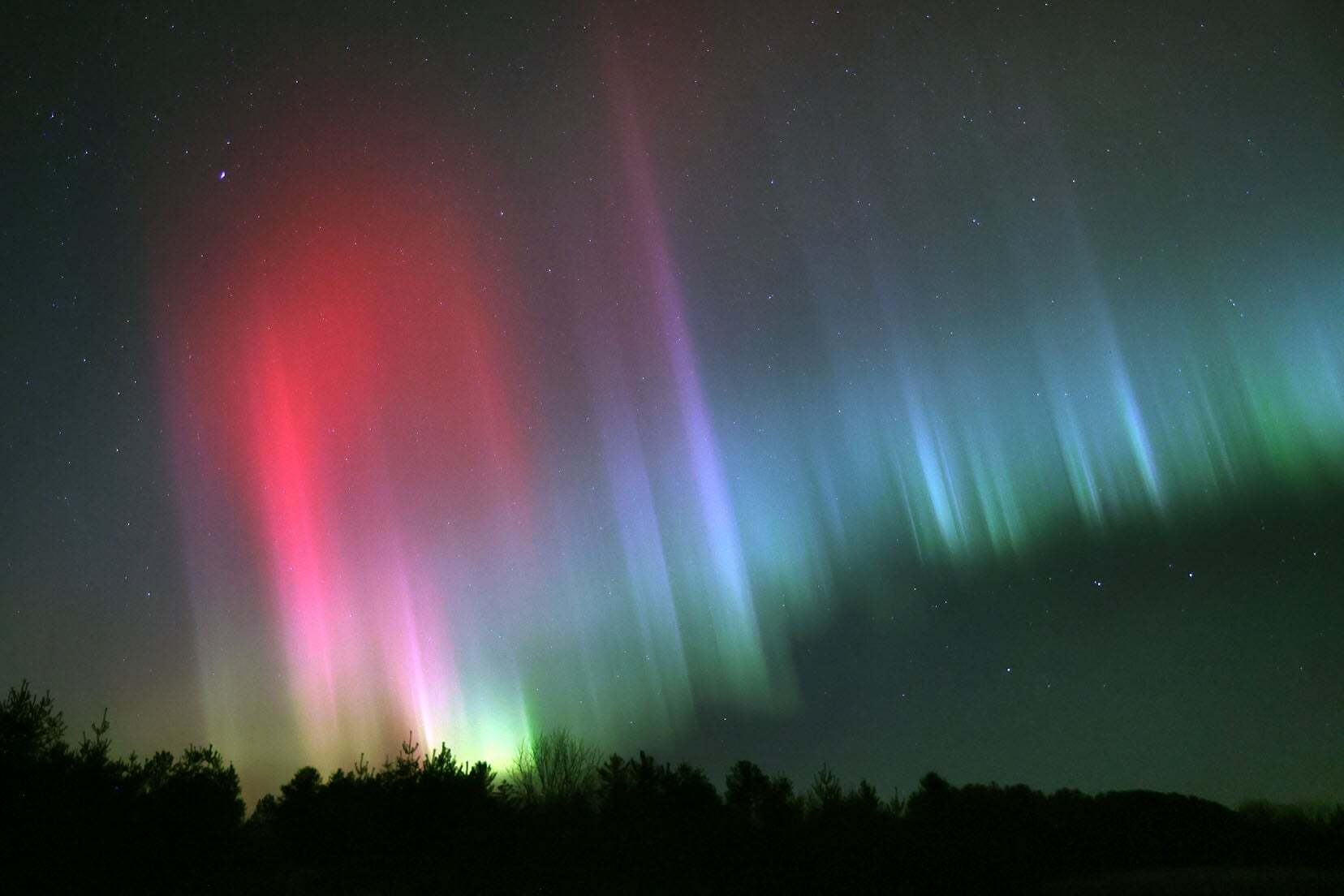
Last week, the night sky in much of the country was ablaze with the aurora borealis, visible as far south as Florida. They were particularly spectacular in the greater Twin Ports area.
But with skywatchers on both sides of St. Louis Bay, which is best for viewing the northern lights — Superior or Duluth?
“I live in Superior, so whenever I think there might be Northern Lights, the first thing I do is go down to the fishing pier in the Billings Park neighborhood,” said photographer and retired educator Deb Carroll, whose most memorable sighting was right outside her front door.
News with a little more humanity
WPR’s “Wisconsin Today” newsletter keeps you connected to the state you love without feeling overwhelmed. No paywall. No agenda. No corporate filter.

Seconding the notion that there’s no place like home — Duluth edition — is Bob King, the longtime Astro Bob columnist of the Duluth News Tribune and the author of several amateur astronomy books.
The two joined WPR’s Robin Washington on “Morning Edition” to tout their favorite homeground viewing spots, and invited readers and listeners to check out their photos and judge for themselves.
The following interview has been edited for brevity and clarity.
Robin Washington: Before we get into from where we should be watching, what direction and in what conditions should we be looking?
Bob King: A good start is always to face north because the northern lights will come from the north. And if conditions are right, they’ll keep climbing and climbing until they get over the top of the sky and even into the southern skies, as they did last Tuesday and Wednesday.
Being out of a city is also a good idea, particularly if you’re north of any kind of city light pollution.
If there’s any doubt about them being out, I just take a picture of that part of the sky with my cell phone. If I see green there, then I know we have Northern Lights.
RW: Why is a phone able to pick them up more than the naked eye?
BK: In general, cell phones take time exposures — a minimum of about a three-second exposure. That’s a lot longer than what your eye can see, which is about at a 30th of a second. So it’s basically a matter of if your eye sees it in a blink, the camera sees it over multiple seconds.
RW: Deb, I notice that your northern lights posts on Facebook go up almost immediately whenever they’re out. Are they calling you ahead of time?
Deb Carroll: I have several sites I look at. One is Solar Ham. Another is the Glendale app, and there’s also the NOAA Space Weather Prediction Center site.
RW: Deb, tell us some of the other spots on the Superior side.
DC: There’s the Arrowhead Fishing Pier and Barker’s Island.
I love photographing them, so I try to find spots where there’s something to put in the foreground of the photo. Barker’s Island has the mariner statue. At Wisconsin Point, the lighthouse is there. And at the marina, there was a boat that went by that night.
If you have an idea about something in northern Wisconsin you think we should talk about on Morning Edition, send it to us at northern@wpr.org.