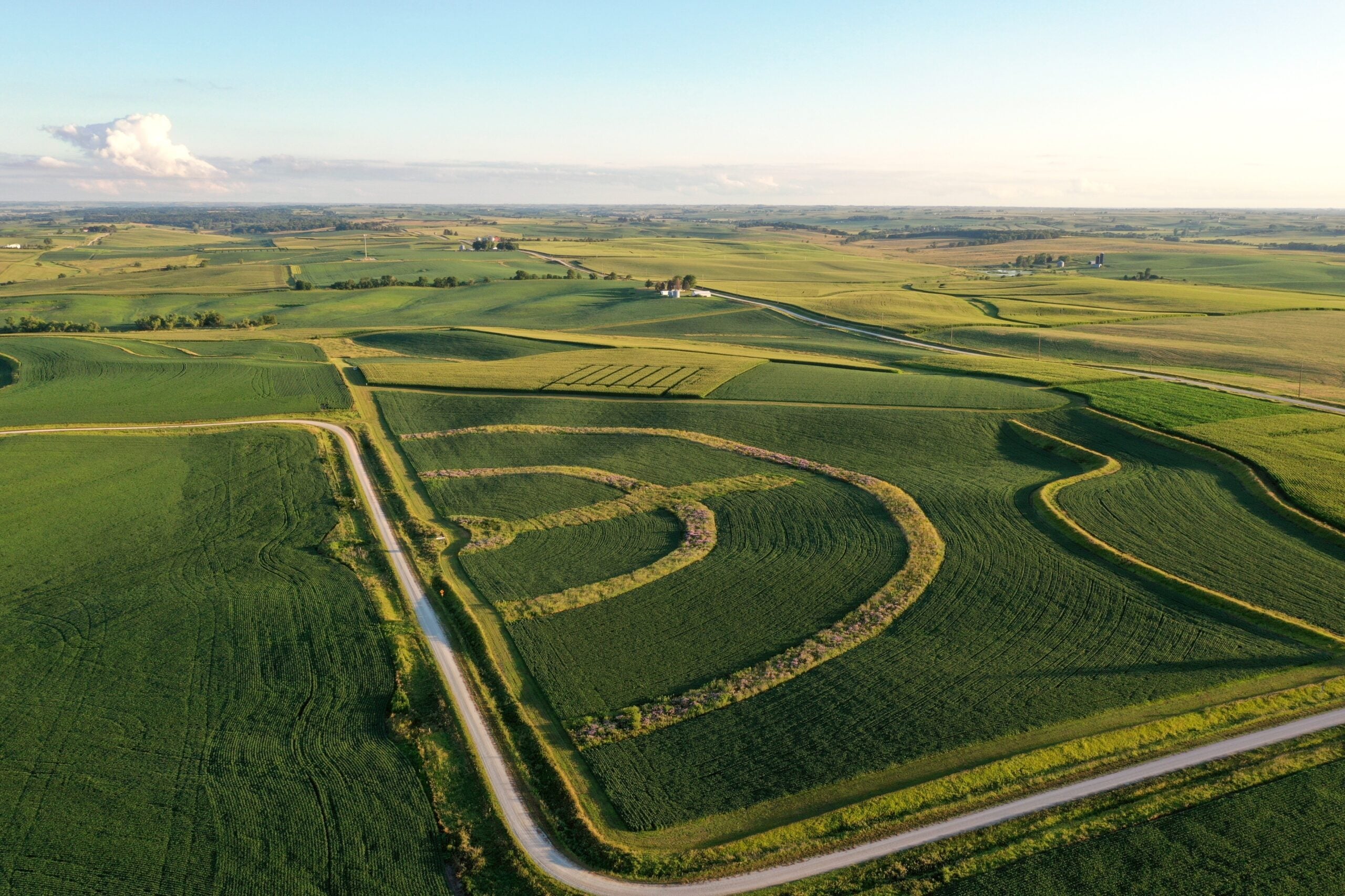
Convincing Midwest farmers to plant tall-grass prairie where they could grow more cash crops has been, well, a hard row to hoe.
Yet, decades of research has shown that setting aside 10 percent of a farm field for wildlife habitat is beneficial for both the environment and agricultural production long term.
“Farmers are looking for a way to help keep their soil in place, add some habitat and filter water,” Tim Youngquist, an Iowa farmer and agricultural specialist in the Iowa State University Agronomy Department, said on WPR’s “The Larry Meiller Show.”
News with a little more humanity
WPR’s “Wisconsin Today” newsletter keeps you connected to the state you love without feeling overwhelmed. No paywall. No agenda. No corporate filter.
“If we are going to clean up the water that’s coming off of farmland, practices like prairie strips can really help. They can improve the overall quality of life on that farm in the community,” he said.
Youngquist operates an Iowa farm his family has owned since 1871. And for the past 12 years, he has served as a farmer liaison of a program at Iowa State University called STRIPS — Science-based Trials of Rowcrops Integrated with Prairie Strips.

The following interview has been edited for brevity and clarity.
Larry Meiller: Your family has owned your farm since 1871. One thing that’s maybe changed over the past 150 years are the conservation projects put in place on your farm.
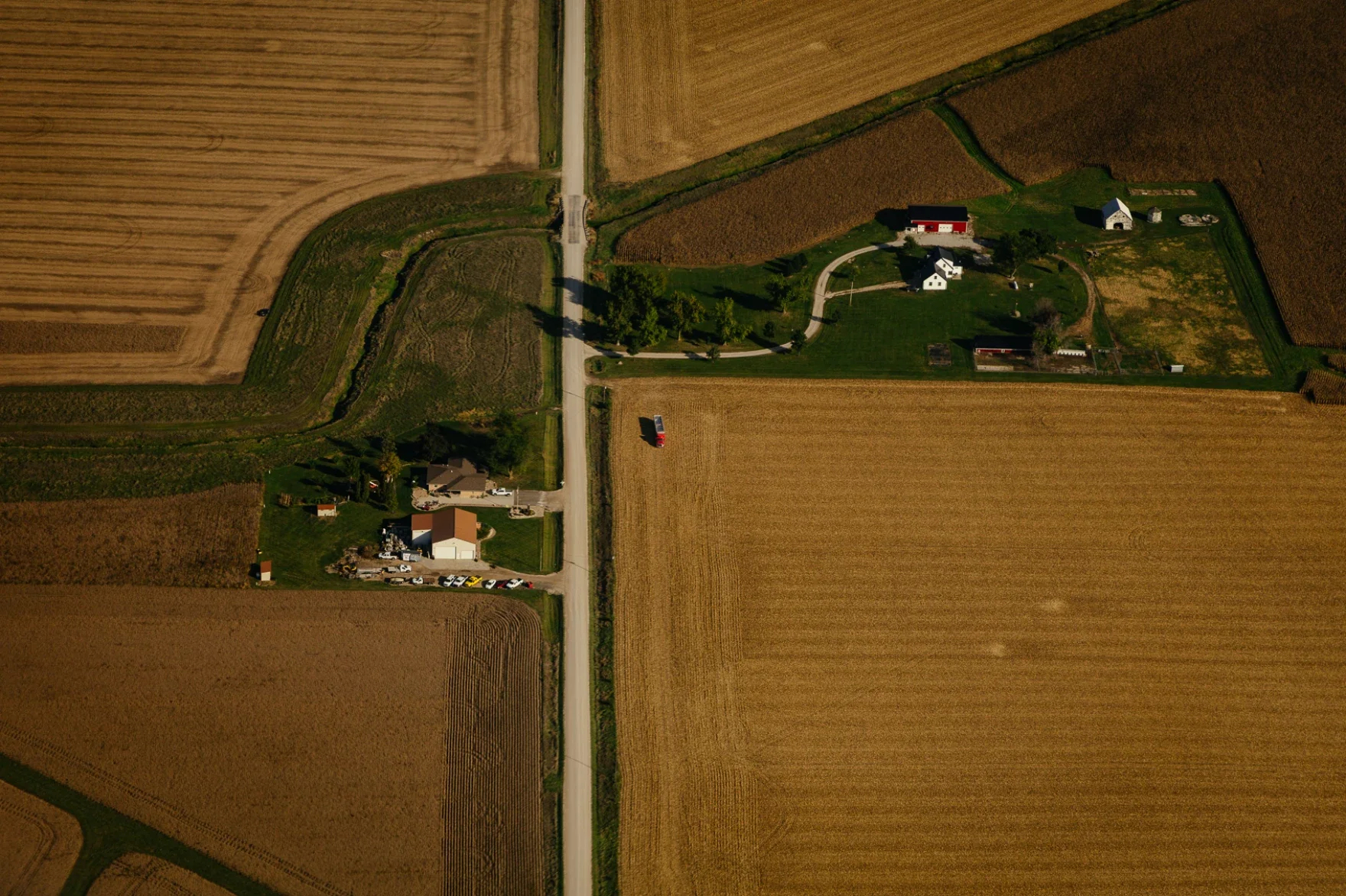
Tim Youngquist: It’s been important to be good stewards of that land and try to help keep the soil in place. You know, filter rainwater as it’s coming, and then providing some habitat for grassland birds, bumblebees and monarch butterflies. We’ve got corn and soybean land, but then we’ve targeted areas that are environmentally sensitive or difficult to farm or lower producing, and put those in the native tall grass prairie.
All over the Upper Midwest, prairie would have been the dominant ground cover if you go back about 150 to 200 years ago.
One of the best things about this project is that it’s so simple. We’re not trying to find some fantastical magic plant from somewhere else. We’re just restoring the native ground cover.
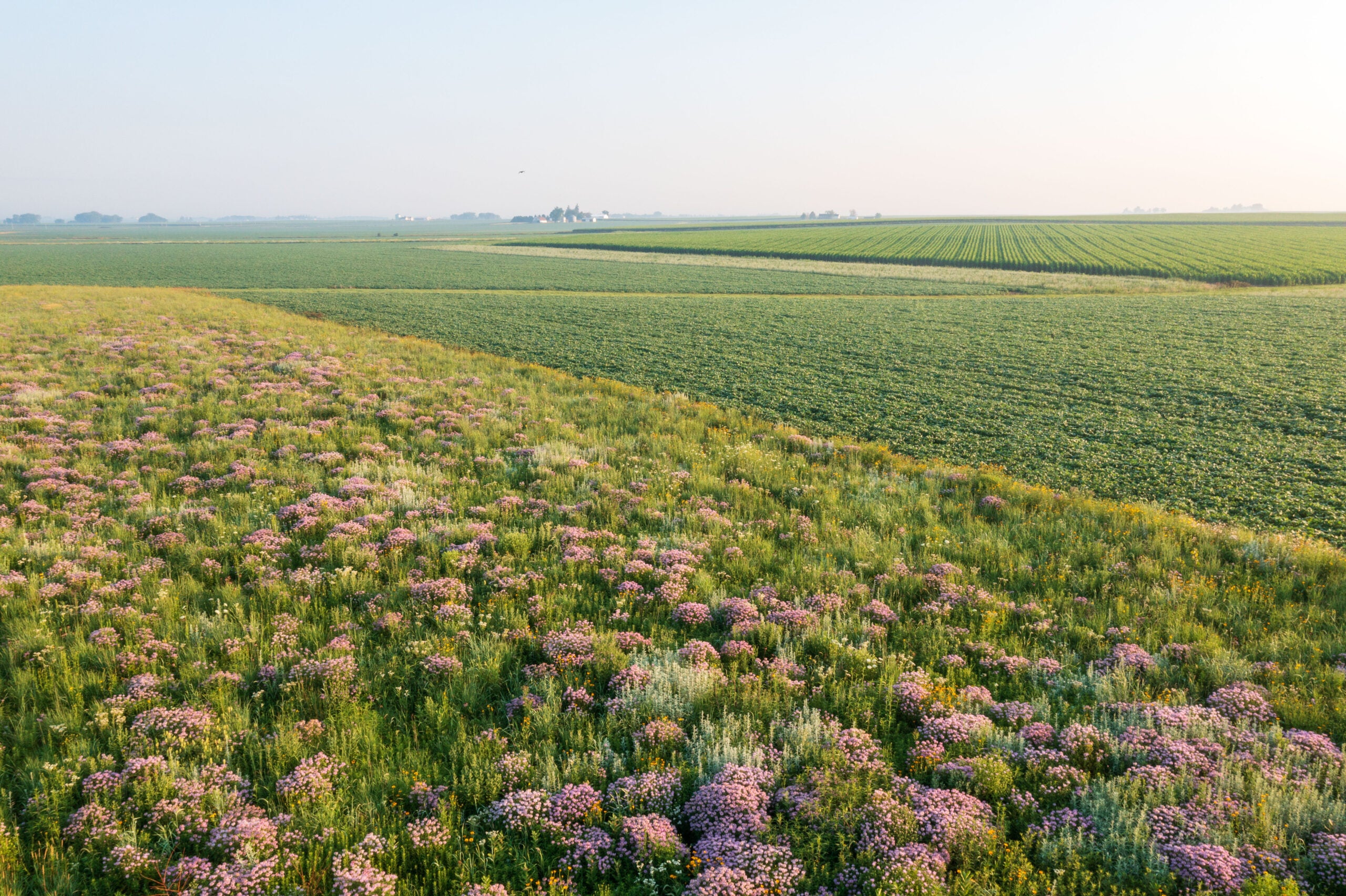
Very quickly after you seed a prairie, you start to see the grassland birds that are in steep decline. You start to see more pollinators, and you start to have more infiltration of the water. You have less soil moving around. All those things.
LM: Just thinking about soil loss on the average Wisconsin farm — and it depends on the kind of soil, steepness and so forth — but it’s somewhere between 1 and 5 tons per acre per year.
TY: I think about 5 tons. [That’s equivalent to removing] a full dump truck for every 2 acres every year. That’s only the thickness of a dime, but every year it’s an insidious problem. Every time the rain falls or wind blows, it’s moving the soil little bit in those corn and soybean systems. But if you were to go outside your door tomorrow, and the ground was a dime lower, you might not notice. So it’s easy to ignore. But for somebody like my dad, who’s been farming for over 40 years, that gets to be a pretty big stack of dimes.
Part of my job, specifically at Iowa State, is to let farmers and landowners know we’re having some unintended consequences from all this production. There is a laundry list of things [farmers can do to] get started doing conservation on your farm. There are tools like prairie strips, cover crops, contour farming.
LM: What has your research found in terms of improved soil and water retention?
TY: If you can put prairie where the water is flowing through the field, you can achieve a 95 percent reduction in soil erosion. So by taking 10 percent of a field and putting it into prairie, you receive disproportionate benefits. [That can also produce] about an 84 percent reduction in the export of phosphorus and nitrogen — two of our main fertilizers that quickly become a problem as soon as it starts moving off the property and downstream.
LM: Aren’t these prairie strips in farm fields actually inviting insects that are then sprayed with crop chemicals?
TY: There is some exposure to chemicals for those creatures, but it’s at really low levels, or at sub-lethal levels.
LM: And if you’re planting prairie strips, you’re also attracting beneficial insects that actually could be helpful [to a farming operation].
TY: One of my colleagues did a study on ground beetles and found there was a higher diversity of beetles and more beetles in fields with prairie strips. The beetles were not ranging far into the field. They can be fat and happy just in the prairie, where they can get a lot of their needs met. But it’s not as though [prairie strips are inviting an] army of beetles that’s going into the field and eating bad bugs.
LM: The prairie strips themselves, they can’t be narrow to be effective. They need to be at least, what, 30 feet wide?
TY: Yeah, I would say 30 feet is a great starting point. What the U.S. Department of Agriculture’s Natural Resource Conservation Service recommends is anywhere from 30 to 120 feet wide. It depends on what your goals are, what your land looks like. The biggest cost to these is … the cash crop land taken out of production.
LM: I imagine it might be difficult to convince a farmer to take [so much] land out of production.
TY: With vast swaths of the Upper Midwest in corn production, not all of those acres are going to yield the same way. … You can target areas that are either lower producing or particularly steep.
Where it makes sense to put an area into some tall grass prairie, you get the environmental benefits that come with it. And if you enroll it into a USDA program, you get an annual rental payment for the land that’s taken out of production.
LM: We’ve gotten away from wildlife habitat on farms in some of our Midwest states. We’ve done away with fence lines and so forth that were there before.
TY: I’ve taken out way more fence in my life than I’ve ever put in. But those little strips of grass along the fence line, they were providing some cover and habitat for some native species.
With farming, boy, there’s a lot of stuff that you can’t control. You’ve got markets, you got weather. You’re always lifting heavy stuff. There’s always stuff to do. But to be able to take a part of your property and have blooming flowers and grasses from April to about October — my wife can have a bouquet of cut flowers on our table basically all summer long. And our 6-year-old son, he could probably name 20 prairie plants. I didn’t know any prairie plants until I was about 20.
There’s a real quality of life that comes with this. Farmers [have told me their prairie strips are] their favorite spots on the farm — a place to go for a walk after supper and unwind.