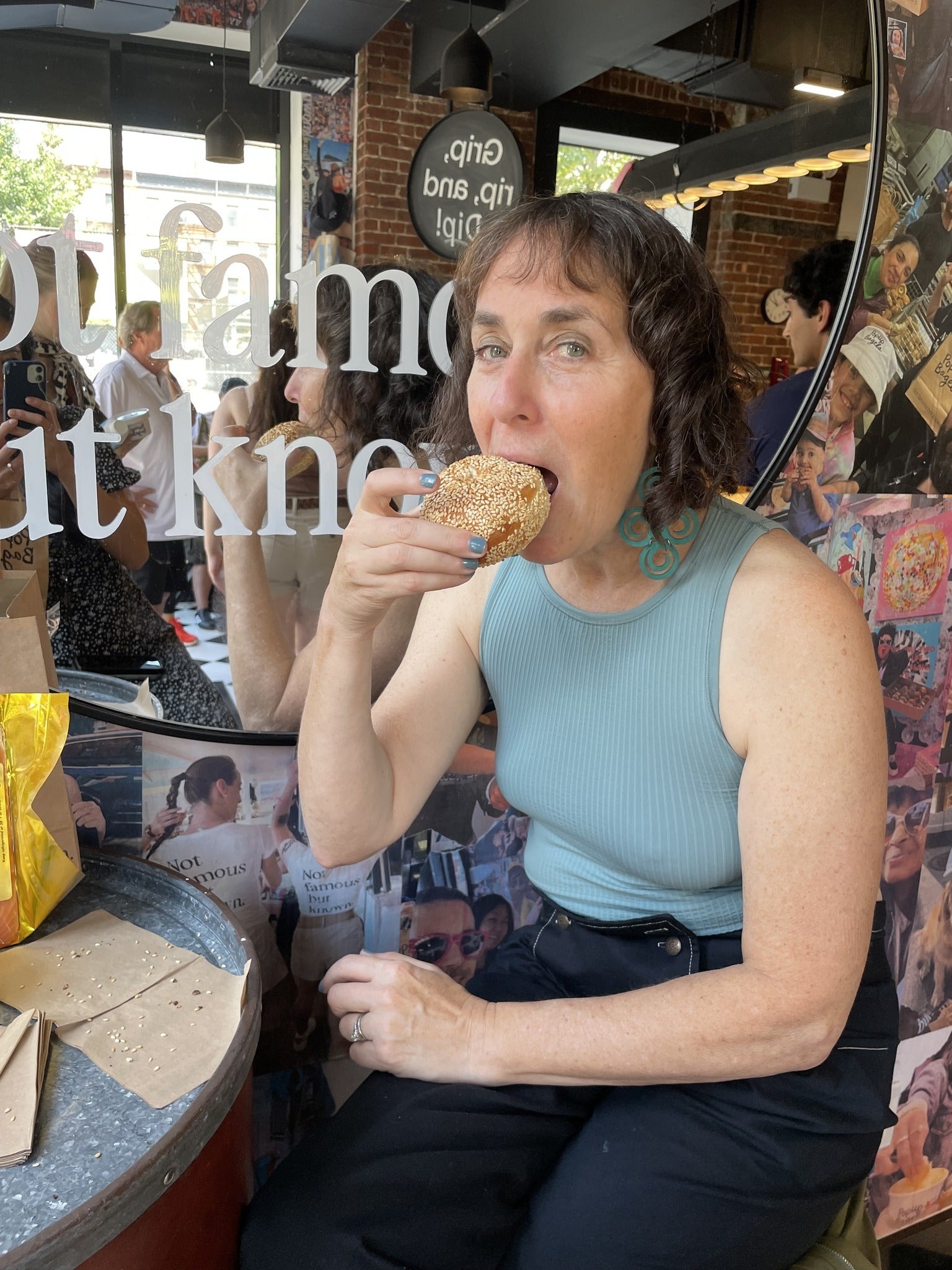
For Jen Rubin, growing up in a Jewish family in New York City meant that eating great bagels “was just everyday life.”
“My family had a small business in Manhattan, in what I thought was, like, the food mecca in the ’70s and ’80s. I ate bagels all the time,” Rubin told WPR’s “Wisconsin Today.” “It’s possible I had a bagel every single day in my school lunch from kindergarten through high school.”
Now after decades of living in Madison, Rubin is on a mission: to find the best bagel in the Midwest and connect with her Jewish cultural identity along the way. She is documenting her journey, which she calls the Great Midwest Bagel Quest, on social media.
News with a little more humanity
WPR’s “Wisconsin Today” newsletter keeps you connected to the state you love without feeling overwhelmed. No paywall. No agenda. No corporate filter.
For the past year and a half, Rubin has made road trips around the Midwest to try bagels from local best-of lists and see how they stack up to the bagels she grew up with. Along the way, she is learning about a new generation of bagel makers putting her own spin on the longstanding Jewish tradition.
Rubin has also been diving deep into the archives to learn about bagel history, where she’s found that bagel-making traditions in the Midwest have been overlooked by historians — and she’s hoping to correct the record. She is currently researching a book about bagel history for the Wisconsin Historical Society Press, which will include stories of Wisconsin’s early bagel makers like Diana Siegel in Marinette and Louis Kohn in Milwaukee.
Rubin joined “Wisconsin Today” to talk about how the project got started, the history she is uncovering about bagels in the Midwest and the evolving Wisconsin bagel scene.
The following has been edited for brevity and clarity.
Rob Ferrett: Tell us the origin story of the Great Midwest Bagel Quest.
Jen Rubin: I’ve been in Madison for 30 years. When I first moved here, I had a little bit of a panic, like, “There’s no good bagels here.” My husband bought me a cookbook, “Secrets of a Jewish Baker,” so whenever I was like, “Oh my God, I need a bagel,” I would just make my own. My mom died a year and a half ago now, and she was the last standing of that generation. She comes from a very Yiddish culture, and she was sort of the culture-bearer for our family. And in the weird thing that your mind does in grief and sleep deprivation, I just got in my head, “I just want to have a good bagel.” And then I was like, “There’s got to be good bagels in the Midwest. I have not given the Midwest enough of a try for the bagels.”
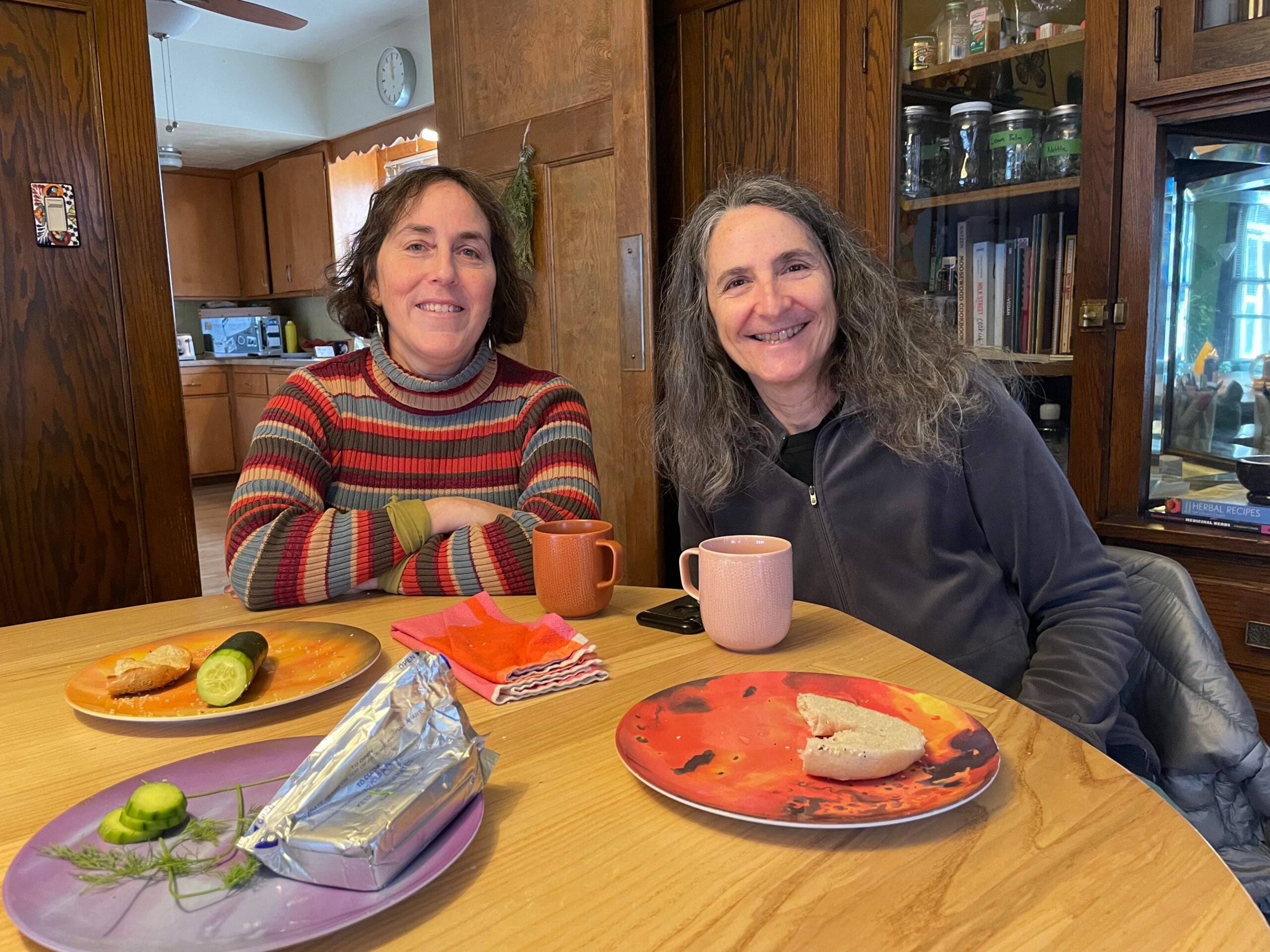
I had this idea that I would go on a search for bagels. “Quest” rhymed with “Midwest.” And then my family got on board right away: My daughter made my logo, my niece made the banjo traveling ditty, and we were off. My friend Jenny Pressman, who was born and raised in Queens but lives around the corner in Madison, we headed out to search for some bagels.
RF: So as you’re questing for great bagels, people who aren’t connoisseurs might say, “OK, what makes a good bagel?”
JR: Well, it’s funny. After I self-appointed myself an expert, suddenly I realized, “Oh, I have to have a description.” It can’t be like (U.S. Supreme Court Justice Potter Stewart, who said) “I don’t know what pornography is, but I know when I see it.” So I couldn’t just be like, “I know a good bagel when I taste it.” I had to have some words for it.
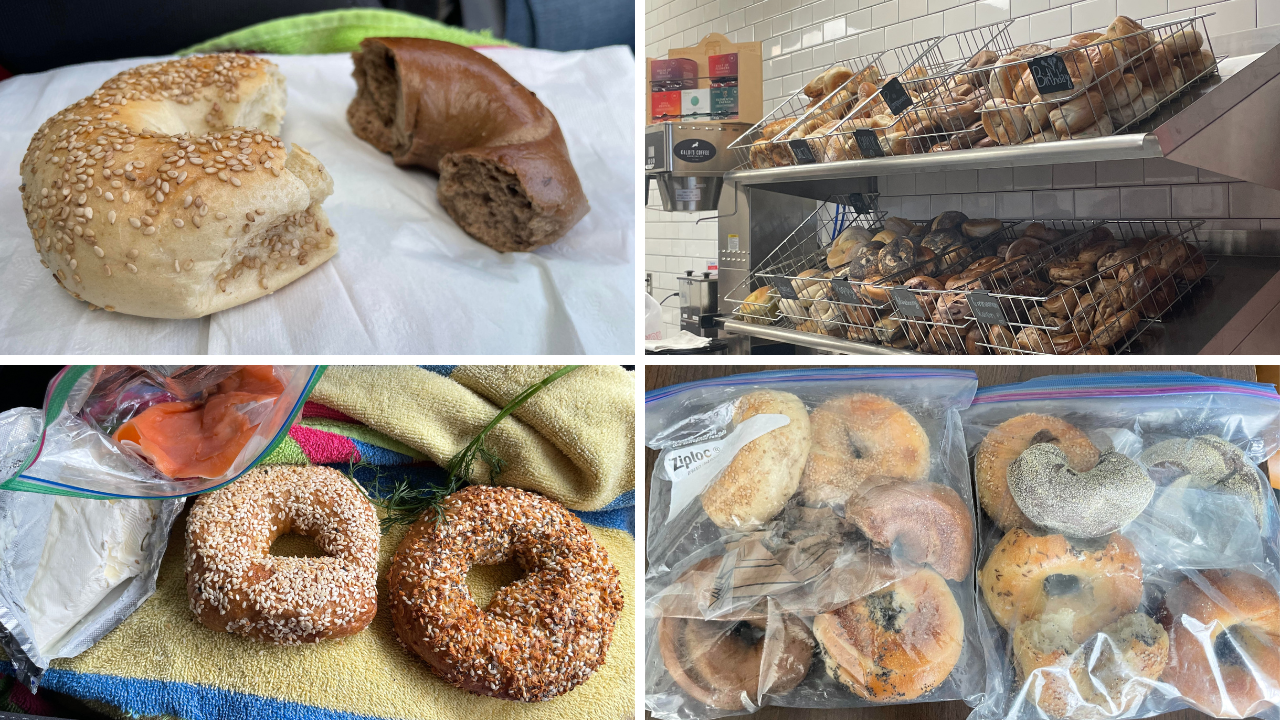
What I think a good bagel is: It simply must have a crisp exterior, like when you bite into it, it has to crackle, but it can’t be impossible. And then it has to have a flavorful flavor. And then I refer to it as this ineffable quality where it needs to be chewy, but it can’t veer into doughiness. And that’s how I define a great bagel.
RF: Ice cream and custard connoisseurs say the benchmark is you test the vanilla at every place. To test the quality bagels, are you tasting the plain bagel, or do you try different varieties?
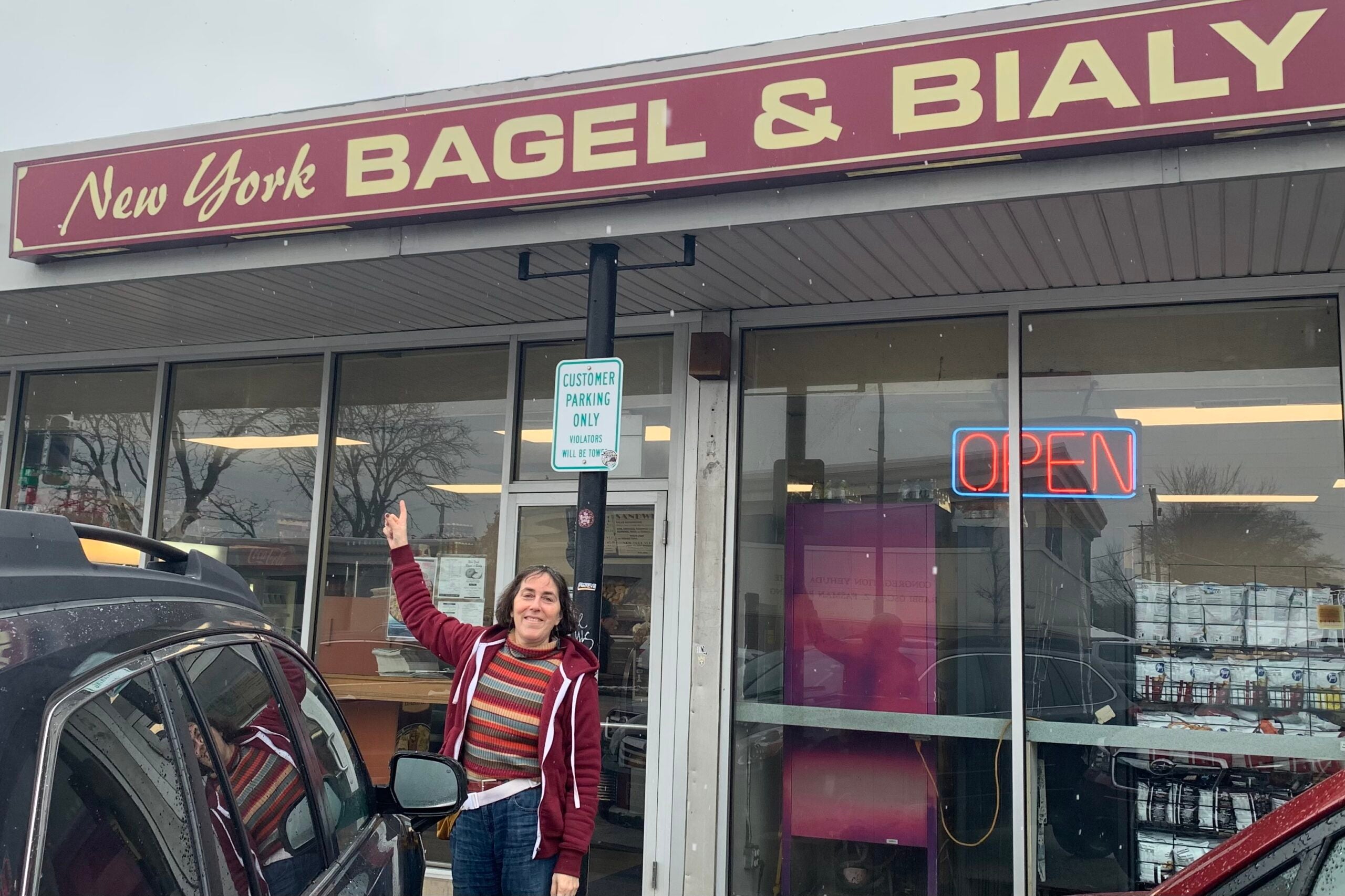
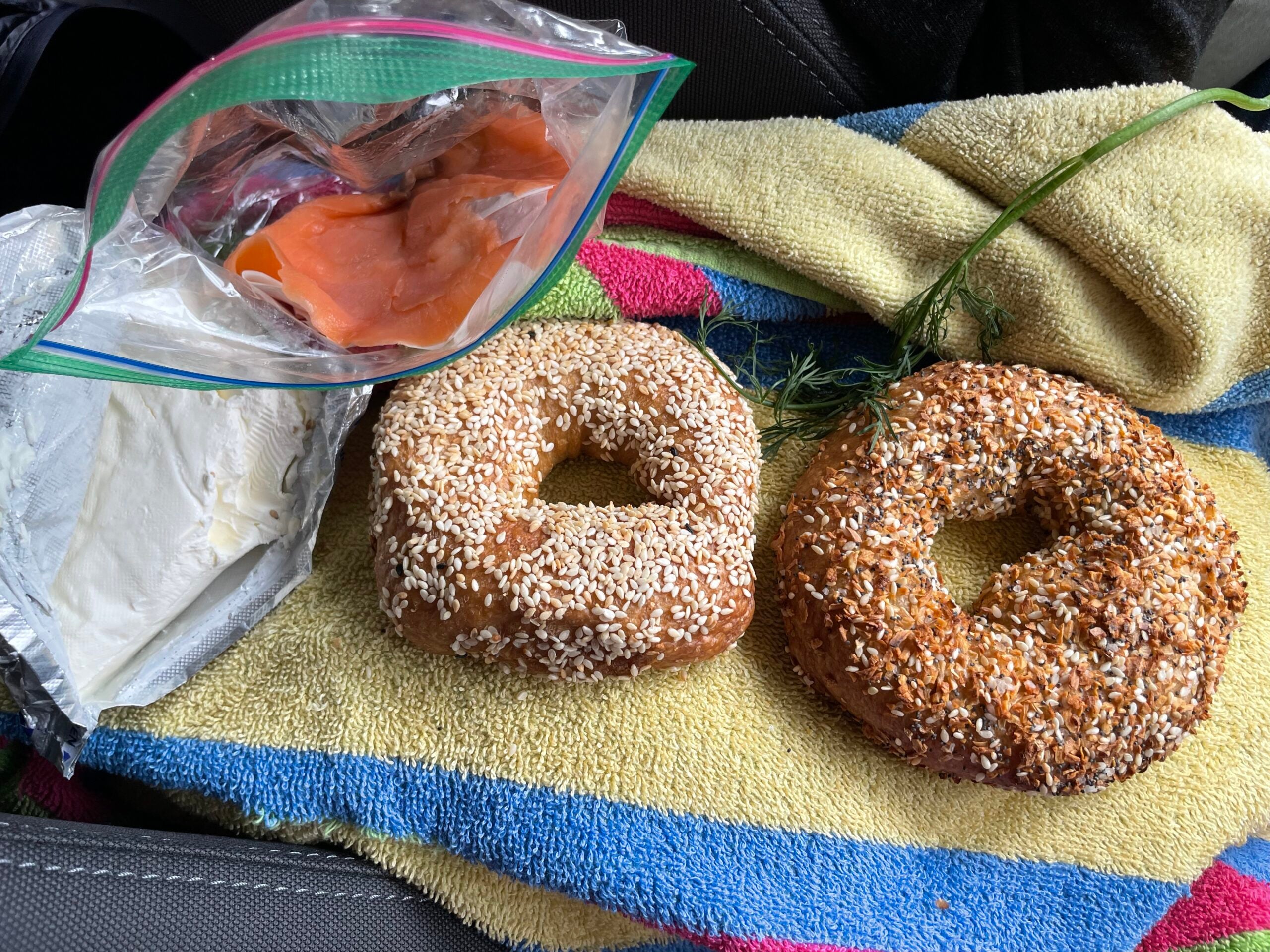
JR: We have a very exacting thing that we do: I test sesame everywhere, only sesame. And then Jenny tests everything bagel, because she is like a zealot for those. We take them to the car, and then we just bite into it unadulterated just to get the thing. I travel with cream cheese, cucumber, dill, salt, pepper, lox, so then we assemble our own bagel after we’ve tasted the quality of it.
RF: I think a lot of people would think the history of Wisconsin bagels is: There isn’t a history of Wisconsin bagels. Well, you found some evidence. What did you discover?
JR: Yeah, I found a lot. Bagels came to the U.S. probably in 1890-1900. It was Jewish-Polish bakers. While most Jewish people in the U.S. stayed in New York City, they also did not stay in New York City. So wherever there was a Jewish enclave, there’s bagels, there’s bagel shops, there’s bagel baker unions. Detroit, Milwaukee, Chicago, St. Louis — in all of those cities, there’s super interesting history. Milwaukee had a lot of Jewish bakeries where they made their own bagels. There was a union that went on strike, I think it was like in 1941, and (one of the local newspapers) bemoaned the bagel shortage.
RF: Let’s hit the road now. Where have you gone in search of good bagels around Wisconsin and elsewhere in the Midwest?
JR: The places I went to officially on the quest — and I say “officially,” like officially to me — are Chicago, Milwaukee, Detroit, Ann Arbor, the Twin Cities, Madison, St. Louis. I used to produce Love Wisconsin, which is a statewide storytelling project for Wisconsin Humanities, and so I go to lots of parts of Wisconsin. So for the year and a half that my job overlapped with this quest, anywhere I go, I check out the bagel. So I’ve tried bagels in Sheboygan. I’ve tried bagels in Ashland and La Crosse and Appleton.
RF: Let’s name some names. What are some of the best bagels you’ve had in Wisconsin?
JR: My favorite place probably is Ruby’s Bagels in Milwaukee. I love a good story. And she actually made this Bon Appétit list of, “yes, you can find great bagels outside New York” or something. (The owner) is a Latina (who started as a) pop-up bagel maker, which I just loved. It does come to this thing I’ve discovered about bagels, at least in the Midwest, but probably everywhere right now, which is: If it wasn’t for this younger, millennial, back-to-the-craft artisanal bagel makers coming back to this artisanal skill, there’d be almost no bagel shops. And so she is one of those.
RF: Bagels are one of those foods that clearly started off associated with a particular ethnic group in the United States, and it made the leap. How do you feel about that? This food you associate with heritage and family, and yet it also has a very broad mainstream interest, as well.
JR: Well, I think the bagel’s mass-production story is a story of mass production of food in this country. It was actually one of the last bread industries to fall because the dough would break all of the machines. But this guy Mickey Thompson created a bagel-making machine in the late ’50s, partnered with Lender’s, and it took off from there. Murray Lender, his goal was the bagel-ization of America. Like anything, if you bagel-ize or pizza-ize or taco-ize America, you’re going to become an assimilated food, so I think it loses its essence. What good is it for everyone in every corner of the country to have a bagel if it doesn’t actually taste like a bagel?
RF: Where is the Great Midwest Bagel Quest going to take you next?
JR: On this quest with Jenny Pressman, we’ve tasted and loved a lot of bagels. I no longer am New York-centric with my bagel. I actually feel like my little tagline is: I’m telling the untold story of the Midwest bagel, because there actually are bagel historians, and I feel like they have done a little flyover with Midwestern bagel history. That said, Jenny and I have never tasted New York bagels together. We’re both going to be in New York coincidentally at the same time in October, so we are going to end the official leg of the tour tasting New York bagels and seeing how we think it compares to the Midwest bagels.