The National Railroad Museum in Green Bay had long tailored its exhibits to people who love railroads. It seemed like an obvious choice, but several years ago, the museum’s curators discovered that only a small percentage of its visitors were diehard railroad enthusiasts.
“We realized that two-thirds of the people coming to the museum were children, and their mothers or grandmothers were our members,” Museum Director Jacqueline Frank recently told WPR’s “Wisconsin Today.” “At that time, we started changing things around, doing a lot more with education.”
That shift in programming paid off as the museum nearly doubled the number of visitors from 65,000 in 2010 to over 100,000 in 2015. And this year, the museum completed a major expansion as it continues to focus on education and railroad history, particularly for children.
News with a little more humanity
WPR’s “Wisconsin Today” newsletter keeps you connected to the state you love without feeling overwhelmed. No paywall. No agenda. No corporate filter.
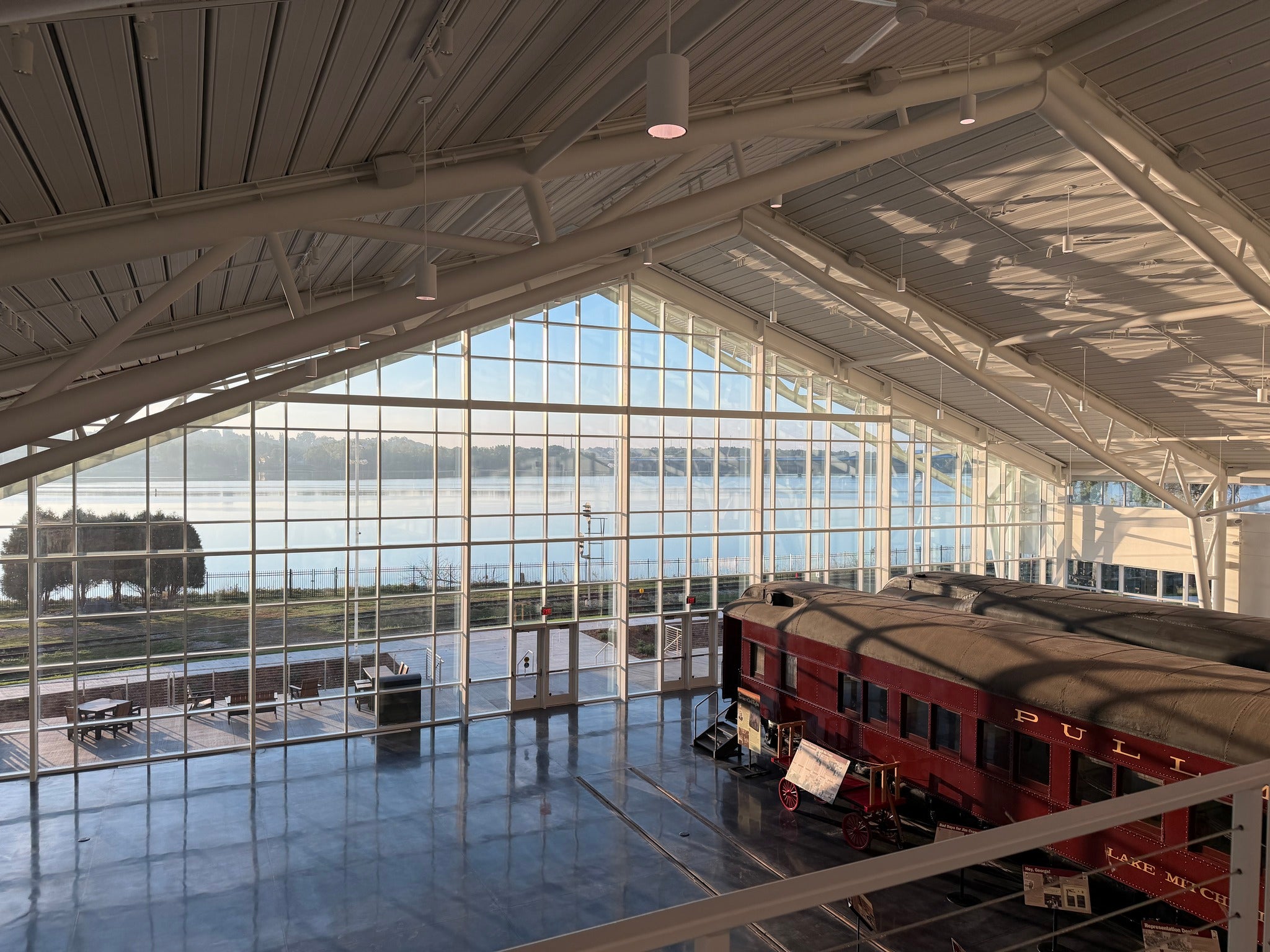
Frank said the project has been 10 years in the making. The 25,000-square-foot expansion sits along the Fox River. The expansion has enough space to house four train cars on tracks and capacity to accommodate 200 kids touring the exhibits.
While Frank called the trains a “fascinating piece of machinery,” she added that the train cars often also fit into American history.
Frank highlighted an exhibit about the Pullman sleeper car, the Lake Mitchell. The first Black union was formed by railroad porters, who laid the groundwork for the Civil Rights movement of the 1950s and ‘60s.
“Some of the early Civil Rights leaders, before we even think of Martin Luther King, were porters working on a train,” Frank said.
The Fox River museum expansion will also include the Lister Hospital Car, which operated in the 1920s and ’30s moving between Chicago and the Mayo Clinic in Rochester, Minnesota.
“Everybody has train stories; they touch us as people in one way or another,” she said. “And they’ve been doing this since the late 1830s. I think there’s really that kind of nostalgia piece that’s embedded in so many of us.”