
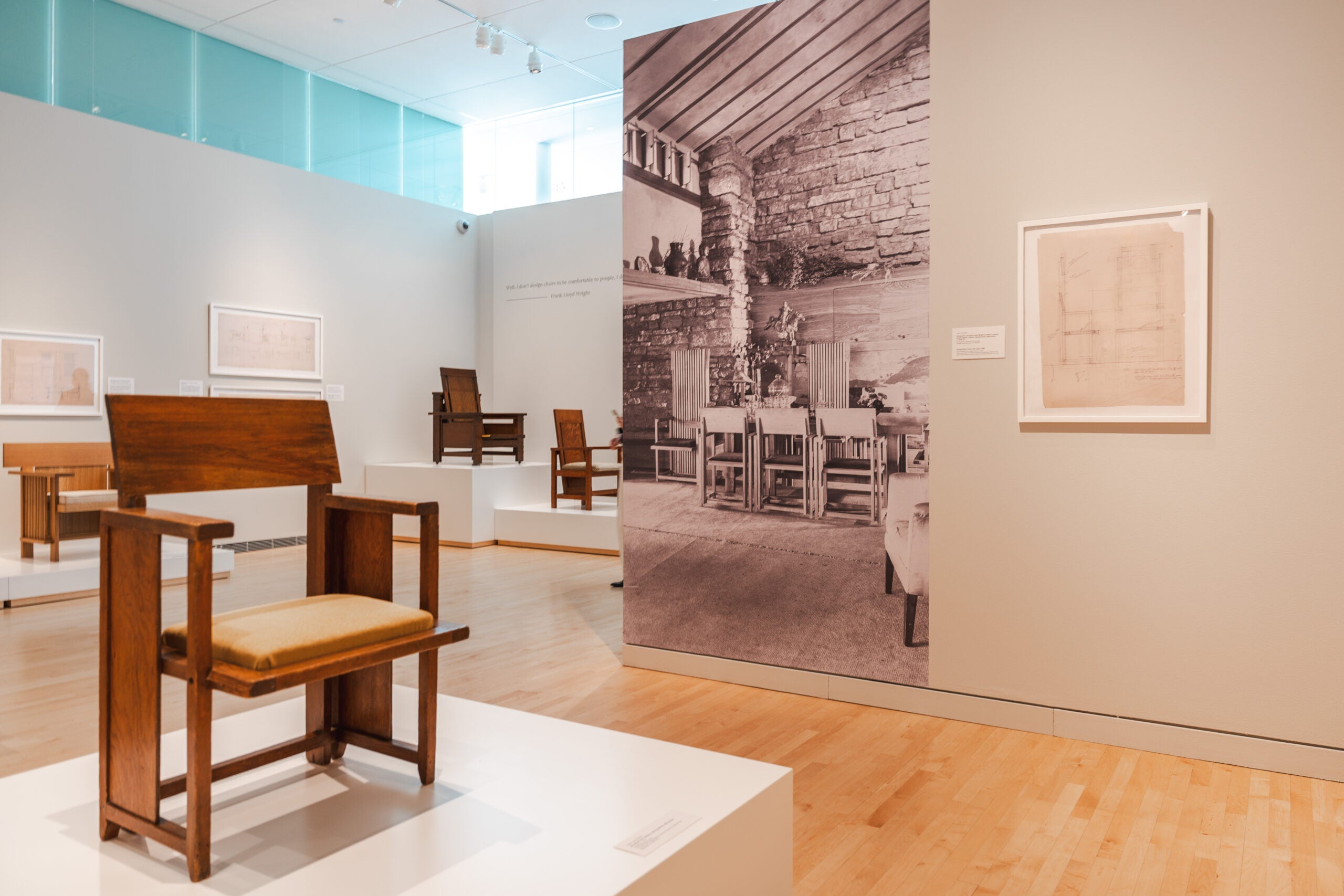
The Museum of Wisconsin Art in West Bend is currently showing a first-of-its-kind exhibit focusing on Frank Lloyd Wright’s chair designs, which the curators said puts his lesser-known work as a furniture designer in the spotlight after years of being overlooked.
“It’s really amazing that so little is known about Frank Lloyd Wright as a furniture designer. He has over 800 pieces of free-standing furniture that he designed,” Eric Vogel, an independent architecture historian and one of the exhibit curators, told WPR’s “Wisconsin Today.” “And yet most of us think of him as an architect, or even a landscape architect or an interior designer, before we think of his furniture.”
Wright, who was born in Richland Center in 1867 and briefly studied civil engineering at the University of Wisconsin-Madison, is famous for his pioneering work as an architect.
News with a little more humanity
WPR’s “Wisconsin Today” newsletter keeps you connected to the state you love without feeling overwhelmed. No paywall. No agenda. No corporate filter.
Wisconsin is home to more than 40 houses, churches and other buildings designed by Wright, including Taliesin, the sprawling 800-acre property in the Driftless region where he built his home studio and an architecture school.
But Wright also left his mark as a furniture designer, bringing his signature touch to more than 200 chair designs over the course of his career.
“He has five to six decades of furniture production, starting here in Wisconsin at Taliesin in the years before World War I, that we think established Frank Lloyd Wright as much as a furniture designer as an architect,” Vogel said.
One reason Wright’s furniture output has been obscured, Vogel believes, is because of Taliesin’s dark history. While Wright was away on business in 1914, a handyman at Taliesin killed Wright’s mistress and her two children and set the building on fire. Two workers and a 13-year-old child were also killed.
“That fire in 1914 and the scandals surrounding it — the murders, the loss of family, the employees killed — those very naturally overshadowed, eclipsed, the way that Wright healed from those tragedies. And he healed by working even harder, by rebuilding Taliesin, by experimenting even more,” Vogel said. “So what we see is iterations at Taliesin of extremely experimental furniture, much of which has been forgotten.”
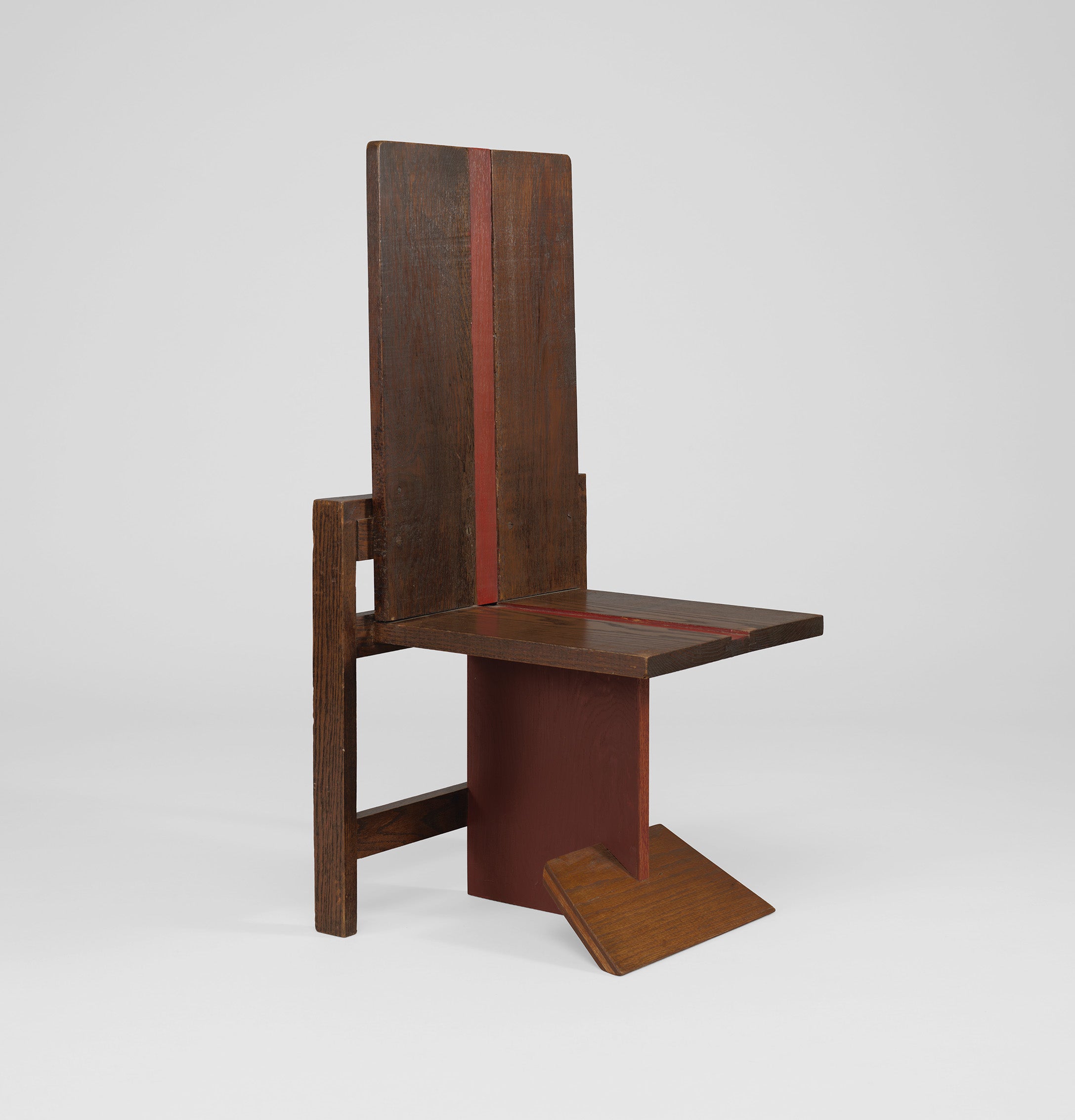
Modern recreations of Frank Lloyd Wright’s forgotten chairs
“Frank Lloyd Wright: Modern Chair Design” takes museum visitors through nearly half a century of Wright’s career, starting with furniture he created for Taliesin right after his Prairie Period and ending with a Space Age chair design from 1959.
The exhibit showcases 30 pieces on loan from more than a dozen museums, archives and private collections, including the Frank Lloyd Wright Foundation, the Minneapolis Museum of Art and the Milwaukee Art Museum. Also on display are 11 recreations of Wright’s chairs that were lost or unbuilt, newly fabricated especially for the exhibit.
Thomas Szolwinski, the Museum of Wisconsin Art’s architecture and design curator, and Vogel agreed that the most exciting part of the process was watching Wright’s designs go from concepts on a page or in a photograph to real-life chairs that they could sit in.
“Shown together with the historic works, it really tells quite a unique and intriguing story that we wouldn’t be able to tell without bringing those pieces back to life,” Szolwinski said. “We were learning through doing, which is what Wright did himself.”
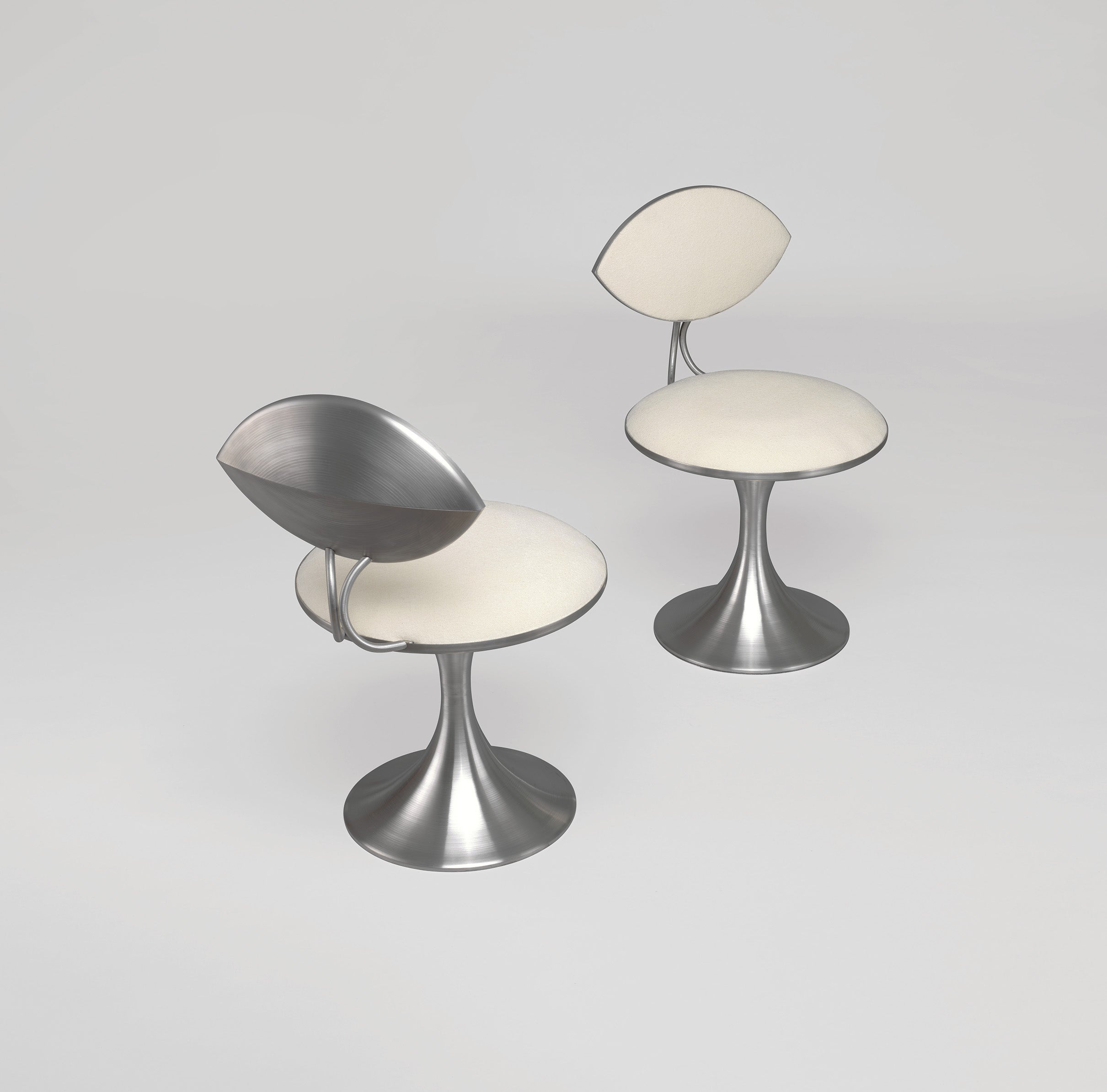
Perhaps the most striking of these designs is a chair Wright designed for the cafe of the Guggenheim Museum in New York City, which is one of his major architectural achievements. Vogel, a scholar-in-residence at the Taliesin Institute, came across the chair while doing a deep archival dive into Wright’s papers at Taliesin West in Arizona.
“It was incredibly exciting to find those drawings,” Vogel said. “At the end of the exhibition — 1959, Wright is 92 years old — we see him create a chair in spun aluminum, a material that I’ve never seen a piece of furniture made from before.”
To reconstruct the Guggenheim chair, the curators worked with a metal fabricator in Milwaukee. In keeping with Wright’s ethos, they tried to use as much local labor and materials as possible when recreating the chairs.
“The guys at Butler Metal Spinning couldn’t have been better partners, and the chairs that they did for the exhibition are just outstanding,” Vogel said. “They’re really showstoppers.”
But are they comfortable? Sitting in Wright’s chairs
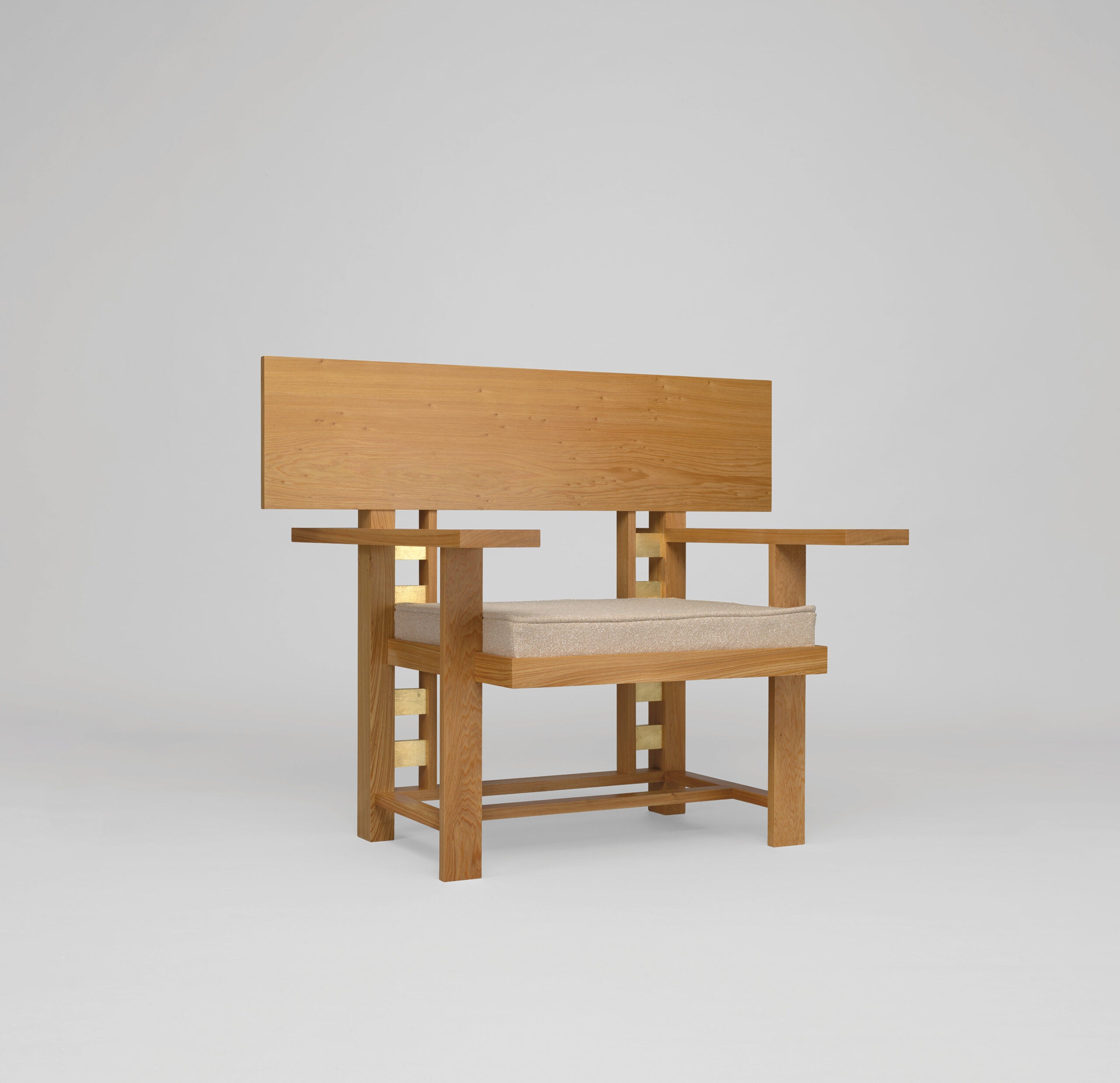
For several of the wood chair designs, the curators worked with Stafford Norris from Stillwater, Minnesota, whom Vogel described as a “consummate craftsman.”
“He very kindly made one-to-one scale mock-ups out of a soft pine. And we looked at them in absolute detail, to the shadow line,” Vogel said. “And, of course, we sat in them.”
Vogel said his favorite to sit in was the Taliesin II armchair.
“I sat in it, and it fit me perfectly. It has a wide seat, these low, wide arms and a wide horizontal backrest,” he said. “And Thomas was sitting in the Ingalls chair, which … fit his body better. We both looked at one another with these big smiles and said, ‘How can people complain about Wright’s furniture?’”
During Wright’s early career, Vogel explained, the cultural norms around sitting in chairs were more formal. Around the dinner table, women would wear corsets and men would be in starched collars.
“There was decorum and protocols that almost prevented the chair design from being comfort-oriented,” Vogel said.
But moving out of the Prairie Period, you can see a shift where Wright found a “sense of ergonomics,” Vogel said, with chair designs that followed the shape of the spine.
That said, there is an irony to putting on an entire exhibit about Wright’s chairs: The architect famously hated sitting.
“The chair was a problem for Wright,” Vogel said. “He thought that sitting was an undignified position, so he searched his whole life for a form of chair that would actually present the human body in a more dignified way.”
“Frank Lloyd Wright: Modern Chair Design” is on display at the Museum of Wisconsin Art in West Bend through Jan. 25. Szolwinski and Vogel will be giving a curator tour on Dec. 26.