
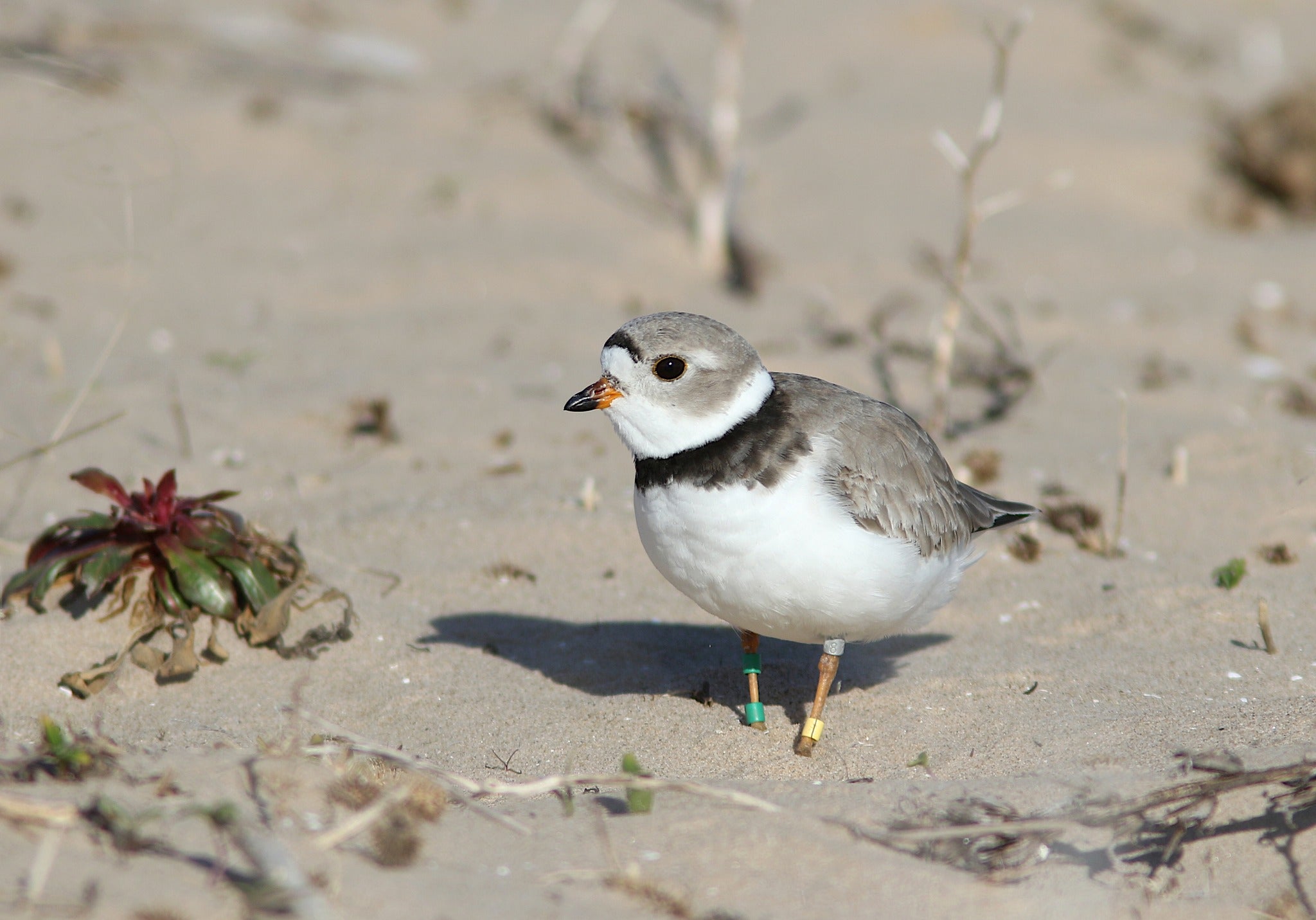
In 2019, a Great Lakes Piping Plover arrived on a marshy island off the coast of Green Bay.
Conservationists keep a close eye on the endangered species, but this bird wasn’t known to them. They named her Ms. Packer and banded her with green and gold bands on both legs.
In the years since, Ms. Packer became a favorite of birders while successfully rearing chicks, nesting with a male named Vince and starring in local TV news.
News with a little more humanity
WPR’s “Wisconsin Today” newsletter keeps you connected to the state you love without feeling overwhelmed. No paywall. No agenda. No corporate filter.
Earlier this month, Ms. Packer died, likely while trying to protect her chicks from a predator.
“One of our monitors found the remnants of a bird with the band combination that we know is her,” said Tom Prestby, Wisconsin conservation manager for Audubon Great Lakes.
Prior to this summer, Ms. Packer came to Green Bay year after year, raising 10 chicks.
To conservationists, she symbolized the recovery of piping plover populations in Wisconsin. The species was down to only 12 breeding pairs in 1990. But following a four-decade conservation effort, this summer saw 85 breeding pairs around the Great Lakes.
Plovers returned to Green Bay in 2016. Now, about five pairs nest there annually, Prestby said. The Apostle Islands are the birds’ other main Wisconsin nesting ground.
Prior to death, Ms. Packer had a difficult 2025
Ms. Packer’s death caps a turbulent two years. In 2024, she only came to Green Bay for a few days. Conservationists thought she might have died. But she returned in time for the NFL draft this spring, building a nest on Cat Island. But a predator took her chicks, Prestby said, prompting the plover to relocate to Long Tail Point in Suamico.
“(She) made it through several hurdles, including Memorial Day and Fourth of July weekend. Fourth of July weekend was very busy out there,” Prestby said.
After the Fourth of July, Ms. Packer’s mate disappeared. Her new nest of eggs hatched. And soon, her death was discovered by Audubon, which monitors plovers for the U.S. Fish and Wildlife Service.
But there’s a silver lining.
“It was a pretty successful year for piping plovers breeding in Green Bay. We had 10 chicks fledge, which is a pretty good number,” Prestby said. “Definitely not all is lost this year for piping plovers in Green Bay.”
Most years, Ms. Packer nested on Cat Island, which is undergoing a restoration effort aimed at rebuilding a marshy habitat at the southern end of Green Bay. A series of storms severely damaged Cat Island in the 1970s.
The multi-decade project uses sand dredged from a Port of Green Bay navigation channel. It will create over 270 acres of island habitat and protect from erosion over 1,000 acres of shallow bay and wetlands behind it.
As of Monday afternoon, a Facebook post announcing Ms. Packer’s death has attracted hundreds of reactions.
“Though we are hopeful new breeding plovers may one day take her place, Ms. Packer will be remembered as an ambassador of Plover conservation in Lower Green Bay, in the shadow of Lambeau Field,” Audubon Great Lakes stated in the announcement.

Wisconsin Public Radio, © Copyright 2026, Board of Regents of the University of Wisconsin System and Wisconsin Educational Communications Board.