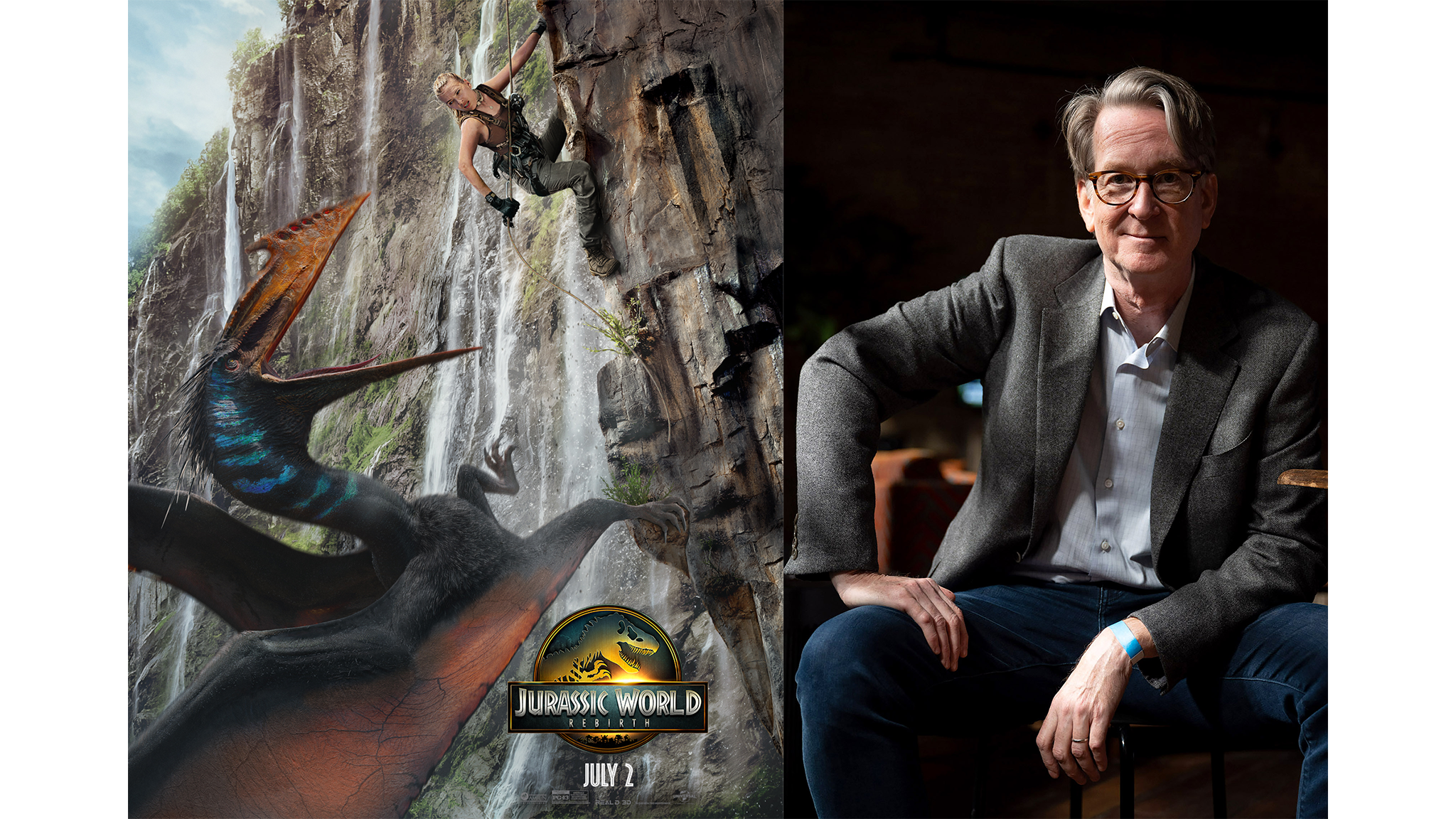
After more than 20 years away from the iconic “Jurassic Park” franchise, screenwriter David Koepp of Pewaukee is bringing dinos back with “Jurassic World: Rebirth.”
Speaking recently on WPR’s “Wisconsin Today,” Koepp said he never forgot his time growing up in Wisconsin and attending the University of Wisconsin-Madison. Koepp cited a “pretty terrific childhood” in Pewaukee as one of the things that led him to where he is now.
“I didn’t think I was from a very interesting place at the time because I don’t think anyone does,” he said. “But looking back, there was a great deal of freedom and room to explore, and that emboldens a person, I would think.”
News with a little more humanity
WPR’s “Wisconsin Today” newsletter keeps you connected to the state you love without feeling overwhelmed. No paywall. No agenda. No corporate filter.
Koepp’s work includes “War of the Worlds,” “Mission: Impossible” and Director Sam Raimi’s “Spider-Man,” plus more than 30 other films. Film industry analysis website The Numbers lists Koepp as the third most successful screenwriter of all time by box office revenue.
Koepp first came to UW-Madison to study writing plays and movies. He said his playwriting professor at the time encouraged him to leave Wisconsin, however, and pursue film at a place like UCLA.
“(My professor) said, ‘If that’s really what you want to do, you should go west or east. You can learn a lot about movies here but they make them there, so go where they make them,’” Koepp said.
On “Wisconsin Today,” Koepp talked about his screenwriting process, changes in Hollywood and his Wisconsin upbringing.
The following was edited for brevity and clarity.
Rob Ferrett: What was it that first made you think this is what you really wanted to do?
David Koepp: It’s hard to point to moments growing up. I know that I always loved movies. They were valued in our house. My mother was always encouraging me to watch movies with her. I remember her telling me I could stay up til midnight one night because the 10 o’clock movie was “Notorious,” the (Alfred) Hitchcock movie. I was like 9 years old and had school the next day, so I thought, “This was pretty terrific.”
I had always written stories. If I had to point to an era, it would be around 1981, I would have been 18. And I remember seeing “Raiders of the Lost Ark” in a movie theater and thinking, “This is the greatest movie I’ve ever seen in my life, and somebody made it up.” I was less concerned with the director, who looked like he had to go to some very uncomfortable places and stand around in the desert, than I was with the writer, who I imagined just sitting around dreaming that up. It seemed like a pretty cool life.
RF: The “Jurassic Park” franchise — you’re returning to it this year — but I want to start at the beginning. How do you approach taking something like Michael Crichton’s novel that it was based on and adapting it to the screen?
DK: Shortly before I did “Jurassic Park,” I had adapted the two novels into the movie that became “Carlito’s Way,” the Brian De Palma movie with Al Pacino. I knew my general way around how to turn a book into a movie. The challenge with the Crichton book was, there’s 350 pages of really dense science in there. It’s exquisitely researched. There was a brilliant idea: Could we extract intact dinosaur DNA from fossilized mosquitoes? The answer in the book and the movie is yes, and in a believable way that made everything else that happened seem real. The challenge was, how do I get all that science and all those lengthy scientific monologues into a movie, which doesn’t traditionally use either of those?
And that was solved bit by bit, by condensing, condensing, condensing and extracting all the things that were the gems that we knew we wanted to keep, finding the bridging material that would make it all work. And coming up with clever little devices like Mr. DNA, the animated movie within a movie that explains how it works. You have to think, “How can I help express this visually in a way that’s succinct and compelling?” And that’s just work, that’s the nose-to-the-grindstone stuff of writing.
RF: You mentioned writing visually when you’re writing a movie. How much of the visual side do you lay out on the screenplay, versus how much the director takes to bring it to life?
DK: I always felt strongly that screenwriting is writing images. Of course, everyone thinks of dialogue. And a screenwriter is responsible for the dialogue. But you’re also responsible for creating a visual template of the film. If you have a chase sequence, for example, you don’t just write “the cars barrel down the road and chase each other.” You write a chase scene. What moments happen and what does it look like?
The big challenge of a screenwriter is, how do I make these images and sounds appear in your head as you’re reading? You want the reader to experience the script at about the pace that you would experience the movie. It should only take 90 minutes or two hours to read a script, at most. How do I do that without it becoming bogged down in description? But if a writer doesn’t write a visual sequence the way they think it should go in the film, the way they think it should be presented, then they’re abdicating their responsibility. The director will come in and reinterpret it anyway, but it’s your job to get something down on the page first.