A new contaminant may threaten the health of America’s national bird.
Findings from a long-running project have already shown high levels of PFAS in nestling bald eagles across Wisconsin. Now researchers are looking to gauge the effects on their health.
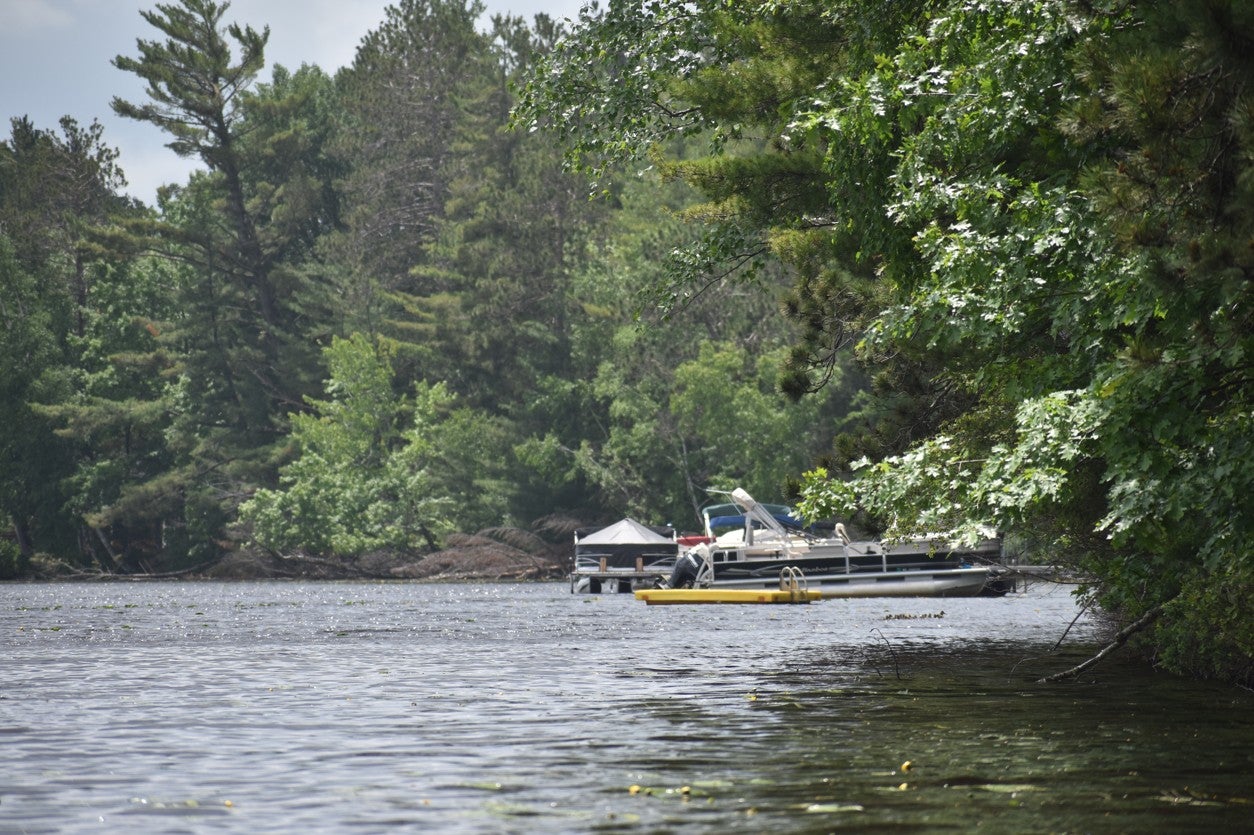
The Great Lakes Bald Eagle Health Project has been tracking levels of heavy metals and other contaminants in nesting eagles across Wisconsin since 1990. In 2023, researchers at Wisconsin Sea Grant, the Wisconsin Department of Natural Resources and the Field Museum of Natural History in Chicago began collecting blood samples from eaglets along the south shore of Lake Superior and the Apostle Islands. In 2024, they sampled birds in the Green Bay area and Lake Michigan shoreline, as well as along the Wisconsin River from Prairie du Chien to Minocqua last year.
News with a little more humanity
WPR’s “Wisconsin Today” newsletter keeps you connected to the state you love without feeling overwhelmed. No paywall. No agenda. No corporate filter.
Researchers collected samples from 50 eaglets in each region to better understand the health effects of PFAS on the birds, said Gavin Dehnert, an emerging contaminant scientist with Wisconsin Sea Grant.
“They haven’t left the nest yet, and all of their food source is coming from the parents. So they give us a really good understanding of the contaminants within about a 3- to 5-mile radius of the nest,” Dehnert said.
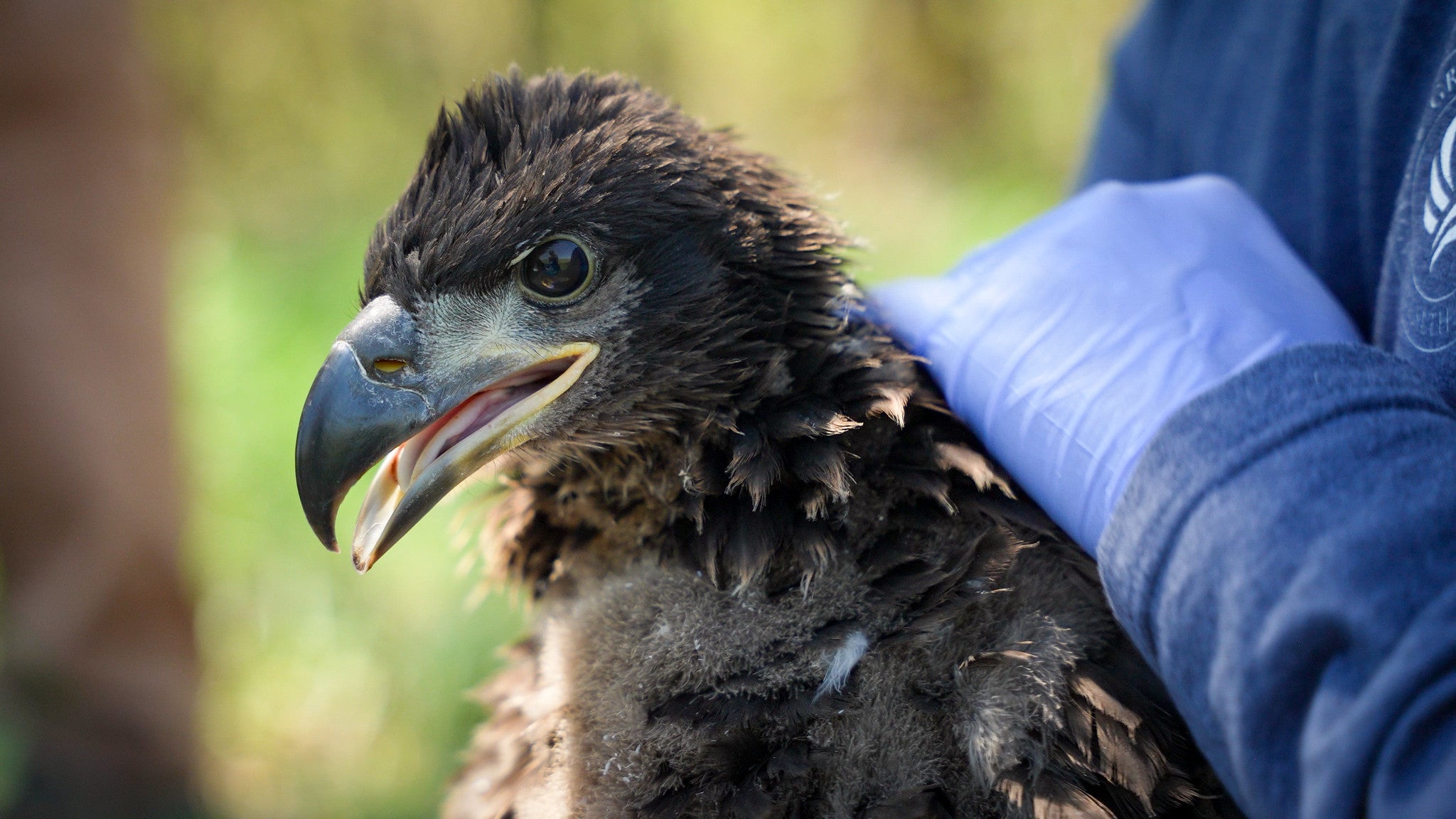
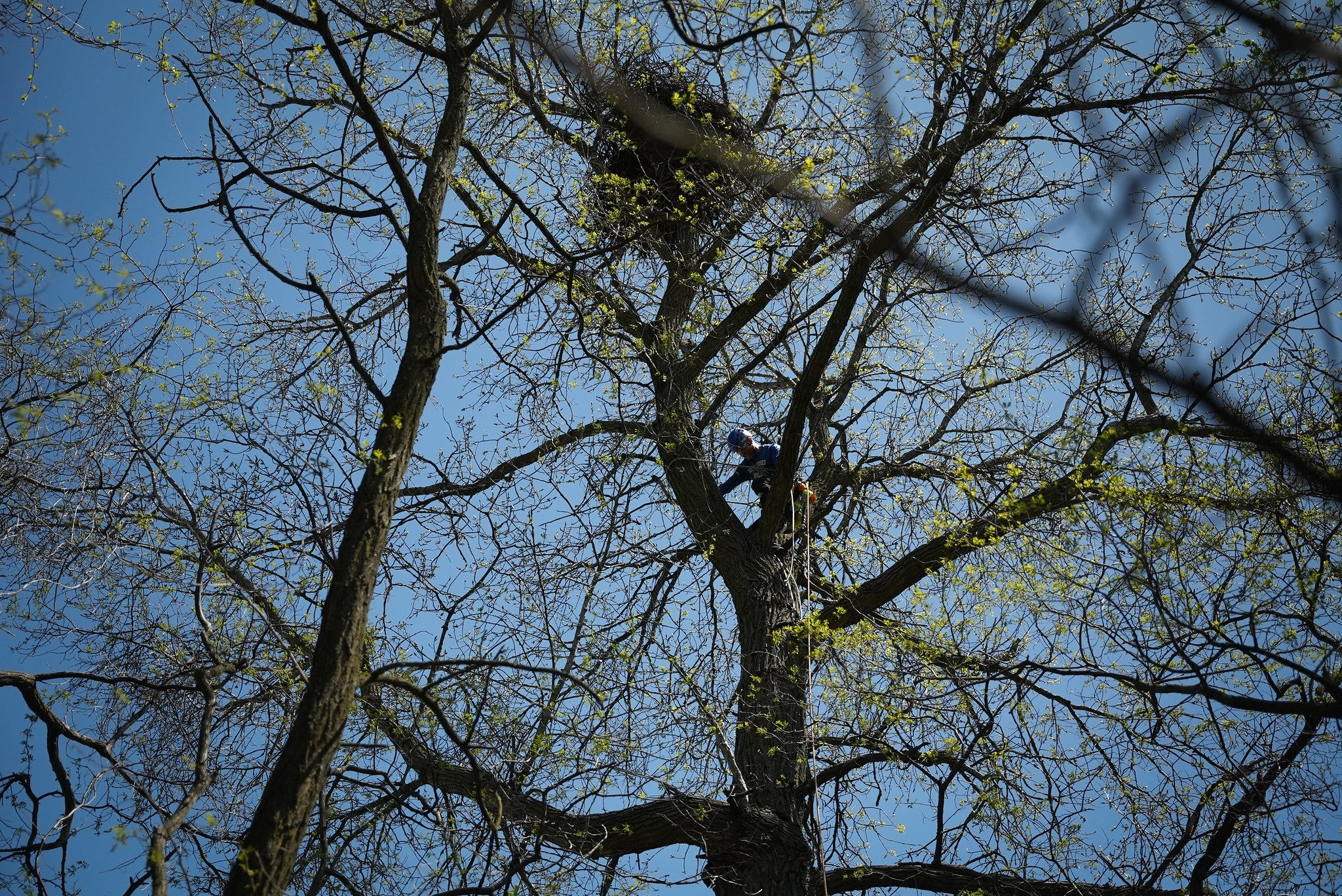
He and partners on the project worked with a tree climber to collect eaglets that are about 5 to 9 weeks old, which are brought down to the ground for a suite of health checks similar to those conducted by a veterinarian.
Researchers also measured around 40 different PFAS, or per-and polyfluoroalkyl substances, in blood samples. An analysis showed the highest PFAS levels of up to 600 parts per billion in samples taken from birds nesting on the middle portion of the Wisconsin River, from the Rhinelander area to a dam near Sauk City, Dehnert said.
Samples also showed PFOS, one of the most widely studied PFAS chemicals, made up as much as 90 percent of the total PFAS. Dehnert noted fish consumption guidelines advise people not to eat fish that contain PFOS levels above 40 parts per billion.
“Our levels that we’re finding in the eaglets are 10 times higher than that,” Dehnert said.
While eagles aren’t on the dinner menu, the levels indicate significant contamination. Total PFAS levels in the Apostle Islands region ranged from 300 to 400 parts per billion and around 200 parts per billion in the Green Bay area of Lake Michigan.
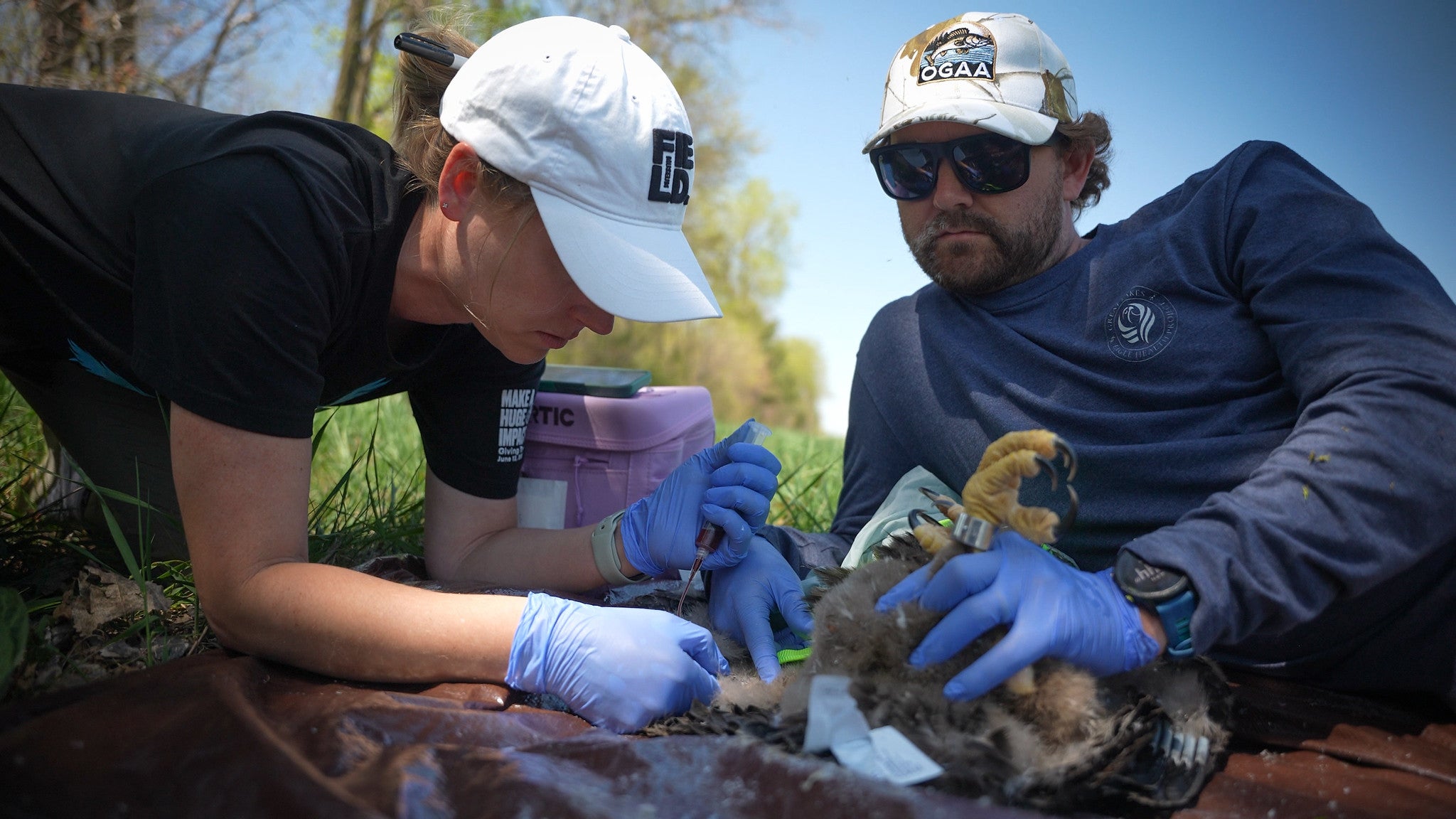
Emily Cornelius Ruhs, a postdoctoral research scientist with the Field Museum, said blood samples with higher levels of PFAS showed a decline in natural antibody levels and white blood cell counts when exposed to bacteria in a lab. Researchers conducted the test to mimic bacterial or viral infections.
“In those eagles that are highly contaminated with PFAS, what we’re seeing is that some of those immune function markers are out of whack a little bit,” Cornelius Ruhs said.
Even though results show a weaker immune response in the birds, they’re not dropping dead out of the sky, said Sean Strom, the DNR’s fish and wildlife toxicologist.
“But what we’re starting to see is that eagles with higher levels of PFAS may not be as healthy as less contaminated birds,” Strom said.
Researchers fear that may reduce their ability to respond to new infections, such as the H5N1 bird flu. Their findings are in line with studies that show reduced antibody response to vaccines in people who have higher PFAS levels in their blood. The so-called forever chemicals have also been linked to kidney and testicular cancer, as well as reduced fertility in women.
Dehnert and Cornelius Ruhs said their working theory is that PFAS contamination in the Lake Superior region may have stemmed from a 2018 oil refinery explosion in Superior. That’s due to high levels of certain chemicals associated with firefighting foam that contain PFAS.
For the middle portion of the Wisconsin River, they speculate contamination may come from spreading of industrial sludge from paper mills due to a chemical that’s commonly found in nutrient-rich material. Dehnert said they didn’t find a clearcut cause or chemical fingerprint in the Green Bay and Lake Michigan area.
While those theories are plausible, Strom said they’re not proven. He believes contamination probably comes from multiple sources.
Either way, Strom noted that people are eating the same fish the eaglets are consuming. Researchers agree the birds can give researchers a good sense of how PFAS are affecting the health of both wildlife and humans. They hope to finalize and release their findings in the coming months.


Wisconsin Public Radio, © Copyright 2026, Board of Regents of the University of Wisconsin System and Wisconsin Educational Communications Board.