
Families across Wisconsin will soon have better access to a large-scale form of genetic testing to help diagnose infants with rare conditions as a program run by the state’s medical colleges enters hospitals outside of Madison and Milwaukee.
Starting this month, the program will help implement rapid genomic testing in six neonatal intensive care units, or NICUs, including in La Crosse, the Fox Valley, Green Bay and Marshfield. This type of test is already available in large hospitals such as American Family Children’s Hospital in Madison and Children’s Wisconsin in Milwaukee.
“Regardless of … where a baby is born, we want them to be able to have access to this genomic testing,” said genetic counselor April Hall, who’s an assistant professor of pediatrics at the UW School of Medicine and Public Health.
News with a little more humanity
WPR’s “Wisconsin Today” newsletter keeps you connected to the state you love without feeling overwhelmed. No paywall. No agenda. No corporate filter.
Almost 2,000 babies in Wisconsin are born each year with a birth defect, which can stem from underlying genetics. A study at Boston Children’s Hospital found about one-third of babies with genetic disorders in its advanced NICU died undiagnosed.
“The first step to be able to treat rare disorders is to make that identification of them,” said clinical geneticist Jessica Scott Schwoerer at Children’s Wisconsin and the Medical College of Wisconsin. “Find them, so therefore we can treat them.”
Getting that diagnosis can help physicians target treatments and reduce the babies’ hospital stays, Hall added.
The goal of the program, called the Baby Badger Network, is to expand access to rapid genomic testing beyond the state’s largest hospitals.
“The goal of the Baby Badger Network is to set up the infrastructure so there is that capacity to offer this testing to any infant in any NICU in the state that would benefit,” Scott Schwoerer said.
About two years ago, Hall and Scott Schwoerer helped start the network in two Green Bay hospitals, with funding from a $50,000 grant from the Advancing A Healthier Wisconsin Endowment. The network offered training and standardized workflows to clinicians there.
Hall and Scott Schwoerer hope expanded access to testing will make a big difference for the few babies across the state who need it.
“Some of these smaller hospitals don’t have as many babies who would qualify for genetic testing,” Hall said. “But we’re hopeful that at least at each site, we would have 10 babies that we’re able to test, and that just gets those babies a quicker diagnosis.”
Benefits of quick, large-scale genetic testing
Rapid genomic testing offers benefits compared to other tests, said genetic counselor Erica Ramos, a personalized medicine expert for the National Society of Genetic Counselors. She is not involved with the Baby Badger Network.
“When we’re looking at newborns in the NICU, we’re looking at very, very sick children. And every minute, every second, can have an impact on how they develop,” she said. “Oftentimes, there are things that could have either treatments or essentially cures when given very early.”
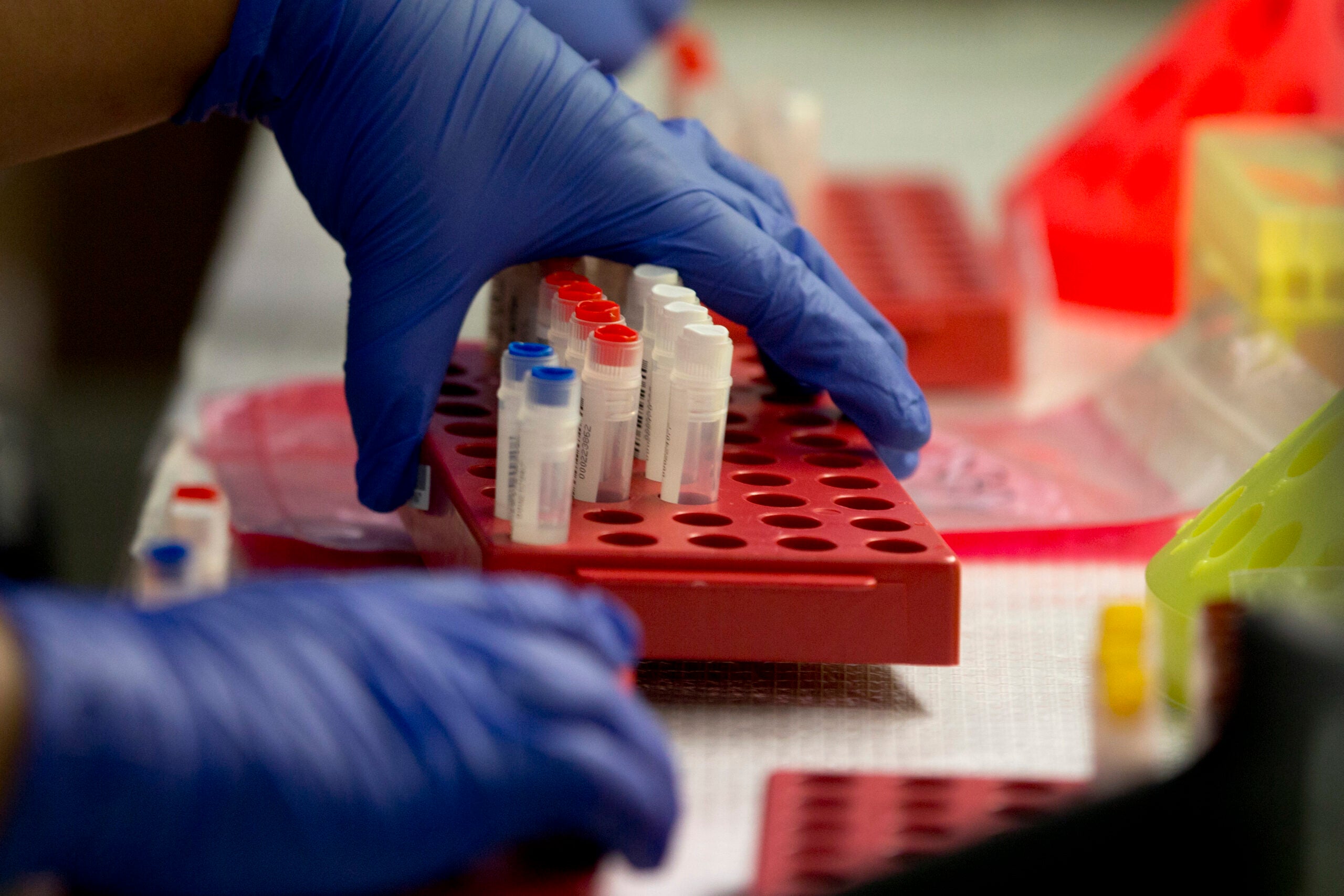
But historically, genome sequencing, which catalogues the entirety of a person’s DNA, takes a long time.
“The goal with rapid or ultra-rapid whole genome sequencing is usually about three to five days, instead of about 45 to 60 days, which we often see with standard genome sequencing,” Ramos said.
Faster sequencing can mean quicker diagnosis and treatment.
“We’ve found things that were highly actionable. We could give the baby a supplement or a medication or something different to significantly improve their care,” Ramos said.
Ramos said widespread access to rapid genomic testing and physician training will be helpful in Wisconsin hospitals.
“It gives the physicians more experience,” she said. “And it can save a lot of costs for the health care system because of the rapidness in which we can get those results back.”
The new Baby Badger Network sites, listed in an announcement by UW’s School of Medicine and Public Health, will be: Gunderson Health System in La Crosse, Marshfield Children’s Hospital, Children’s Wisconsin Fox Valley Hospital, Bellin Hospital in Green Bay, Aurora Sinai Medical Center in Milwaukee and Aurora West Allis Medical Center.
The goal is to eventually expand testing capacity to all NICUs in the state, Hall said.

Wisconsin Public Radio, © Copyright 2026, Board of Regents of the University of Wisconsin System and Wisconsin Educational Communications Board.