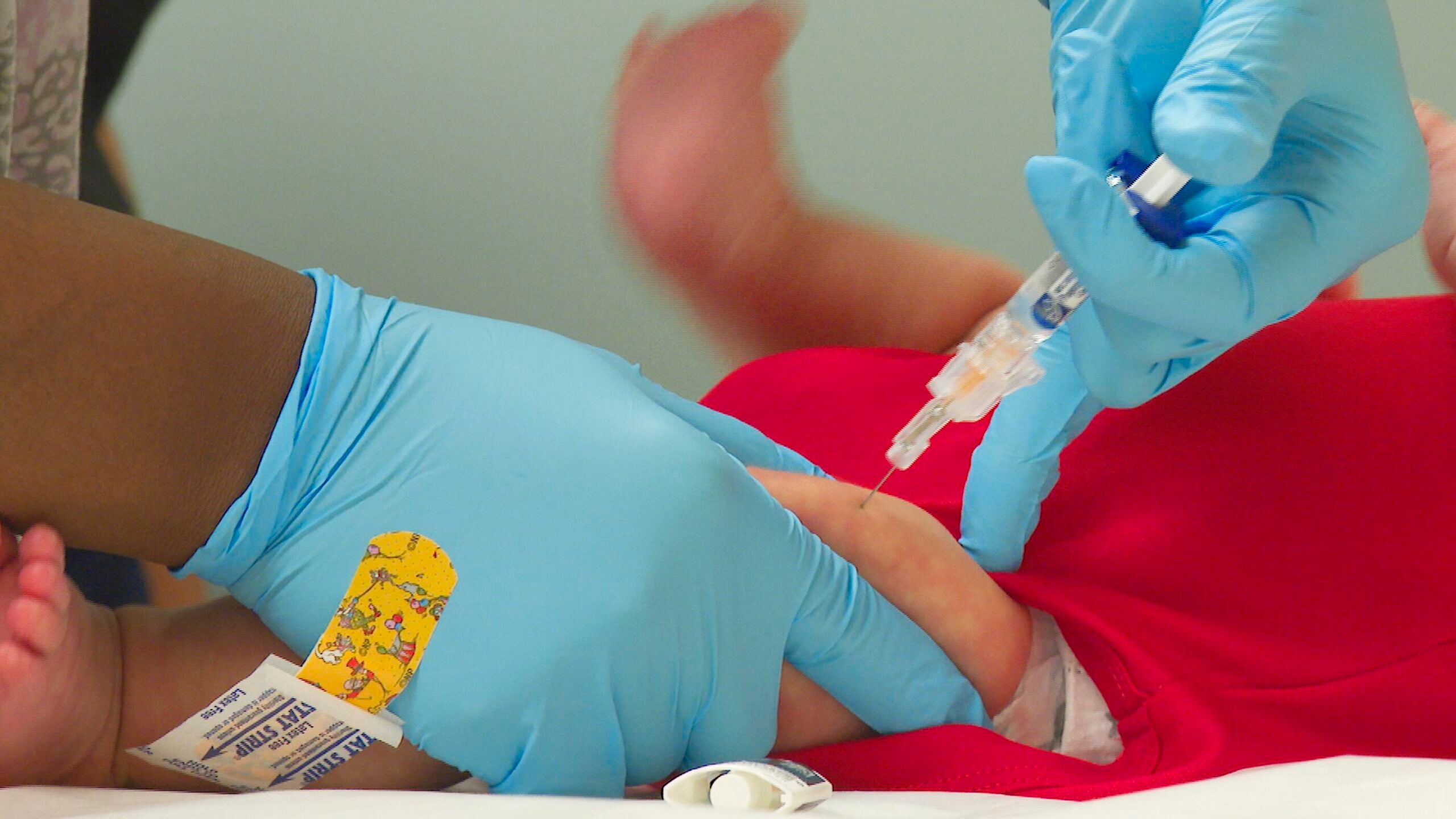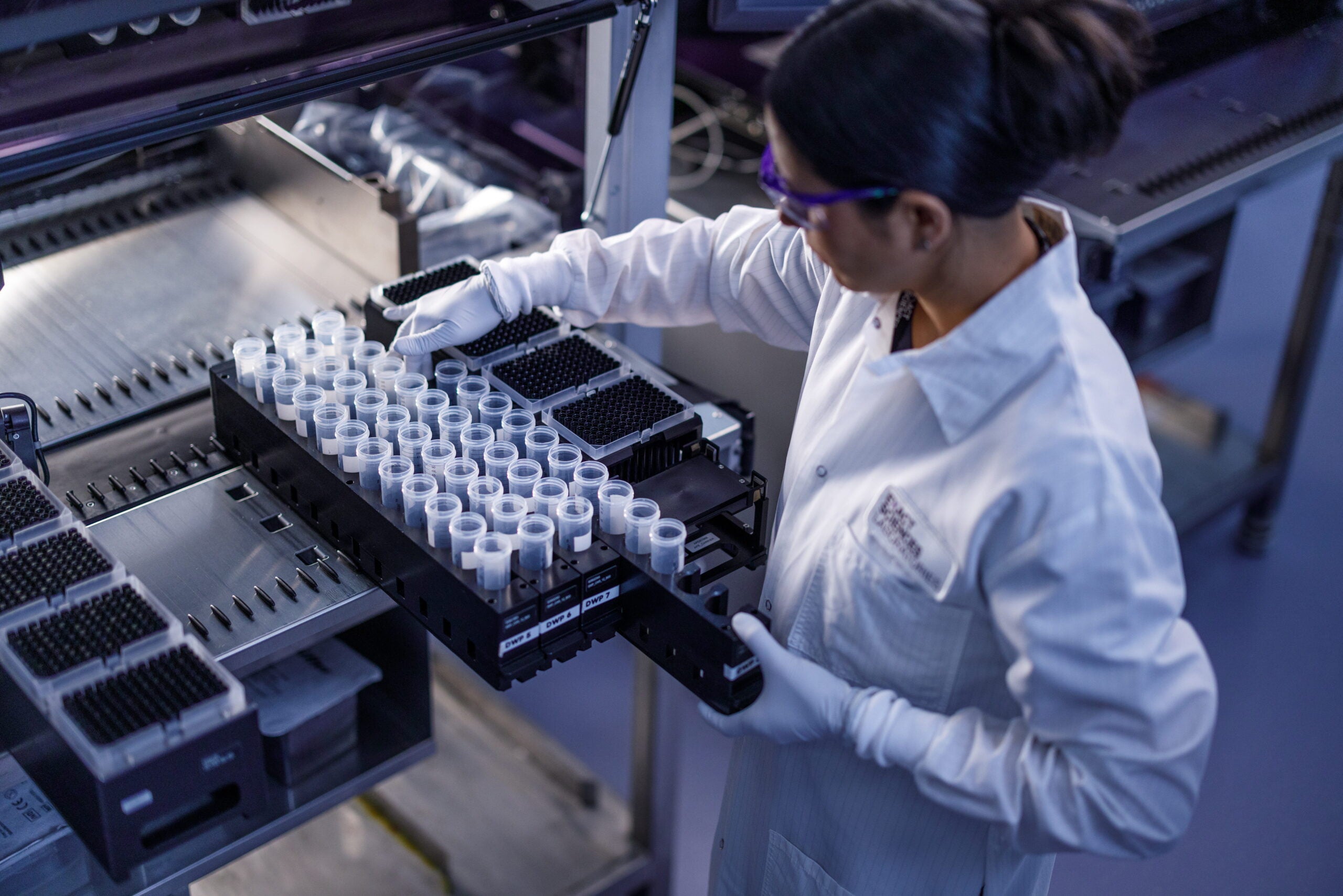
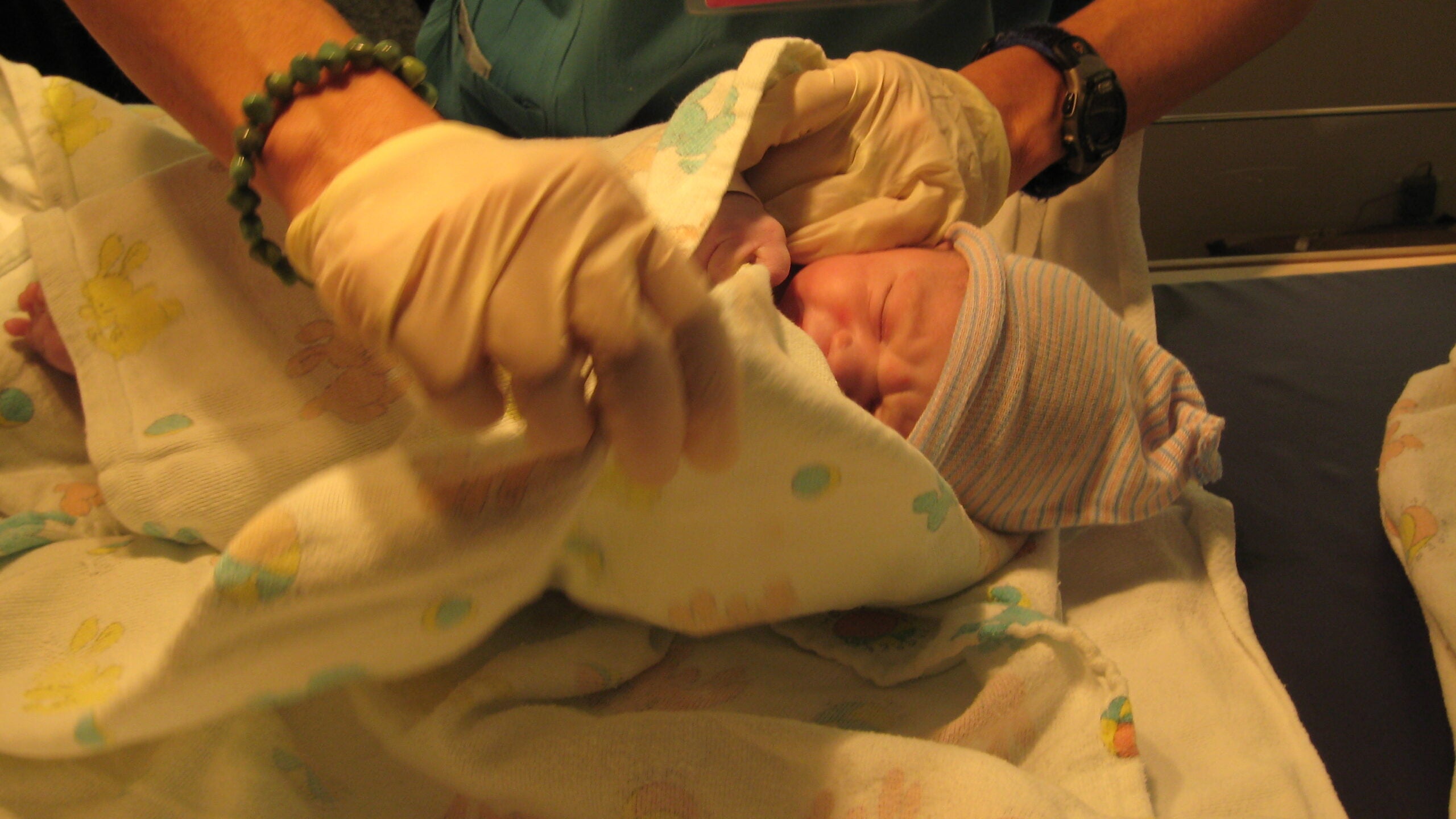
As advances in medicine could change how newborn screening is done, a task force meets today in Milwaukee to set criteria for testing decisions that could have lifelong impact.
The federal government has set no national standards, so screening requirements vary from state to state. Most test for at least 30 disorders that could cause disability or death. Wisconsin law requires 44 blood tests, and a test for hearing. Genetic testing is not done now but could be in the future.
Karen McKeown is an administrator at the Wisconsin Division of Public Health.
News with a little more humanity
WPR’s “Wisconsin Today” newsletter keeps you connected to the state you love without feeling overwhelmed. No paywall. No agenda. No corporate filter.
“Some of those tests would give us results where we might say, ‘Well, this child is at higher risk for developing something later in life, but not necessarily going to.’ That opens a whole different set of questions to questions to consider.”
Questions such as: Do parents want to know? Should their consent be required for tests of uncertain benefit? The health task force will get input on these and other questions to develop criteria for newborn screening in the future. Says McKeown: “Moving forward, I think science continually evolves. I would be reasonably confident that in the future tests will be added.”
The expansion of newborn screening in states across the country has been driven by new technology and political pressure from advocacy groups. The issue has also sparked a debate about cost and the benefits of testing, which sometimes can result in false positives.
Wisconsin Public Radio, © Copyright 2025, Board of Regents of the University of Wisconsin System and Wisconsin Educational Communications Board.