The Corporation for Public Broadcasting recently announced it will cease operations after Congress rescinded $1.1 billion of previously-approved federal funding.
The nonprofit was founded in 1967 to establish federal support for public media across the country. It provides PBS Wisconsin and Wisconsin Public Radio with about $6 million annually, which represents roughly 10 percent of their combined total revenue.
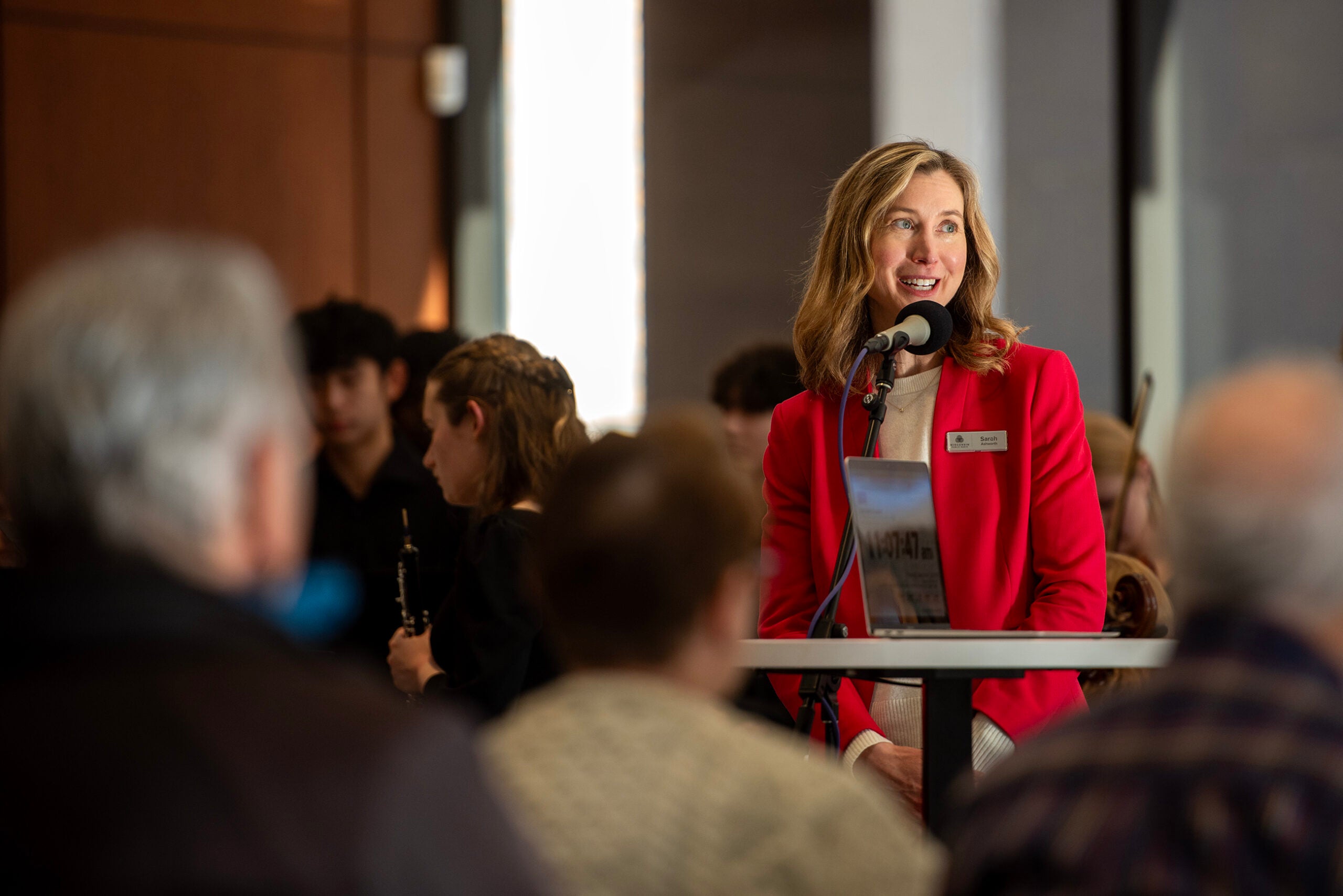
WPR Director Sarah Ashworth noted that WPR existed before the CPB was formed and will continue to serve listeners in Wisconsin in spite of the lost funding.
News with a little more humanity
WPR’s “Wisconsin Today” newsletter keeps you connected to the state you love without feeling overwhelmed. No paywall. No agenda. No corporate filter.
She joined WPR’s “Wisconsin Today” to discuss how the organization will be affected by the loss and what it means for listeners in the state.
The following was edited for brevity and clarity.
Rob Ferrett: Will the impacts of this funding loss for WPR be something that listeners will be able to notice?
Sarah Ashworth: I think, unfortunately, yes. And I think for public media consumers all over the country, that is the answer.
What we don’t know is — some of the larger services that the CPB provided, like music rights or different infrastructure — we don’t know how that will come together. So it’s not quite known fully what the impact is on the system and then what we will feel.
Once we begin to know those things, then we’ll be able to assess what our service continues to look like for WPR. We’re committed to being here and being WPR on the air.
RF: What else did the Corporation for Public Broadcasting provide besides federal funding?
SA: Public media is built from the ground up. There’s no central leader, necessarily, of the public media system. There’s NPR, there’s PBS, there’s the CPB and then there are 1,500 public media stations across the country.
At this moment, what I see is, who steps in to figure out some of these things with the absence of the CPB? So music licensing, for example … NPR has organized a group to look at that, which involves station leaders. PBS as well is looking at that. So it’s figuring out who steps in to lead in some of these areas where the CPB was.
“The sound of who we are is affected by those decisions.”
Sarah Ashworth, WPR director
RF: Wisconsin Public Radio airs nationally-produced programming from NPR and other public radio stations across the country. Could these funding cuts affect WPR’s ability to air those?
SA: That’s part of the big unknown right now. NPR has said it’s very committed to continuing its programming, finding ways to absorb the cuts and continuing to be that service across the country for “Morning Edition” and “All Things Considered” and other programs that it produces.
I think it will take time for the funding cuts to settle in, for stations to make those determinations and decisions and then for the impact to come to Wisconsin.
RF: In June, WPR laid off 15 employees and sunset some shows. Was this impending cut to the CPB taken into consideration when WPR made those decisions?
SA: The threat of loss of funding to the CPB felt very real and (we thought): How do we prepare Wisconsin Public Radio to continue its service, knowing that that’s a real threat? We did have an operating budget deficit that had started during COVID and was continuing. So we knew we needed to get into a better position to weather whatever cuts might be ahead.
We are, budget-wise, in a better financial position going forward because of some of the decisions we’ve made. Those are incredibly difficult decisions because they impact everyone who’s a listener. The sound of who we are is affected by those decisions.
RF: The argument from Republicans who supported these cuts was that they felt their perspective wasn’t being represented in public media. What do you say to those concerns?
SA: I reject the idea of bias in the work that we do. I see the work that you do. I see the work that our news teams in particular do and the care and thought that goes into representing many perspectives and experiences across the state.
I was a journalist before I was in this role, and I have participated in so many newsroom conversations that have really pushed to make sure that we’re fully telling a story. I also see that if we miss something, if we make a mistake, we’re very transparent in correcting it. We’re open when we make a mistake and we bring in another voice.
The beauty of public media is that we produce many things across many different topic areas. It is guaranteed that some people will hear things they like and they’ll also hear things that they don’t like or that they disagree with. And I think that’s OK.
We need our audience and our listeners and our communities to understand that coverage is not just in one hour or one day. It is over many months, many years, where we are helping share the story of Wisconsin.
Disclosure: No member of Wisconsin Public Media’s senior leadership reviewed this story before publication.