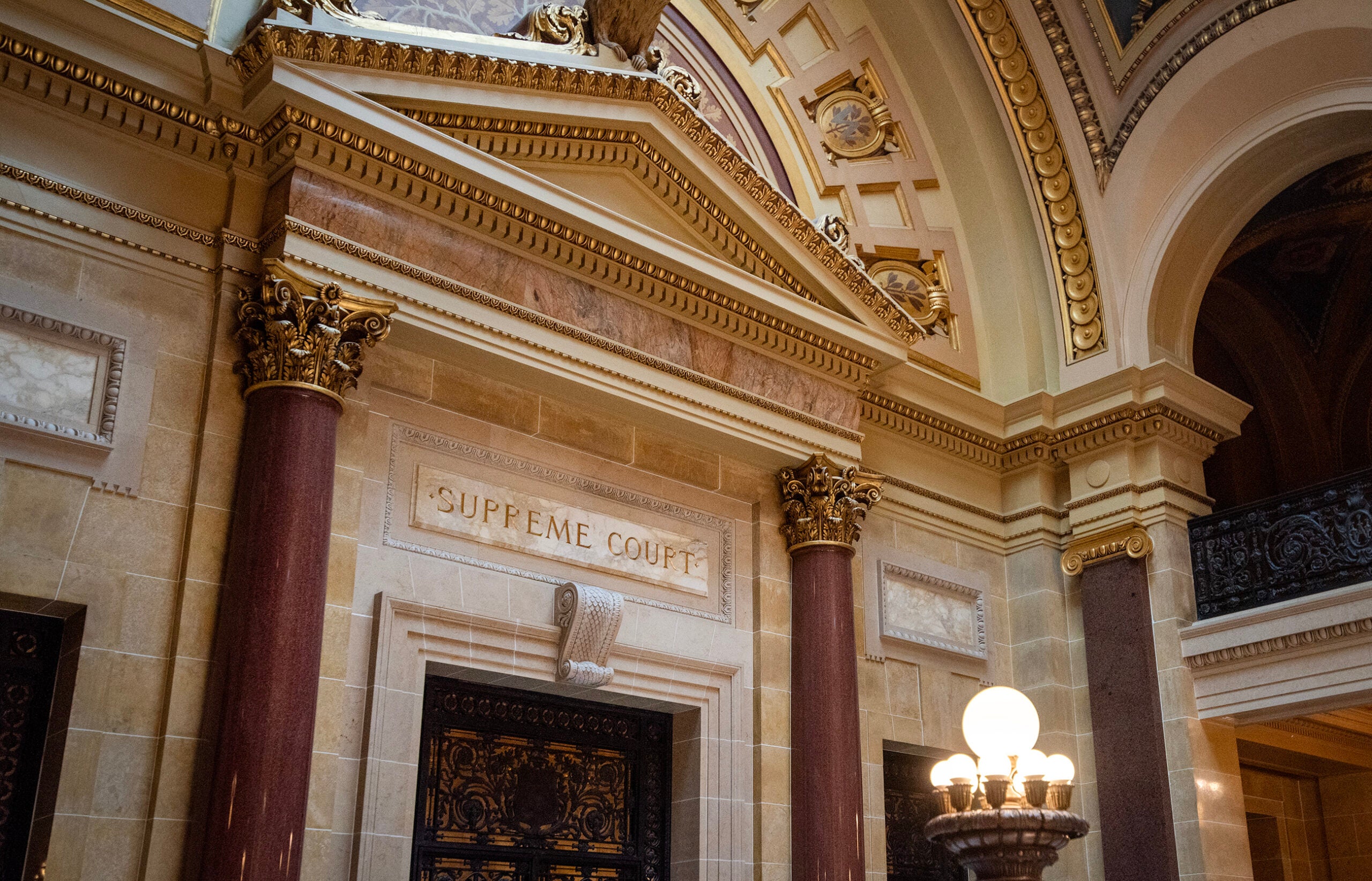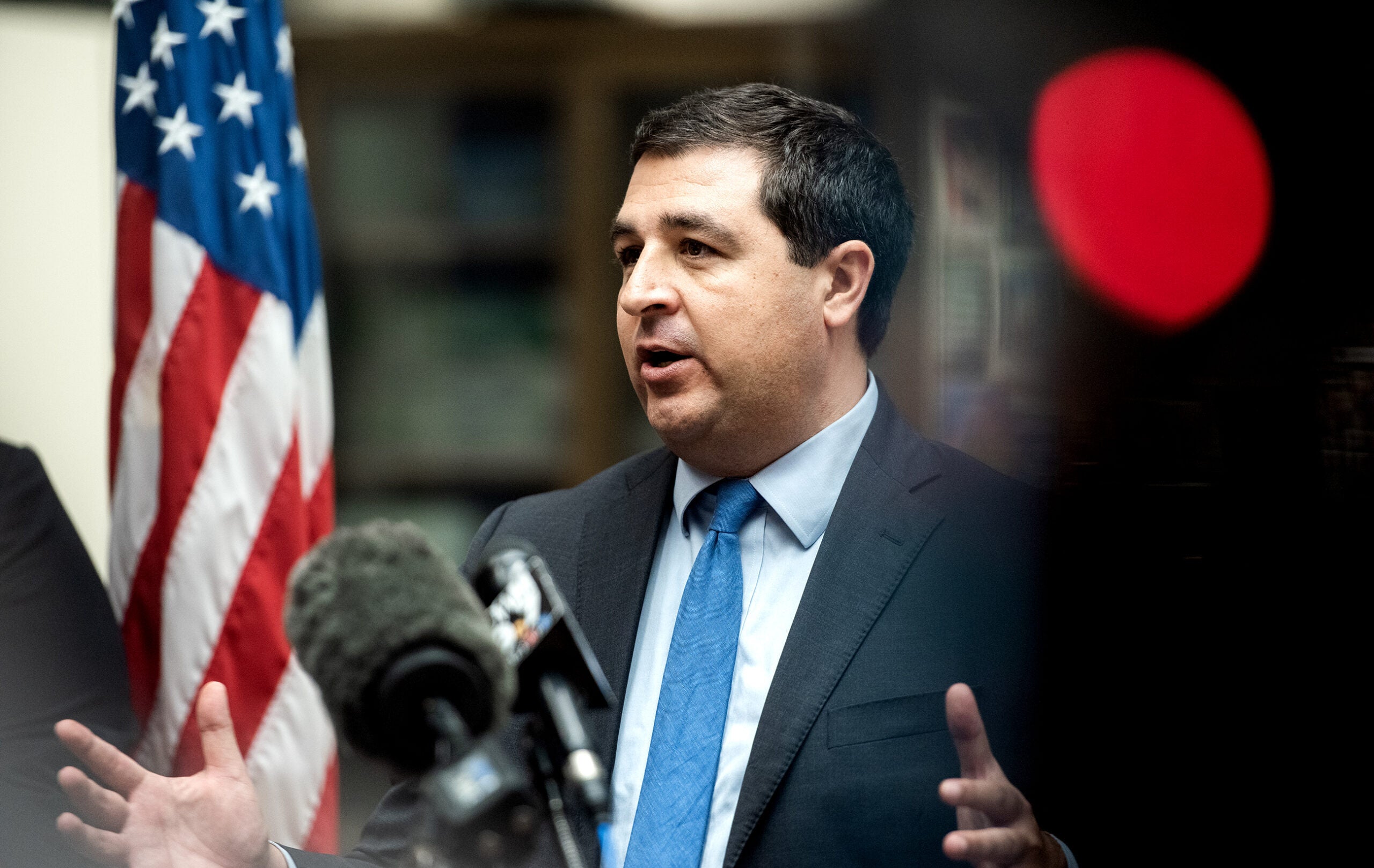
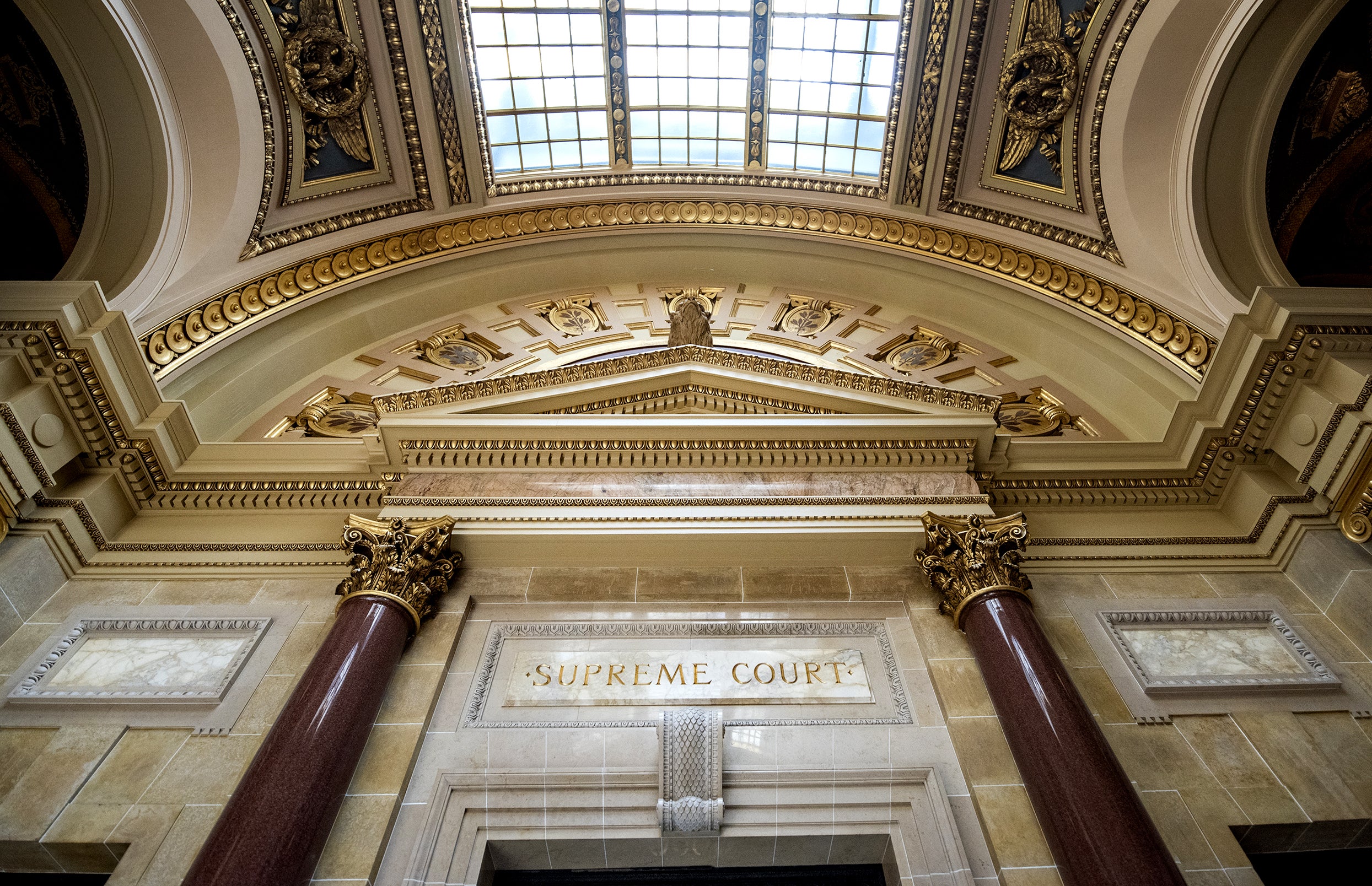
Gov. Tony Evers had the legal right to ban conversion therapy for LGBTQ+ youth, and a Republican-controlled legislative committee exceeded its authority by blocking the rule, the state Supreme Court found Tuesday.
In the ruling, justices said the statutes governing how that committee processes rules proposed by government agencies are unconstitutional because they bypass two fundamental principles of the legislative process.
Writing for the court’s majority, liberal Chief Justice Jill Karofsky said those laws had allowed a small minority of lawmakers to essentially veto a proposal in committee, bypassing bicameralism — the requirement of legislation to go before multiple chambers — and presentment — the requirement that, once passed, a bill goes before the governor.
News with a little more humanity
WPR’s “Wisconsin Today” newsletter keeps you connected to the state you love without feeling overwhelmed. No paywall. No agenda. No corporate filter.
“We agree with the Governor,” Karofsky wrote. “The requirements of bicameralism and presentment are triggered when legislative action alters the legal rights and duties of others outside the legislative branch.”
While the decision could have broad effects on the balance of power in state government, this case largely focused on a pair of rules, including one involving a proposed ban on conversion therapy.
Shortly after Evers became governor in 2019, his administration’s Department of Safety and Professional Services proposed banning the widely discredited practice of using therapy to change a person’s gender identity or sexual orientation. The Evers administration’s ban applied to social workers, marriage counselors and family therapists, which are all professions licensed by the state. It did not apply to religious institutions, which are not licensed by the state.
In 2021, Republicans on the Legislature’s Joint Committee for Review of Administrative Rules blocked the ban from taking effect, then used a procedural maneuver to keep it shelved. They introduced legislation that would have, if passed, blocked the ban in law. But rather than seek to pass that bill, GOP leaders deliberately shelved it — keeping the ban from taking effect without the full Legislature having to take a vote on it and sidestepping a gubernatorial veto. They took the same action in 2023.
In the court’s majority opinion, Karofsky wrote that the laws governing that process — including the committee’s ability to indefinitely object to a proposed rule — meant a very small number of legislators had the power to unilaterally “halt a rule from having effect.”
Attorneys for the Legislature had argued that because agency rules do not have the same force as law, then they do not have to follow the same requirements of bicameralism and presentment. Karofsky wrote that those requirements are triggered whenever legislative action affects other branches’ rights and duties.
“When the Legislature bypasses those [bicameralism and presentment] procedures, it removes core protections of the Wisconsin Constitution,” she said.
Karofsky also noted the Legislature can change the administrative rulemaking process by passing legislation to do so, “as long as it adheres to the constitution, including the provisions of bicameralism and presentment.”
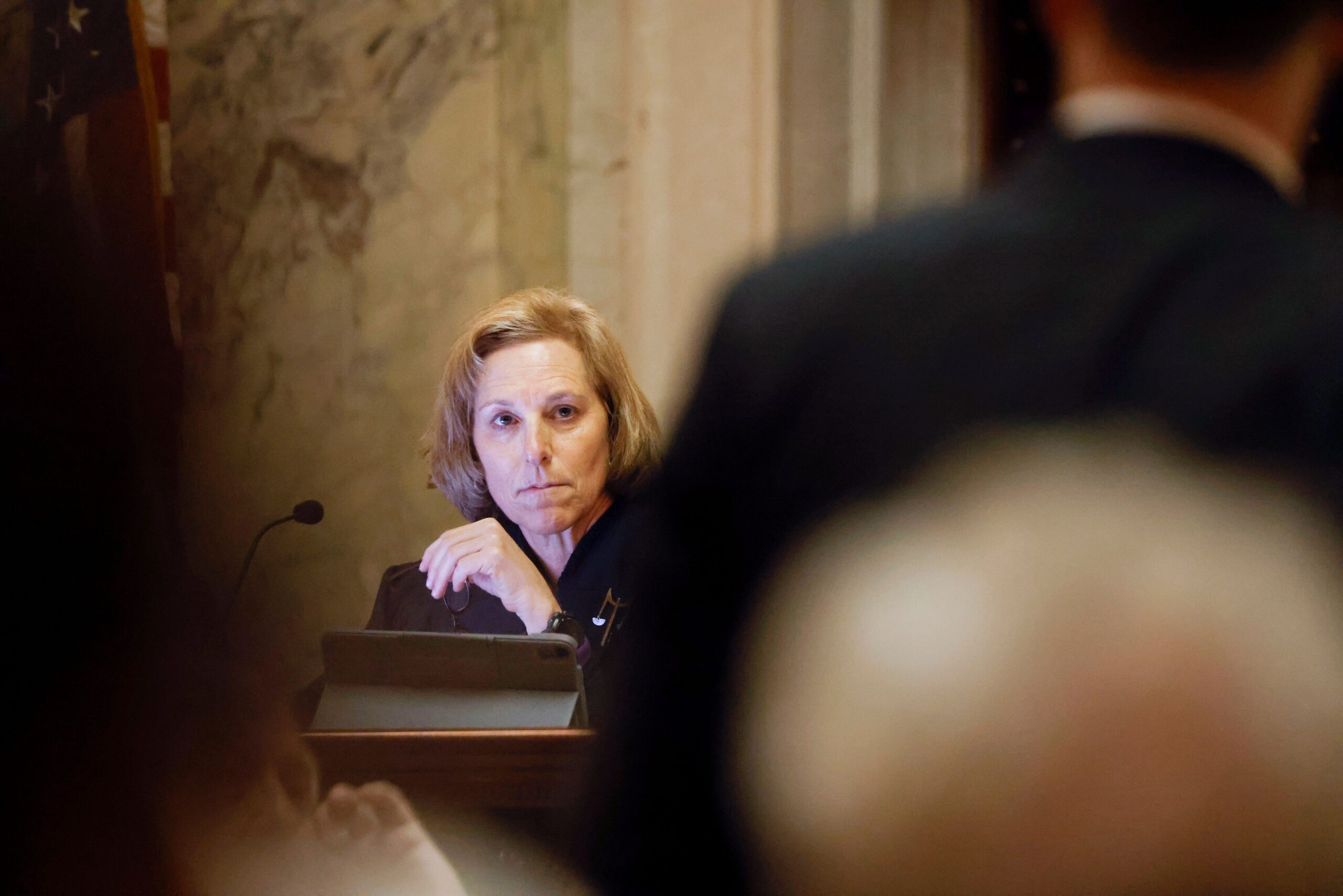
Joining Karofsky in the majority opinion were fellow liberal Justices Ann Walsh Bradley, Rebecca Dallet and Janet Protasiewicz.
The court’s conservatives all took issue with the majority opinion, writing separately to attack the ruling.
In one dissent, conservative Justice Annette Ziegler said the majority was on a “quest to restructure and unbalance our state government, culminating in even more power and control being allocated to the executive branch.”
Ziegler argued the ruling confines the power of the Legislature without applying similar constraints on a governor’s power. And she said that, if bicameralism and presentment are a requirement of halting rulemaking, then rulemaking itself would be unconstitutional by the same logic.
“Equal application of the principles applied to the legislature would seem to spell the destruction of the administrative state as we know it,” she wrote. “But the majority makes clear that the executive branch is exempt from the constitutional constraints the majority strictly applies to the legislative branch.”
In another dissent, fellow conservative Justice Rebecca Bradley said the liberal majority had invoked the Wisconsin Constitution to take power from the “the People’s elected representatives in the legislature” and give it to the executive branch.
“Progressives like to protest against ‘kings,’” Bradley wrote, “unless it is one of their own making.”
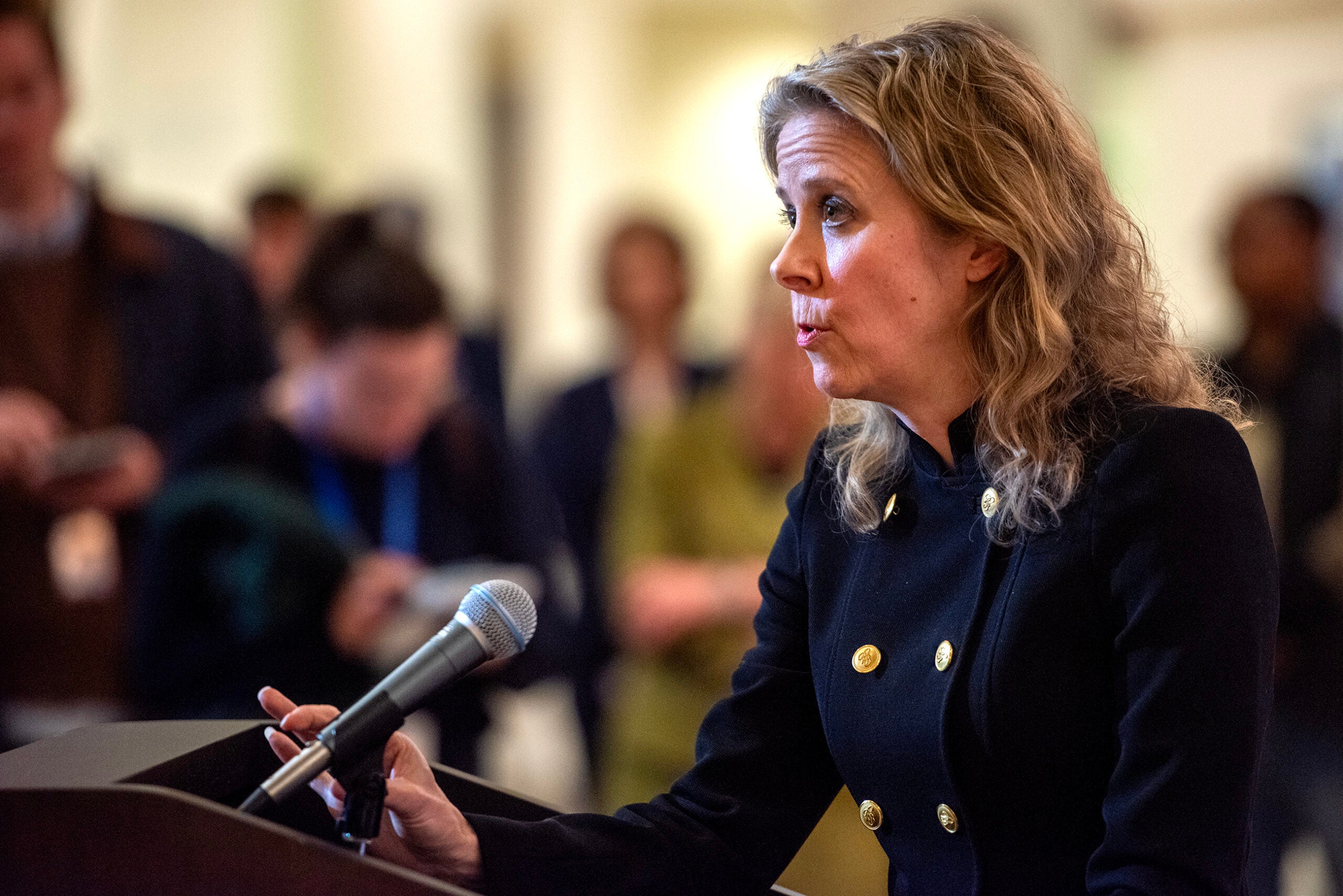
Conservative Justice Brian Hagedorn, sometimes considered a swing vote, partially concurred and partially dissented in the case. He wrote that the court should have ruled more narrowly, but instead its decision “raises more questions than it answers” about the function of administrative rulemaking in Wisconsin.
“It does not recognize the hornet’s nest of constitutional issues implicated by its ill-considered solution,” he wrote.
Ruling is latest in ongoing dispute between Evers and Republicans
In a written statement reacting to the decision, Evers called the ruling “incredibly important,” saying it would preserve checks and balances.
“Today’s Wisconsin Supreme Court decision ensures that no small group of lawmakers has the sole power to stymie the work of state government and go unchecked,” Evers wrote.

Sen. Steve Nass, R-Whitewater, issued a written statement blasting the ruling, saying it amounts to “judicial tyranny.” Nass, who cochairs the Joint Committee for Review of Administrative Rules, said the decision had ended decades of shared governance between the legislative and executive branches.
“Governor Evers asked his liberal allies on the state supreme court to give him unchecked dominion to issue edicts without legislative review that will harm the rights of citizens in order to enact his extreme agenda,” Nass wrote.
Tuesday’s ruling is the court’s latest involving the ongoing contest for power between Evers, a Democrat, and the Republican-controlled Legislature.
In July 2024, the court ruled 6-1 against a “legislative veto” involving land conservation rules, including an attempt by the Legislature to block Evers’ ability to acquire land using funds already earmarked by the full Legislature.
But the court has also recently ruled against Evers in at least one high-profile case. In a unanimous decision late last month, the court found the Legislature’s Joint Finance Committee was within its rights to withhold funds for literacy instruction from the state Department of Public Instruction. Shortly after that ruling, lawmakers released some literacy funds as part of the state budget.
Tuesday’s ruling was also a victory for advocates who supported the conversion therapy ban and who had been repeatedly stymied by the Legislature.
A 2022 study in the Journal of the American Medical Association found conversion therapy was associated with substance abuse and suicide attempts among LGBTQ+ youth, costing the U.S. billions per year. Also in 2022, a study in the journal Ethics, Medicine and Public Health found the approach “has more risks than benefits, and rests upon scientifically questionable premises.”
Since 2018, several Wisconsin cities including Milwaukee, Madison, Eau Claire, Racine and Superior have passed local ordinances banning conversion therapy.
Decision raises big questions about separation of powers in Wisconsin
Legal experts say a dispute over rulemaking may seem wonky on its face, but it raises other big questions about the separation of powers.
“Is rulemaking more a legislative power? Is it more an executive power? And depending on how you answer that, is it constitutional?” said Bryna Godar, a staff attorney for the State Democracy Research Initiative at the University of Wisconsin Law School, explaining the contours of the debate. The research hub filed an amicus brief in the case, supporting Evers.
The Wisconsin Supreme Court didn’t directly answer those questions in its decision, although Justice Ziegler argued in her dissent that the majority was attempting to do so.
Godar said the types of rules covered by the decision matter because they allow a government to administer laws.
“The Legislature typically passes bills that go through the Legislature and the governor, and those impact our day-to-day lives. But a lot of things are really complex, technically,” she said. “They require sort of a more nimble response or more expertise.”
She argued that agencies adopting codes — for example, codes of conduct for therapists — still follow a system of checks and balances. And she said Tuesday’s decision aligns Wisconsin closer to other states when it comes to the distribution of power between legislative and executive branches.
“Wisconsin was really an outlier in the degree of legislative committee veto power that we were giving to this one small committee,” she said.
Courts are taking up these questions because, as gridlock permeates legislatures, many executive branches turn to rulemaking as a way of getting things done, said Caleb Gerbitz, a Milwaukee-based attorney who writes about Wisconsin appellate courts.
As the debate rages across the country and in Washington, Tuesday’s decision out of Madison represents a sea change for Wisconsin’s legal processes, Gerbitz argued. He said the Legislature originally set up these processes so it could get a second look at rules the executive branch puts out.
“For 50-plus years, we’ve had a regime where the Legislature does have some say in what becomes an administrative rule,” he said. “After this decision, it’s not totally clear how any of those statutes are going to work anymore.”
That clarity, he added, is likely to be found in the courts, through further litigation.

Wisconsin Public Radio, © Copyright 2026, Board of Regents of the University of Wisconsin System and Wisconsin Educational Communications Board.