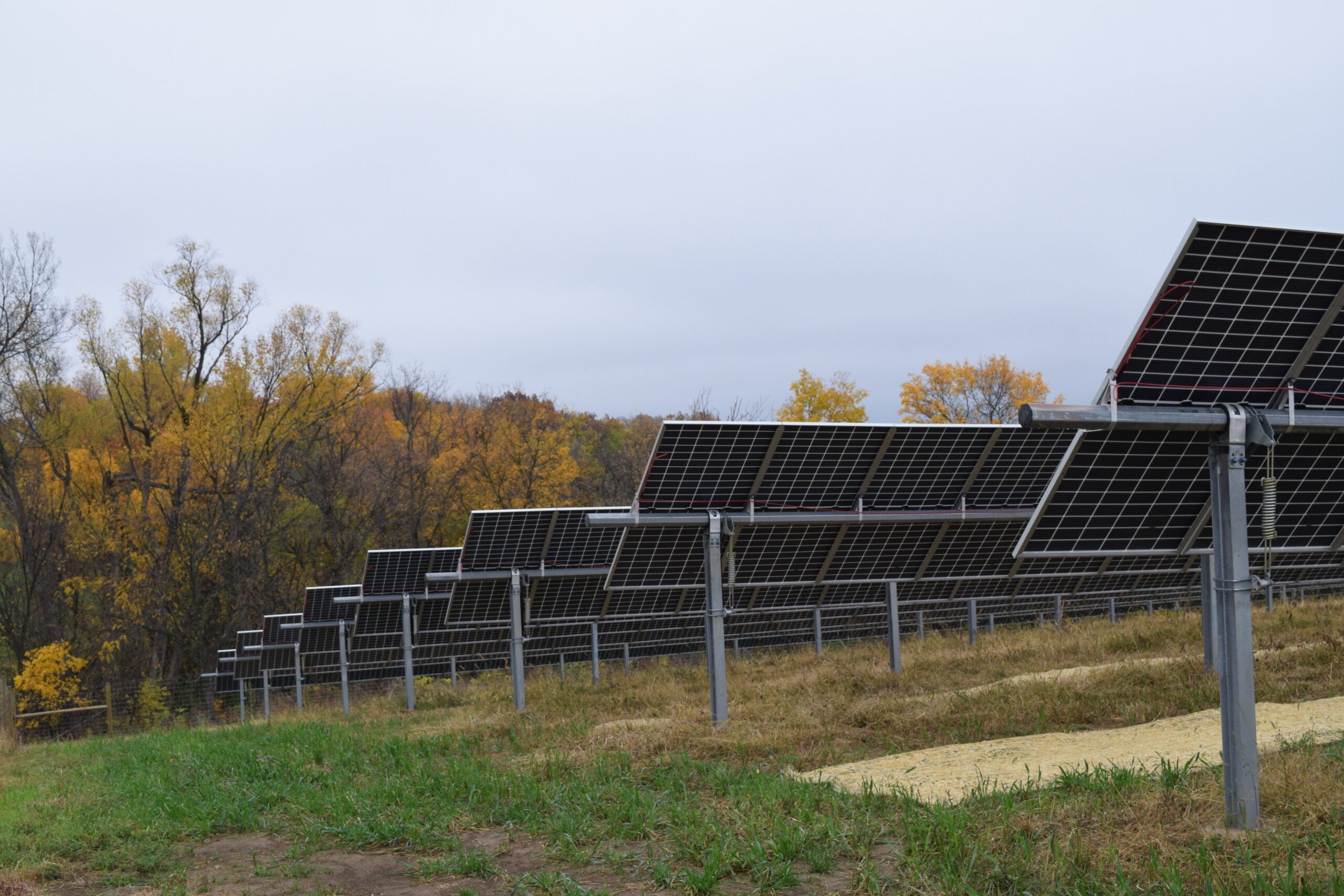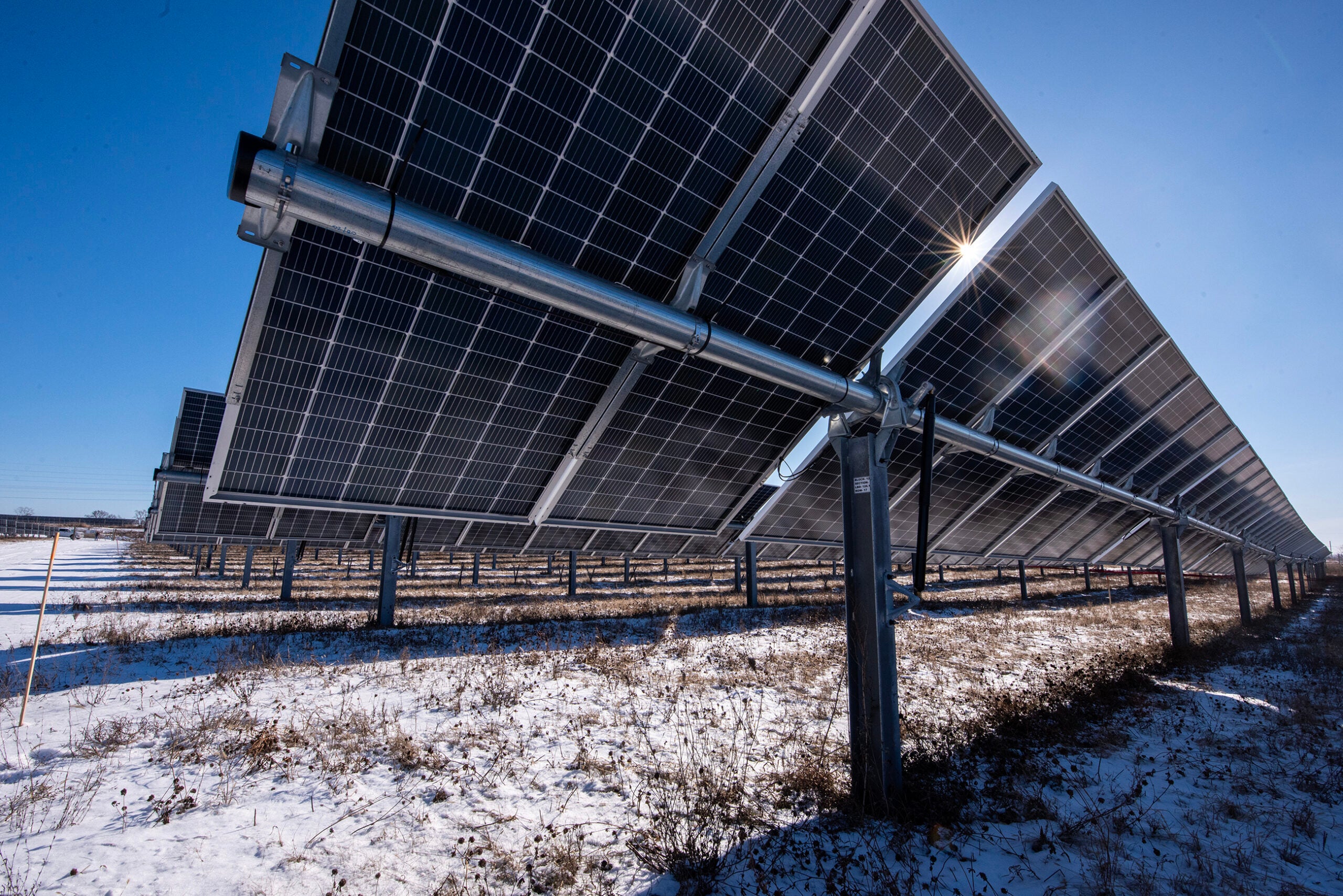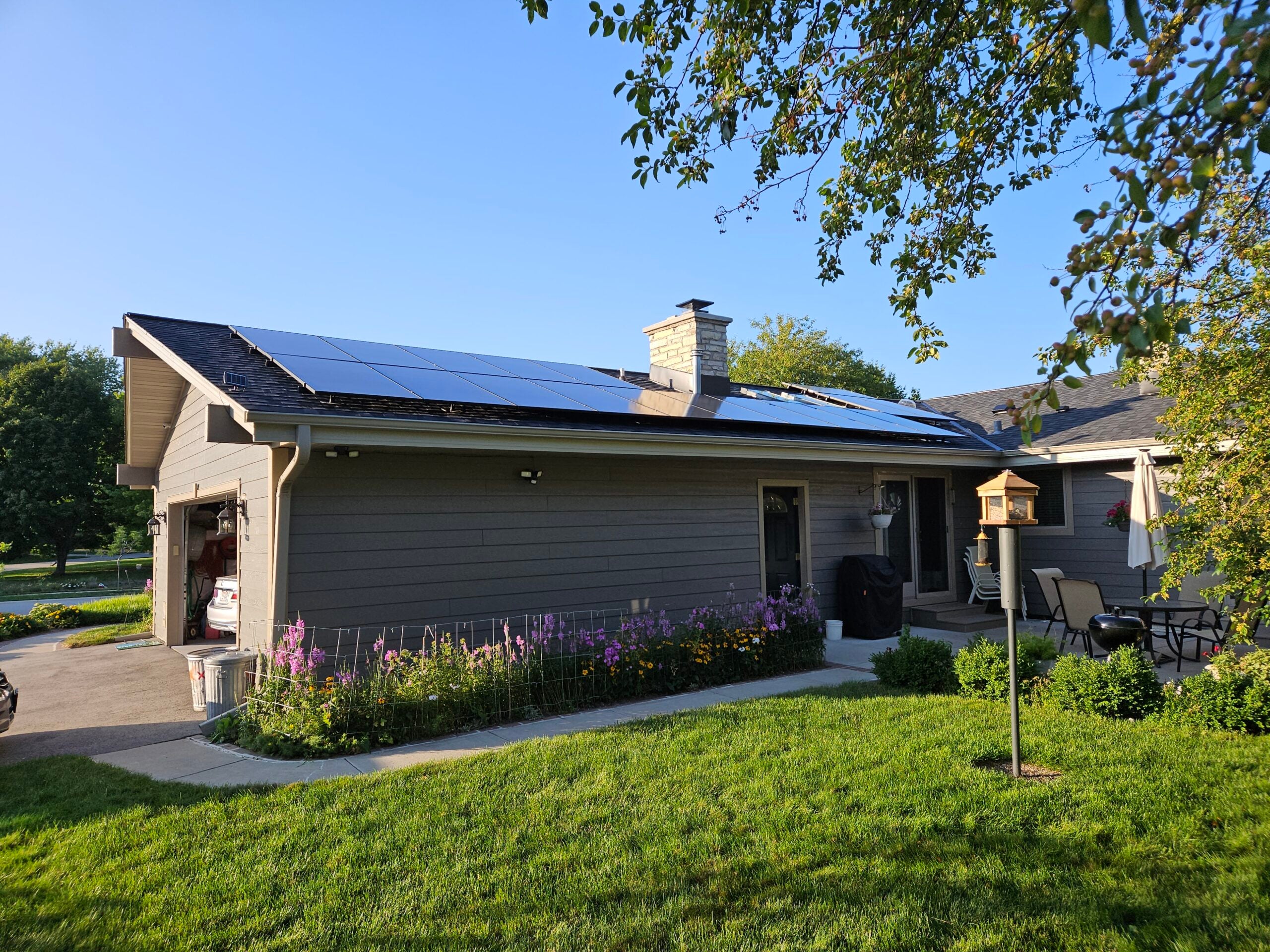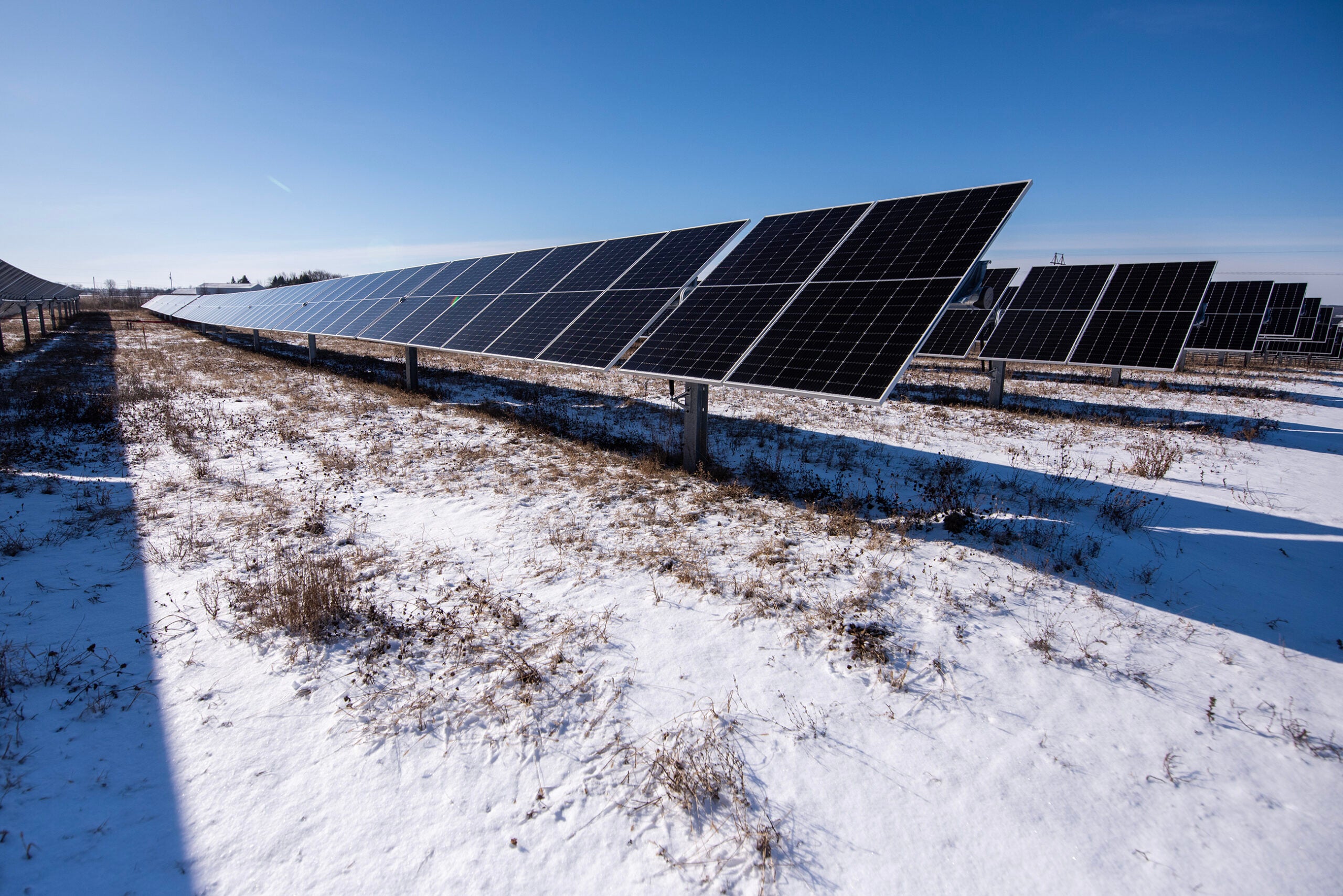
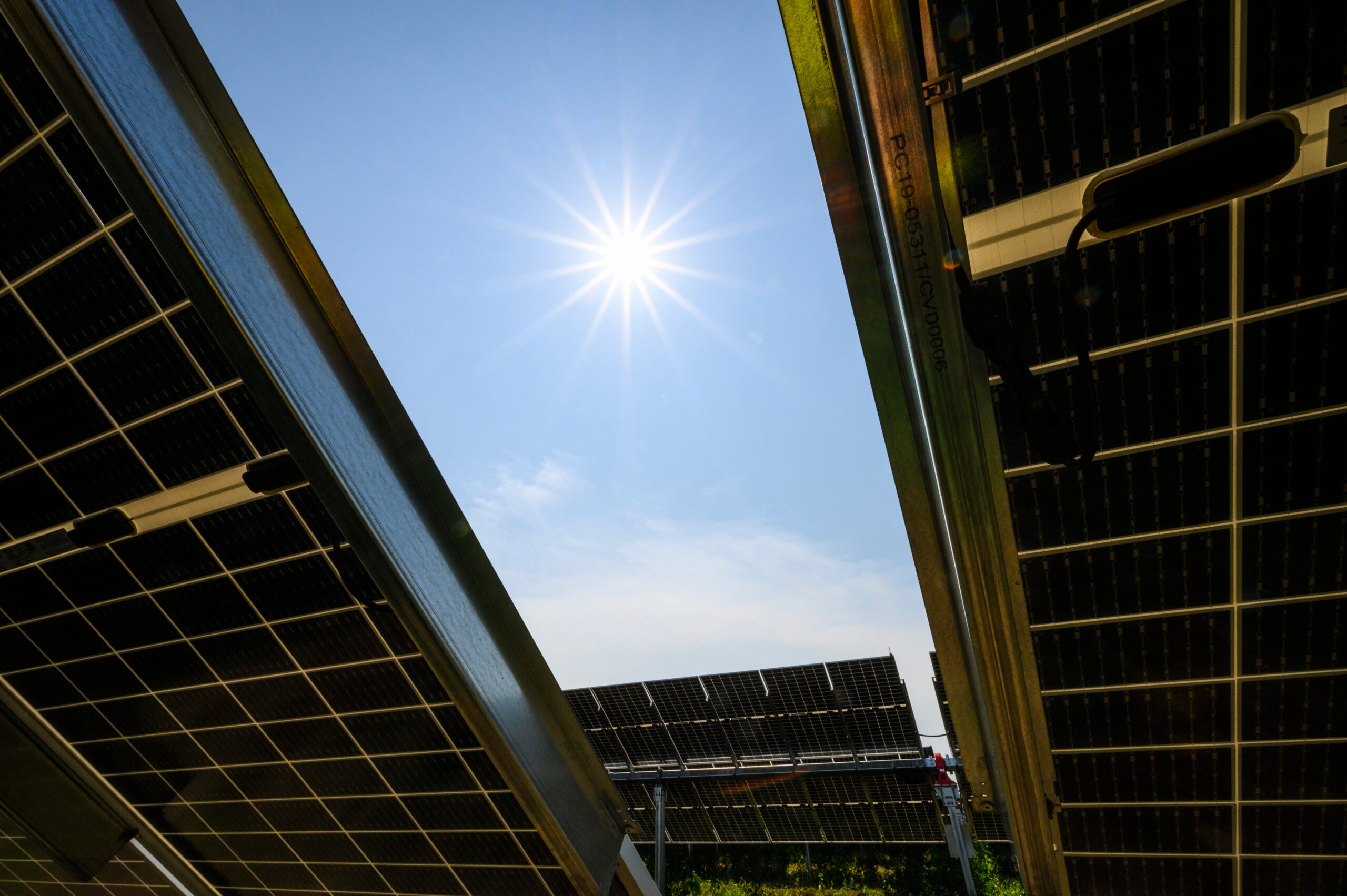
Four years ago, the International Energy Agency declared solar energy the “cheapest source of electricity in history.”
Greg Nemet, a professor in the La Follette School of Public Affairs at the University of Wisconsin-Madison, knows this isn’t the first time people have declared the “dawn of the solar age.” People in the 1950s, the 1970s and the early 2000s all declared an imminent solar age, only to see fossil fuels continue to dominate.
But Nemet believes this time is different, and that solar energy’s growth is unstoppable.
News with a little more humanity
WPR’s “Wisconsin Today” newsletter keeps you connected to the state you love without feeling overwhelmed. No paywall. No agenda. No corporate filter.
Solar energy now accounts for about 7 percent of the global electricity supply, and it’s doubling that amount every few years.
“So you start taking that 7 percent and doubling that every three or four years, you get to pretty big numbers very quickly,” Nemet recently told WPR’s “Wisconsin Today.” “In fact, by the time you get to the mid 2030s, you’re at about half of the electricity supply. Solar is not on the margins anymore, just happening in a few innovative countries. It’s happening around the world. It’s becoming a big part of the global electricity supply.”
In 2019, Nemet published “How Solar Energy Became Cheap: A Model for Low-Carbon Innovation.” But the growth he’s seen since then prompted him to update the book, with a new subtitle: “Pathway to a Solar-Centric Economy.”
He spoke to “Wisconsin Today” about how solar energy has been able to see such remarkable growth, how the growth can be nurtured and what it means for the future.
The following has been edited for clarity and brevity.
Kate Archer Kent: So the first edition of your book comes out in 2019, exploring how solar energy became so affordable. Why did you see a need to update the book?
Greg Nemet: The progress that’s happened in solar in the last six years has really been dramatic, and it’s really changed the way the solar future looks. Adoption of solar is about four times what it was six years ago. The costs have dropped by 75 percent, and we’ve seen an array of other changes, as well. And so it really shifted the focus of the book to not only update the data, but also to think about the implications, which is: What happens when solar takes over the global energy system?
And it looks like it’s headed to do so.
KAK: Yet, it still costs roughly $30,000 to install solar panels on a home here in this country, and that might not be affordable to most families. What do you make of that?
GN: The “here in this country” is a key part of what you just said, because in the U.S., solar costs about three times what it would cost in other developed countries with similar wages, like Australia and Germany, where that $30,000 system would cost $10,000. That’s still a substantial expense, but that’s on the level of a furnace rather than on the level of a car.
And so if we could make some of the changes to the U.S. so that we could pay what the rest of the world is paying for solar, I think we’d see a lot more adoption than we already see.
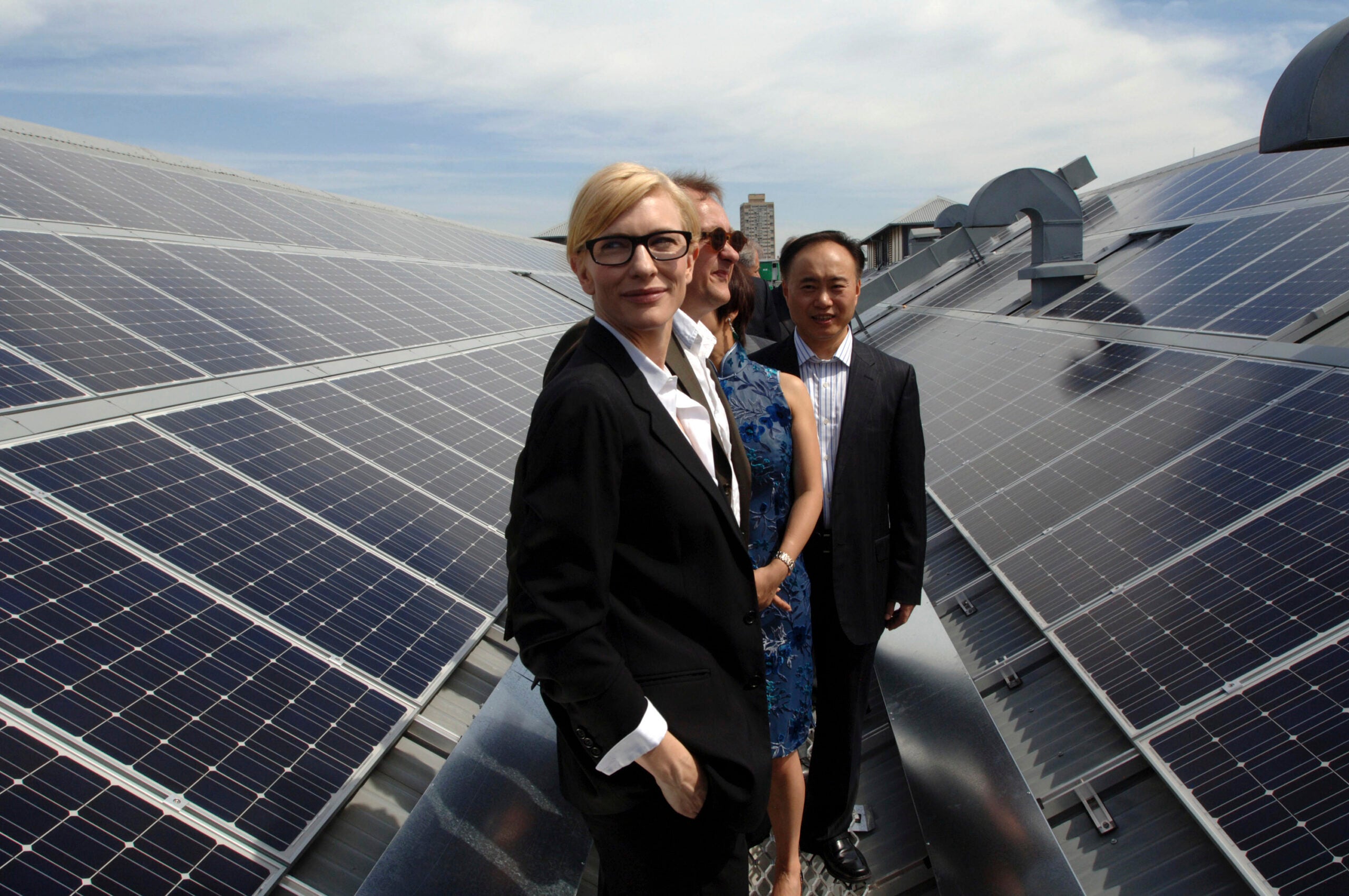
KAK: Australia, rather than building large solar farms owned by utilities, rapidly installed rooftop solar on homes. About 40 percent of homes there have solar panels. How did they do that?
GN: That’s a new story that wasn’t in the book in 2019 because it hadn’t happened yet. Australia is a big exporter of fossil fuels, of coal to China, of natural gas to the rest of Asia. Despite that, they really made a big push on going with solar for electricity, and it’s been things like making the installations really simple and streamlined.
You can get a solar system installed in your house, and it comes with a guarantee that they’ll do it in one day, and that dramatically reduces the cost. And it’s also subtle things like how permitting works. But it came from some policy decisions at the national level to say we’re going to do this.
It’s a sunny place, but we have sunny places like that in the U.S., as well, so it really provides a model for what the U.S. and others could do. It’s really pushing on residential solar, rather than these large utility-scale projects, which is more of what we’ve done in Wisconsin.
KAK: In 2022, solar accounted for about 3 percent of Wisconsin’s power generation, according to the state Public Service Commission. It accounted for less than one-tenth of a percent in 2015. Is that the typical kind of growth that you’re seeing?
GN: Yeah, that’s exponential growth. To go from that tiny number in 2015 to what you said in 2022, and now we’re at something like 5 percent of electricity — that’s rapid growth.
When I did the first book, there were big projects being proposed in Wisconsin. I remember thinking, “Really, we’re doing big solar in Wisconsin?” I’d been seeing it happen in the Middle East and the Southwest of the U.S., but that was the sign of things to come, and so that’s been happening more and more in our state. So now we’re up about 5 percent of electricity. It’s a little bit behind the rest of the U.S., which is about 7 percent, but it’s not too far behind.
KAK: We’re seeing the Trump administration roll back subsidies for solar energy, for energy programs. You wrote about how President Ronald Reagan made cuts to our country’s solar program in 1981. It made me wonder: do you see parallels now under the Trump administration, with cuts to clean energy programs?
GN: What happened in the ‘80s is that the frontier of innovation went elsewhere. It went to Japan and eventually Germany and eventually China because that’s where the innovation was, that’s where the support was, and eventually that’s where the markets were.
The difference is that there’s a lot more momentum with the industry now than there was in 1981. Solar is big. It’s mature. It’s several percent of the global electricity supply. There’s big companies involved, and so there isn’t the sense that we can just cut off clean energy the way we really did in 1981. The recent policies are going to slow down the growth in the U.S., but they won’t slow down the growth in the rest of the world and they won’t stop growth in the U.S.