A nationwide fire truck shortage is causing delays and safety concerns for Wisconsin fire departments.
Fire officials around the state are trying to replace their aging fleets, but new trucks are taking years to arrive while costs skyrocket.
In the village of Caledonia in southeastern Wisconsin, Fire Chief Walter Leininger is still waiting to receive a new, standard “pumper” truck that his department ordered more than two years ago.
News with a little more humanity
WPR’s “Wisconsin Today” newsletter keeps you connected to the state you love without feeling overwhelmed. No paywall. No agenda. No corporate filter.
His village paid more than $800,000 for the fire engine in 2023, and he told WPR’s “Wisconsin Today” that now it isn’t expected to arrive until 2027.
“It becomes a safety concern for the public if we’re going to be able to reach them, if we’ve got equipment that’s 20-25 years old, and it’s got 180,000 miles on it,” Leininger said. “It’s taking a gamble when you start getting equipment that old. It’s not the safest.”
The Caledonia Fire Department previously ordered a fully customized fire apparatus in 2016 that only took 11 months to build and arrive.
The National Fire Protection Association recommends that departments replace their fire engines every 15 to 25 years, depending on mileage and usage.
Leininger said the older fire trucks become more difficult to maintain as replacement parts become harder to find. It’s also a challenge to find workers that know how to repair the older vehicles.
Refurbishing instead of replacing
Over in the Racine Fire Department, Fire Chief Steve Hansen has skilled labor in-house with two mechanics who help maintain its fire engines.
Because new trucks take so long to arrive, his department is looking at refurbishing some of its aging trucks to extend their useful life.
Hansen told WPR that he has a 2003 pumper apparatus being refurbished now for a quarter of the cost of buying a new one, and it will be done quicker, too.
“We anticipate getting that vehicle back in the next two months, at which time we’re going to put it through its paces, testing the mechanical systems, testing the pump, making sure that it performs up to National Fire Protection Association standards,” Hansen said. “If that is successful, then we would potentially look at refurbishing two trucks that are due up in 2028 and 2030 as well.”
Refurbishing trucks involves completely disassembling the fire engine, replacing its most problematic components and putting it back together. This method could save taxpayers significant money compared to the millions of dollars to buy new engines.
But Hason noted that refurbished trucks don’t get the technological advancements that newer trucks offer.
“Our ladder truck, which was built in 2014, has 28 individual computers on it at various points in the chassis,” Hansen said. “They’re all together to perform different functions and provide different monitoring capabilities of the different systems that they’re installing on these trucks.”
The advanced technology is part of what is contributing to the shortage and delays for new trucks.
Fire engine manufacturers like Oshkosh Corporation and REV Group, both based in Wisconsin, have blamed the issue on supply chain and logistics problems, in addition to record demand for new trucks.
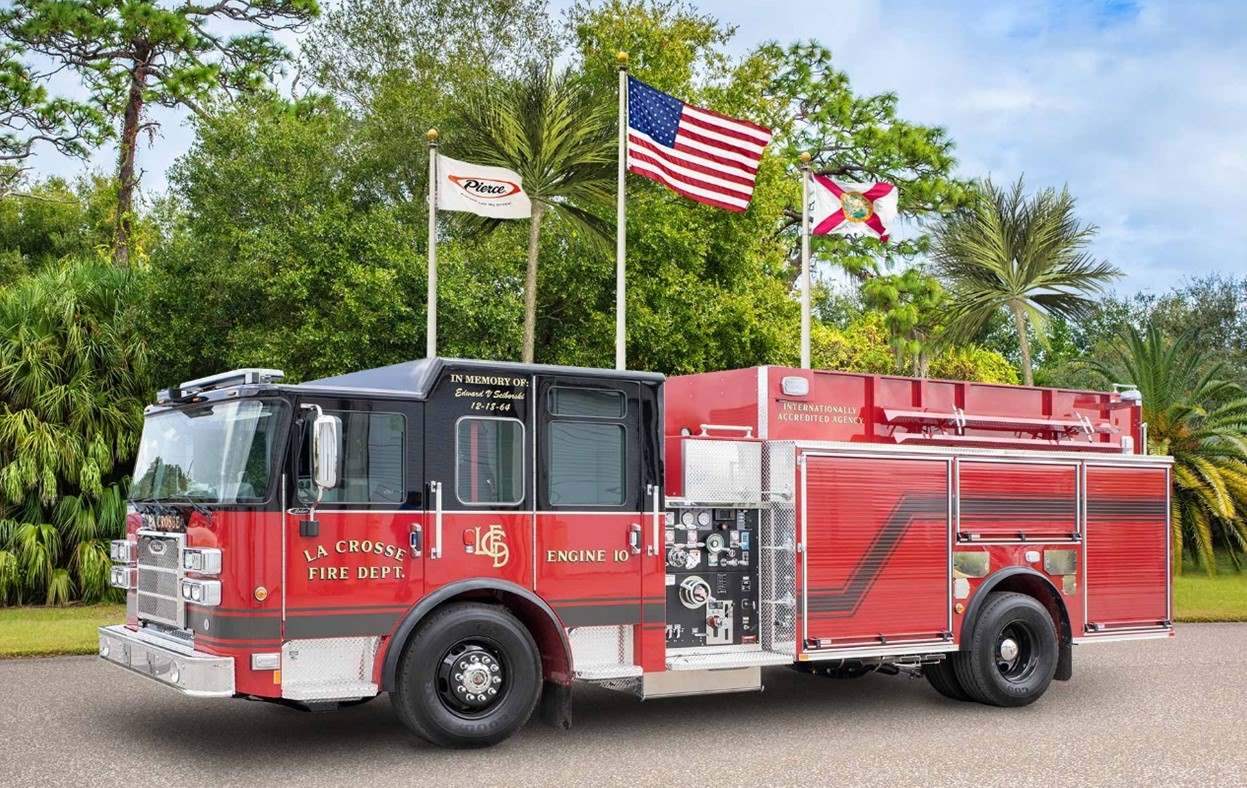
Last year, the city of La Crosse filed a class action lawsuit in federal court against both companies and a third manufacturer, Rosenbauer America, accusing them of working together to limit the supply of trucks and raise prices.
In statements, the companies have called the lawsuit meritless.
Other cities, including those in other states, have also filed suit against them. In December, a federal judge agreed to combine the cases.