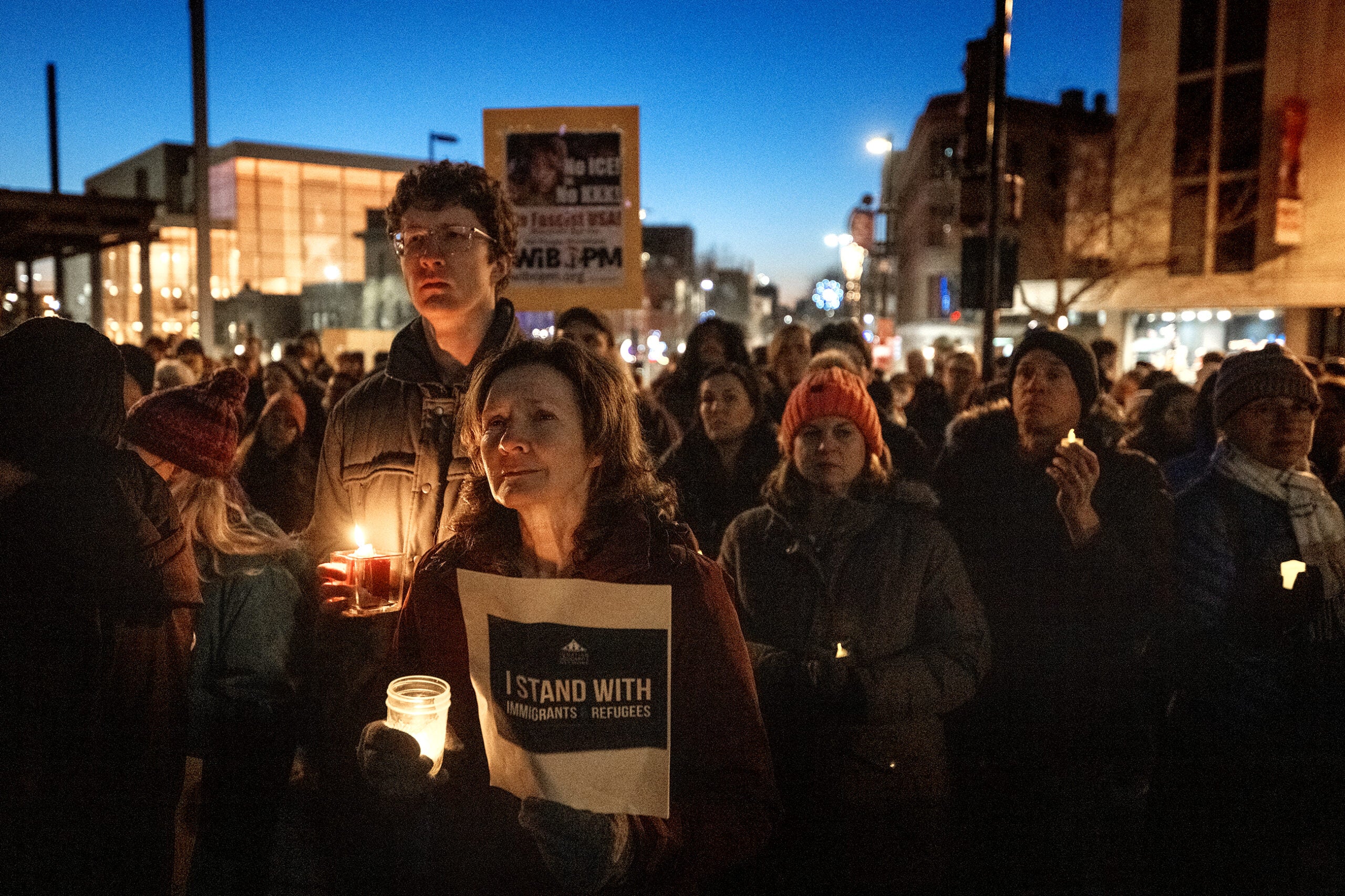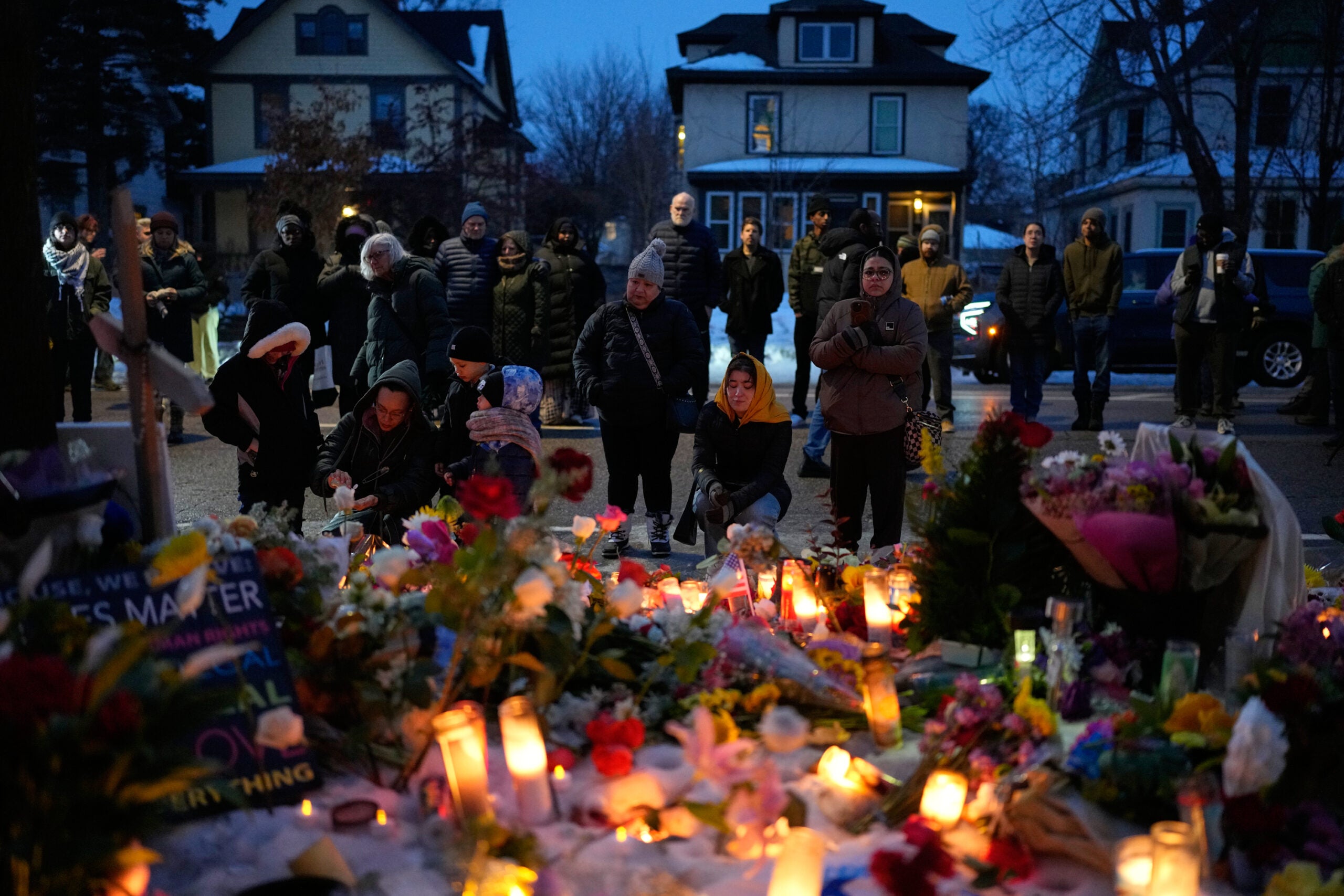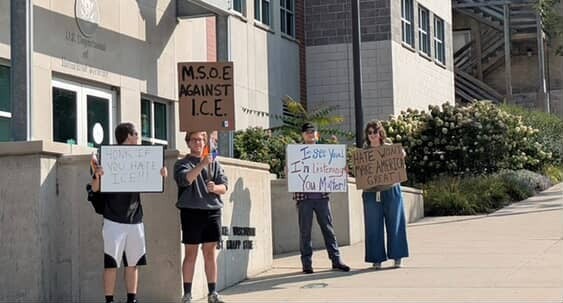
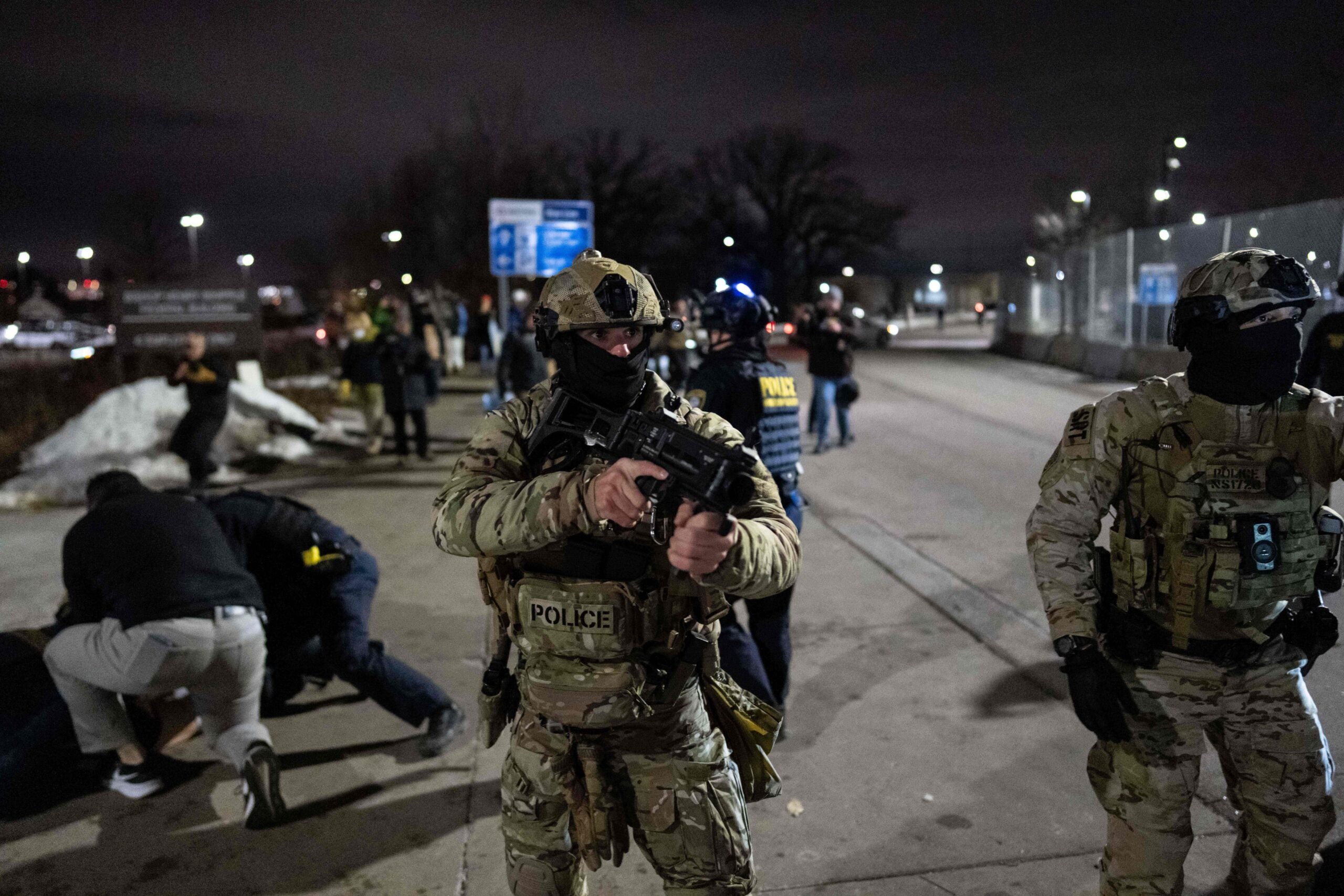
Western Wisconsin residents are following the protests and clashes in Minneapolis-St. Paul over federal immigration enforcement actions with concern.
“It feels a bit like a pressure cooker over here,” Eau Claire City Council President Emily Berge said Friday in an interview with WPR’s “Wisconsin Today.”
The Trump administration has surged some 2,000 federal agents in the Twin Cities, with plans to add 1,000 more. Many of them are agents with Immigration and Customs Enforcement, or ICE, and protests have broken out over their aggressive enforcement tactics. Those protests have intensified since an ICE agent fatally shot Renee Macklin Good in her car last week. On Wednesday, the Department of Homeland Security said an ICE agent had shot a man in the leg in an enforcement action.
News with a little more humanity
WPR’s “Wisconsin Today” newsletter keeps you connected to the state you love without feeling overwhelmed. No paywall. No agenda. No corporate filter.
In Wisconsin border communities including Hudson, many people make daily commutes to the Twin Cities for work, shopping or recreation. A Hudson resident who asked to remain anonymous over safety concerns said she has been involved in organizing to support protesters in the area. She said people all across the metro area have been making sure protesters and organizers have rides, are fed and are safe.
But the psychological effects of the unrest have been widespread. She said some of the students at the elementary school where she teaches are afraid to come to class.
“It is just the saddest thing to see tiny children who are just starting school have this kind of fear and uncertainty,” she said.
That echoes the experience of others in immigrant communities.
“Everybody is terrified,” immigration attorney Marc Christopher told “Wisconsin Today.” “They see what’s been broadcast on TV. They see the indiscriminate arrest of people. … The level of fear and anxiety in our immigrant community is off the charts.”
And Berge, who is also a Democratic candidate for Congress, said people in the Hmong community worry they will be targeted for being members of a minority group, regardless of legal status.
“Even though they’re American citizens,” she said, “they have to bring their documents with them, their passports or ID with them when they leave the house — even to walk their dog or bring their kids to school.”
In an interview with PBS Wisconsin’s “Here and Now,” GOP U.S. Sen. Ron Johnson placed the blame for the unrest squarely on Democratic Minnesota Gov. Tim Walz and other politicians he said were “inciting people to resist and obstruct justice.”

Local officials respond to rumors, concerns about ICE enforcement
With attention focused on Minneapolis, unfounded rumors of ICE agents staging or planning large-scale operations in Wisconsin spread widely on social media. Officials in Baldwin, Wausau and Stevens Point all told WPR that social media chatter was false.
Still, officials in many communities have felt pressure to review policies and plans should federal immigration enforcements scale up.
The Hudson School District this week sent a message to parents reiterating its visitors policy and how district officials work with law enforcement.
Superintendent Nick Ouellette said there is not a separate policy for ICE, nor any branch of law enforcement.
“We’re not taking a political side of the argument,” Ouellette said. “We’re just saying this is how we handle things.”
If a district employee is approached on school property by a federal agent requesting information about a student or the student’s family, district policy and federal law prohibit the employee from sharing any student information without a valid judicial warrant or subpoena.
This includes confirming whether a student is enrolled at the school or within the district.
The Hudson School District serves about 5,000 students. Ouellette said it does not keep records of students who are not U.S. citizens.
Editor’s note: WPR’s Evan Casey, Corrinne Hess, Danielle Kaeding and Liz Harter contributed.

Wisconsin Public Radio, © Copyright 2026, Board of Regents of the University of Wisconsin System and Wisconsin Educational Communications Board.