A northern Wisconsin town sued by the U.S. Department of Justice last year for not providing electronic voting machines to people with disabilities has lost its federal appeal.
Thornapple’s town board passed a resolution to stop the use of electronic voting machines in June 2023. Court documents show the town’s former clerk Suzanne Pinnow cited “the controversial nature of electronic voting machines” as part of its justification.
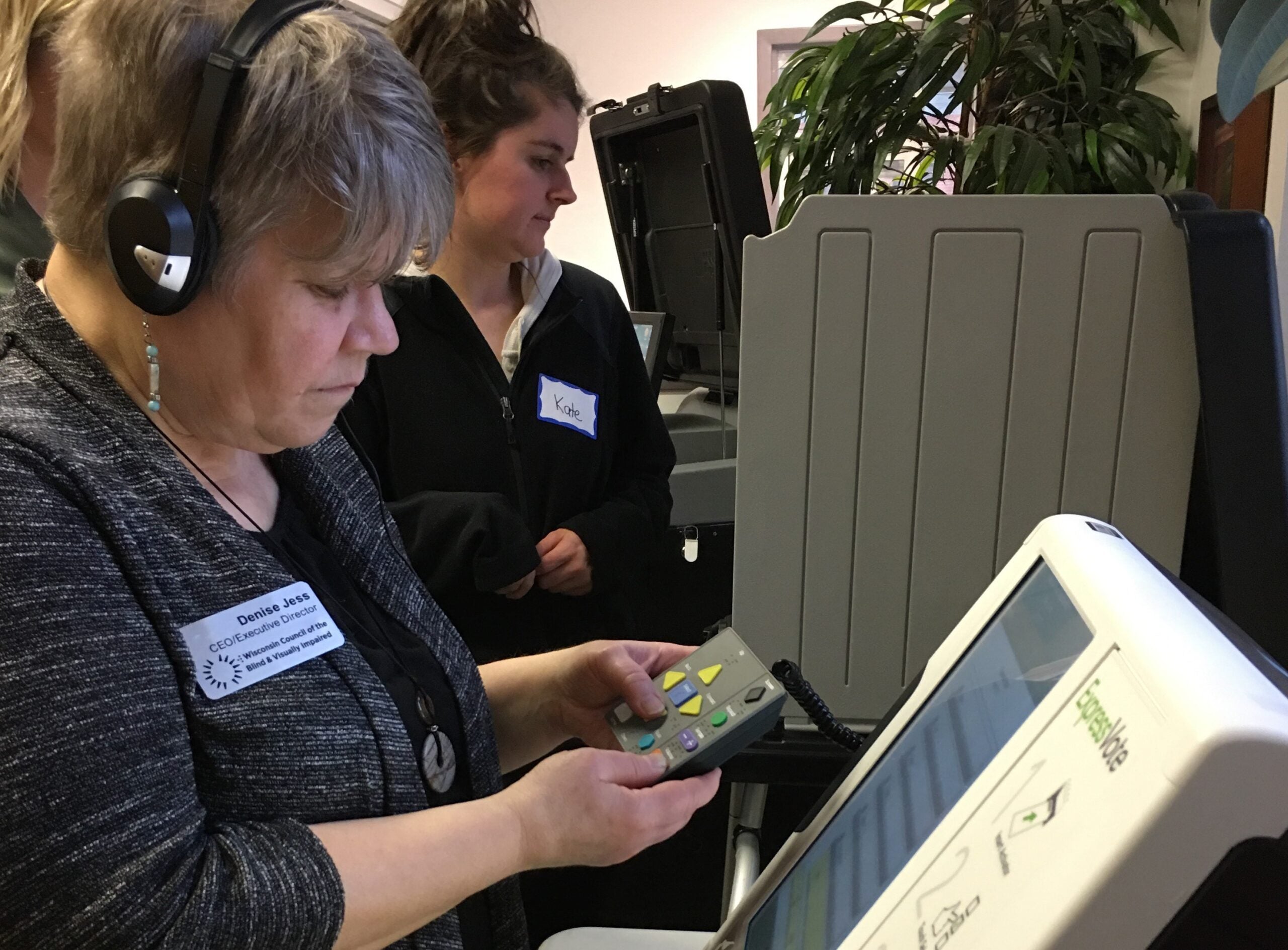
The DOJ sued Thornapple and the Rusk County Town of Lawrence for removing access to voting machines designed for people with disabilities. They said the decisions violated the federal Help America Vote Act, or HAVA. Officials in Lawrence negotiated a settlement and agreed to make at least one accessible machine available in future elections.
Thornapple pressed on in federal court and argued the paper ballots used in 2024 primary elections in April and August didn’t constitute a “voting system” under federal law, which exempted them from the accessibility requirement. The judge was not convinced and ordered Thornapple to make an accessible voting machine available in the November presidential election.
The town appealed the ruling, but the lower court’s decision was upheld Monday by the 7th U.S. Circuit Court of Appeals. The order from the judicial panel said the HAVA statute makes several references to paper ballots.
“We decline to read in a loophole for hand counted paper ballots in the face of clear textual indications to the contrary,” said the order.
The ruling also noted testimony from Thornapple’s former clerk claiming individuals with disabilities preferred receiving assistance from her rather than using an accessible voting machine “misses the point” of privacy protections in the federal law.
“The man telling Pinnow ‘who he wanted to vote for’ and having her guide his hand exemplifies both a lack of privacy and independence,” the order said.
Thornapple did prevail in a state-level complaint related to its use of paper ballots. In May, the Wisconsin Elections Commission dismissed a complaint alleging the town broke state law by removing voting machines. An analysis of state law by commission attorneys found that clerks in towns with fewer than 7,500 residents have the power under state statute to stop using voting machines without the commission’s permission.
News with a little more humanity
WPR’s “Wisconsin Today” newsletter keeps you connected to the state you love without feeling overwhelmed. No paywall. No agenda. No corporate filter.
Still, the elections commission said even small municipalities must make at least one accessible voting machine available to people with disabilities during elections.

Wisconsin Public Radio, © Copyright 2026, Board of Regents of the University of Wisconsin System and Wisconsin Educational Communications Board.