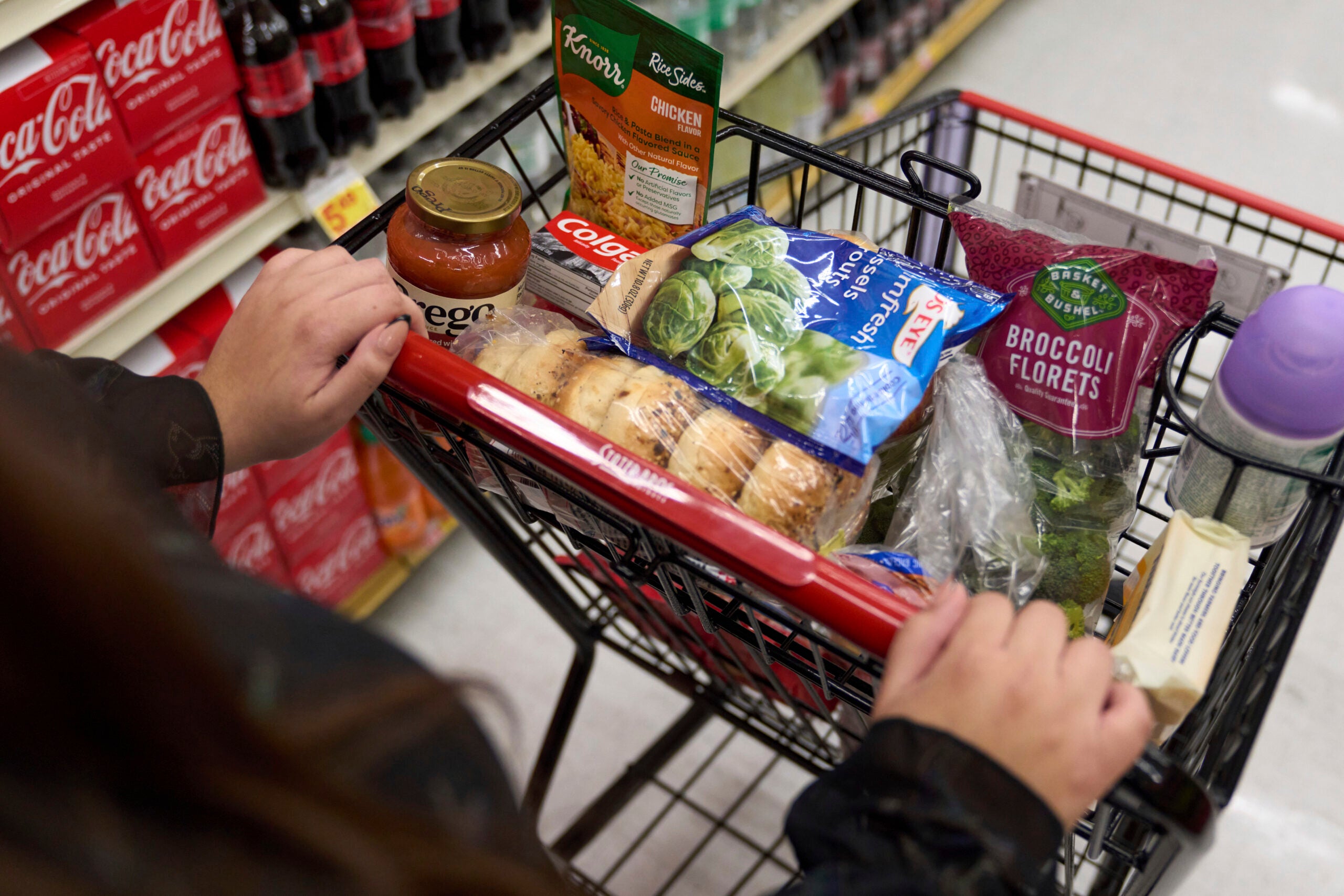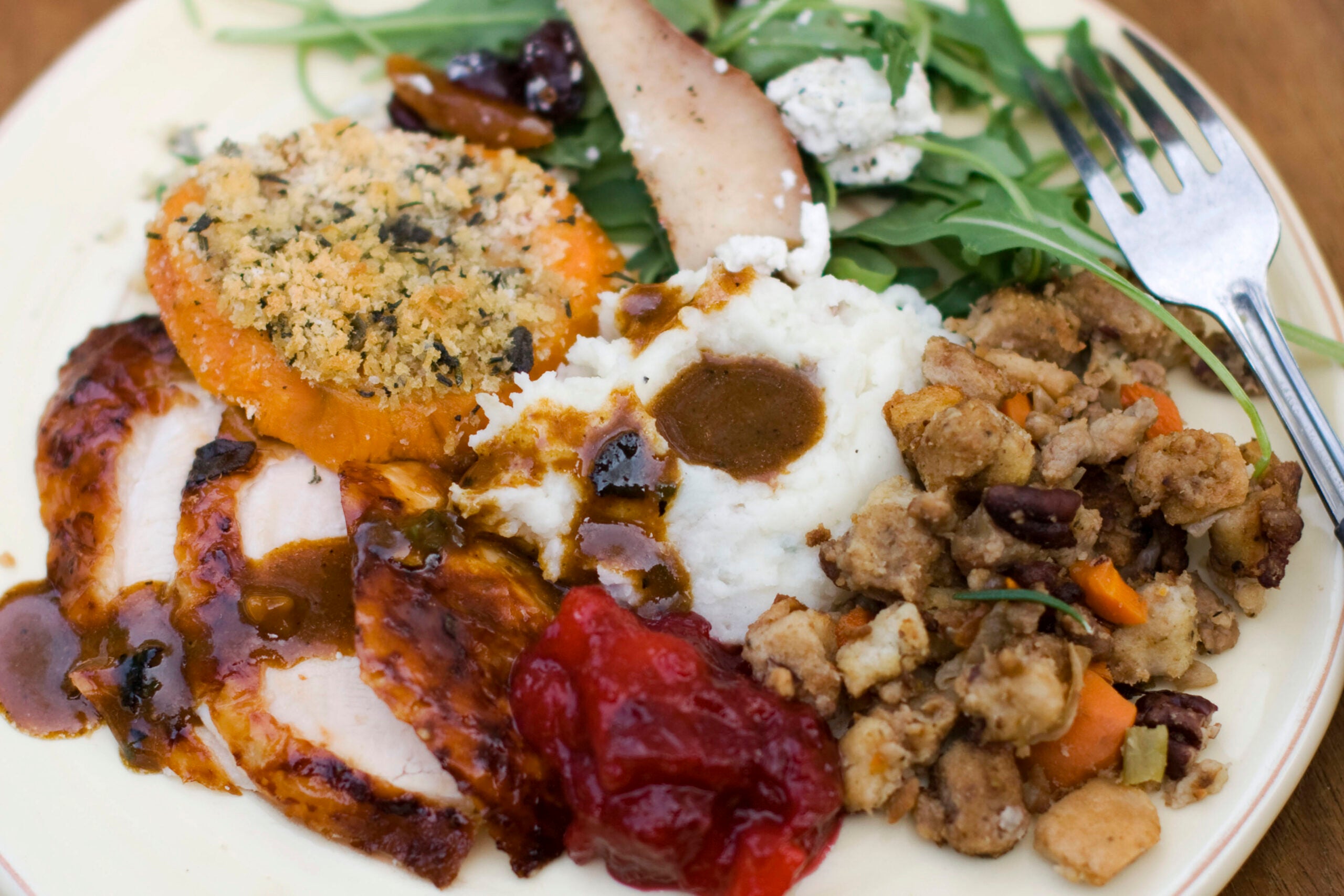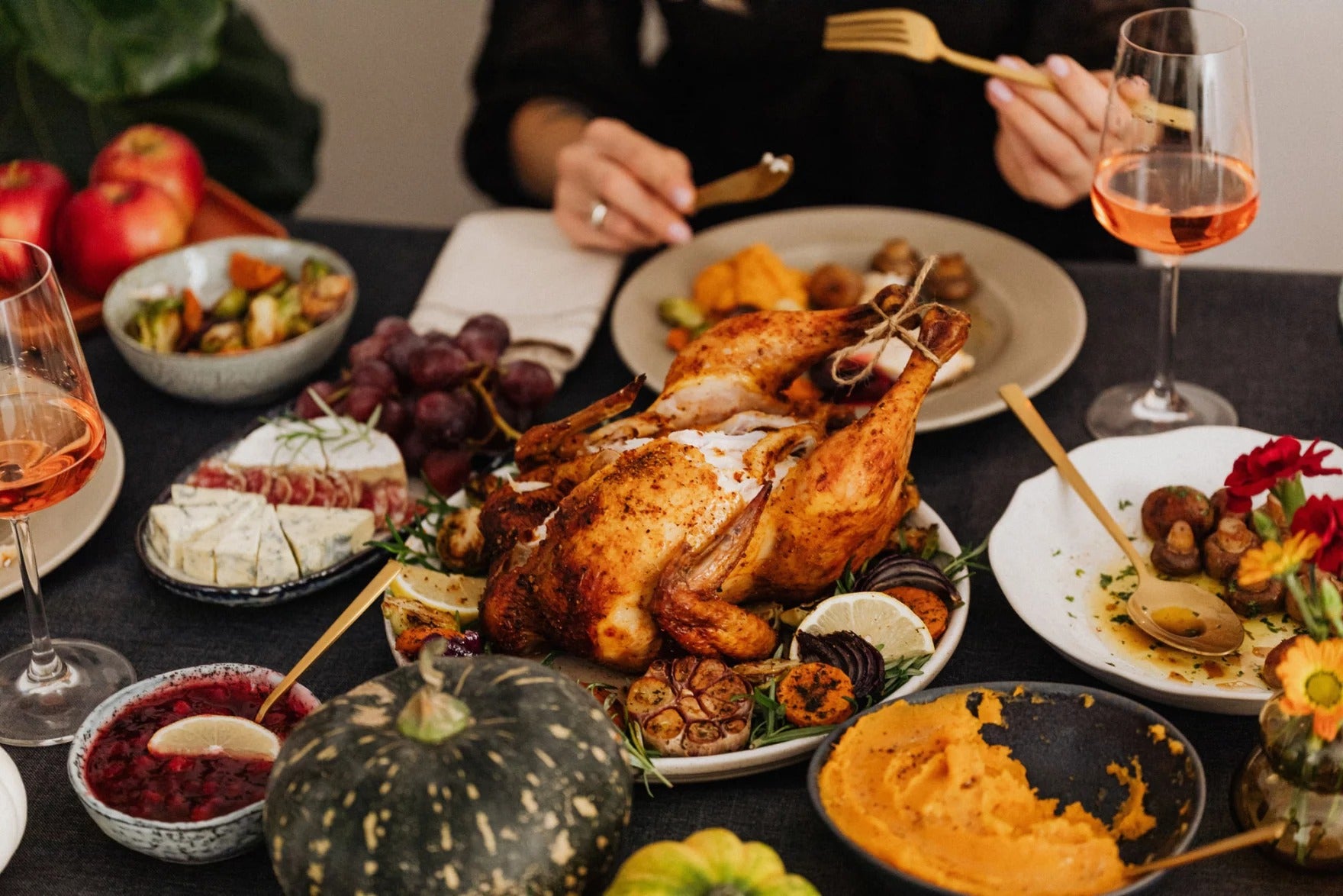

Wisconsinites are paying slightly more for their Thanksgiving meal this year, thanks in part to a higher cost for turkey.
An annual survey of grocery store prices by the Wisconsin Farm Bureau found dinner for 10 people will cost an average of $61.84 this year. That’s an increase of 6.7 percent, about $3.88, compared to the same meal in 2024.
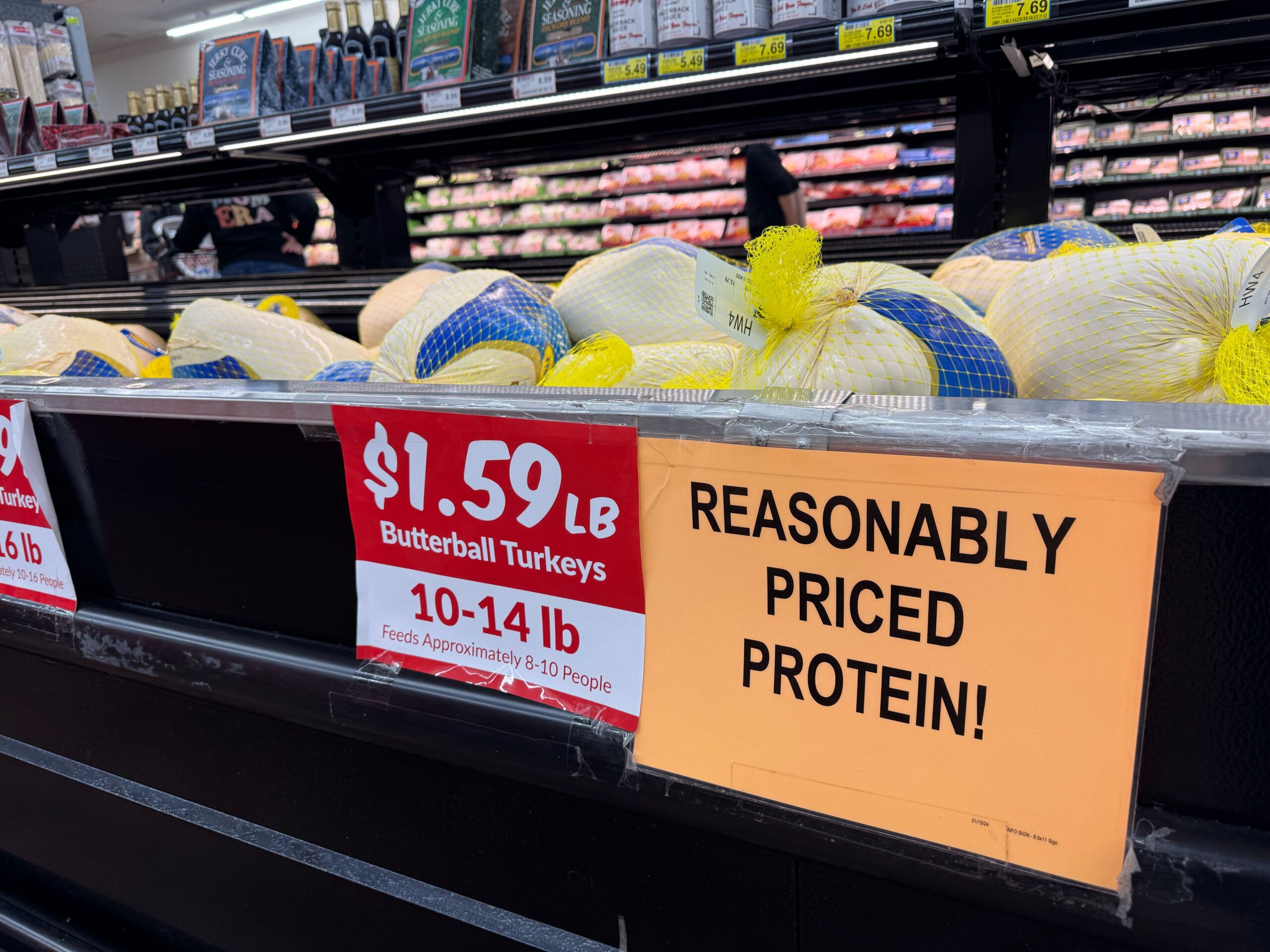
Turkey had one of the largest price increases on the statewide survey, coming in almost 9 percent higher than last year.
News with a little more humanity
WPR’s “Wisconsin Today” newsletter keeps you connected to the state you love without feeling overwhelmed. No paywall. No agenda. No corporate filter.
By comparison, the same survey done at a national level found a 16-pound turkey was down 16 percent from 2024.
Some ag economists warned turkey prices could be higher this winter after imported ingredients used in animal feeds were hit with higher tariffs by the Trump administration.
Cassie Sonnentag, senior director of public relations for the Wisconsin Farm Bureau, said it’s not unusual for the state to see a different price than the national average.
“Regions, grocery chains and even store-to-store prices can vary widely,” Sonnentag said. “It’s also important to note that the survey was conducted the first week of November, so a lot of grocery stores were just beginning to start offering specials on turkey.”
The survey found a gallon of whole milk was also up 28 cents, or almost 9 percent, from 2024. Sonnentag said dairy products are having a “trendy” moment this year as consumers look for ways to increase their protein consumption, leading to stronger prices.
This year’s survey price also ticked higher thanks to some fresh produce items. Three pounds of sweet potatoes cost 84 cents more, an increase of nearly 27 percent from last year. A prepared relish tray with carrots and celery cost twice as much as in 2024 at $1.68 per pound.
Mike Semmann, president and CEO of the Wisconsin Grocers Association, said higher costs for labor, transportation and utilities have an impact throughout the food supply chain and can end in higher prices on grocery store shelves. He said grocers have also been concerned about how higher tariffs could affect imported items like spices and aluminum used in packaging.
“There are a lot of different things that go into food pricing, particularly throughout the course of the year,” Semmann said. “But we’re pretty happy this year that what we’re seeing is Thanksgiving pricing and some of the deals that are being offered are really quality products at a very competitive price, all the way around the state.”
And shoppers with extra freezer space could save on future meals by taking advantage of the holiday pricing, Semmann said.
“This might be the week to buy that second turkey at this type of pricing, and then you might be able to have something to look forward to in the next several weeks,” he said. “There are some other deals that some grocery stores have (such as) if you buy a ham, you get a free turkey. So there are many different ways that Wisconsin grocery stores have worked very hard to provide consumers options this holiday season.”
Sonnentag said price-conscious consumers can often save by buying foods that are in season. In Wisconsin, that includes brussel sprouts, leeks, carrots and other root vegetables. Or shoppers can consider subbing in alternatives to classic Thanksgiving dishes.
“If you can opt for a smaller turkey or just that smaller cut, seeking out an alternative protein option can also help reduce your grocery bill,” Sonnentag said. “Considering what is on your menu and the quantities that you are purchasing is definitely a way to stretch that food dollar.”

Wisconsin Public Radio, © Copyright 2026, Board of Regents of the University of Wisconsin System and Wisconsin Educational Communications Board.