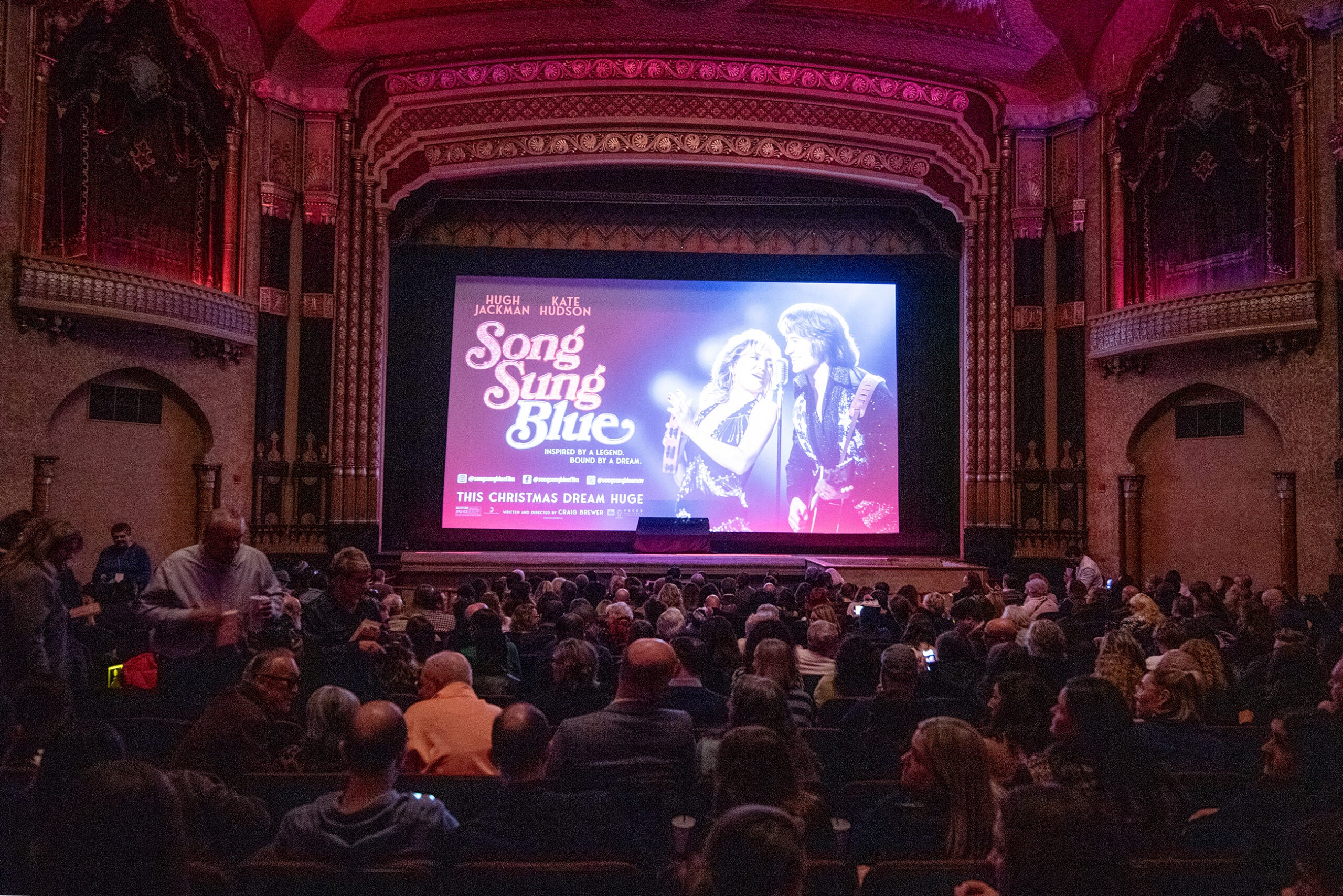
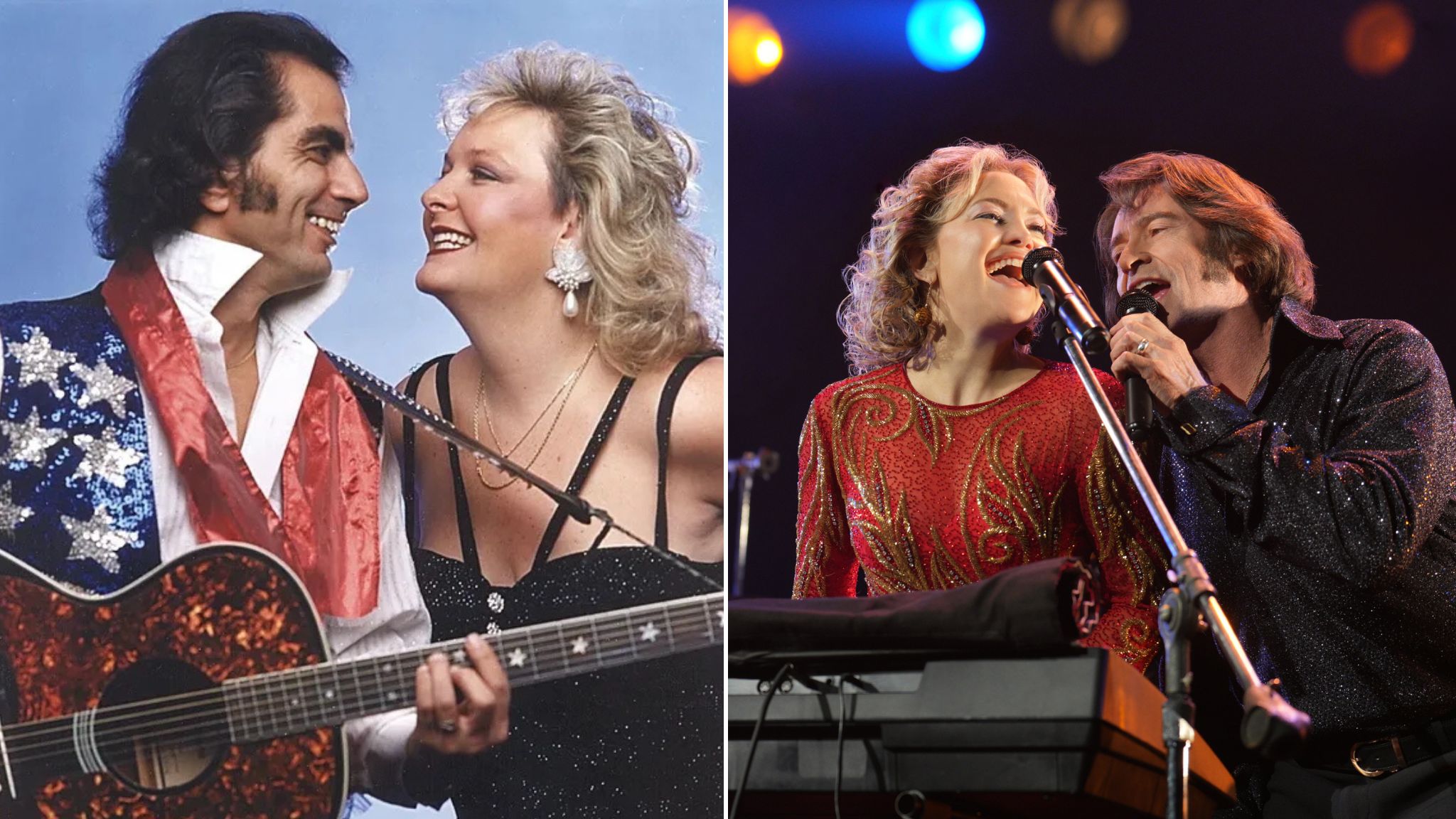
Milwaukee’s legendary Neil Diamond tribute band and power couple Lightning & Thunder first fell in love almost four decades ago. On Christmas, their story will be seen in theaters nationwide in “Song Sung Blue.”
The movie — based on a 2008 documentary with the same name — follows the real-life story of Wisconsin’s own Claire “Thunder” Sardinia and Mike “Lightning” Sardina, who performed together from 1989 until Mike’s death in 2006. One of their most memorable performances was at Summerfest in 1995, where they opened for Pearl Jam and sang “Forever in Blue Jeans” with Eddie Vedder.
The film stars Kate Hudson as Claire alongside Hugh Jackman, who plays Mike. Jackman called the movie “a love letter to Milwaukee.”
News with a little more humanity
WPR’s “Wisconsin Today” newsletter keeps you connected to the state you love without feeling overwhelmed. No paywall. No agenda. No corporate filter.
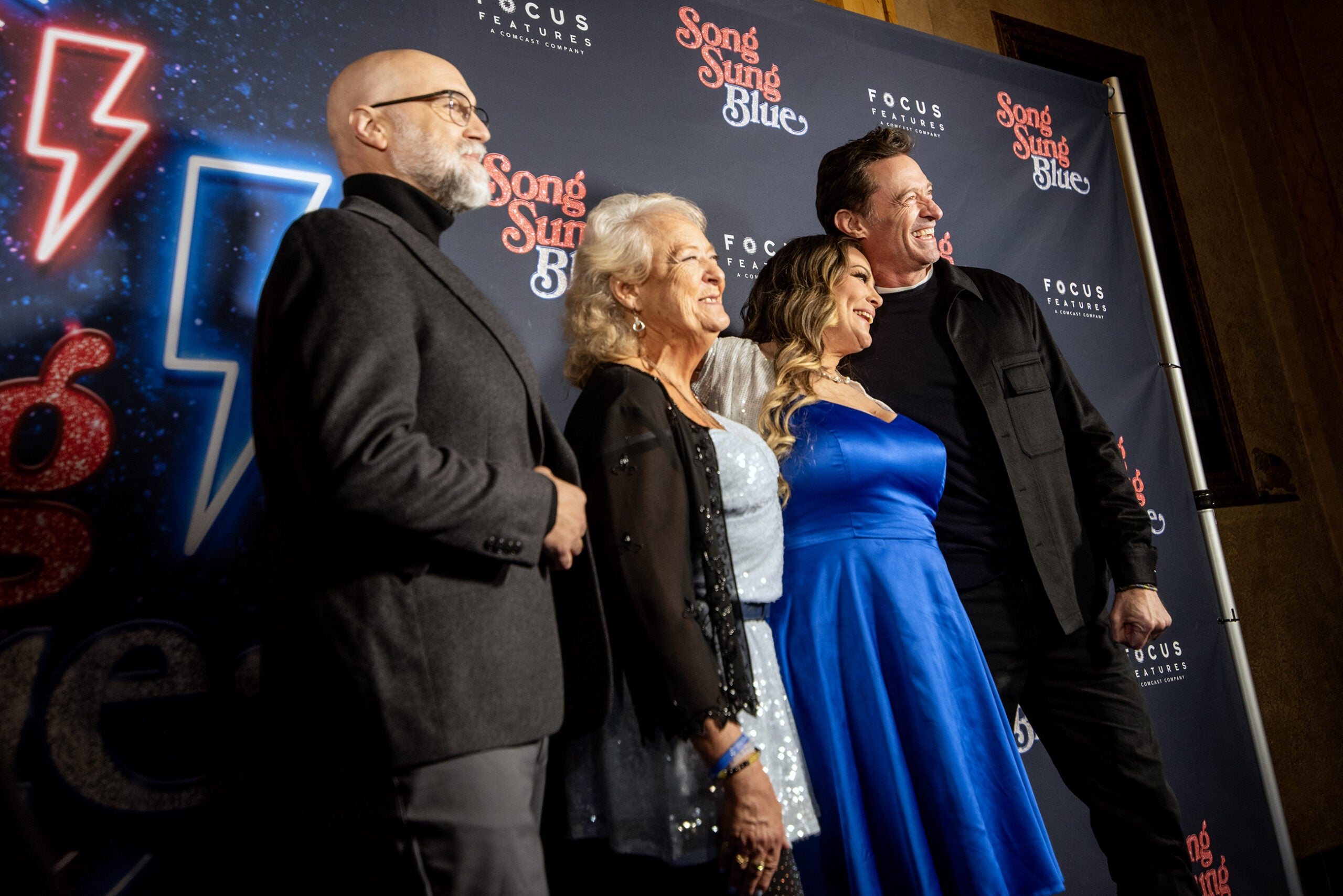
Earlier this month, the Oriental Theater in Milwaukee hosted a hometown premiere for friends and family of Claire and Mike. Jackman and director Craig Brewer were also in attendance.
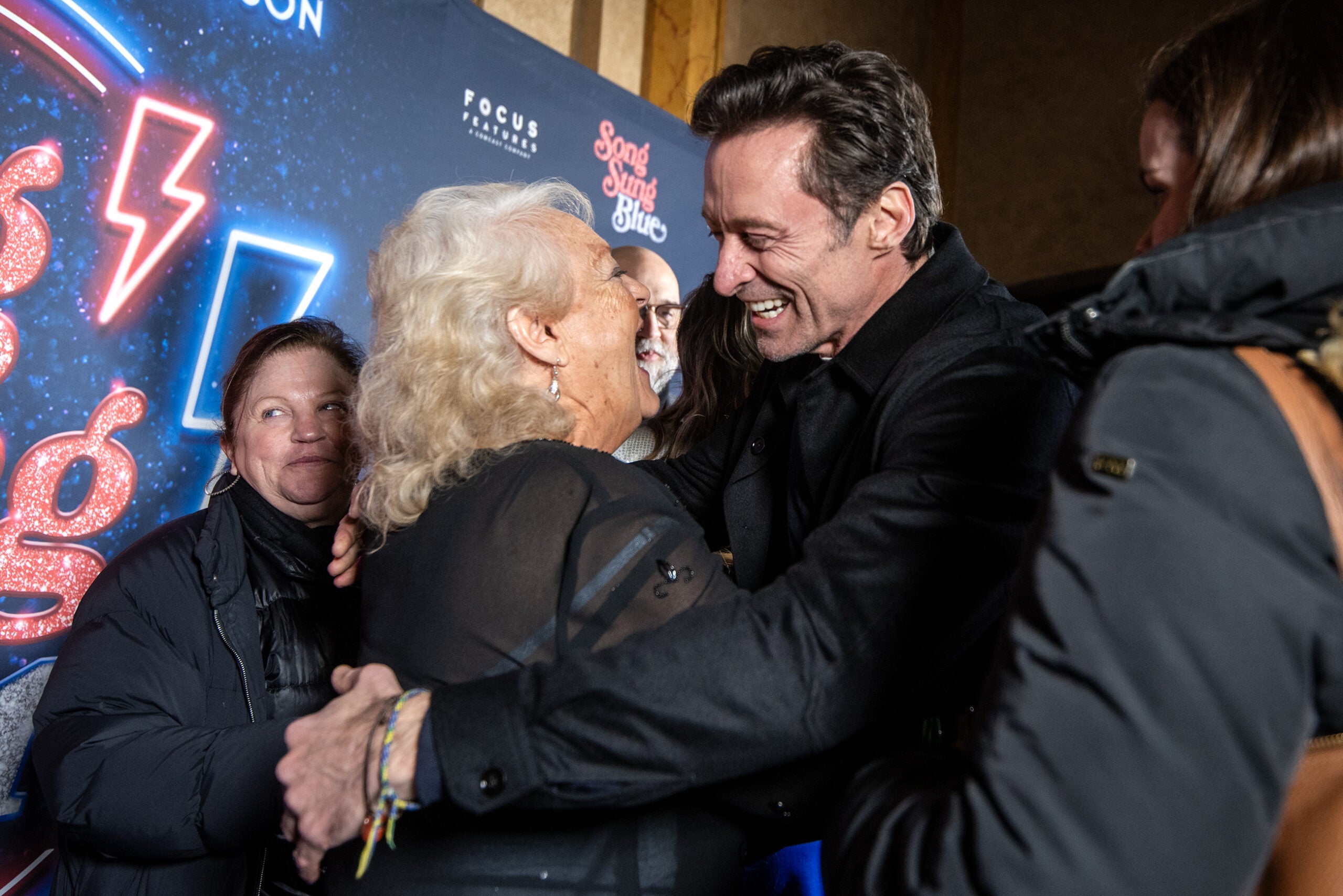
“The feeling in this city — there’s something special about it,” Jackman told reporters. “Being here tonight is in many ways the most important night for this movie, being here with the family whose lives we’re portraying. I’ve absolutely loved it.”
Brewer told WPR about the first time he learned about Lightning & Thunder, when he saw the 2008 documentary at a film festival. He said he immediately knew he wanted to tell their story in his own way.
“I thought it was just gonna be a fun little thing … (about) some band doing Neil Diamond songs. Then this story started unfolding, and I was just captivated with it,” Brewer said. “They just wanted to perform. And they were very committed to each other and their community. (Those are) the kinds of movies that I’ve always really been inspired by.”
Claire Sardina joined WPR’s “Wisconsin Today” to talk about her memories of performing with her late husband and how it feels to see her story told on the big screen.
This interview has been edited for length and clarity.
Kate Archer Kent: What do you think Mike would make of the crowds coming to see a movie about your life story?
Claire Sardina: I think he would be elated. I believe in my heart of hearts that he watches over me. He guides me. I look up to the heavens when I feel somewhat overwhelmed by all the hype, and he brings me back to the level of the performer that he taught me to be. It would have been a dream for him.
KAK: How did Lightning influence you as a performer?
CS: He showed me how to be a true entertainer. To not be phased by things that were happening outside and to feel the stage 100 percent. He was such a people person himself, and entertainers, in my opinion, should be that way. They shouldn’t be performing for themselves. They should be performing for their audiences, whether they’re big or small. So he taught me those things. He taught me vocal skills and how to sing just by listening to him. Sometimes we were cute and did vocal exercises prior to (performances). Both of us practiced our craft.
He was an interpreter of the great Neil Diamond. He didn’t call himself an impersonator. It was great because he wanted to do the music of the great Neil Diamond for people to love and enjoy.
I heard Hugh Jackman say in one of his interviews, “We believe that if it wasn’t for Mike, this whole thing wouldn’t be happening. Because Mike was a dreamer.” I agree with that. I was his counterpart, the love of his life. He was a teacher to me, a father to my children — so many things.

KAK: How did you and Mike decide to start performing Neil Diamond songs?
CS: We got advice from an Elvis impersonator at the time. Lightning had dabbled a little bit with a couple of Nieil Diamond songs, and he stopped him and said, “This is something you need to pursue.” Lightning listened to him. He got the hair style and he took on the persona of Neil, but also his own persona too. Because, again, his claim to fame was not as a Neil Diamond impersonator, but an interpreter.
KAK: Before Lightning and Thunder, you took on the persona of Patsy Cline. What drew you to her?
CS: I loved her country twang. I loved her stage presence in the videos that I watched. And I loved the meaning of her songs. “I Fall to Pieces,” “Crazy,” “Sweet Dreams,” “Walking After Midnight.” Her songs had strive and meaning to them. The audience ate it up, and they would sing along with me. I attracted a large senior audience because the seniors, when they were younger, experienced the late, great Patsy Cline before she perished in a plane crash.
KAK: In 1999, a car hit you while you were outside your home and you ended up losing your foot. How did that affect you and Mike as musicians and as a couple?
CS: I was gardening in my front yard and a car came up on my property, ran me over and took my leg. Of course, the impact was strong, as it would be to any family no matter what their circumstances.
It rocked our world and for a while, we thought we weren’t going to be able to get up and go again. My feelings of insecurity and my mental health went downhill. The pharmaceuticals that they put me on because of my operations were strong. I had several operations and Lightning was alive during all but one of them. It impacted the whole family, but it put a monkey wrench in all aspects of our life, even the performance aspect. So it took a while to get back on our feet — no pun (intended).

KAK: How did singing affect your recovery and your ability to heal?
CS: Oh, well that’s easy. Music is a universal healing power. I’ve got a God-given gift that I like to share with people. Ever since I was three years old, I have been singing. I wasn’t going to let this hold me back.
It took me a while to bounce back after the loss of Lightning, which happened after the accident. So I had time where I hermit-ized myself — reflected and looked into myself. I quit smoking. I had a major operation, and I was actually in a wheelchair for nine months. But it pivoted me to now being able to dance and sing. And I still, of course, do perform.
KAK: What can we learn from your life story, even if we’re not performers?
CS: Attitude is everything. … I’d say to people across the board: if you look at others that are less fortunate than you are and put yourself in their position, you won’t feel so sorry for yourself.
Everybody’s got a health story to tell, and it’s all in the attitude. “This too shall pass,” as Lightning would say. That was one of his favorites, and I think it comes from (Alcoholics Anonymous). That’s what I would tell people to do: Be positive, and this too shall pass. You can do this. Don’t sit in the chair and feel sorry for yourself and wither and waste away. Get up and do something. Do your stretches, do your rehab, listen to your doctors, have surgery. Have what it takes to become a whole person again. And pray — I pray a lot.