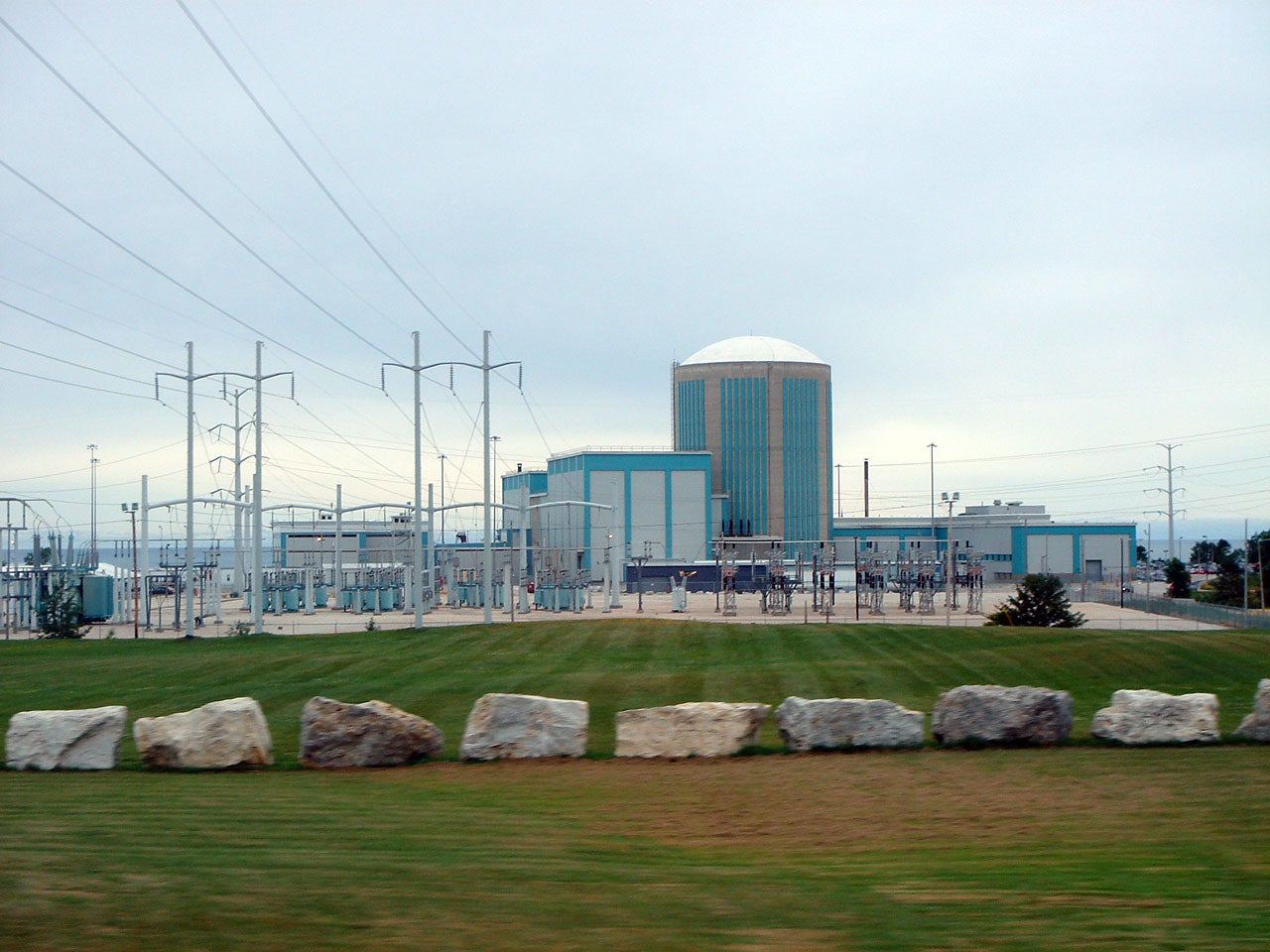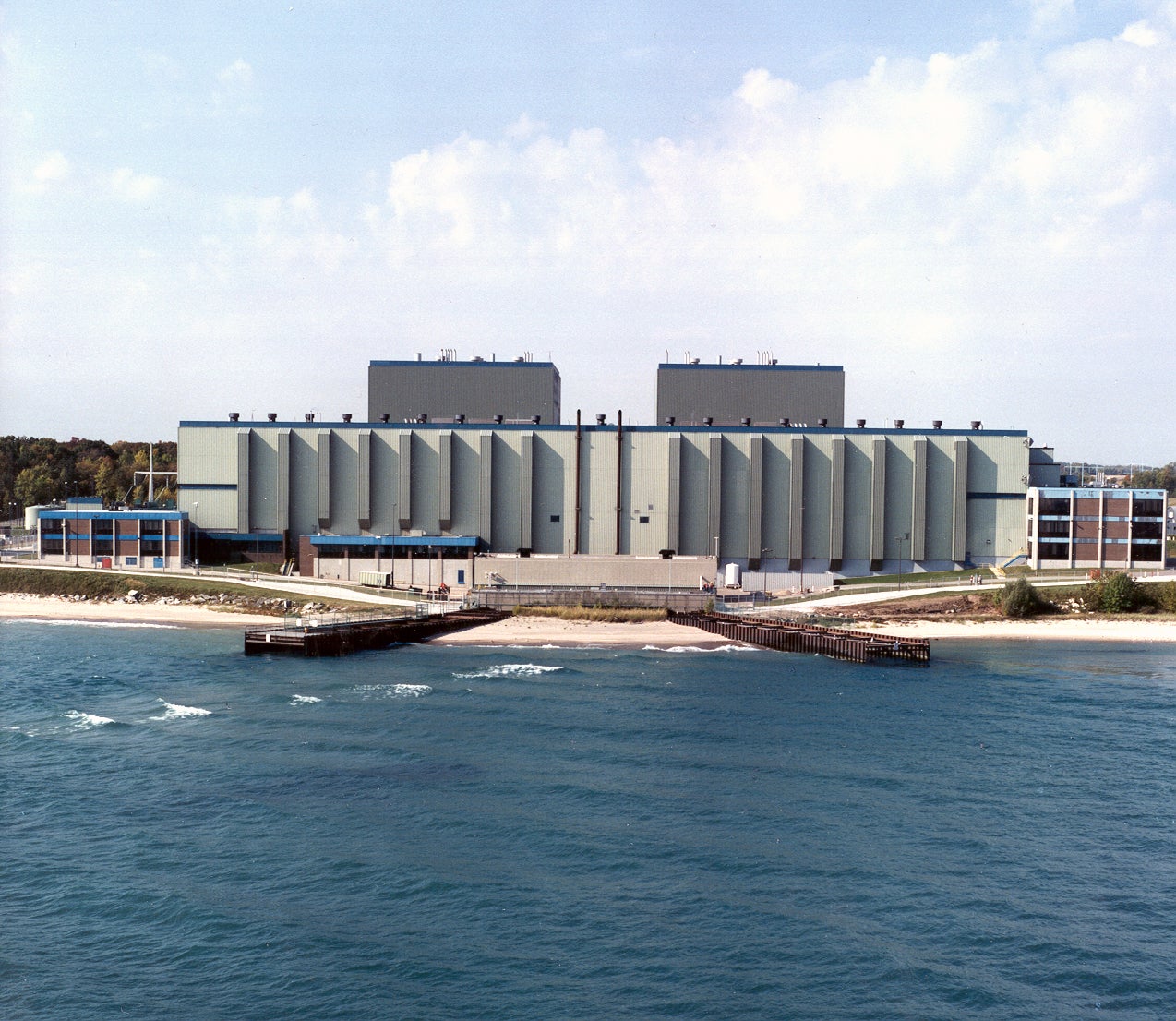
Plans to bring new nuclear energy to the site of a shuttered nuclear plant in Kewaunee County are moving forward.
Utah-based EnergySolutions, the owner of the Kewaunee Power Station site, announced in January that it filed a notice with federal regulators confirming that it plans to apply for a major licensing action for new nuclear generation at the Kewaunee Power Station site.
In addition to a notice of intent, the company says it submitted filings to the U.S. Nuclear Regulatory Commission related to potential permits, which are still under review.
News with a little more humanity
WPR’s “Wisconsin Today” newsletter keeps you connected to the state you love without feeling overwhelmed. No paywall. No agenda. No corporate filter.
EnergySolutions first announced plans to explore bringing new nuclear power to the Kewaunee County site last year. The company is working on the effort with WEC Energy Group, the parent company of We Energies and Wisconsin Public Service.
In a statement, Ken Robuck, president and CEO of EnergySolutions, said the recent notice filed with the Nuclear Regulatory Commission is an “important milestone” in bringing “the next generation of nuclear power” to Wisconsin.
“The need for reliable, carbon-free power has never been greater,” he stated. “We have assembled an experienced team that brings environmental compliance, nuclear licensing and project management expertise to this project at a time new nuclear generation in Wisconsin is essential.”
The company also says it’s conducting “in-depth studies” to support its application and to demonstrate the Kewaunee Power Station site’s “suitability for new nuclear construction.” EnergySolutions says those efforts are a “prerequisite” for securing approval from federal regulators.
EnergySolutions did not respond to requests for additional comment. The original Kewaunee Power Station began commercial operation in 1974 and shut down in 2013.
State Rep. Dave Steffen, R-Howard, chairs the Assembly’s energy and utilities committee, and has been a supporter of bringing new nuclear energy to Wisconsin. He said EnergySolutions’ recent notice with the Nuclear Regulatory Commission is “the first major commitment” the company is making to the federal government to show “they are serious about building a nuclear facility.”
“It provides a more certain confirmation that they are going to be moving forward with this project,” he said.
Steffen said EnergySolutions is in the process of acquiring land around the Kewaunee Power Station. He said the site is attractive to the developer because it is located near infrastructure like substations and transmission lines that existed for the previous plant.
Steffen also said the company plans to build a new plant on “unused ground” at the Kewaunee site and that the project would not be a demolition or a rejuvenation of the existing plant.
But it could be a decade-long process even though there have been some efforts at the state and federal level to try to reduce the regulatory timeline for project approvals, Steffen said.
“This is the very first new nuclear project to come to Wisconsin in decades,” he said. “We don’t anticipate it to be the last. Over the coming years, there will be additional players in this space who are going to be looking to Wisconsin.”
The state Assembly recently passed a bill that would provide tax incentives for companies building new nuclear plants in the state. It passed on an 86-11 vote with bipartisan support. It still needs to clear the state Senate before it would head to Gov. Tony Evers’ desk.
Steffen said the bill could help EnergySolutions accelerate plans if it becomes law.
Proponents of nuclear energy argue it would be a carbon-free way to replace coal or natural gas plants as a constant and reliable source of electricity.
“Because it’s not dependent on the wind or the sun, nuclear energy operates whenever we want it, pretty much,” said Paul Wilson, a nuclear engineering professor at the University of Wisconsin-Madison. “But even if we have to shut it down for refueling, that is very, very infrequent. Nuclear power plants today around the country typically operate for 18 months without shutting off.”
Opponents of nuclear energy argue it’s one of the most expensive forms of energy generation, and far more expensive than wind or solar power.
Katie Nekola, general counsel for the nonprofit Clean Wisconsin, which lobbied against the nuclear tax incentive bill, said nuclear power costs “three to four times” as much as a natural gas plant per unit of energy and four to five times as much as solar or wind.
“In addition to just not costing as much to construct, there’s no fuel cost for solar or wind — those are huge costs,” she said. “There’s no waste disposal costs for solar or wind.”
Nekola also questioned the need for the Kewaunee County project because it could come online years after a number of large-scale, power-hungry data centers are running in the state.
“It’s clearly not going to meet the needs of data centers because they need power right now, and this thing wouldn’t be built for probably 10-15 years,” she said. “I’m not sure what it’s being built for.”
But Wilson said starting the process now could help bring fossil plants offline down the road.
“It may take 10 years for nuclear to be online, but 10 years from now, we will have higher demand for energy one way or the other,” he said. “Nuclear could be filling that demand and we could be turning off the coal and turning off the natural gas.”

Wisconsin Public Radio, © Copyright 2026, Board of Regents of the University of Wisconsin System and Wisconsin Educational Communications Board.