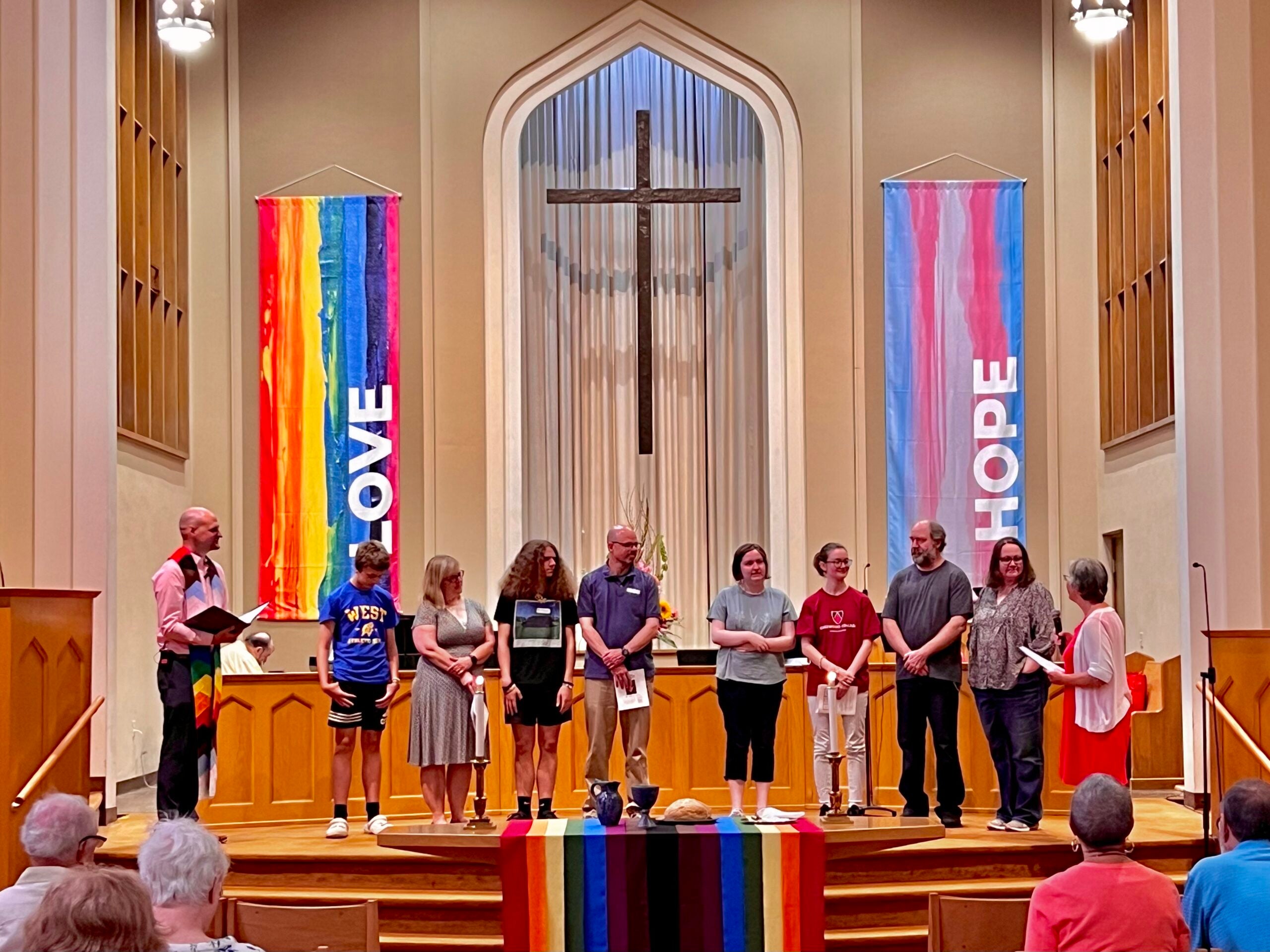
June was complicated for Wisconsin pastors Rev. Tim Schaefer and Rev. Heather Yerion-Keck.
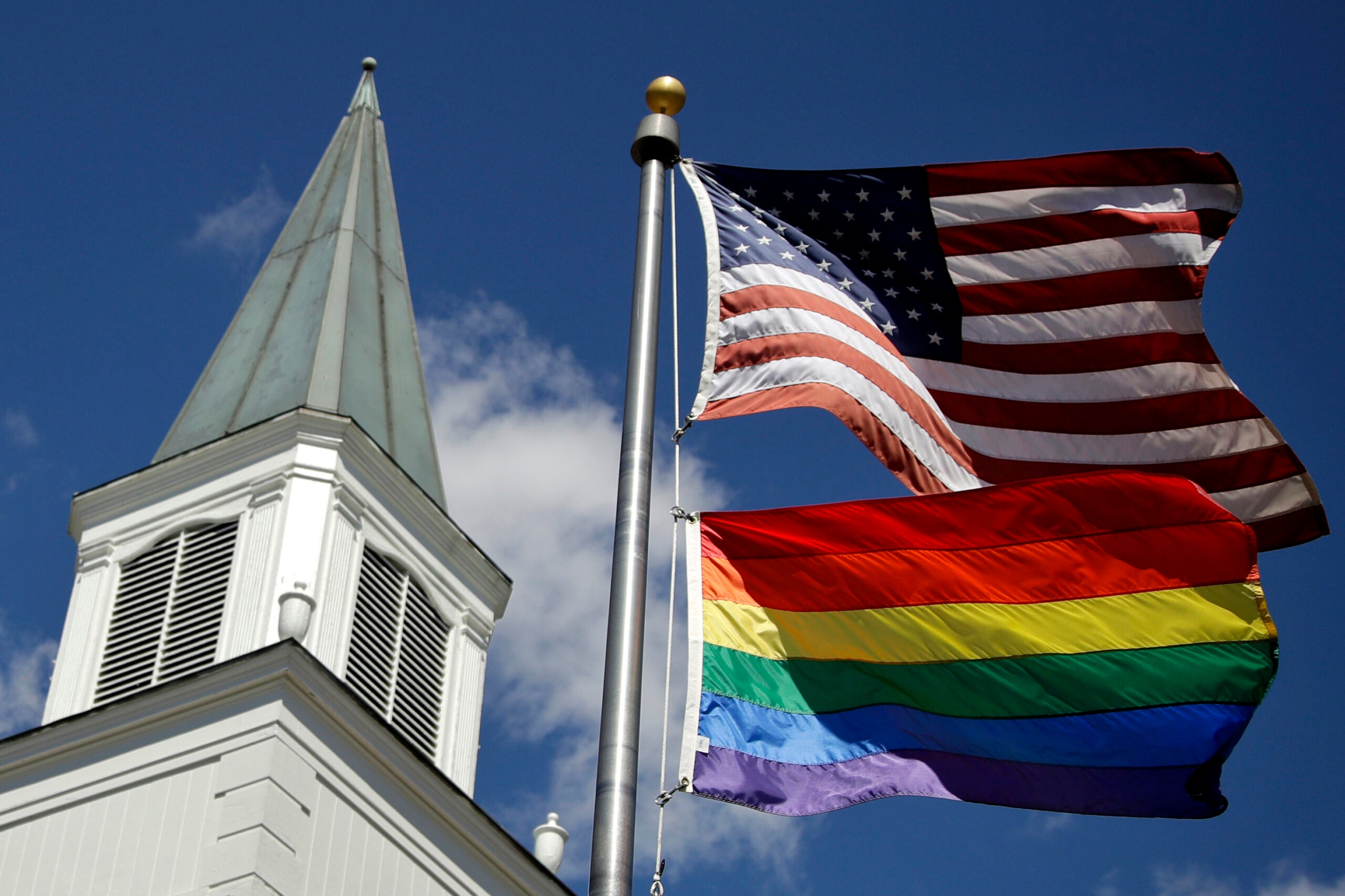
On June 26, they celebrated the 10th anniversary of Obergefell v. Hodges, the U.S. Supreme Court case that affirmed marriage equality for same-sex couples. Although they both married their same-sex partners prior to the case, they saw it as an important step in recognizing their love.
“It was just a big shrug of relief that (my wife and I) would be free and recognized and honored wherever we lived,” Yerion-Keck told WPR’s “Wisconsin Today.”
News with a little more humanity
WPR’s “Wisconsin Today” newsletter keeps you connected to the state you love without feeling overwhelmed. No paywall. No agenda. No corporate filter.
However, earlier in June the national Southern Baptist Church — the nation’s largest Protestant denomination — formalized efforts to reverse that Supreme Court decision and condemned same-sex marriage.
“Sadly, the Southern Baptists tend to be the loudest voices in the room,” Schaefer said.
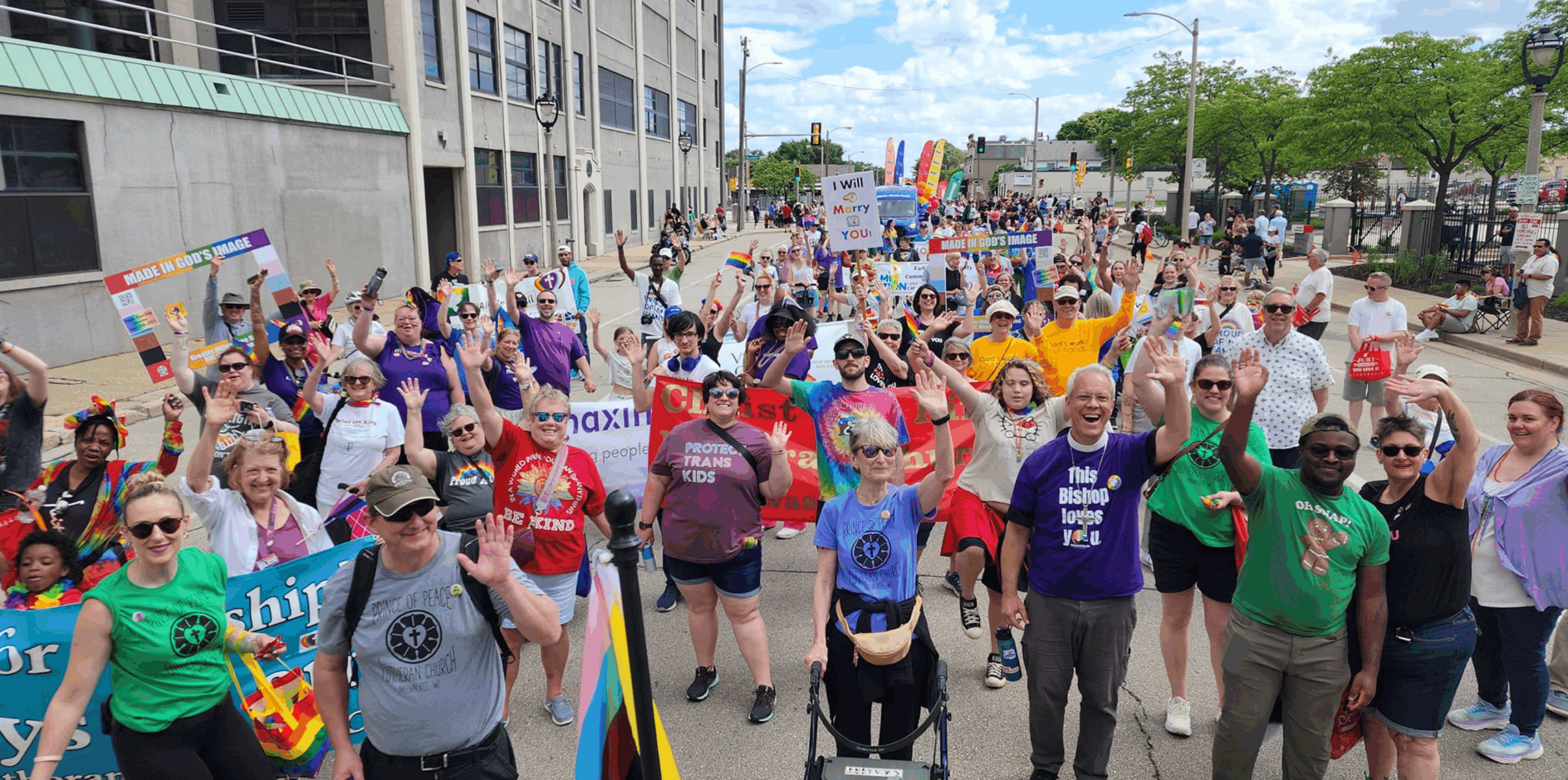
In separate parts of Wisconsin, both pastors have continued to preach on inclusivity and love. Although Schaefer said he is sometimes concerned about the direction of the church, he knows each denomination and individual congregations vary widely in their views.
Schaefer and Yerion-Keck spoke about last month’s decisions and their personal journeys.

The conversation has been edited for clarity and brevity.
Rob Ferrett: I want to ask each of you what this issue has looked like in your own congregations. Rev. Yerion-Keck, you are a pastor at Lutheran congregations in Two Rivers and Manitowoc. How do people talk about this?
Rev. Heather Yerion-Keck: I am part of an Evangelical Lutheran Church of America congregation, and the ELCA says on paper that we openly accept and we openly call (non-heterosexual people to become pastors). But there is a complete variance from congregation to congregation about their willingness to talk about it and their willingness to accept it.
I am presently at a congregation that stepped up and agreed to call an openly gay pastor, but I can tell you that in my call process I was turned down by two congregations because of my relationship. They were not ready, willing or able to accept a pastor that was anything other than straight. So there is just so much variety in that response.
RF: Rev. Schaefer, you’re at the First Baptist Church in Madison. To what extent is same-sex marriage a topic of conversation?
Rev. Tim Schaefer: I will say it is not so much anymore, aside from folks sort of lamenting that this isn’t a policy that all Baptist churches embrace.
The history of my congregation is they had a big discussion about this when they made the decision to formally become welcoming and affirming in 1994 — so really one of the earliest congregations, even in Madison, but certainly among the first Baptist churches in the country to become open and affirming.
RF: Another Christian Baptist denomination, maybe the best known of the country, the Southern Baptist denomination, voted to formalize efforts to overturn Obergefell v. Hodges. Rev. Schafer, what is your reaction to that?
TS: My congregation is primarily American Baptist, and the American Baptist Churches USA and the Southern Baptist Convention have a long history. They split over the issue of slavery, which many denominations did.
I will say that more and more, the Southern Baptist Convention seems to be eroding some of those four foundational freedoms that Baptists really championed, two of which are church freedom, that we have that autonomy to do ministry the way we see fit, and Bible freedom, we get to interpret Scripture the way that we see fit.
The way that that’s sort of playing out now is that the denomination is making decisions about how Scripture should be interpreted on all sorts of issues, including gay marriage, hot-button issues and also how their churches ought to do ministry.
We get a lot of people who come and visit us, sort of hesitantly for the first time, and all they know about Baptists is what they hear from the Southern Baptist Convention.
RF: Rev. Schafer, you and your family received national attention when your father — a United Methodist Church pastor — was convicted of breaking church law by officiating your wedding with your first husband. Take us back to that time in your life.
TS: We were living at the time in Boston, and Massachusetts was among the first states that legalized gay marriage. It was very important to have this be a family affair.
At the time, my father was serving in a rural Pennsylvania congregation and he performed our ceremony.
His signature, then, was on our wedding certificate. And due to whatever struggles were happening within his congregation, somebody decided that the best way to embarrass him, or to perhaps get him out of that congregation, was to look up this marriage certificate with his signature on it because that act at the time violated the United Methodist Church’s Book of Discipline.
A complaint was filed. It ended up in a trial, and he was convicted of performing my marriage and subsequently defrocked, and he was ousted from not just his congregation but from their conference.
Fortunately, maybe a year later or so, he was reinstated and then did ministry in California.
RF: How do you go from that to “I’m going to answer the call and become a pastor”?
TS: When I was younger, I watched my dad and I wanted to be a pastor, and because I did not see a lot of openly queer clergy like myself, I convinced myself it was not possible. The moment of this trial actually reignited that calling to ministry.
What happened was hundreds of supporters came to support my family and support my dad. So many people attended the trial that the room was filled to capacity, and there were still many people outside of the building holding signs and chanting and praying and singing.
I thought there is this movement I was previously unaware of, folks within denominations fighting for equality just to be recognized as a human being. And (I) wanted to be a part of that.
RF: Rev. Yerion-Keck, can you take us through your story of becoming a pastor?
HYK: When I came out in the early ’90s, I was living in the lower Midwest in the time of the Westboro Baptist Church and its prevalence of hate and protesting at gay funerals.
So I walked away from the church because I didn’t feel that there was any other church speaking out in support of me. I never walked away from God, but I walked away from church.
It was at least 15 to 20 years before I could walk back into church. And it was because there was a rainbow sticker on somebody’s bumper in the car in the parking lot. What got ignited in me was that I knew there was a whole generation of people my age that had been hurt and injured by the church.
(I wanted) to bring them back or at least to let them know that they’re still loved.