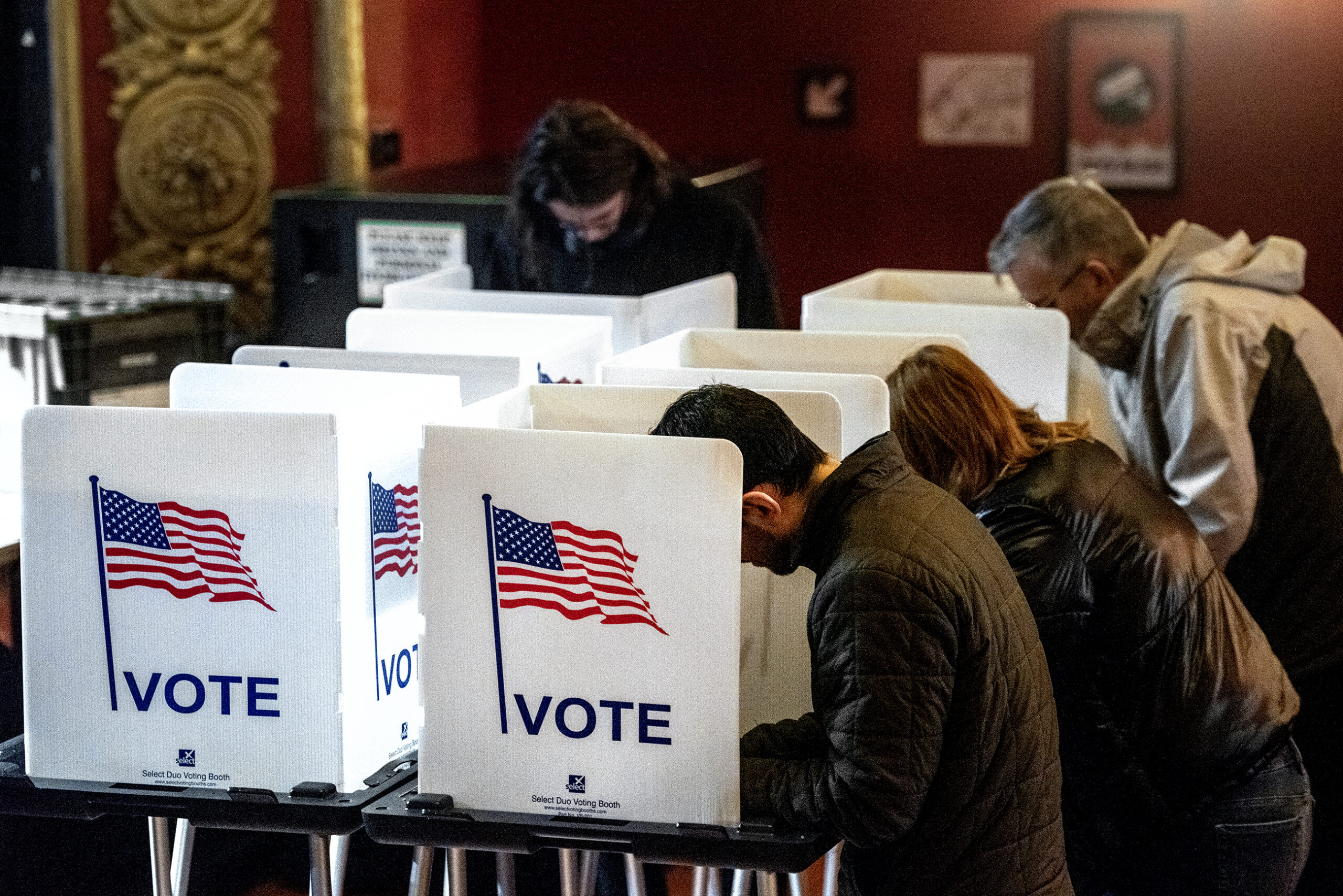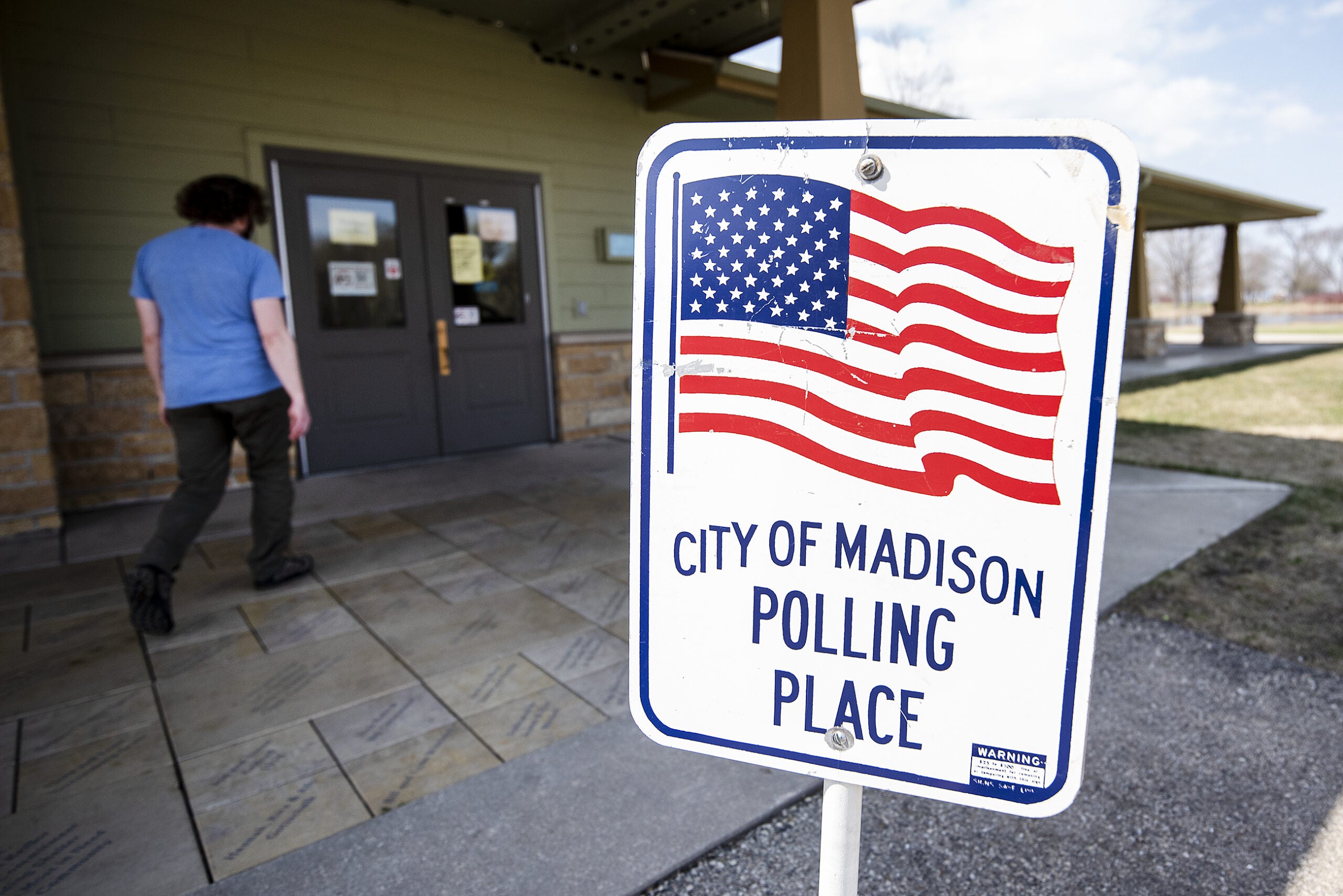
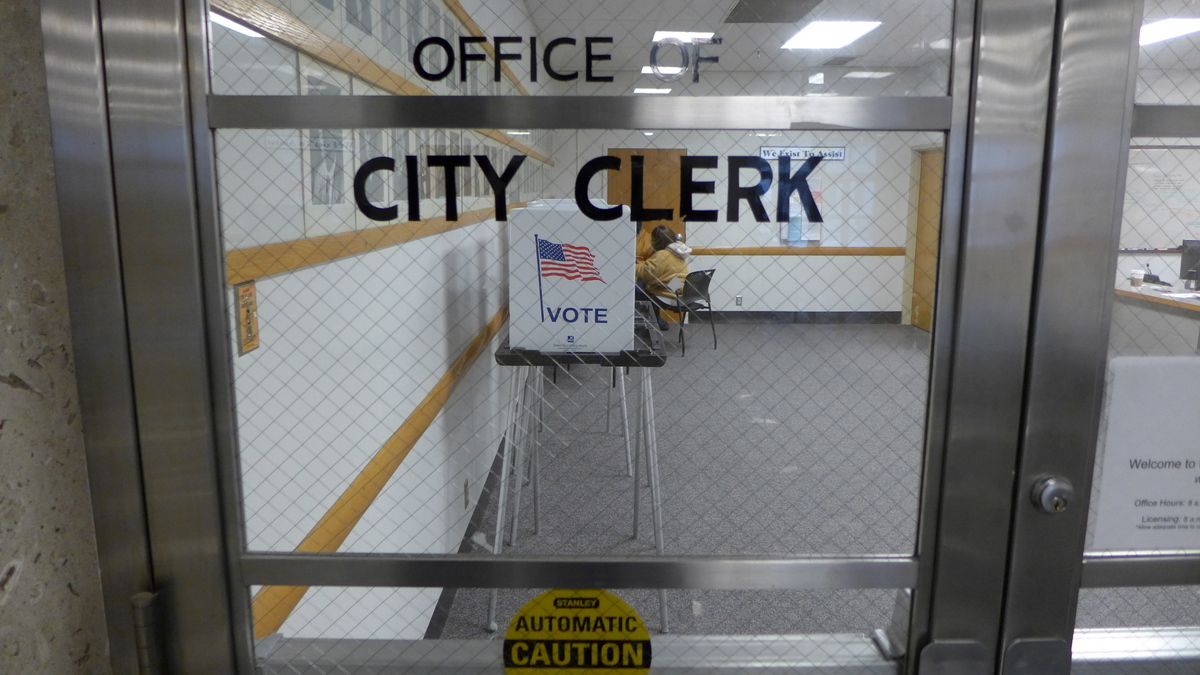
The state’s elections commission has ordered Madison to make changes after nearly 200 absentee ballots went uncounted in last November’s election.
Madison’s city attorney, however, is arguing that the Wisconsin Elections Commission, or WEC, lacks the legal authority to issue such an order.
The city’s 193 untallied ballots would have not changed the outcome of any race or referendum. But a report from the bipartisan Wisconsin Elections Commission blasted the Madison City Clerk’s office for a “confluence of errors” that led to the ballots being overlooked.
News with a little more humanity
WPR’s “Wisconsin Today” newsletter keeps you connected to the state you love without feeling overwhelmed. No paywall. No agenda. No corporate filter.
Among other measures, the order instructs Madison to create an internal plan documenting which city employees are responsible for which areas of election law. That’s after WEC’s investigation found city election staff were working in silos, without a sense of who should take responsibility for the uncounted ballots.
It also instructs Madison to print poll books closer to election time, by having them printed out one week ahead of Election Day. Those books help staff keep track of registered voters, including which voters have and have not returned absentee ballots.
Because Madison printed those poll books “unusually early” before November’s election — nearly three weeks before Election Day — many of the entries were missing watermarks that said “absentee returned.” Those watermarks “could have alerted officials that absentee ballots had not been counted,” WEC’s investigation said.
WEC’s investigation into Madison’s uncounted ballots marked the body’s first investigation of its kind since the commission was created nearly a decade ago.
Commissioners had been preparing to issue an order targeting Madison’s election procedures during their meeting in July. But at Madison City Attorney Mike Haas’ request, the commission agreed last month to wait to put out that order so Madison could submit a proposed order first and work with the commission on hashing out details. Alongside his duties as city attorney, Haas has been serving as the city’s acting clerk in the wake of the ballot scandal. He also formerly worked for WEC as the body’s administrator and as its legal counsel.
In a letter submitted prior to Friday’s meeting, Haas argued that while state law allows WEC to issue administrative rules that apply to all city clerks, it typically doesn’t mandate detailed procedures that would apply to only one municipality.
“The Commission’s proposed orders are also a stark departure from its typical approach to working with local election officials and would set a troubling precedent,” Haas wrote in this letter. “The Commission’s authority does not extend to requiring the future implementation of specific procedures in excess of those required in the statutes.”
WEC’s attorney disputed that characterization, calling it “absurd.”
“Under the City Clerk’s interpretation of the law, the Commission would tell clerks that they have done something wrong but then couldn’t provide a roadmap or instructions for the proper way to administer the legal duty,” WEC staff attorney Angela O’Brien Sharpe wrote in her analysis.
Madison city officials say they’ve taken steps to reorganize the clerk’s office, and that they’ve implemented procedures to ensure the debacle isn’t repeated.
If that’s the case, it shouldn’t be too much work to comply with the order, WEC officials said.
Commission Chair Ann Jacobs, a Democrat, said she was frustrated by the city attorney’s response.
“We got a letter that sort of reads a bit petulant, like ‘You’re not the boss of me,’ and ‘Why do I have to do things nobody else has to do?’” Jacobs said. “Well, nobody else failed to count 200 ballots.”
Madison has the option to appeal the order within 30 days to Dane County Circuit Court. But Haas indicated that Madison would not do so.
“We are focusing our energy on moving forward to serve Madison voters,” Haas wrote in response to a question from WPR. “It does not serve the voters to engage in a legal dispute with our partners in administering elections.”
The commission ultimately agreed to change a few details based on Haas’ feedback, before approving the order 5-1 on Friday morning.
Democratic Commissioner Mark Thomsen was the only commissioner to vote against the order. He said he didn’t believe the commission should single Madison out.
“I don’t think it’s fair to burden the new clerk with a set of orders that other clerks recognize no one else has to follow,” Thomsen said. “The spring election in 2025 went well. The clerk that was responsible for these errors … is gone and, to me, the order just seems spiteful.”
Madison’s former clerk resigned
Madison’s former clerk, Maribeth Witzel-Behl, resigned in April after being placed on leave. An internal Madison Human Resources investigation concluded she breached her contract and violated multiple city policies by failing to properly supervise elections.
The WEC’s report says Witzel-Behl first learned on Nov. 12 that it was likely some ballots had not been counted when election workers told her they had discovered a sealed envelope inside the type of sealed bag that Madison uses to store and transport absentee ballots.
At that time, post-election canvassing was still going on, which means those ballots could likely still have been counted if the clerk or other elections staff had decided to take action.
But according to the WEC, Witzel-Behl did not take action. Staff later discovered more sealed bags with uncounted ballots on Dec. 2, while Witzel-Behl was out of the office and taking a staycation, according to the WEC report
A member of the clerk’s office didn’t notify the WEC about the overlooked ballots until Dec. 18, more than a month after the first uncounted ballots were discovered. At that point, the state commission had already certified Wisconsin’s election results, making the statewide vote tallies final.
In a statement Friday, Madison Mayor Satya Rhodes-Conway once again apologized to the Madisonians whose votes went uncounted.
“I appreciate the Wisconsin Election Commission considering our input and amending its orders to reflect that feedback,” the mayor said. “I hope the WEC’s investigation can help inform best practices for election clerks around the state. ”

Wisconsin Public Radio, © Copyright 2026, Board of Regents of the University of Wisconsin System and Wisconsin Educational Communications Board.