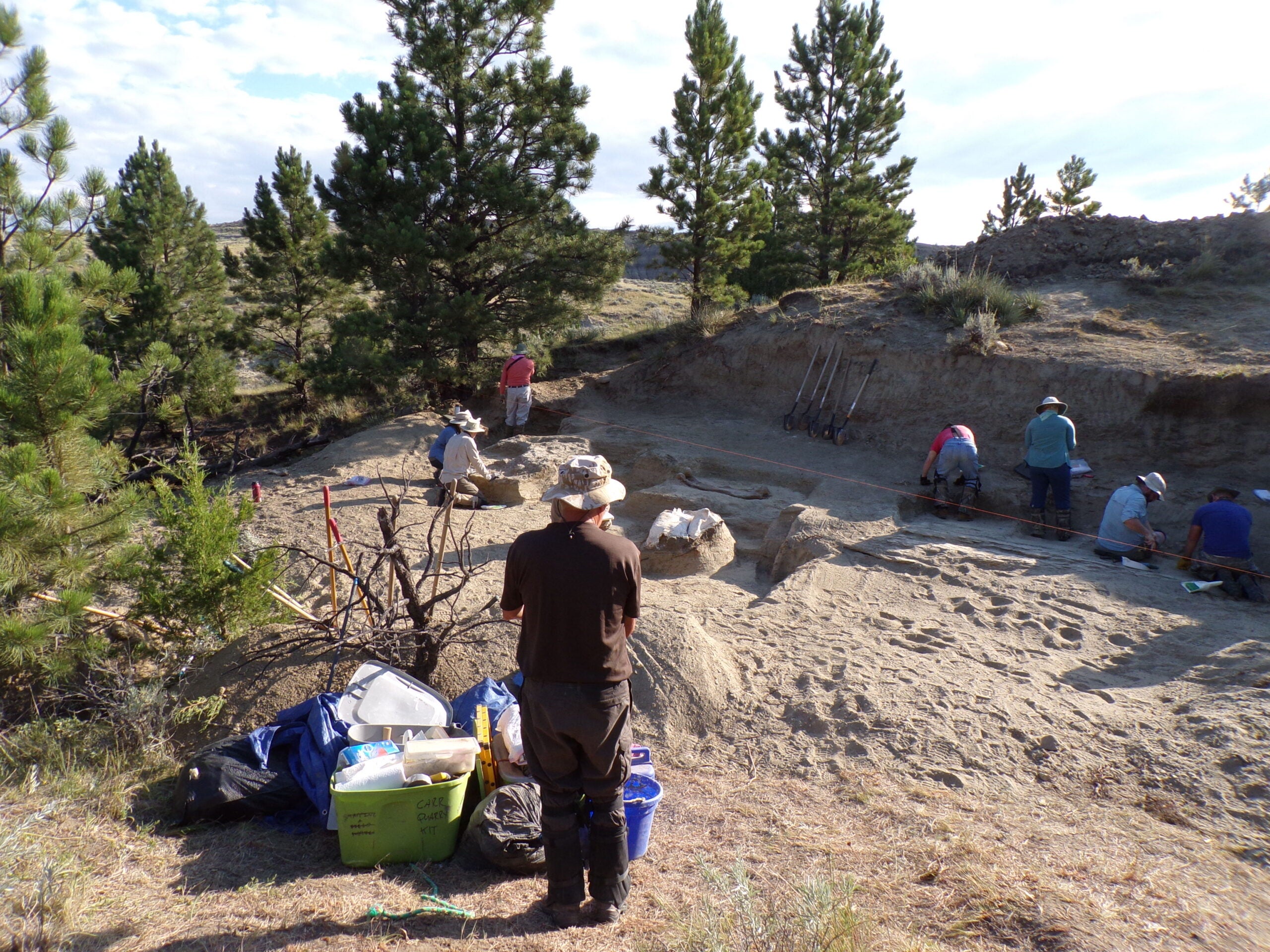
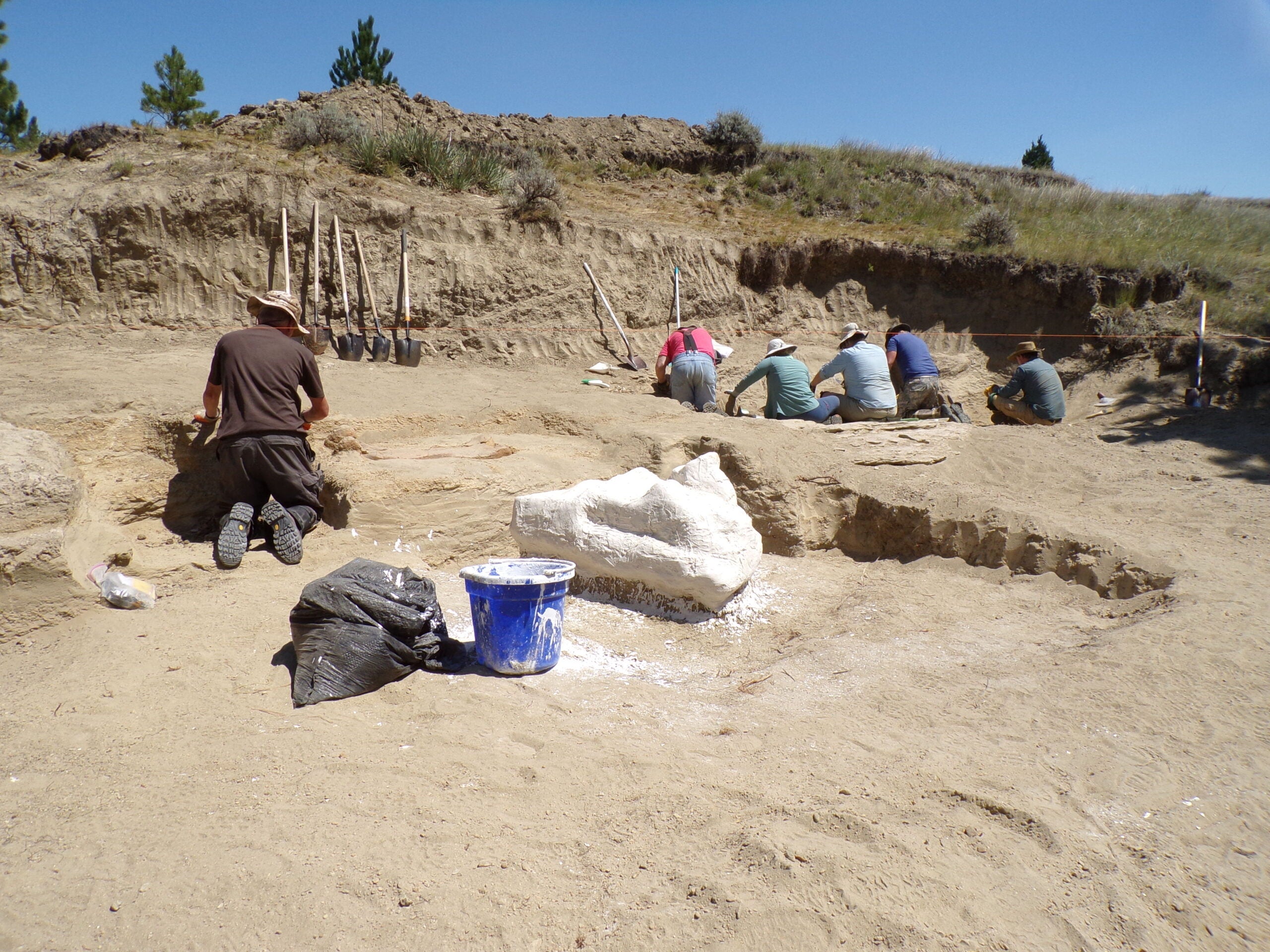
For 20 years, Thomas Carr has gone dinosaur hunting at the Hell Creek Formation in Montana with his students and volunteers.
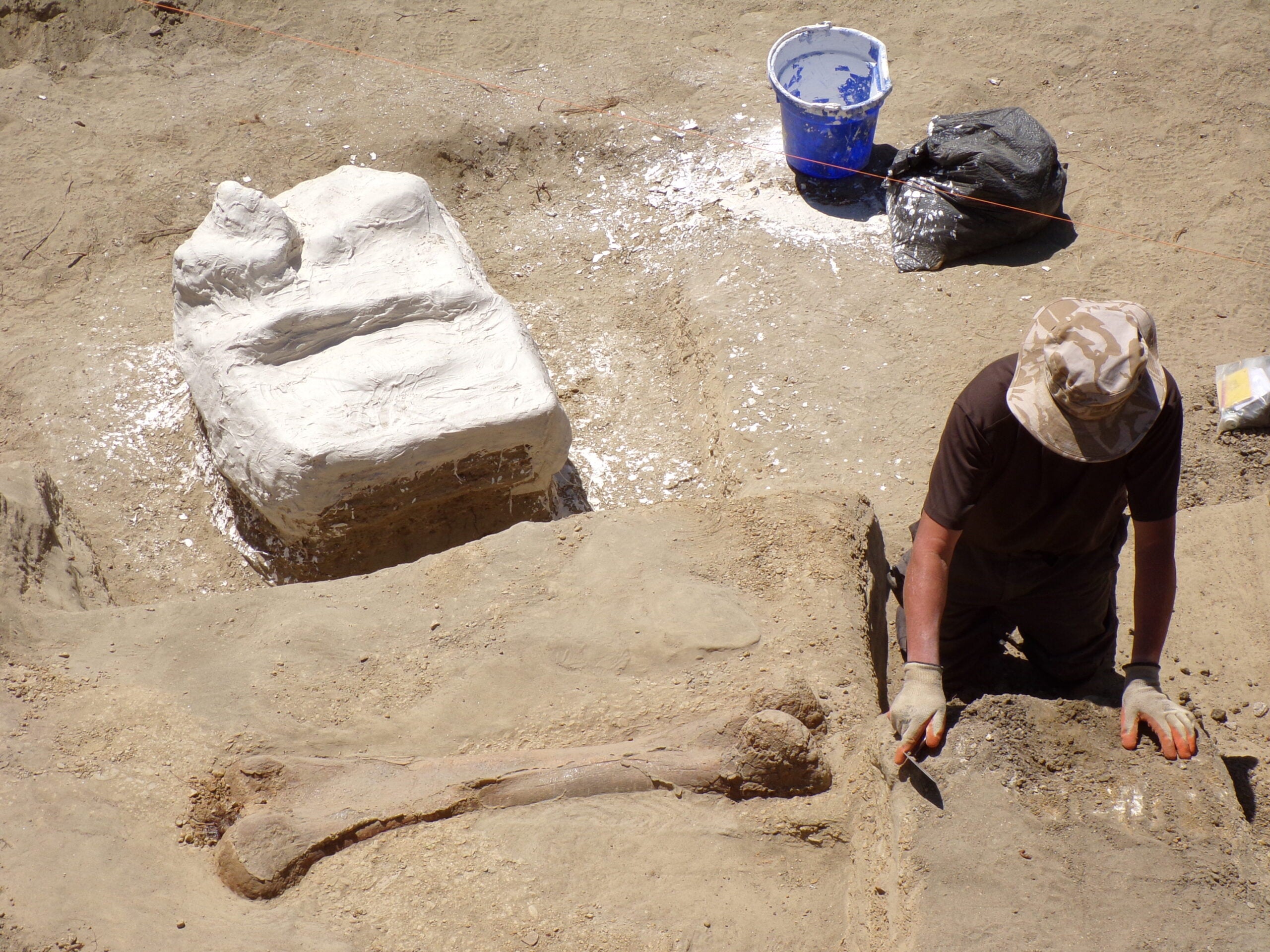
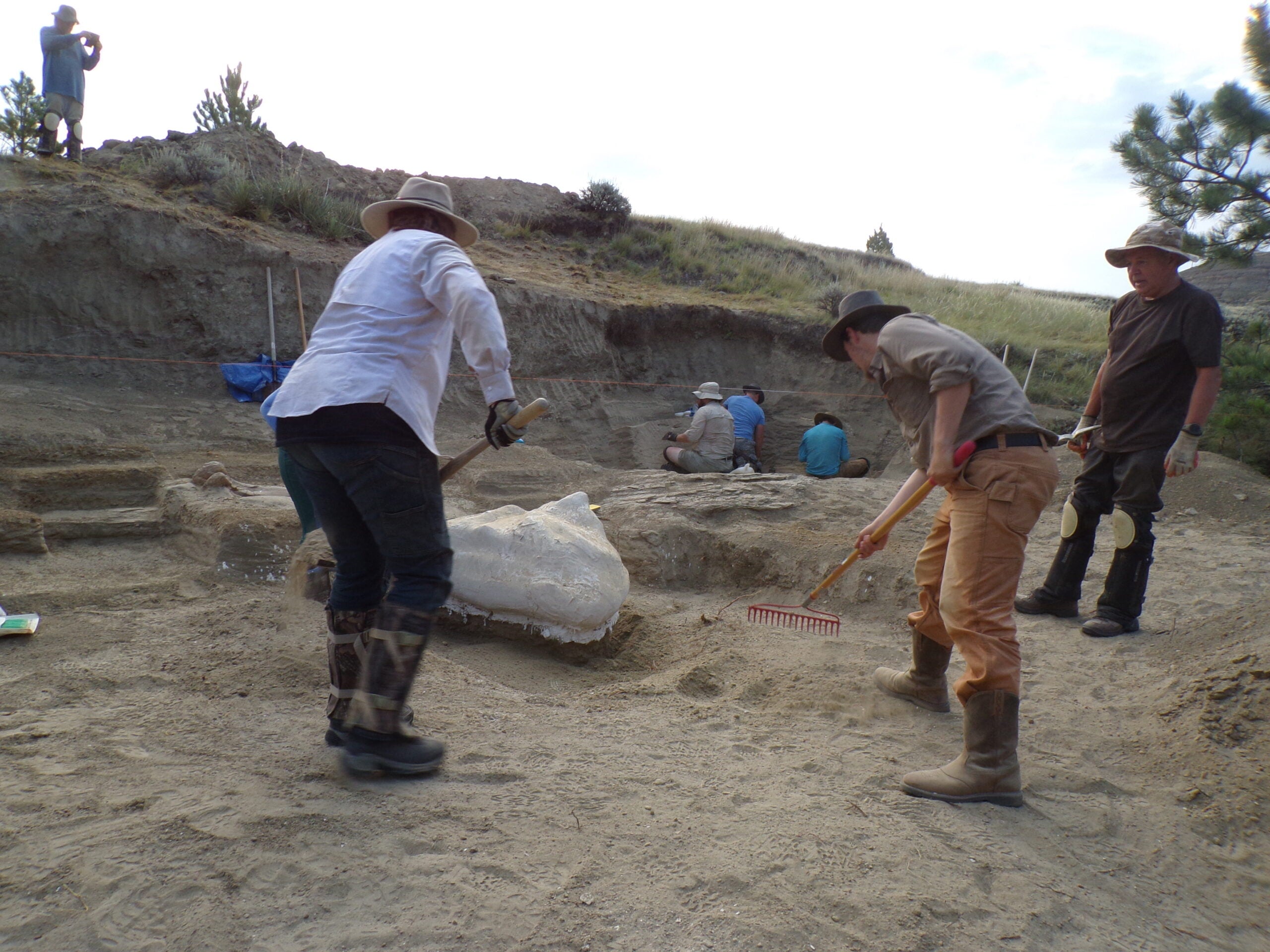
In 2024, they found something big at the fossil site — a partial triceratops skeleton.
Carr is a biology professor at Carthage College, a small liberal arts school in Kenosha. He also directed the Carthage Institute of Paleontology, a lab and field work hub for his paleontology students based at Kenosha’s Dinosaur Discovery Museum. That institute, which allowed for the rare triceratops discovery and others like it, closed on Jan. 4.
News with a little more humanity
WPR’s “Wisconsin Today” newsletter keeps you connected to the state you love without feeling overwhelmed. No paywall. No agenda. No corporate filter.
The institute was a partnership between Kenosha Public Museums and Carthage that launched in 2004. The museum pledged to “provide a lab in the basement” of the Dinosaur Discovery Museum — one of three museums overseen by Kenosha Public Museums — for the institute.
That original agreement expired this year, leading to the dissolution of the institute. According to the university, budget considerations were a key factor in the decision not to renew the agreement.
College and museum officials said even without the institute in place, a partnership between Carthage and the museum will continue.
But Carr argues the loss of the program will make it more difficult for paleontology students at Carthage to get hands-on experience.
“I tell students that we’re gonna have to find internships, volunteerships, other opportunities at other institutions for them to get that experience that we once took for granted,” Carr said.
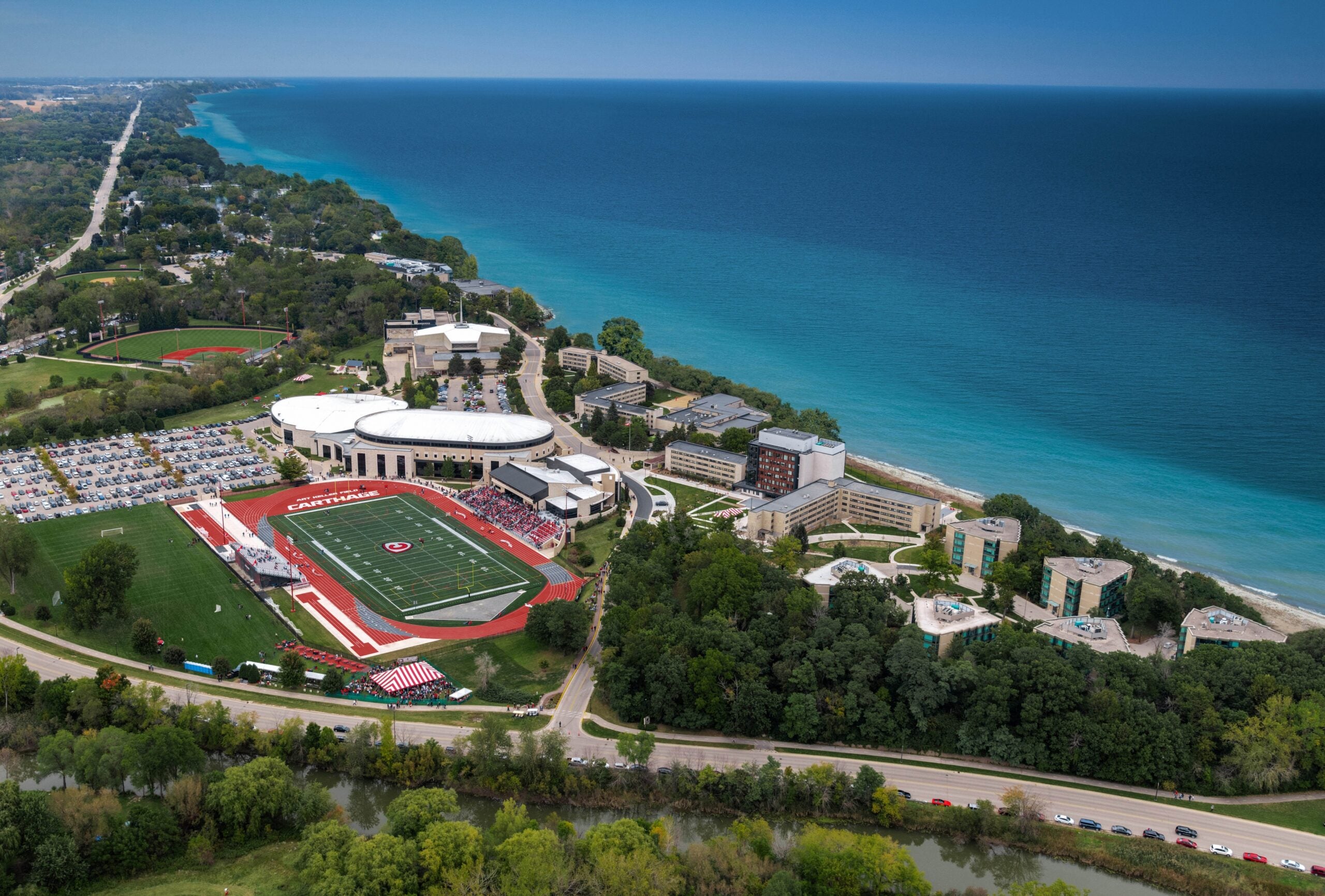
Carthage College has around 3,000 students and sits on the shore of Lake Michigan. In 2020 during the COVID-19 pandemic, the school eliminated 20 percent of faculty and restructured 10 departments to cut costs.
That included the removal of funding for the preparator position at the institute. The program requires a paleontologist, a role filled by Carr, and a preparator who helps run the field and the lab.
Carr said he had to use grants to fund the preparator position until that money ran out in 2024. The person who previously held the job left for a museum in Colorado after the grant funding ended, leaving the lab at the institute empty. Carr hired a fossil preparator temporarily for their trip to Montana in 2024. The exhibition ended up being their last.
Conversations about signing a revised agreement began with the college and the museum in the summer of 2024, but those talks stalled.
In spring of 2025, Carthage approached Carr to sign a document formalizing his unpaid position as director of the institute — a separate role from his tenured professor position. Carr had been in the role for 20 years.
He said he refused to sign the document because it included the following statement: “Directors are expected to represent Carthage professionally and not speak disparagingly about the College in any public or professional setting.”
Carr argues the line was included in the document because he had begun speaking with local news outlets about the struggles the institute was facing.
In response to not signing, Carr says he was “pushed” out his director position.
David Timmerman, the Carthage provost, said Carr himself “made the decision to step down.”
“That choice that (Carr) made put us in a position of needing to make a choice,” Timmerman said. “Were we going to hire a new person to be (a preparator) and (a new director), or would we just dissolve the institute … and we’re not in a financial position to add another employee for this purpose.”
Soon after, the university and museum began phasing out the institute.
Timmerman said because the agreement is between just the university and the museum, the institute is not contractually required to exist.
“The Carthage Institute of Paleontology is named in the agreement,” Timmerman said. “But, as a contractual matter the agreement is really between the college and (the museum).
Timmerman said it is a “small but important distinction.” He wants the relationship between the college and museum to continue, even if the institute is gone.
The Dinosaur Discovery Museum is one of three that make up the Kenosha Public Museums. Kristine Camilli is their current executive director and has been with the museum for over 15 years.
“We have partnered with Carthage since probably the ’60s or ’70s,” Camilli said. “This is a long-standing relationship that’s not going anywhere.”
The museum is a designated federal repository and continues to accept fossils found with permits that list it as the official repository. Camilli and Timmerman said Carthage students, including those on the paleontology track, can still use it.
As of this January, all field and lab equipment from the institute has been taken from the museum and put in storage at Carthage.
Despite the shuttering of the institute, the Carthage paleontology program has seen a record 19 students this semester, according to Carr. He said he is currently seeking out similar partnerships with out-of-state museums so a similar expeditionary program can begin.
“The fossils won’t be going to Kenosha anymore,” Carr said.

Wisconsin Public Radio, © Copyright 2026, Board of Regents of the University of Wisconsin System and Wisconsin Educational Communications Board.