The CEO of Edgerton Hospital is thankful for a stable financial year, but he says rising insurance premiums and the potential for more uncompensated care are going to challenge rural hospitals like his.
According to the latest annual report from the Wisconsin Hospital Association, Wisconsin hospitals saw better operating margins in 2024 after rockier years that included the closure of some rural hospitals. But that momentum faces hurdles.
Expanded subsidies for insurance on the Affordable Care Act marketplace are set to expire at the end of the year unless lawmakers vote to extend them. If they don’t, premiums for many will likely rise.
News with a little more humanity
WPR’s “Wisconsin Today” newsletter keeps you connected to the state you love without feeling overwhelmed. No paywall. No agenda. No corporate filter.
And the One Big, Beautiful Bill Act that President Donald Trump signed into law earlier this year made more than $900 billion in cuts to Medicaid and Children’s Health Insurance spending over the next 10 years. That will reduce federal Medicaid spending in rural areas of the U.S. by $137 billion, according to an analysis by KFF.
That law also includes $50 billion that states can apply for to support rural health initiatives. The Wisconsin Department of Health Services recently applied for $1 billion to support three areas of rural health care: workforce, technology and care coordination services.
Marc Augsburger is president and CEO at Edgerton Hospital and Health Services. He joined WPR’s “Wisconsin Today” to talk about how recent state and national developments might impact rural hospitals like his.
This interview has been edited for length and clarity.
Rob Ferrett: We’ve got this report from the Wisconsin Hospital Association saying hospital and health system finances stabilized a little bit last year. What does that look like at your hospital?
Marc Augsburger: We’re very excited that things have stabilized a bit, meaning our Medicare and Medicaid payments are a little bit flatter than the accelerated rises and falls that we’ve seen in the past.
I really believe that there is a lot of power in what is happening at the government (level) right now. There is also chaos, as we all know. But there is also a bit of stabilization, especially coming through the state government system, where we’ve been able to pick up Medicaid payments that will be coming in early 2026.
RF: In the One Big, Beautiful Bill Act, Congress included a $50 billion Rural Health Transformation Fund aiming to address concerns for smaller hospitals outside of urban areas. Do you anticipate it being helpful for hospitals like yours?
MA: We’re really hopeful that that is going to be helpful to us. It remains to be seen a little bit, mainly because as a state we’ve just put in the application for $1 billion, and we won’t know the outcome of that for another month or two. Once the determination is made about how much, if any, of the billion dollars comes back to the state of Wisconsin, we’re very hopeful that it will fall into one of the three (categories) that will be very beneficial to health care.
Of the money that might fall into the three buckets, we’re not sure how that actually is going to come down to reach the individual hospital level, but we are extremely hopeful that we are going to be able to pull some money down that is going to financially continue to stabilize health care within the state.
RF: Edgerton is a Critical Access Hospital. That means it has a special status because of how important and vital it is to serving the surrounding area. That affects Medicare service reimbursement. How does that affect the bottom line for Edgerton?
MA: A critical access hospital is a federally designated, 25-(bed) or smaller hospital. Edgerton specifically is an 18-bed Critical Access Hospital. And what that means is at the end of the year, when we have completed our finances for the year and look at our federal cost report, the federal government reimburses our straight Medicare funding at 101 percent of our cost.
The one issue for Critical Access Hospitals across the nation is something called sequestration, which is where the government keeps 2 percent of the money that is supposed to be coming to hospitals. So of that 101 percent we actually are only receiving 99 percent of the cost for Medicare.
That doesn’t afford us any opportunity to have extra dollars which would help to purchase new equipment and things like that. So we really rely upon payments from your commercial insurances to help cover some of those gaps. And of course, BadgerCare Medicaid pays under the federal Medicare level, and so somehow we have to make up that significant deficit as well.
RF: Subsidies for marketplace coverage under the Affordable Care Act might lapse, and some people are expected to go off of that kind of coverage or get cheaper plans. How might that impact whether people are able to pay for services at a hospital like yours?
MA: We’ll be looking at the percentage of patients that have maybe fallen under BadgerCare and no longer are eligible for the program, and whether they move onto another insurance or become uninsured. I think that is the biggest concern of most hospitals across the nation.
Of course, we’re hearing that there is a possibility of a significant (cost) increase to Obamacare-type insurance, and we just don’t know what that is really going to do to the hospitals yet. We’re hoping that there is an opportunity for folks to pick up either commercial insurance or remain on the Medicaid program.
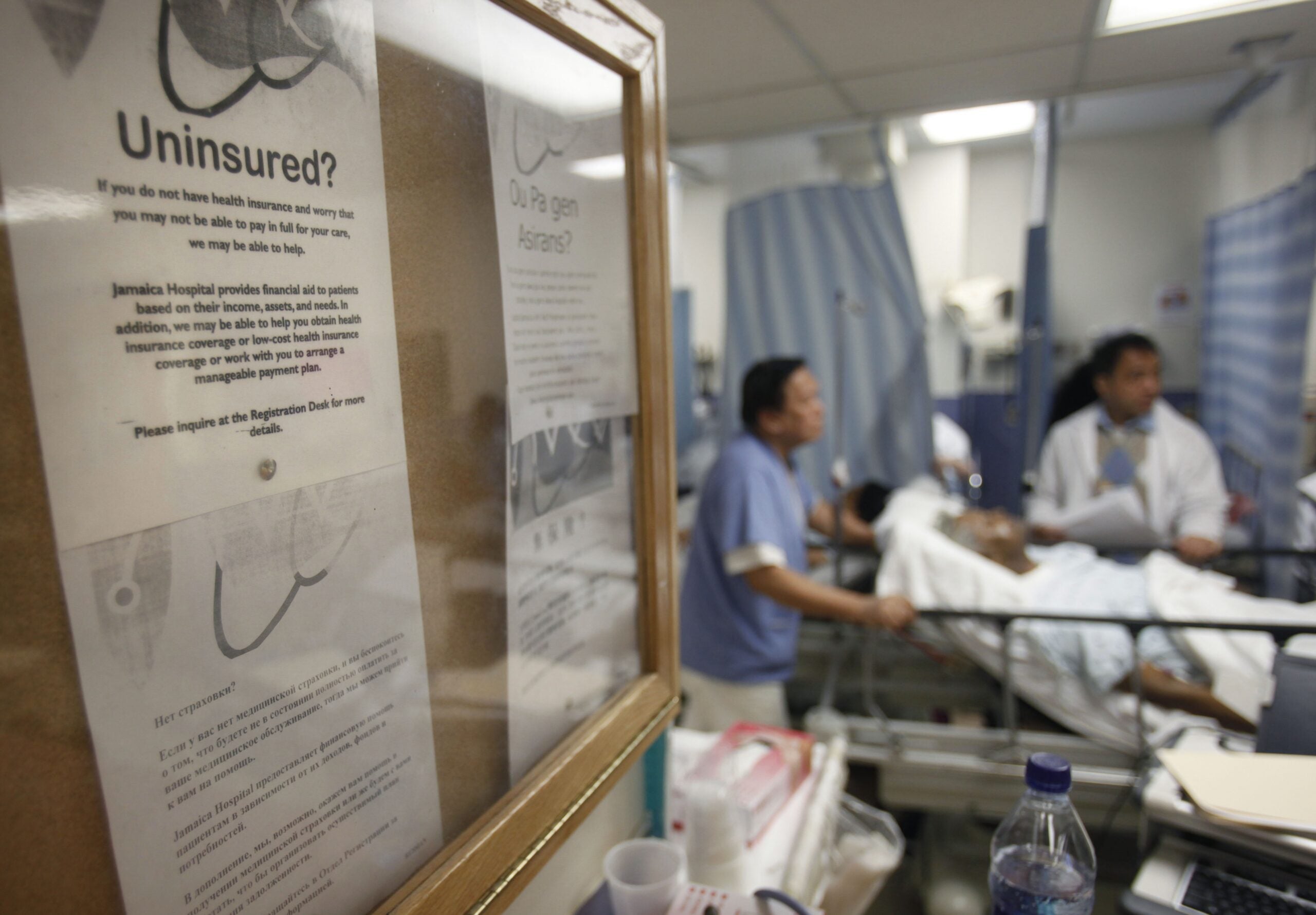
RF: Uncompensated care — care that hospitals don’t end up being paid for — rose by almost 30 percent in 2024 in Wisconsin. That can be a challenge for rural hospitals with tight margins. What kind of efforts does your hospital make to avoid uncompensated care?
MA: We try to work with the patients that come in that are uninsured to get them on some kind of sustainable payment plan. In some instances, we’ll look for some type of alternative care or other kinds of coverage for those patients. Otherwise, what we have to do on the hospital side is tighten our belts. We have to assume that debt piece. There’s not a lot we can do about that.
RF: We’ve heard concerns about not being able to find enough health care workers in some places around the state. Is Edgerton struggling with that?
MA: In Edgerton, we feel very fortunate that we have a significant portion of our jobs filled at this time. However, with each opening that occurs … those are becoming harder and harder to fill. Our hospital had not used traveling agency nursing staff for a number of years. We stopped using them in late 2021 after COVID, but in the last year, it’s been a little tighter and slower to fill positions. So we definitely have had to pay premium dollars to make sure that we provide the top notch and highest level of quality care.
I am concerned about the future, especially when we look at some areas, such as nursing physicians, X-ray technicians, lab technicians and a number of other areas that are really becoming hard to fill. There’s less population going into those specialties, and we need to stay ahead of the curve. One way that we can help out is financially help students going back to school for a degree. We want to make sure that our employees attain the next level of interest for them and help the hospital stay staffed better.