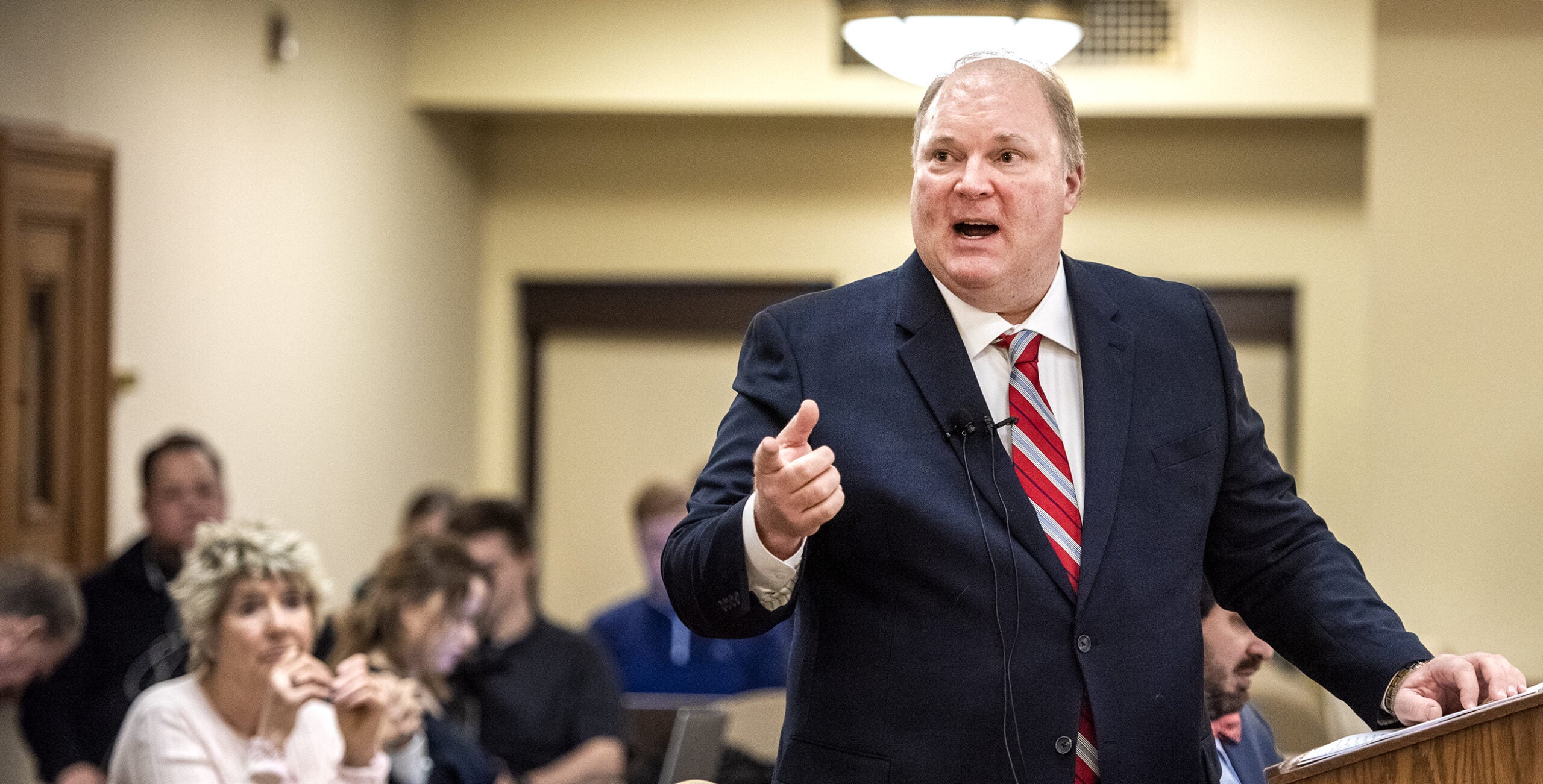
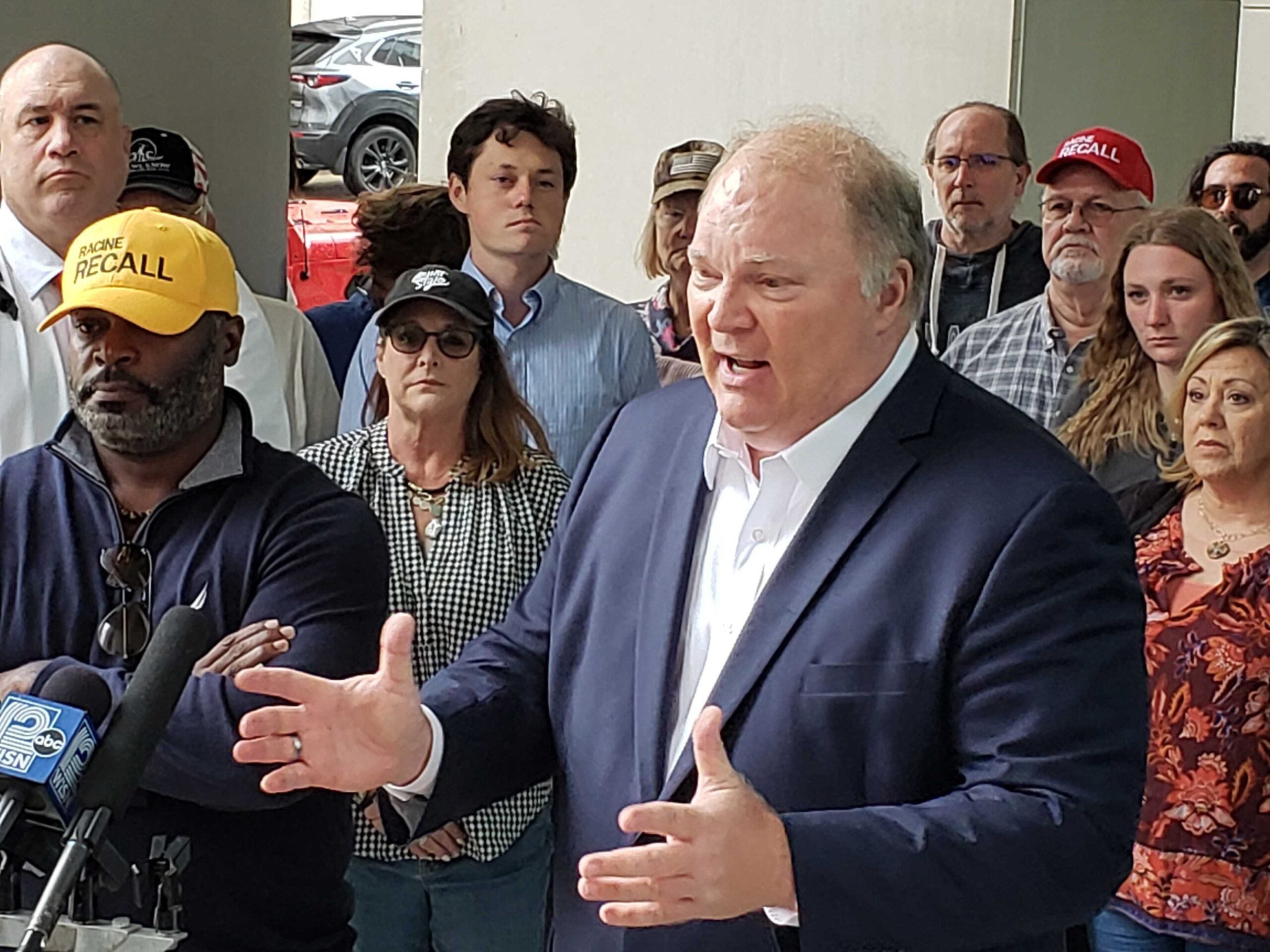
Former Wisconsin Supreme Court Justice Michael Gableman says his due process rights have been denied during the ongoing fallout of his investigation of the 2020 presidential election.
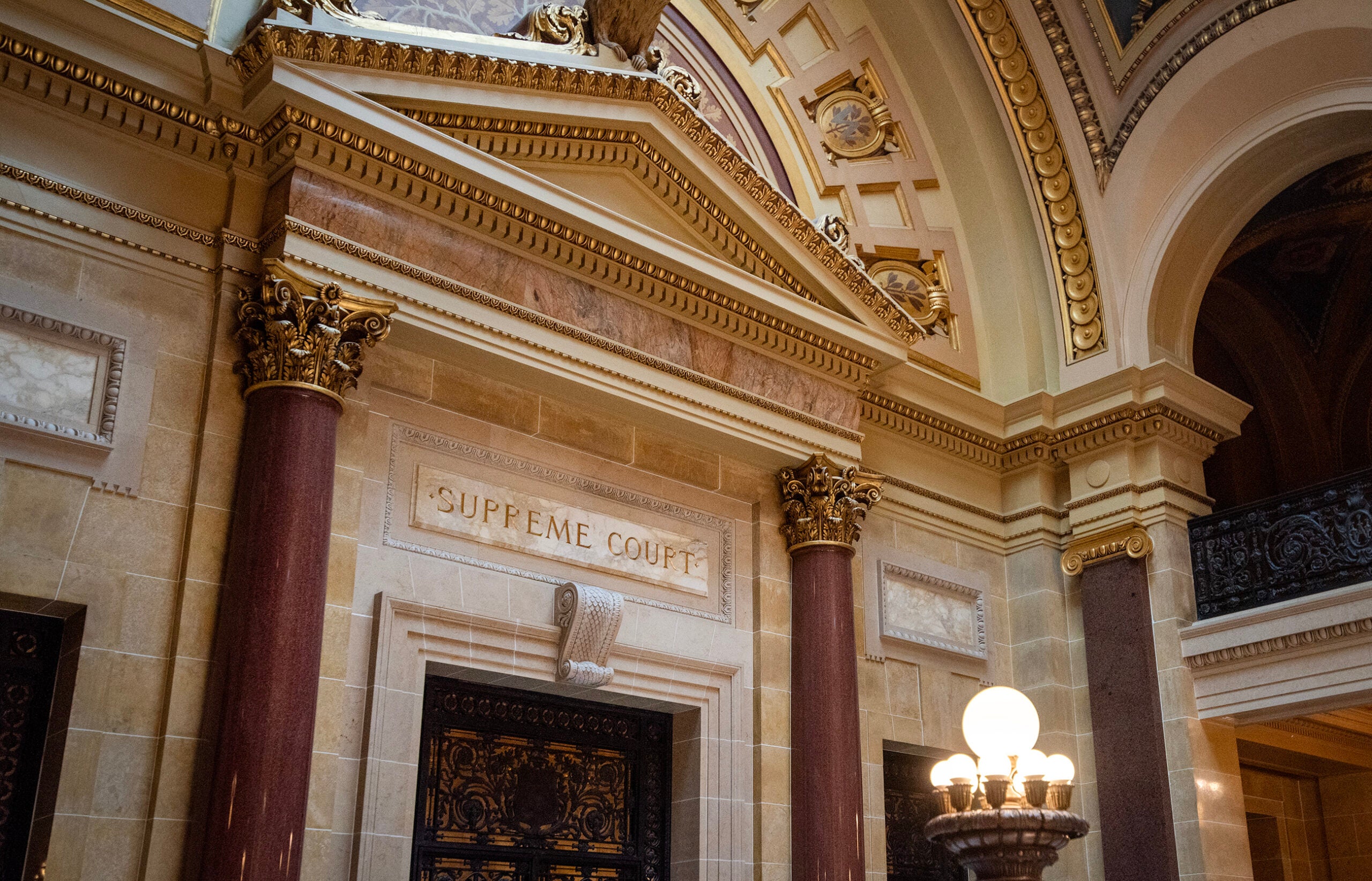
In a letter dated Dec. 29, an attorney for Gableman said that’s because two liberal justices on the Wisconsin Supreme Court declined to recuse from hearing the discipline case against Gableman — a case that will determine whether he loses his law license.
Citing a U.S. Supreme Court case about judicial bias, Gableman’s attorney, Skylar Croy, said the high court “should seriously consider whether it can provide due process.”
News with a little more humanity
WPR’s “Wisconsin Today” newsletter keeps you connected to the state you love without feeling overwhelmed. No paywall. No agenda. No corporate filter.
Legal experts say those efforts to remove justices from hearing the complaints, and this latest letter asserting a violation of due process — a constitutional right, set forth by the 14th Amendment — could set up an effort to appeal the Wisconsin Supreme Court’s decision federally.
But that would be a tall order during an already “highly atypical” case, said Caleb Gerbitz, an attorney at Meissner Tierney Fisher & Nichols in Milwaukee who writes extensively about appellate law.
“The U.S. Supreme Court virtually never steps in on issues of … lawyer regulation,” he said. “That’s generally relegated to the states.”
Setting up a possible federal court challenge
In 2021, Gableman was hired by Assembly Speaker Robin Vos, R-Rochester, to investigate wrongdoing in Wisconsin after the 2020 election, when now-President Donald Trump narrowly lost the state to former President Joe Biden. In 2022, Gableman was fired from that role. During his investigation, he found no evidence of widespread fraud and racked up a multimillion-dollar price tag and some lawsuits of his own.
Those legal challenges, alleging Gableman had violated state record request laws, contributed to a rash of ethics complaints filed by the Office of Lawyer Regulation, or OLR, the state body that determines who can practice law in Wisconsin.
After an investigation into ten allegations of professional conduct violations, including lying, disrespecting a judge and making demeaning comments about a female attorney, the OLR recommended last April that Gableman lose his license for three years. A court-appointed referee seconded that recommendation in September.
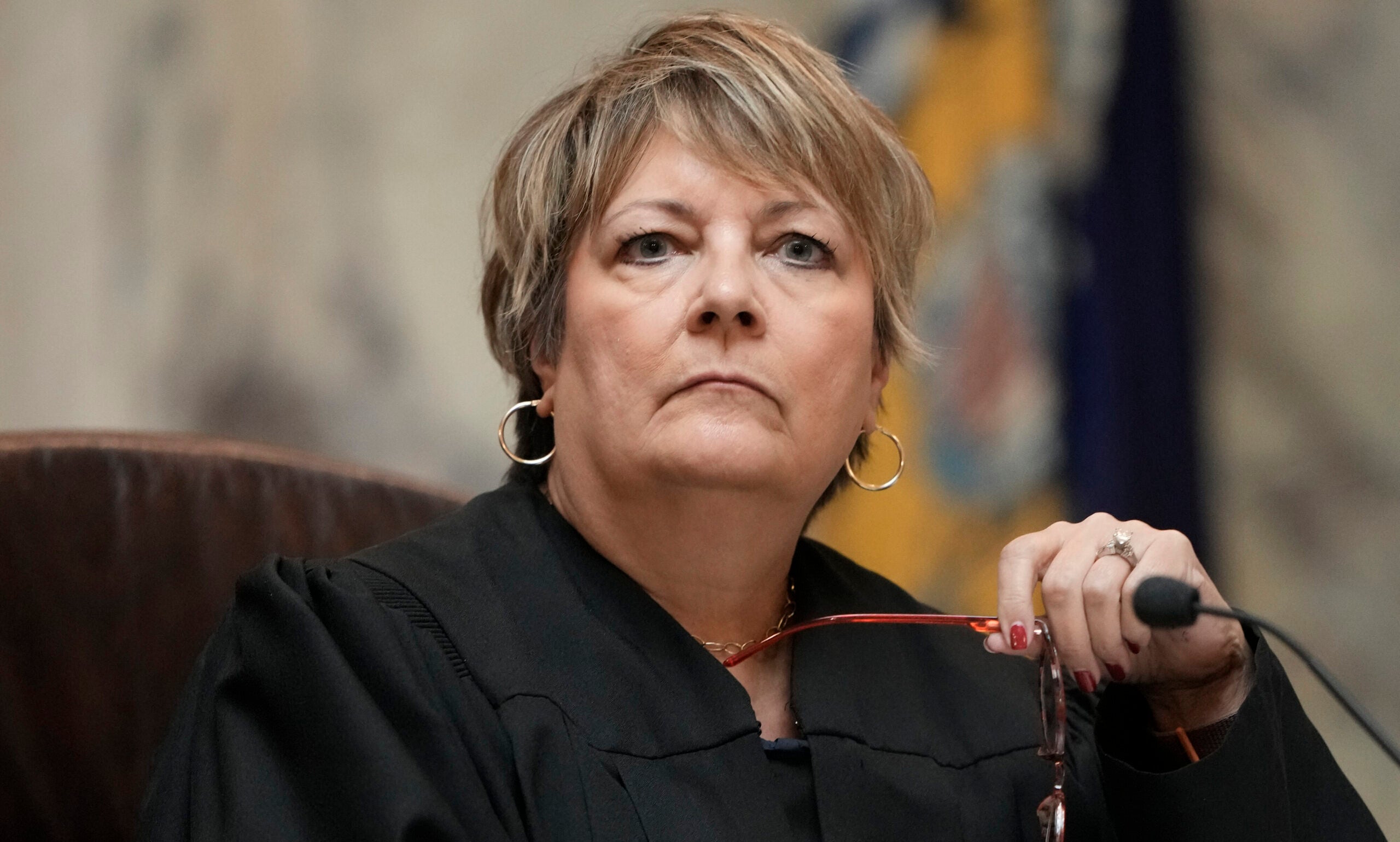
That bumps the matter to the state Supreme Court. In recent months, Gableman’s team has tried to have three liberals on the court recuse. Justices Janet Protasiewicz and Rebecca Dallet declined to do so.
Dallet was asked to recuse because of comments she made about Gableman in 2018, but she said that those comments had nothing to do with the post-2020 investigation. Protasiewicz was asked to recuse because of materials during her 2023 campaign that described the Gableman investigation as “disgraceful” and described him as “not fit to be on the bench.” She declined to recuse, saying those comments were about “the importance of judicial independence,” not pre-judging a hypothetical complaint against Gableman.

Justice Susan Crawford said she will not hear the case, saying that she served on the Dane County Circuit Court with the judge that Gableman is accused of disrespecting.
According to Gerbitz, the U.S. Supreme Court has only weighed in on a due process challenge to judicial recusal standards once. That’s the case that Croy cited in his letter, Caperton v. A.T. Massey Coal Co.
In that 2009 U.S. Supreme Court decision, the plaintiffs argued that a West Virginia Supreme Court justice hearing a lawsuit against the Massey coal company could not be impartial, because the company had spent $3 million on his reelection campaign. The high court found that that justice should recuse himself because the election spending posed a “serious risk of actual bias” that violated the plaintiff’s due process rights.
But the high court ruling is narrow, according to Bryna Godar, an attorney with the State Democracy Research Initiative at the University of Wisconsin Law School. The ruling finds that “most matters relating to judicial disqualification [do] not rise to a constitutional level,” Godar noted in an email to WPR.
“Typically, state supreme courts provide the final word on attorney discipline proceedings. But where an attorney raises federal constitutional issues, like due process, that can in some cases open a path for federal court involvement,” Godar wrote.
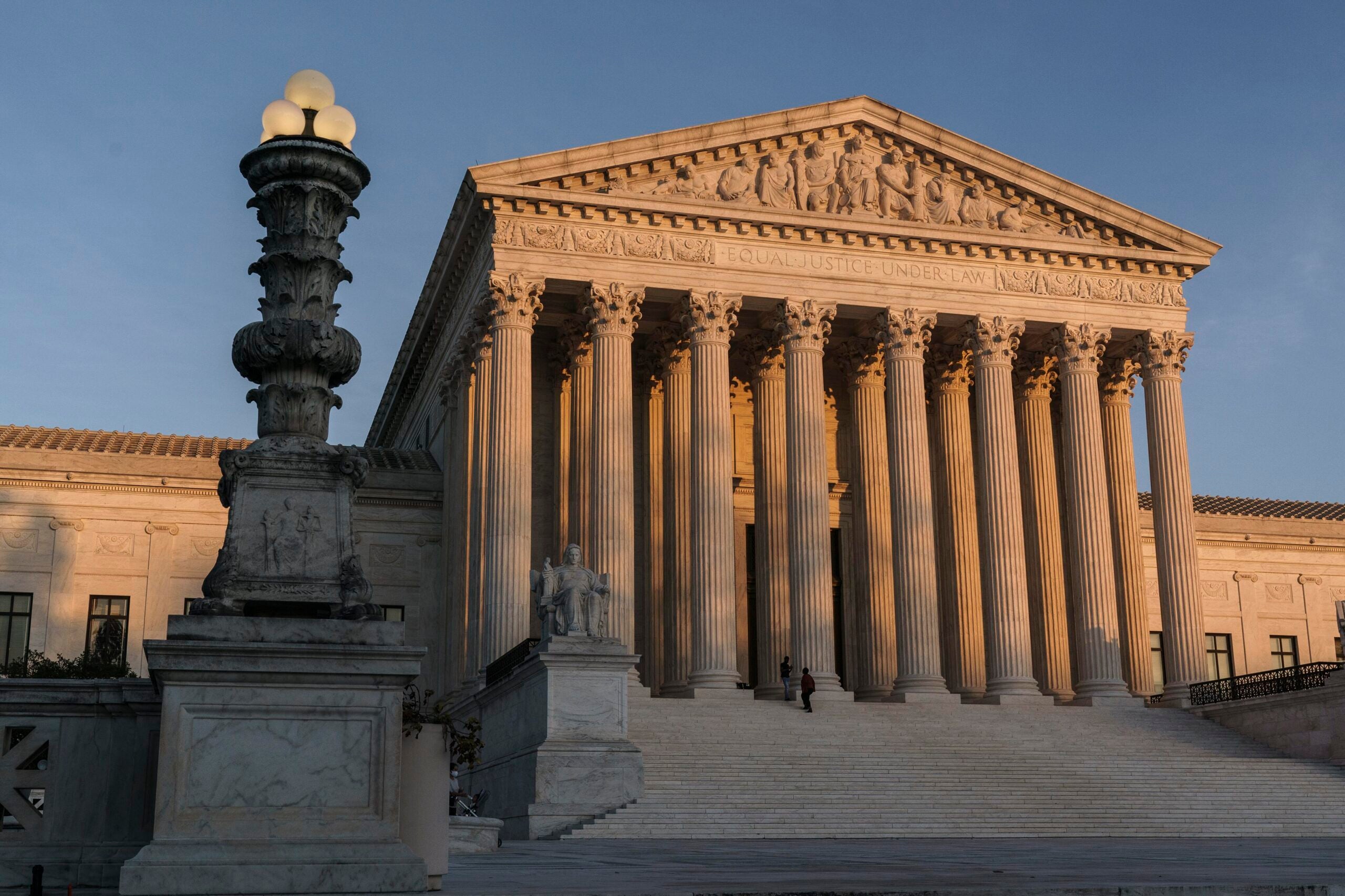
Most lawyer regulation complaints are settled by the states
Wisconsin’s own recusal standards, set by the court’s former conservative majority, does not view campaign spending as a conflict of interest requiring recusal. Instead, it’s largely up to justices to determine for themselves when they believe they’re unable to be objective.
In contrast to the Massey case, which hinged on an extraordinary amount of money, the Gableman team’s argument hinges on the speech of justices, said Gerbitz.
“This one deals with comments made during a campaign, and that’s something that the U.S. Supreme Court has never addressed before,” he said.
There are “very high First Amendment interests” in protecting a judicial candidate’s speech, Gerbitz added.
The recommendation of a temporary loss of his law license was part of a deal struck with Gableman and his legal team, in which Gableman said he “cannot successfully defend” against the allegations — essentially pleading no contest.
In the December letter to the Supreme Court, Croy said that that term “is standard boilerplate” acknowledging the cost and challenge of fighting an OLR complaint.
When the case reaches the Wisconsin Supreme Court, the justices can decide whether to go along with the three-year recommendation, or to impose a lighter or stricter penalty.

Wisconsin Public Radio, © Copyright 2026, Board of Regents of the University of Wisconsin System and Wisconsin Educational Communications Board.