Editor’s note: This article contains sensitive language about suicide and accounts of emotional abuse.
Lexi Westley comes from a family of coaches and athletes. But it took what she calls a “terrifying” experience with a coach at the University of Wisconsin-Madison to motivate her to pursue coaching herself.
A little more than three years after coach Mackenzie Wartenberger resigned from her position as head coach of the UW-Madison women’s cross country team, Westley and four of her teammates are coming forward about what they call abusive behavior by Wartenberger. They allege their coach’s leadership fragmented the team and created a toxic environment, leading to mental health problems. The athletes brought up patterns of emotional abuse, body shaming and dismissing injury concerns.
News with a little more humanity
WPR’s “Wisconsin Today” newsletter keeps you connected to the state you love without feeling overwhelmed. No paywall. No agenda. No corporate filter.
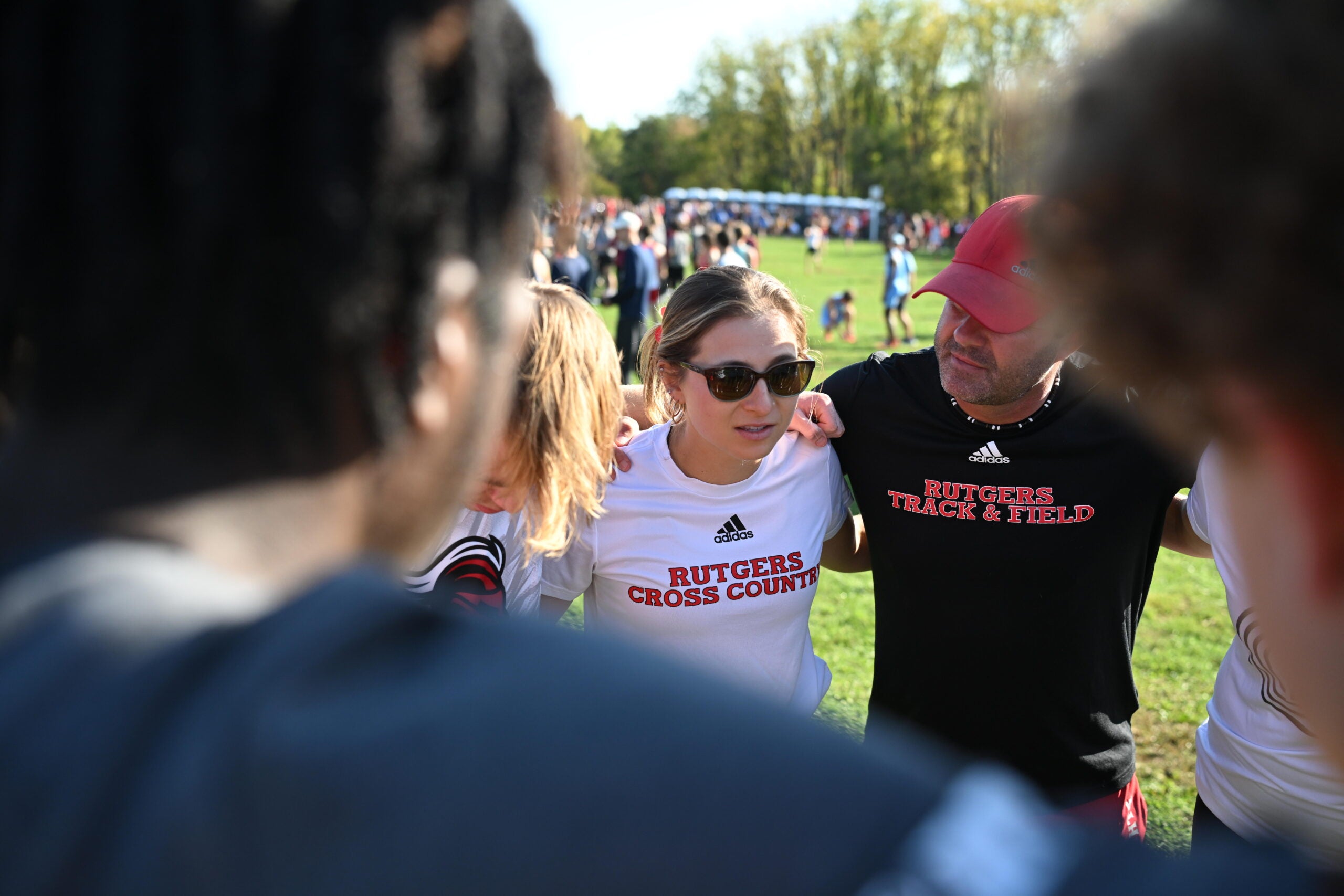
Now Westley — assistant coach of the men’s and women’s cross country teams at Rutgers University — is calling upon those experiences to be the supportive coach she needed. She hopes that speaking out, even years later, could help empower athletes in a similar situation.
“If I can share my story and be vulnerable, I could help one of (my athletes), or help another athlete or a future recruit,” Westley said in an interview with WPR’s “Wisconsin Today.”
Now similar allegations are surfacing with UW-Madison women’s basketball. This month, five former players brought a suit against their former coach Marisa Moseley and other UW administrators, claiming they were subject to psychological abuse, retaliation and discrimination.

Nellie Drew, professor of practice in sports law at the University at Buffalo, has been watching the cases unfold. In an interview with “Wisconsin Today,” she said the allegations are a troubling pattern emerging from UW Athletics.
“It’s no coincidence that you had two coaches in two different sports accused of similar behavior,” Drew said. “That speaks to a larger issue. Whoever hired them, whoever was supervising them and was responsible for their behavior, certainly wasn’t paying attention or was deliberately indifferent to it.”
In response to WPR’s request for comment, UW Athletics provided the following statement:
“Wisconsin takes seriously its responsibility to look after every student-athlete’s holistic well-being. Any concerns put forth by student-athletes are critical and every instance is treated with the utmost respect and care.”
A spokesperson declined to discuss further details, citing student privacy law.
WPR also reached out to Wartenberger for comment, but didn’t receive a response. She did respond to the allegations in an emailed statement to the Wisconsin State Journal:
“Coaching student-athletes was an immense privilege, and I hold deep respect for the challenges they face — especially the unique pressures placed on female student-athletes today,” Wartenberger said. “I believe every woman deserves to have her voice heard, even when her experience may differ from my own perspective or intentions, and for that reason I will not be inserting my voice into their stories — this is not my space to occupy.”
‘I was in a constant state of fear every day’
Westley’s mother was a Division I college gymnast, her father a three-sport college athlete and competitive bodybuilder, her grandmother a coach of more than 50 years.
Westley was no different. When she discovered running, she fell in love with it, and she was good enough to get a scholarship to run for the Badgers starting in 2019. That summer, the team brought on Wartenberger as head coach.
The pressures of being a DI college athlete proved hard on Westley’s mental health — especially because she was on a scholarship.

“The expectations of performing were on our backs immediately when we came in,” Westley said. “We were told, ‘You are expected to score. You are expected to be in our top five as a freshman. You are worth X amount of dollars to us. If you are not (performing), you are useless.’”
Westley said about half of the team were targets of their coach’s intensity.
“She was super passionate about coaching and about the sport, but the way that she expressed that probably wasn’t the appropriate and correct way to do so,” she said.
That included what Westley described as being belittled and bullied.
“She would go after the way I dressed … she’d go after my character as a person, she made very nasty verbal remarks about my family and the people that raised me, the character traits that make me who I am and my personality. And that was really hard,” Westley said.
“As a coach, looking at it now, those are all things that are not what a coach should be ‘coaching,’” she added. “Those don’t have to do with running.”
When runners had injuries, Wartenberger would make them run through the pain, according to Westley. She also said Wartenberger pitted athletes against one another in a way that soured the team culture.
It became a toxic environment. David Rusbasan, clinical professor of psychology at Indiana University, described the point at which a leader crosses the line from “tough” to “toxic” in an interview with “Wisconsin Today.”
“They tend to be a little bit more unpredictable. They’re praising you one day and then destroying you emotionally the next,” Rusbasan said. “Doing that publicly in front of other people. … (And) failing to respond to any sort of concern that was mentioned to them, dismissing that right away.”
Under Wartenberger’s leadership, the Badgers were running well. But their performance wasn’t without consequences.
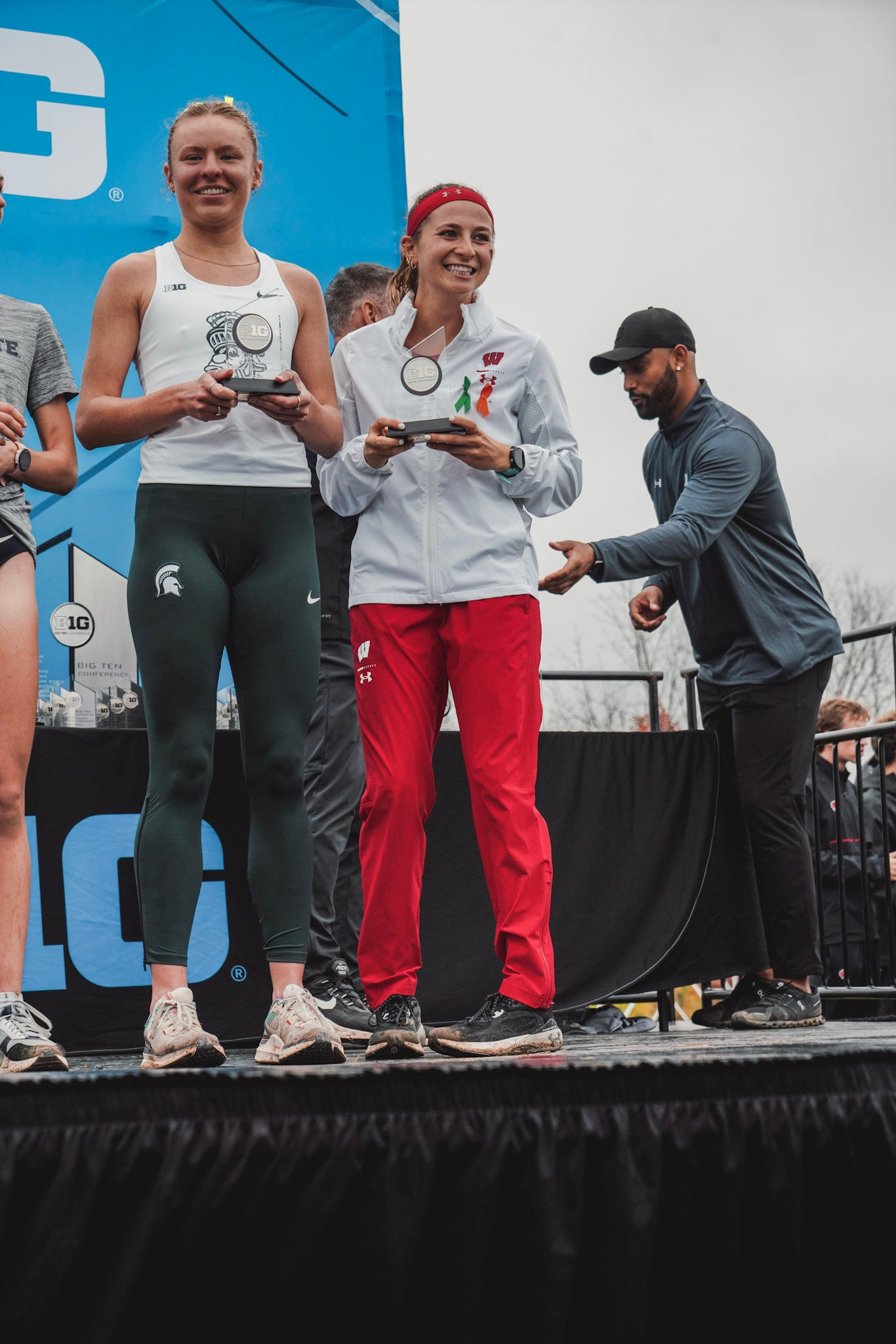
Prior to college, Westley said she had never developed physical symptoms due to stress. But running under Wartenberger, she wasn’t sleeping well, and she was experiencing panic attacks and frequent bouts of crying.
Westley started seeing a counselor in the program about her struggles. And while the meetings were helpful, she said she wasn’t able to prioritize them.
“I felt like I had to cancel appointments because I had practice, or I had a class, or I had an optional thing for the sport,” Westley said.
From her current coaching position, Westley now sees that Wartenberger’s behavior went well beyond the threshold of “tough coaching.”
“Finding a way to be a ‘tough coach’ is knowing where that line is crossed,” Westley said. “You show that you’re involved and that you care about them as more than just a runner.”
‘How did nobody notice?’
In the fall of 2021, one of Westley’s teammates brought up the abuse to program administrators, according to reporting from the Wisconsin State Journal. In January of 2022, Wartenberger voluntarily resigned from her position after two and a half years as head coach.
“A lot of women were upset because they didn’t experience the other side. And they (thought) we were running so well, we were healthy, we were running fast,” Westley said. “The rest of us were jumping for joy, because the woman who brought us a lot of pain and sadness was gone, and we could finally breathe.”
In April of that year, Westley’s teammate, friend and roommate Sarah Shulze died by suicide.
On top of existing mental health struggles coming into college, Westley said the pressures of being a student athlete on scholarship and the societal pressures placed on young women may have contributed to the decline in Shulze’s mental health.

Looking back, Westley said she regrets not speaking up about Wartenberger’s behavior sooner. But she also wondered why team administrators and mental health professionals didn’t recognize a problem.
“How did nobody notice?” Westley said. “How did what we were saying not get brought up to higher-(ups) quicker?”
She also said she was disappointed with the administration’s silence now that more runners have spoken up.
“It feels like there hasn’t been a lot of change,” Westley said. “Universities really need to listen to their athletes, take it seriously and make change.”
A pattern of abuse in college sports
Drew, with the University at Buffalo, said that while universities often have policies and procedures to prevent abuse by coaches, they aren’t always effective on their own.
“Even if it’s a really good policy (or) procedure, it still depends upon people holding others accountable,” Drew said. “The sense I’m getting is that in this athletic department, the coaches were allowed to pretty much do what they wanted to do, and nobody was going to stop them.”
Drew also pointed to the fact that UW’s athletic department didn’t provide a clear roadmap for athletes to go above their coaches to report them. Psychology professor Rusbasan emphasized the importance of effective reporting systems.
“An organization that is unwilling to tolerate something like harassment (has) a reporting system that is easy and anonymous,” Rusbasan said.
But Drew said student athletes are gaining more power through revenue sharing and the NCAA transfer portal, an online database that allows college athletes to publicly declare their intention to transfer schools and get recruited elsewhere.
“It gives athletes an avenue out, an exit ramp, if a coach comes in who is not a coach that they can have a good relationship with, or in an environment that they don’t think they can be successful in,” Drew said.
But without accountability, instances of abuse will continue to occur because of the nature of the college athletics environment, Drew said.
“Anytime you have a situation where a lot of people are going to be interacting on a regular basis in stressful situations, there’s going to be the potential for some kind of bad conduct to occur,” Drew said. “The problem is that when a misstep occurs and it’s not corrected, then people start to let more things slide.”
If you or someone you know is considering suicide, call or text the three-digit suicide and crisis lifeline at 988. Resources are available online here.
Editor’s note: This story has been updated to include a statement from coach Mackenzie Wartenberger.