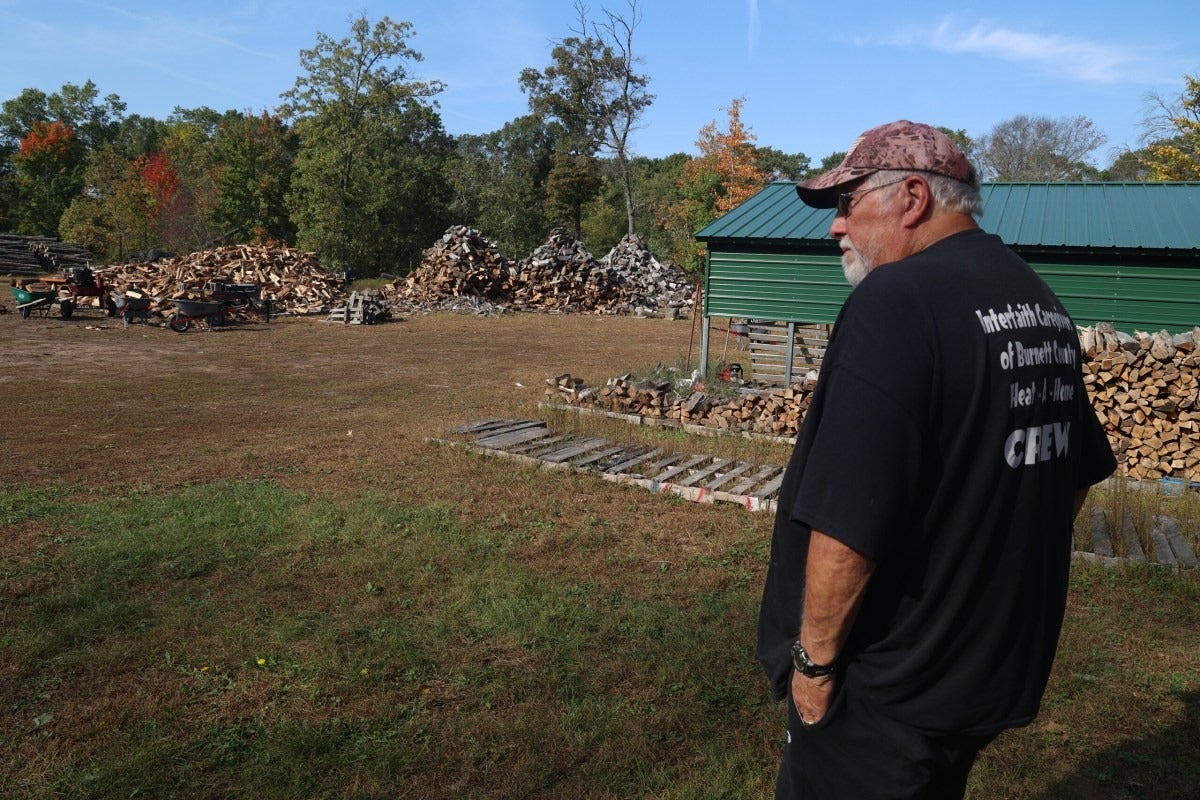
When Denny Blodgett learned his northwest Wisconsin county intended to burn wood harvested during a road-widening project near his home, he thought it would be unthinkable for that fuel to go to waste.
As Blodgett recalls, he offered some of the harvested wood to an older man from his church, and word spread around his community of Danbury that he had firewood to give.
“And pretty soon, we’re helping 125 families,” said Blodgett, who founded Interfaith Caregivers’ Heat-A-Home program.
News with a little more humanity
WPR’s “Wisconsin Today” newsletter keeps you connected to the state you love without feeling overwhelmed. No paywall. No agenda. No corporate filter.
That was three decades ago.
Last year, volunteers delivered nearly 200 loads of split wood to local households.
And as the cost of living increases amid federal cuts to social safety net programs, struggling families increasingly face a winter of tough choices as they try to meet their basic needs.
Food, medicine or heat?
Interfaith is one of about 250 known firewood banks across the country that seek to ameliorate the demand for energy assistance.
There isn’t a clear definition for firewood banks, which have been around since at least the 1970s, but have roots in Native traditions since time immemorial. They can take the informal form of Good Samaritans delivering logs to neighbors to large take-what-you-need distribution sites operated by cities or Indigenous tribes.
But the common denominator to these networks of care is their low- or no-cost service to people who lack the means to purchase alternative forms of heat and process their own firewood. Often, both factors stem from the same issue, such as illness or aging.
The U.S. Census Bureau estimated as of 2020 that 2.3 million households in the United States rely on firewood as their primary source of heating fuel.
But one of the great paradoxes of what researchers term “fuel poverty” is that those struggling to keep their homes warm in rural, often heavily forested areas lack ready access to wood.
“I’ve got 20 acres of oak and hardwood here and a chainsaw and a log splitter, but I’m pretty much unable to really do much with it,” said Danbury resident Peter Brask, 78, who struggles with neuropathy. “I just still feel embarrassed asking for help because I’ve been so self-sufficient all my life.”
Last year’s wood delivery from Interfaith was a “lifesaver” for getting through the winter, the retired IBM software specialist said.
Blodgett, a former U.S. Air Force lieutenant colonel, purchases and accepts donated wood, delivered to a yard adjacent to his home. A processor cuts “cattywampus” piles of timber into smaller pieces, and volunteers split them into burnable portions.
The wood dries until it’s “seasoned.” The less moisture in a log, the cleaner and more efficiently it burns.
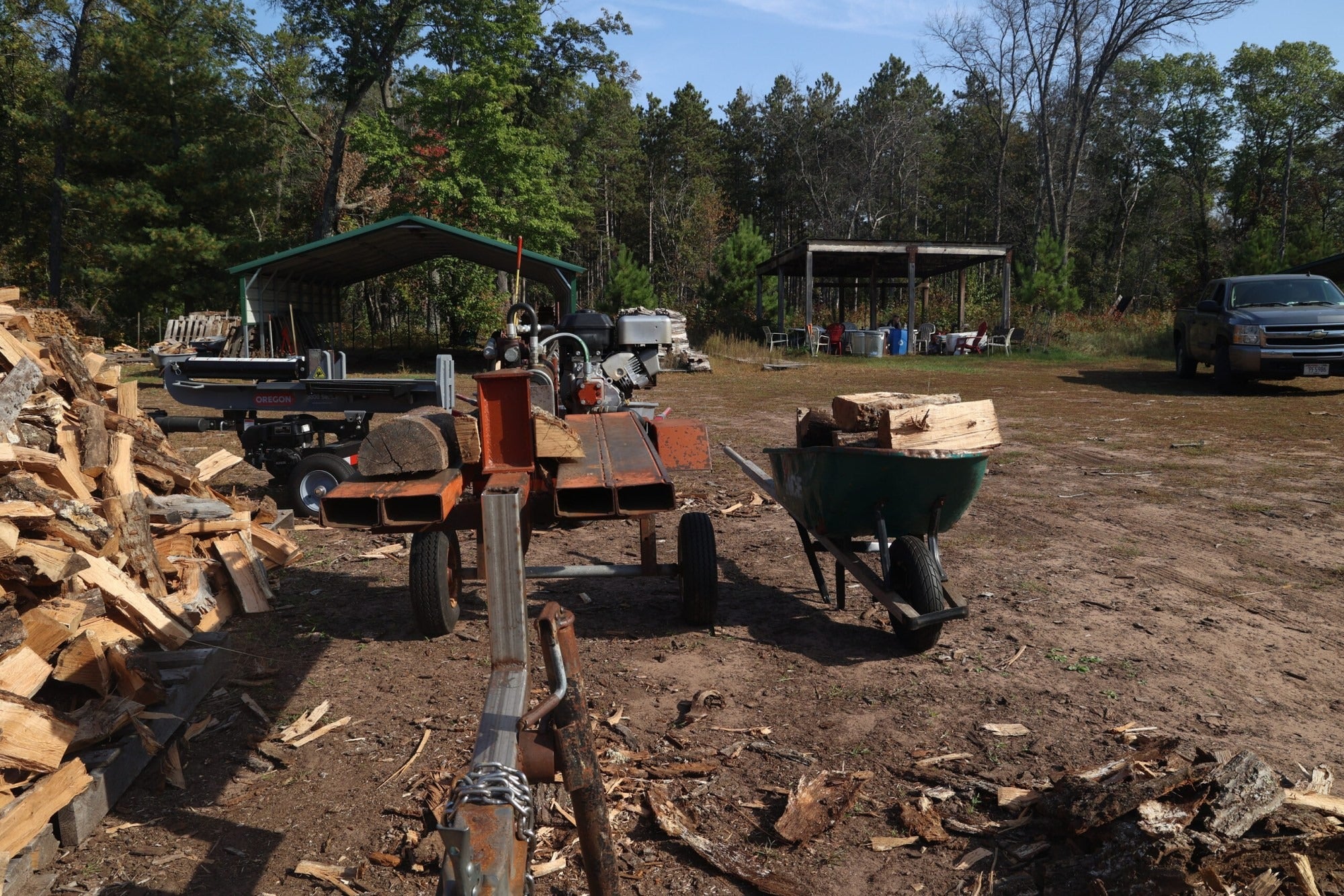
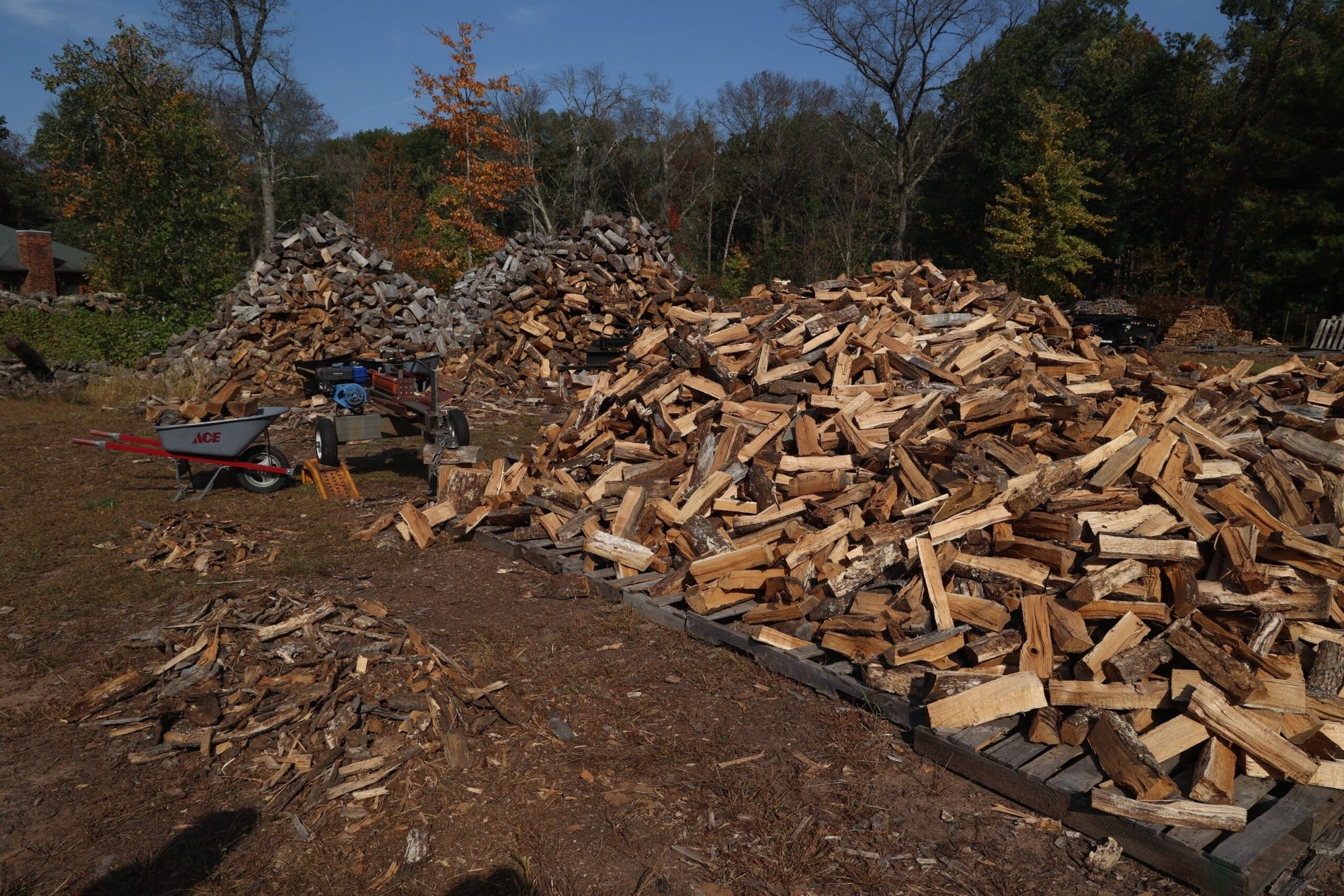
Interfaith purchased two trailers a few years ago with money the group obtained from the Alliance for Green Heat, a nonprofit that advocates for the use of modern wood-burning heating systems.
Buoyed with money from the 2021 Bipartisan Infrastructure Law, it has issued more than $2 million in grants to firewood banks that help them purchase safety equipment, chainsaws and wood splitters, as well as smoke detectors for wood recipients.
Overlooking a renewable resource like wood at the potential cost to human health is unthinkable, said the organization’s founder John Ackerly, especially when so much potential firewood ends up in landfills — the “scraggly stuff” that lumber mills can’t offload. The U.S. Environmental Protection Agency calculated 12.2 million tons of wood ended up as municipal solid waste in 2018.
“Usually, firewood is not a very profitable thing to sell, very labor-intensive and very heavy,” Ackerly said.
Another opportunity presented by firewood banks is providing a local outlet that avoids spreading wood infested with invasive species. Banks also avert the dumping of wood sourced from storm-damaged trees, exacerbated by climate-change-magnified severe weather — winds and snow.
“We’re losing our power, our electricity in these storms all the time,” said Jessica Leahy, a University of Maine professor, who co-authored a guide to starting community wood banks. “It would be great to have everybody in the most carbon-neutral heating source for their house. That sounds great, but there are people burning their kitchen cabinets in order to stay warm.”
Now in its fourth year issuing grants with federal dollars, the Alliance for Green Heat had to rebrand after the Trump administration pushed for increased timber harvests on federal lands in the name of national economic security.
This year, firewood banks seeking grants must source wood from actively managed federal forests, a potential problem for the handful of states that lack them.
“Before, we really touted the program as serving ‘low-income populations’ with a ‘renewable, low-carbon fuel,’” Ackerly said. “We had to remove that language, but we were able to keep doing what we had been doing the same way.”
Researchers who mapped wood banks across the U.S. identified a second in Wisconsin — the Bear Ridge Firewood Bank, sponsored by the Stockbridge-Munsee Band of Mohican Indians — and a handful in other Midwestern states, including Indiana, Michigan and Minnesota.
Clarisse Hart — director of outreach and education at Harvard Forest in Petersham, Massachusetts, and one of the researchers — said firewood banks often go by different names depending on the region: firewood assistance program, firewood for elders, firewood ministry, wood pantry and charity cut, to name a few.
Other exchanges happen behind the scenes, she said, often on private, community social media pages — making banks harder to identify.
Often, the operations depend on the commitment of volunteers.
“A lot of people want to give back, but they don’t know what to do,” said Ed Hultgren, who started an Ozark, Missouri, wood bank in 2009. “It doesn’t have to be wood ministry. You find a gap in your area and see if there’s something you can do to fill it.”
Wayne Kinning — a retired surgeon who volunteers with his Fenton, Michigan, Knights of Columbus council — is one of a dozen or so men from St. John the Evangelist parish who cut, split and sell low-cost firewood. The proceeds support local charities.
“We donate all our time and even our chainsaws,” he said. “That, of course, then gives a person a sense of meaning in their day and a sense of worth in their giving.”
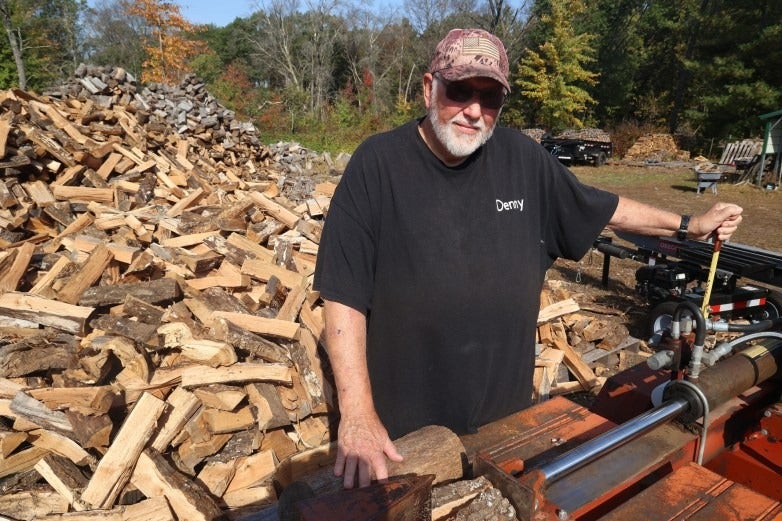
Among Blodgett’s helpers are a snowmobile club, several churches and a Jewish summer camp. Another dedicated volunteer — Wendy Truhler, 74, of Danbury — has assisted Blodgett for nearly two decades, since her spouse died.
“Listen, I helped my husband split for 30 years. I know how to lift and work a splitter and this and that,” she told Blodgett when she started. “I would rather be outside than glued to a little 12-inch computer screen.”
Blodgett delivers wood throughout the year, which takes the pressure off the winter rush.
He fills the extra time working on other Interfaith projects: constructing wheelchair ramps for families and running the Christmas for Kids program.
Last year, 335 children received toys and clothes from their wish lists. Families also get a $50 food card. And he makes sure they get another resource wood provides.
A decorated tree for Christmas.